
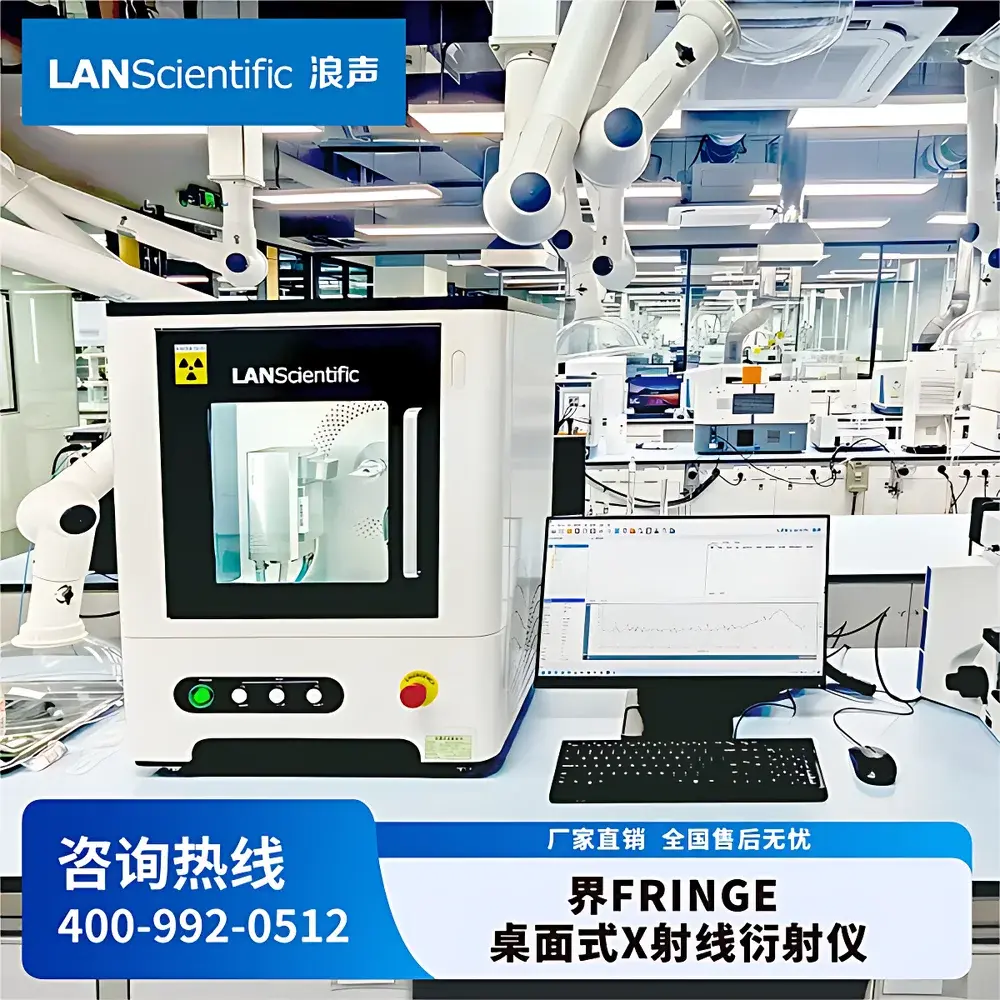
LANScientific FRINGE EV Desktop X-ray Diffractometer for Calcined Alumina Phase Analysis and Transformation Ratio Calculation
| Brand | LANScientific |
|---|---|
| Origin | Jiangsu, China |
| Manufacturer Type | Direct Manufacturer |
| Product Category | Domestic |
| Model | FRINGE EV |
| Instrument Type | Powder X-ray Diffractometer |
| Power Rating | kW-class (typical operational range: 1.2–2.4 kW, configurable per application requirements) |
| Detector | DPPC (Digital Pulse Processing Counter Detector), Count Rate ≥ 1 × 10⁷ cps |
| Optical Configuration | Integrated fixed Soller slits, Bragg–Brentano θ–2θ reflection geometry |
| Safety Compliance | Interlocked sample chamber with automatic beam shutdown, real-time door status feedback in GUI |
| Software Platform | CrystalX™ v3.2+ with automated phase identification, Rietveld refinement, quantitative phase analysis (QPA), crystallinity index calculation, and alumina polymorph transformation ratio reporting (α-, γ-, δ-, θ-, κ-, χ-Al₂O₃) |
Overview
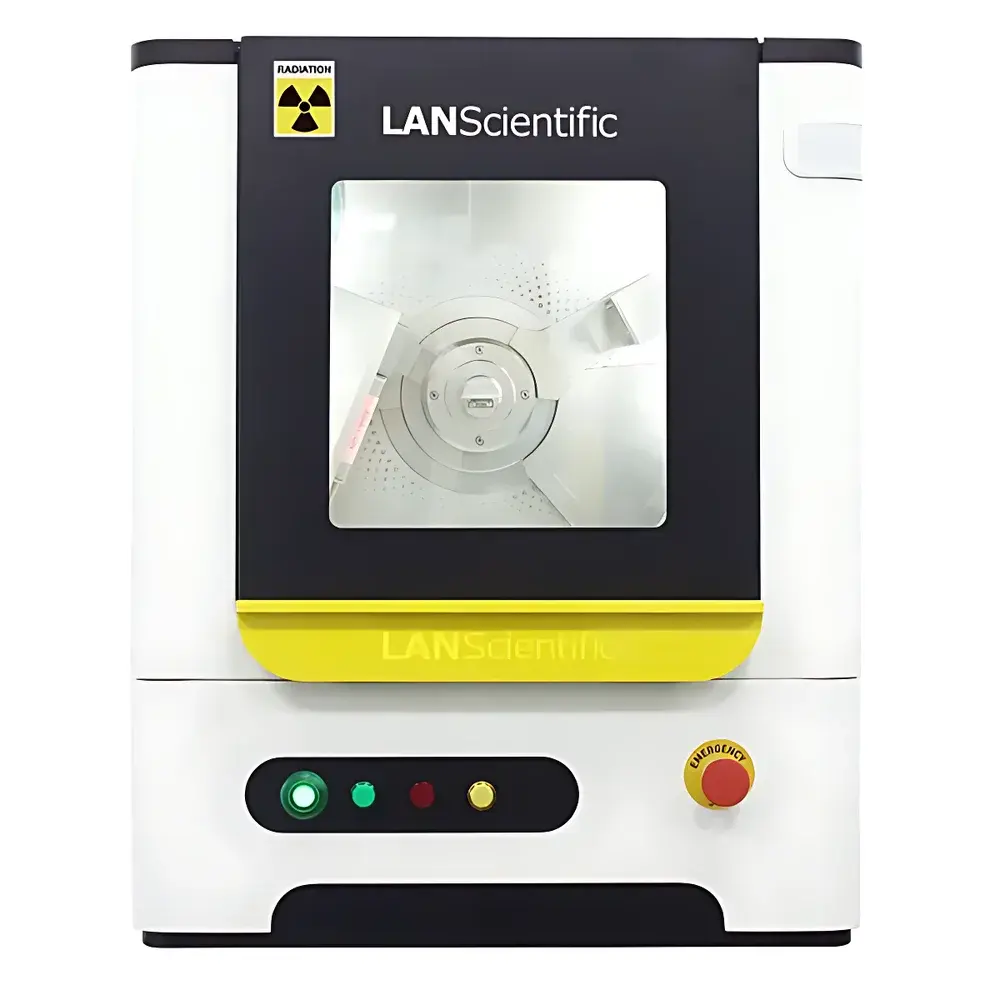
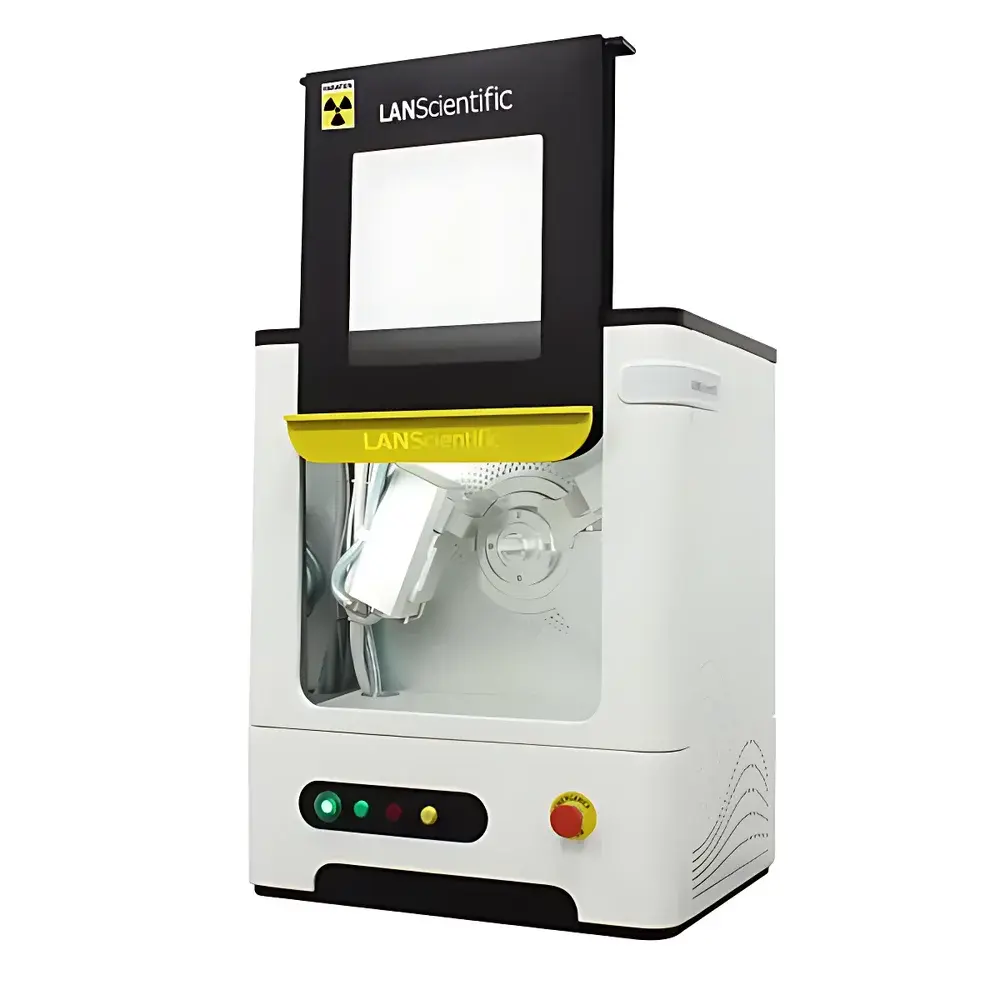
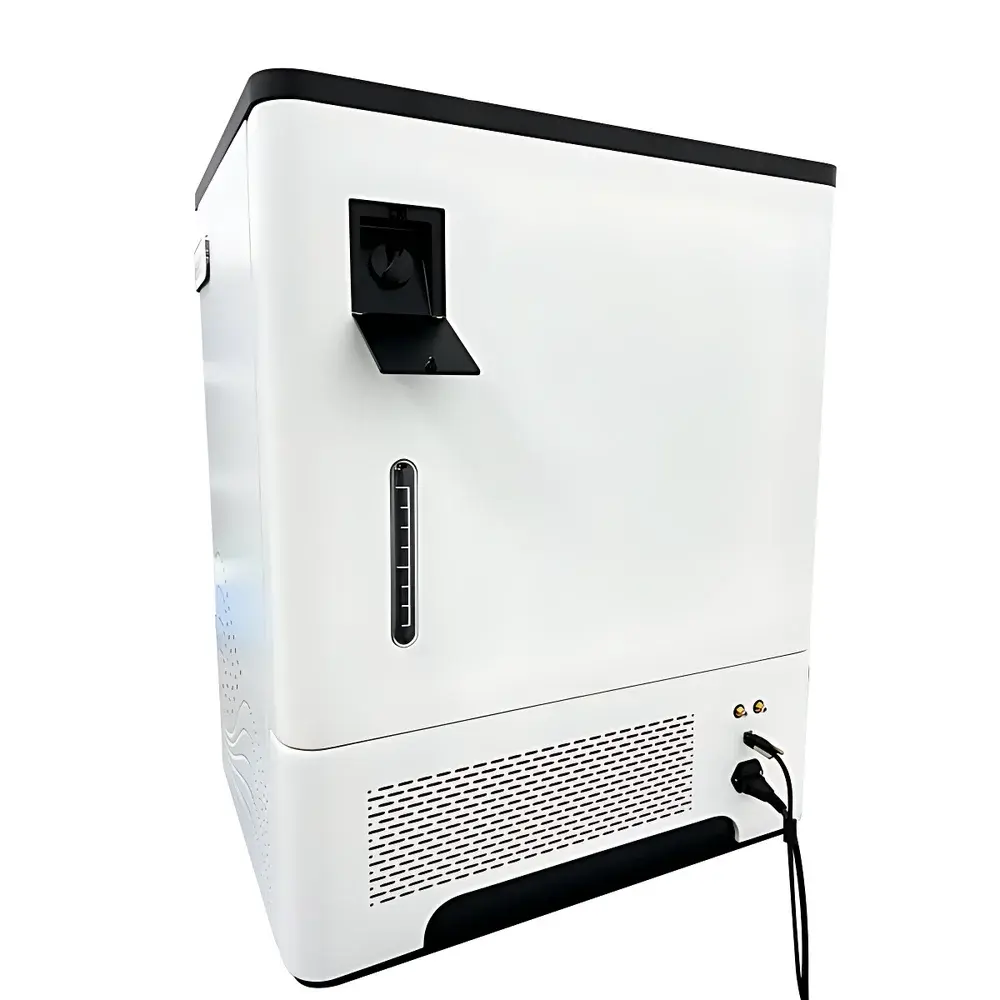
The LANScientific FRINGE EV is a benchtop X-ray diffractometer engineered for precise, high-throughput phase characterization of calcined aluminum oxide (Al₂O₃) and related transition aluminas. Operating on the Bragg–Brentano θ–2θ reflection geometry, it employs a kW-class sealed-tube X-ray source (Cu Kα, optional Co/Fe anodes) and a high-efficiency Digital Pulse Processing Counter (DPPC) detector to deliver high-resolution diffraction data without requiring secondary monochromators. The system is optimized for quantitative assessment of phase composition—particularly the relative proportions of metastable transition phases (γ, δ, θ, κ) versus thermodynamically stable α-Al₂O₃—enabling accurate calculation of thermal transformation ratios critical in catalyst support synthesis, ceramic sintering control, and refractory material qualification. Its compact footprint, air-spring assisted large-window hinged door, and vibration-damped optical bench allow stable operation on standard laboratory desks or mobile analytical platforms—including ISO-certified mobile labs and field-deployable research vehicles.
Key Features
- kW-class X-ray source delivering stable, high-intensity Cu Kα radiation (1.5406 Å) with integrated cooling and power regulation for reproducible intensity output across extended acquisition sequences.
- DPPC detector with ≥1 × 10⁷ counts per second (cps) throughput and intrinsic energy discrimination capability—enabling simultaneous collection of diffraction patterns and supplementary energy-dispersive spectral (EDS) fingerprints for elemental verification.
- Fully integrated, fixed-geometry Soller slits eliminating mechanical adjustment points—enhancing angular reproducibility (<0.002° 2θ drift over 8-hour operation) and long-term alignment stability.
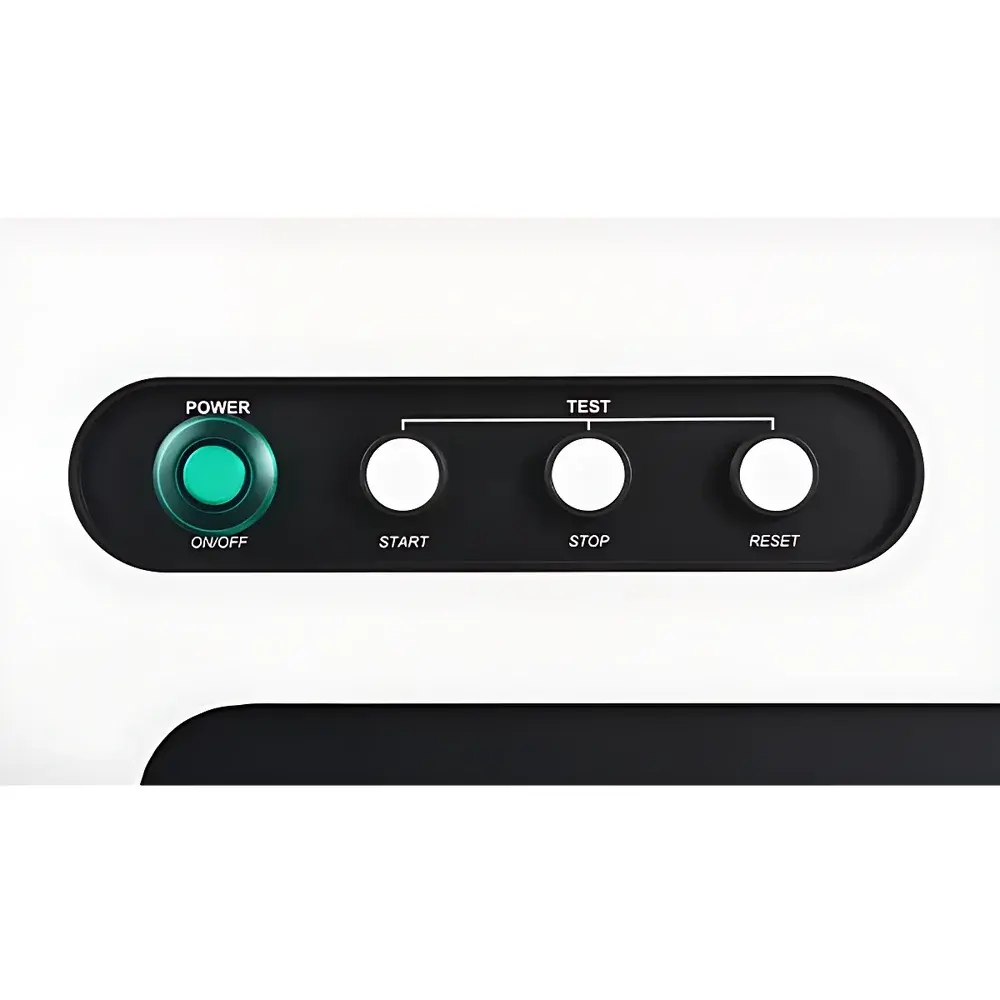
- Interlocked, fully enclosed sample chamber with real-time door status monitoring, automatic X-ray beam cutoff upon door opening, and visual/audible safety alerts compliant with IEC 61010-1 and GB/T 18804-2021 standards.
- Modular goniometer design supporting interchangeable sample stages: flat-plate holders for powders and pressed pellets; low-background silicon zero-diffraction substrates; and optional thin-film reflectivity stage (θ–θ configuration).
Sample Compatibility & Compliance
The FRINGE EV accommodates diverse sample forms—including loose powders, die-pressed pellets (Ø13 mm, Ø25 mm), bulk ceramics, sintered compacts, and thin-film coatings (≥5 nm thickness). Its optimized beam path minimizes air scatter and background noise, ensuring high signal-to-noise ratio even for low-crystallinity or nanostructured alumina samples. The instrument supports quantitative phase analysis (QPA) in accordance with ASTM E1423-22 and ISO 21397:2021 for crystalline phase content determination. All software workflows—including Rietveld refinement, internal standard calibration, and transformation ratio computation—are traceable and audit-ready for GLP/GMP environments. CrystalX™ includes full 21 CFR Part 11 compliance modules: electronic signatures, user role-based access control, and immutable audit trails for all data processing steps.
Software & Data Management
CrystalX™ software provides an integrated analytical environment for raw data acquisition, phase identification (via ICDD PDF-4+ database), quantitative Rietveld refinement, crystallinity indexing (based on Warren–Averbach deconvolution), and alumina polymorph-specific transformation ratio reporting. The “Auto-Phase” workflow executes full pattern matching, peak fitting, and mass-balance-constrained QPA within <90 seconds post-acquisition. Batch processing supports up to 96 samples with customizable report templates (PDF/CSV/XLSX), metadata tagging (sample ID, operator, date/time, instrument parameters), and export to LIMS via ASTM E1482-compliant XML schema. All processed results retain full raw-data linkage and are stored with SHA-256 checksum integrity verification.
Applications
- Quantification of α-Al₂O₃ formation kinetics during thermal treatment of boehmite or gibbsite precursors.
- Quality control of catalyst supports—monitoring γ-to-α transition onset temperature and phase heterogeneity across production batches.
- Crystallinity assessment of flame-sprayed or plasma-synthesized alumina coatings in aerospace and biomedical implant applications.
- Structural fingerprinting of doped aluminas (e.g., Cr³⁺-, Mg²⁺-, Si⁴⁺-modified) for lattice parameter deviation analysis and solid-solution homogeneity evaluation.
- Research-grade phase mapping in multi-step calcination studies under controlled atmospheres (N₂, air, H₂/N₂), interfaced with external thermal controllers.
FAQ
What alumina polymorphs can the FRINGE EV distinguish and quantify?
The system reliably identifies and quantifies α-, γ-, δ-, θ-, κ-, and χ-Al₂O₃ using reference intensity ratio (RIR) methods and full-pattern Rietveld refinement against ICDD standards (e.g., 00-010-0425, 00-010-0426, 01-073-1124).
Does the instrument require liquid nitrogen cooling for the detector?
No—the DPPC detector operates at ambient temperature with Peltier stabilization, eliminating cryogen dependency and associated maintenance overhead.
Can CrystalX™ generate reports compliant with ISO/IEC 17025 accreditation requirements?
Yes—software modules include uncertainty propagation modeling per GUM (JCGM 100:2008), calibration certificate import, and instrument performance verification logs required for accredited testing laboratories.
Is the FRINGE EV suitable for in-line process monitoring?
While designed primarily for lab-based analysis, its robust goniometer, shock-resistant optics, and modular power supply enable integration into semi-mobile or near-process environments when mounted on ISO 14644-1 Class 7 cleanroom carts or vehicle-mounted isolation platforms.
How is transformation ratio calculated for calcined alumina samples?
CrystalX™ computes transformation ratio as [I(α-Al₂O₃) / (I(α-Al₂O₃) + ΣI(transition phases))] × 100%, where intensities are derived from Rietveld-weighted integrated peak areas normalized to internal standard signals (e.g., corundum SRM 676a) or matrix-matched calibration curves.





