
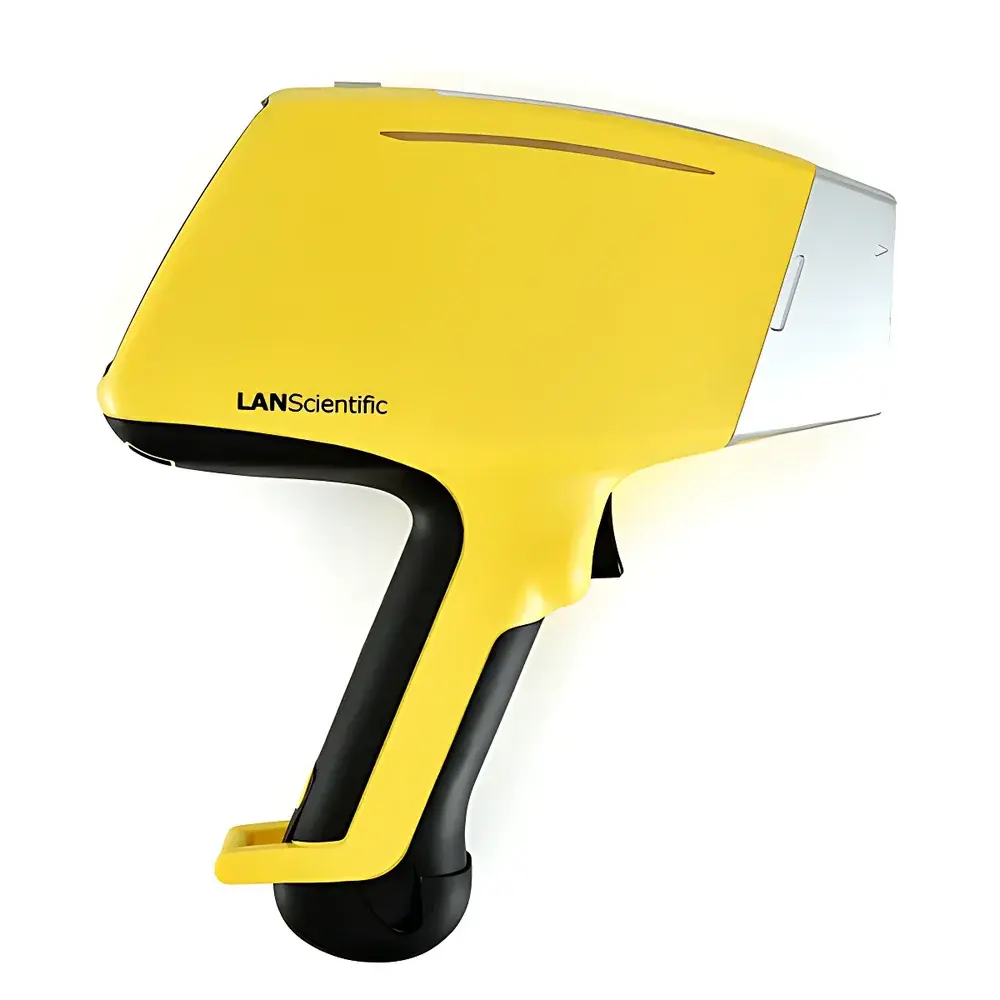
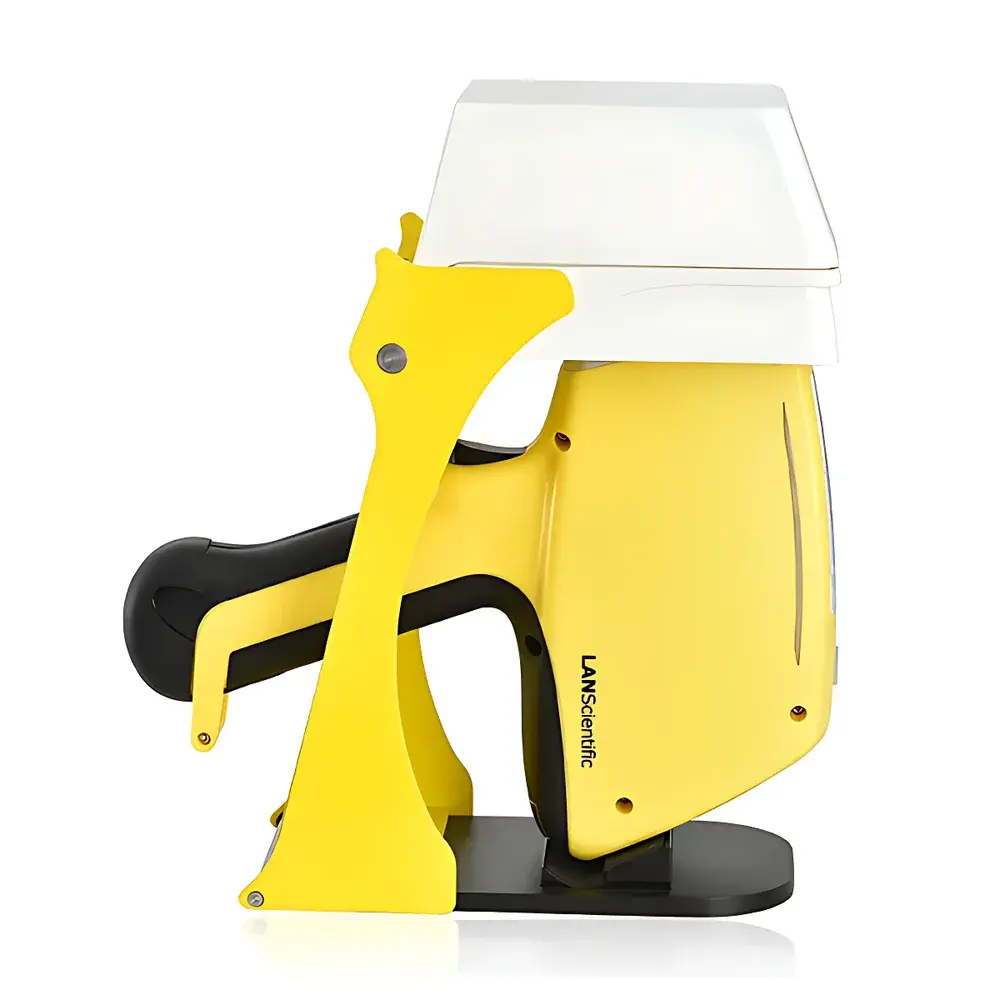
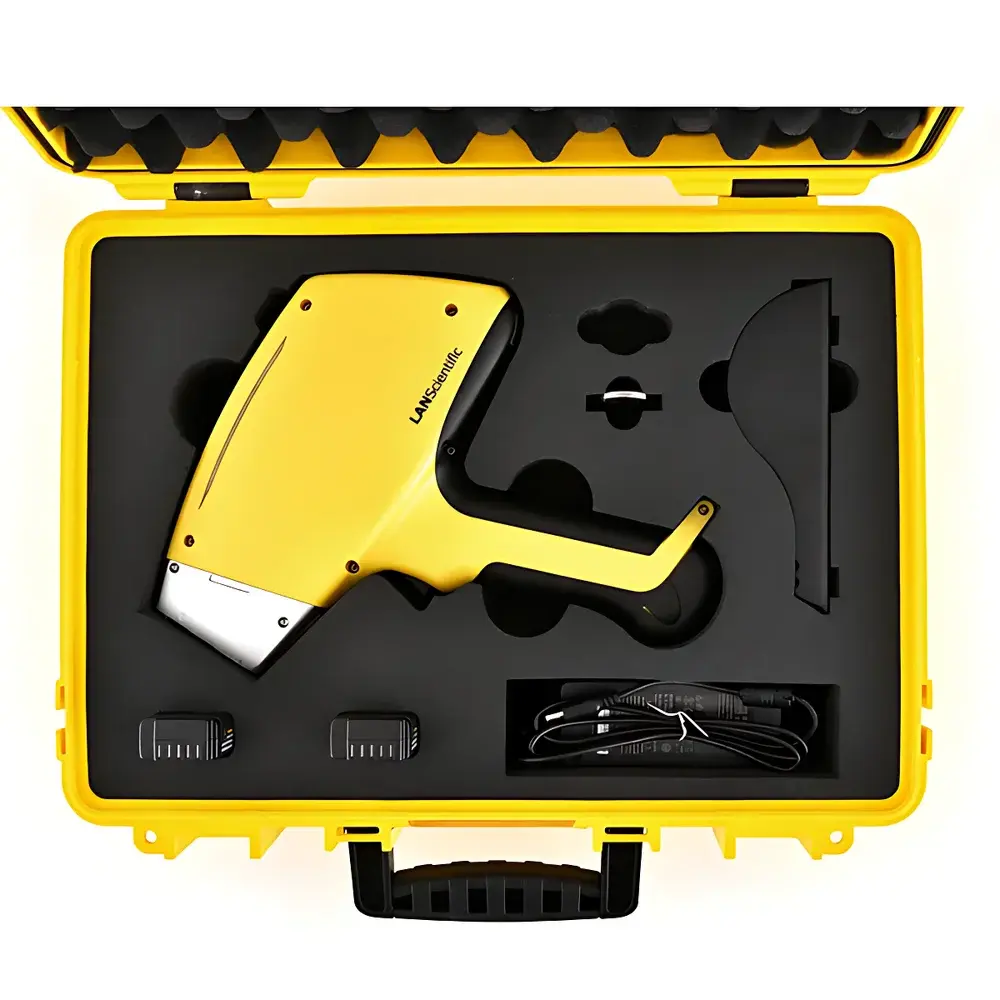
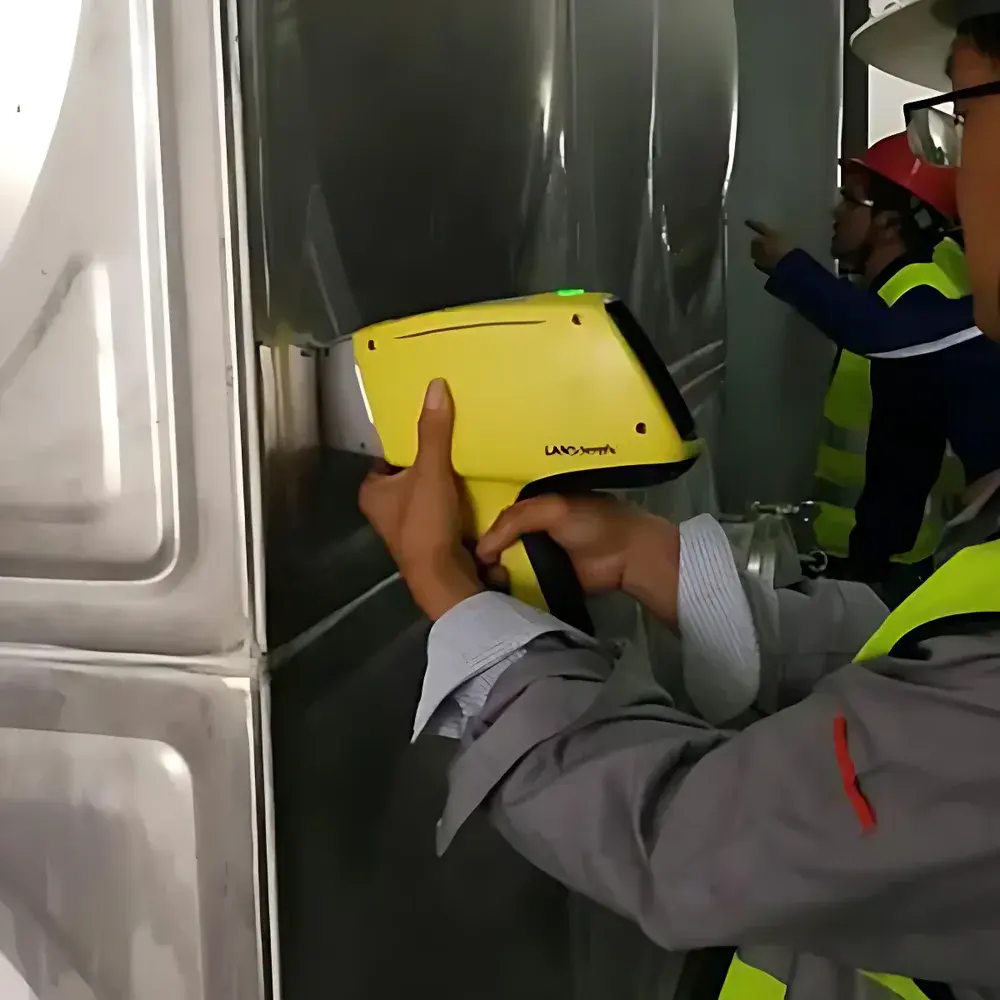
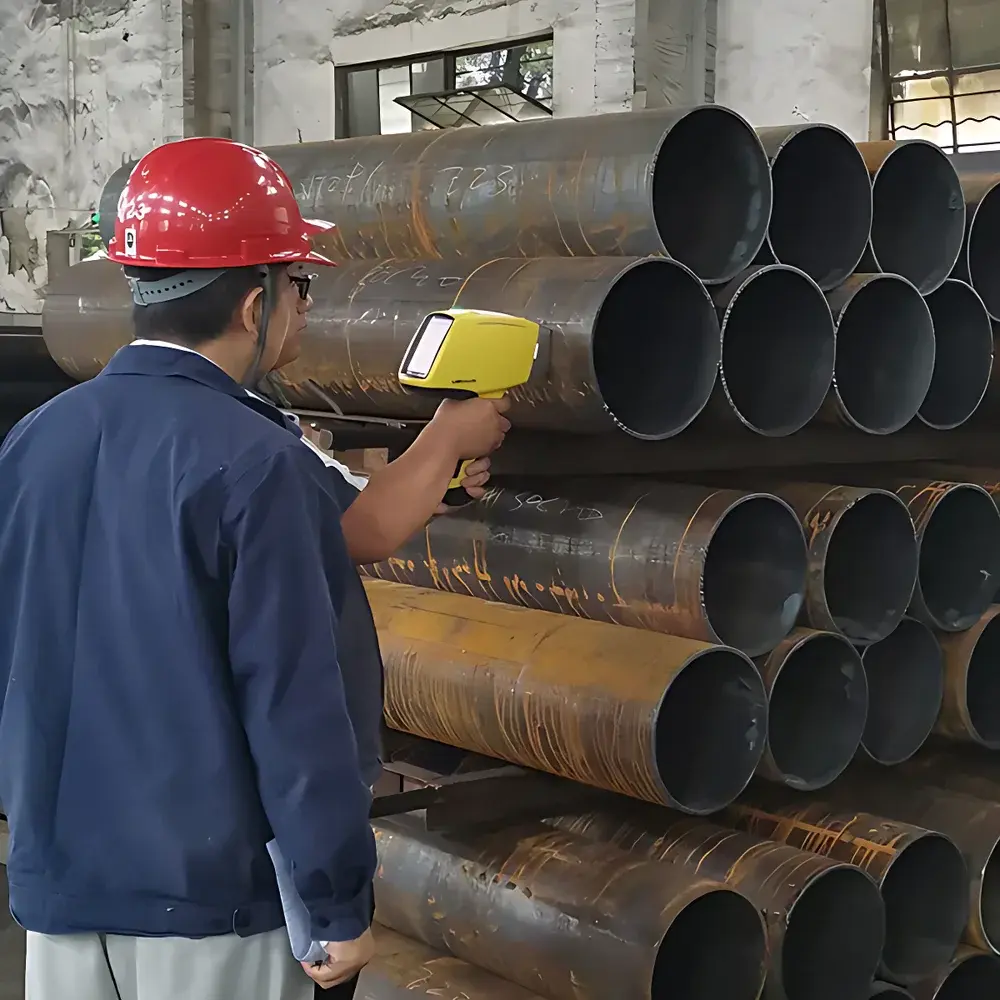
Brookfield LANScientific TrueX800 Handheld Energy Dispersive X-Ray Fluorescence (EDXRF) Spectrometer
| Brand | LANScientific |
|---|---|
| Origin | Jiangsu, China |
| Manufacturer Type | Direct Manufacturer |
| Regional Classification | Domestic (China) |
| Model | TrueX800 |
| Application | Handheld / Portable |
| Instrument Type | Standard EDXRF |
| Industry Use | General-Purpose |
| Elemental Range | Mg to U |
| Quantification Range | 1 ppm – 99.99% |
| Energy Resolution | <140 eV |
| Repeatability | ±0.1% RSD |
Overview
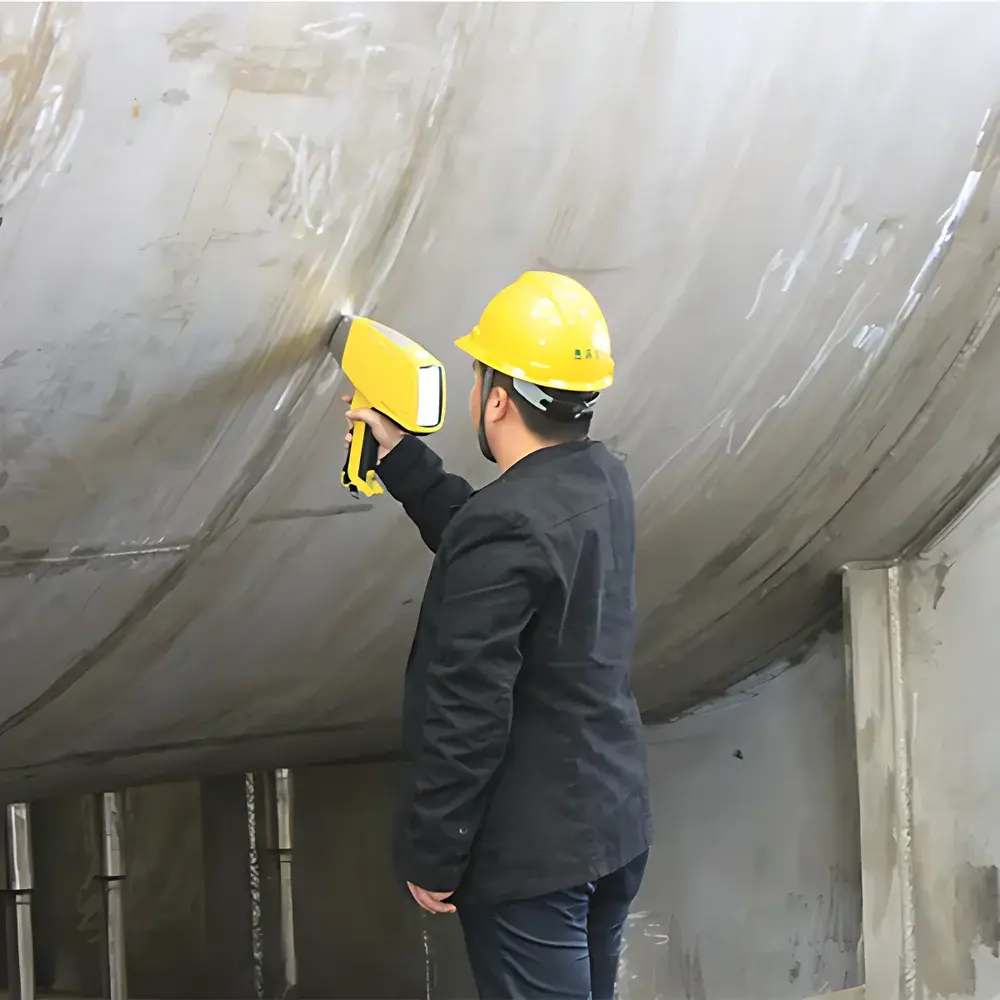
The Brookfield LANScientific TrueX800 is a handheld energy dispersive X-ray fluorescence (EDXRF) spectrometer engineered for rapid, non-destructive elemental analysis of metallic alloys and engineering materials in field and industrial environments. Based on the fundamental principle of X-ray fluorescence—where primary X-rays excite atoms in a sample, causing emission of characteristic secondary (fluorescent) X-rays—the TrueX800 detects and quantifies elemental composition by measuring the energy and intensity of these emitted photons. Its compact, ruggedized design integrates a high-performance silicon drift detector (SDD), micro-focus X-ray tube, and real-time spectral processing firmware to deliver laboratory-grade accuracy outside the lab. Designed for compliance with ISO 17025-aligned workflows and routinely deployed in QA/QC, positive material identification (PMI), scrap sorting, and incoming inspection protocols, the instrument operates reliably across ambient temperatures from −10 °C to 50 °C, under high-dust or low-light conditions, without requiring sample preparation or vacuum purging.
Key Features
- Non-destructive testing (NDT) capability: No surface grinding, coating removal, or sampling required—analysis occurs directly on intact components, welds, pipes, or scrap piles.
- Ultra-low detection limits: Achieved via proprietary Super-FP fundamental parameter algorithm and net-intensity fitting, enabling reliable quantification down to 1 ppm for key elements (e.g., Cr, Ni, Mo, Cu) without mode switching or calibration reconfiguration.
- High spectral resolution: <140 eV at Mn Kα ensures effective separation of overlapping peaks (e.g., V Kβ / Cr Kα, S Kα / Pb Mα), critical for accurate analysis of complex multi-element alloys.
- Robust repeatability: ±0.1% relative standard deviation (RSD) demonstrated across repeated measurements on homogeneous reference standards per ASTM E1621 and ISO 21043-2 guidelines.
- Integrated grade identification engine: Preloaded with 380 globally recognized alloy specifications—including ASTM, EN, JIS, GB, and UNS designations—with bidirectional cross-referencing to resolve regional nomenclature discrepancies (e.g., 304 vs. SUS304 vs. X5CrNi18-10).
- Expandable material library: Supports user-defined alloy templates and custom grade definitions; accommodates >600 active alloy IDs and >10,000 underlying material records within onboard database architecture.
Sample Compatibility & Compliance
The TrueX800 analyzes solid metallic samples—including castings, forgings, sheet metal, weld deposits, fasteners, piping, and shredded scrap—with minimal surface requirements (flatness <0.5 mm, area ≥5 mm²). It complies with IEC 62471 (photobiological safety), meets CE marking requirements for electromagnetic compatibility (EMC) and low-voltage directives, and supports audit-ready documentation per FDA 21 CFR Part 11 when paired with optional secure software licensing. While not certified for explosive atmospheres (ATEX/IECEx), its IP54-rated enclosure provides protection against dust ingress and water splashing—suitable for refinery perimeters, offshore platforms, and recycling yards. All measurement data adhere to ISO/IEC 17025 traceability principles when calibrated using NIST-traceable reference materials (e.g., CRM 124a, CRM 681).
Software & Data Management
The instrument runs on embedded Linux-based firmware with LANScientific’s TrueX Manager v4.x application suite. Data acquisition, spectral review, report generation, and remote diagnostics are managed via intuitive touchscreen interface or optional Windows-based desktop software. Security features include role-based access control, password-protected method editing, and encrypted local storage. Reports export in PDF, CSV, or XML formats—with configurable headers, footers, corporate logos, and digital signatures. Audit trails log operator ID, timestamp, measurement parameters, and spectral metadata—supporting GLP/GMP documentation integrity and internal quality audits. Firmware updates and spectral library patches are delivered via USB or Wi-Fi, ensuring long-term regulatory alignment.
Applications
- Positive Material Identification (PMI): Verification of alloy composition prior to welding, pressure vessel fabrication, or pipeline installation per ASME B31.3 and API RP 578 requirements.
- Scrap Recycling & Sorting: Real-time discrimination of stainless steels (300/400 series), aluminum alloys (1xxx–7xxx), copper-based alloys, and superalloys (Inconel, Hastelloy) on conveyor belts or stockpiles.
- Incoming Inspection & Supplier QA: Rapid screening of raw material certificates against actual chemistry—reducing reliance on third-party lab submissions.
- Power Generation Asset Integrity: On-site verification of turbine blade coatings, boiler tube alloys, and transformer tank materials during outage maintenance.
- Aerospace Component Traceability: Spot-checking fastener chemistry, landing gear forgings, and airframe extrusions against AMS and MMPDS specifications.
FAQ
Does the TrueX800 require annual recalibration?
No—its factory-calibrated X-ray tube and SDD are thermally stabilized and drift-compensated in real time; however, daily verification using a check standard (e.g., Fe/Ni/Cu alloy) is recommended per ISO 21043-1.
Can it analyze coated or painted metals?
Yes—thin organic coatings (<50 µm) and oxide layers do not significantly attenuate characteristic X-rays from base metals; thicker or multi-layered coatings may require empirical correction or mechanical cleaning.
Is radiation safety training mandatory for operators?
Yes—users must complete site-specific radiation safety orientation per national regulations (e.g., NRC 10 CFR 35, UK IR(ME)R); the device emits <1 µSv/h at 5 cm and includes interlocked shutter and beam-on indicators.
What operating system does the onboard software use?
A hardened, read-only Linux kernel optimized for low-power ARM architecture; no general-purpose OS (e.g., Android or Windows) is installed.
How is data backed up and archived?
All spectra and reports are stored locally on encrypted eMMC memory and can be synchronized to network shares or cloud repositories via scheduled FTP/SFTP transfers configured in TrueX Manager.





