
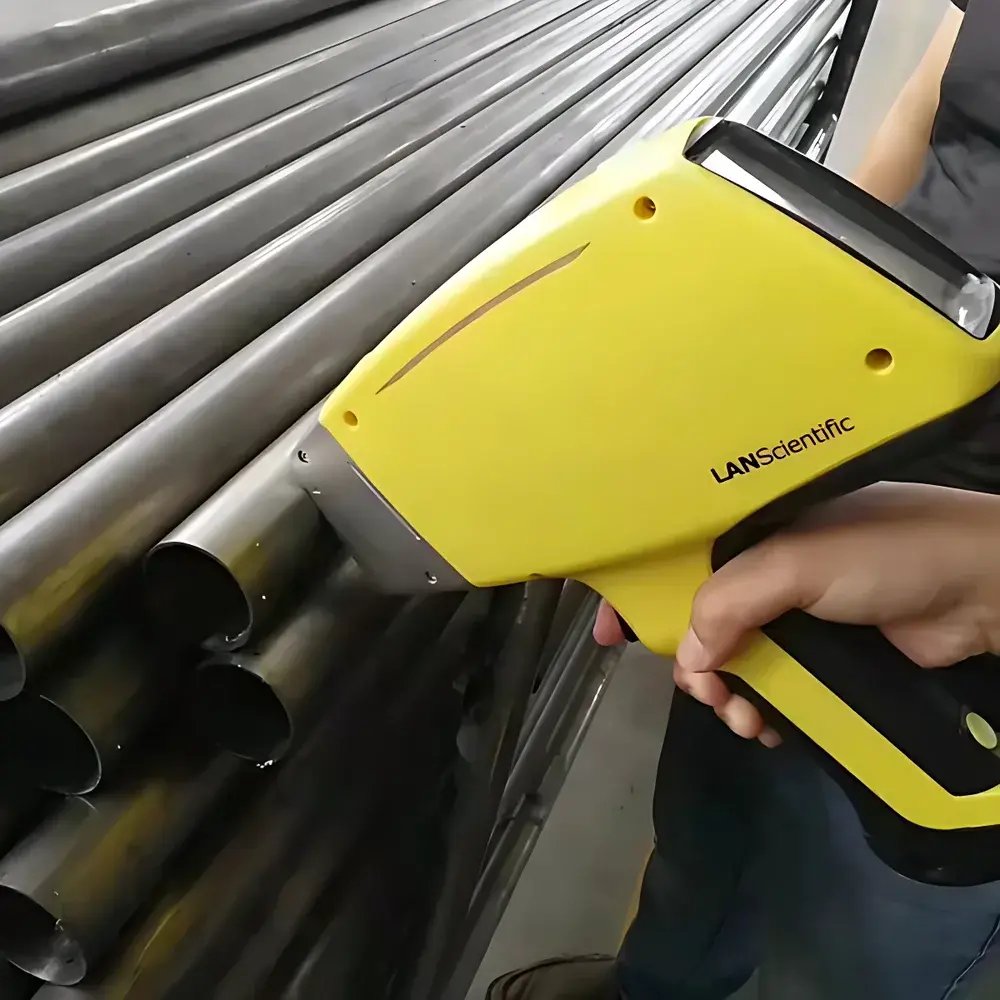
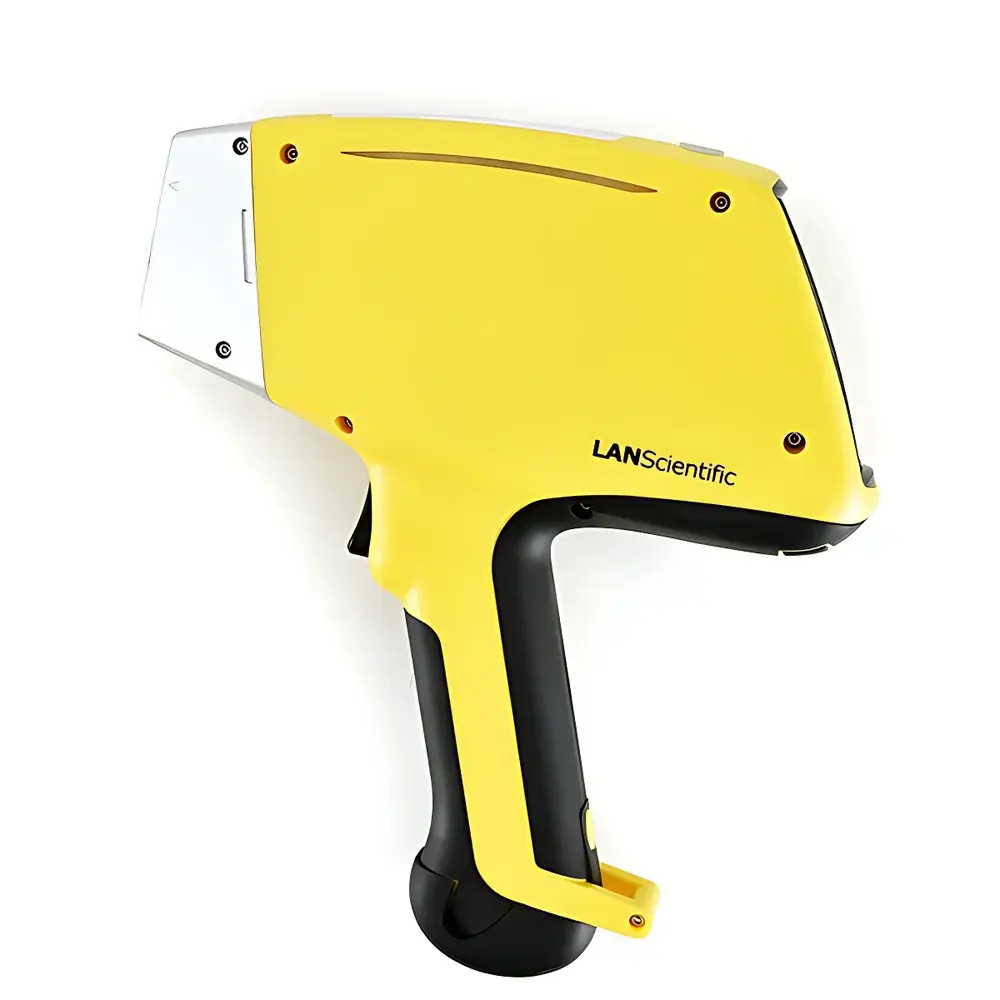
LANScientific TrueX 860 Handheld Energy Dispersive X-Ray Fluorescence (ED-XRF) Analyzer
| Brand | LANScientific |
|---|---|
| Origin | Jiangsu, China |
| Manufacturer Type | Original Equipment Manufacturer (OEM) |
| Regional Classification | Domestic (China) |
| Model | TrueX 860 |
| Application | Handheld / Portable |
| Instrument Type | General-Purpose ED-XRF Spectrometer |
| Industry-Specific Use | Non-Ferrous Metals |
| Elemental Range | Mg (12) to U (92) |
| Detection Limit | Sub-ppm to ppm level (matrix-dependent) |
| Compliance | CE, RoHS, FCC, ISO 17025-aligned operation |
| Weight | <1.5 kg |
| Battery Life | ≥8 hours typical usage |
| Safety | Automatic beam shutter, radiation interlock, real-time dose monitoring per IEC 62495 |
Overview
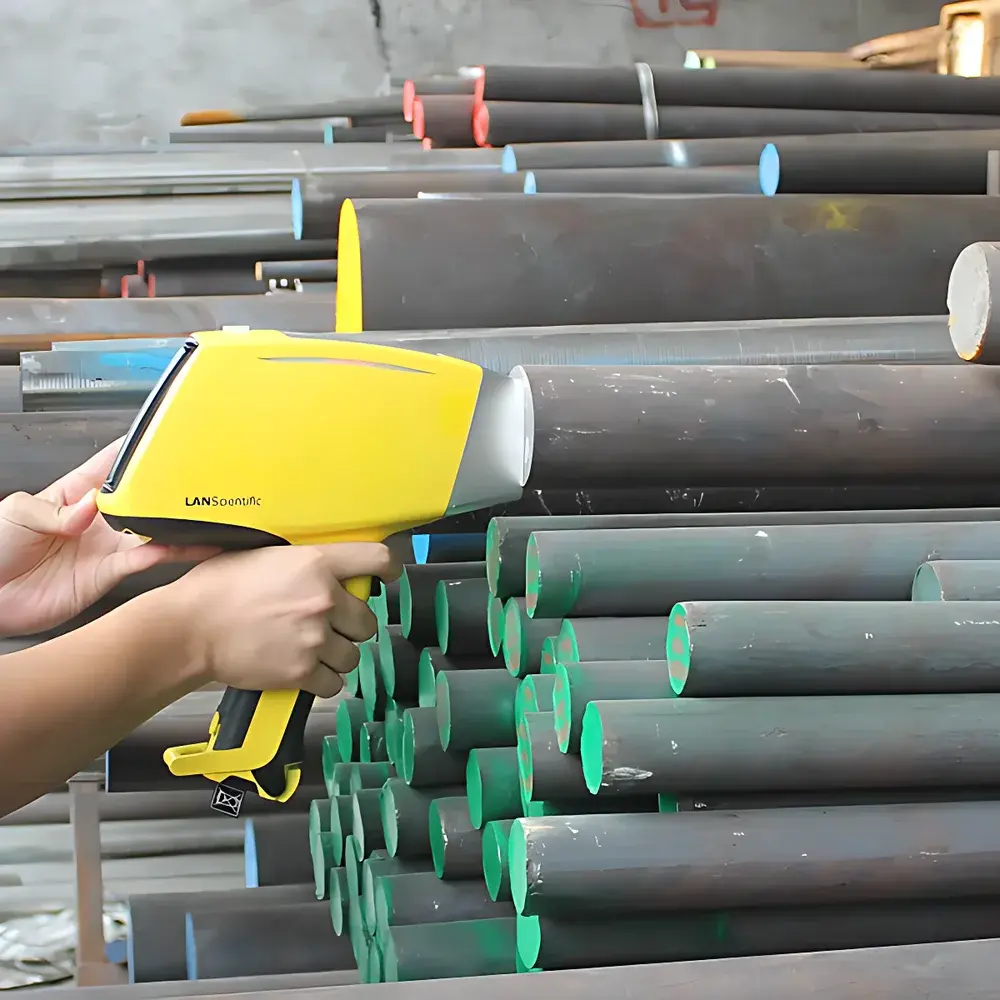
The LANScientific TrueX 860 is a handheld energy dispersive X-ray fluorescence (ED-XRF) spectrometer engineered for field-deployable elemental analysis of metallic alloys and industrial materials. Based on the fundamental principle of X-ray fluorescence—where primary X-rays excite atoms in a sample, causing emission of characteristic secondary X-rays—the TrueX 860 quantifies elemental composition by measuring the energy and intensity of these emitted photons using a high-resolution silicon drift detector (SDD). Its optimized X-ray tube (Ag anode, 40 kV/100 µA max), combined with advanced spectral deconvolution algorithms, enables rapid (<2 s), non-destructive, and matrix-compensated quantification across the Mg–U range. Designed for operational robustness in industrial environments, it meets IEC 62495 requirements for handheld X-ray equipment safety and incorporates real-time radiation dose logging compliant with ALARA principles.
Key Features
- Lightweight ergonomic design (<1.5 kg) with integrated lithium-ion battery supporting ≥8 hours of continuous operation under typical analytical conditions.
- Silicon drift detector (SDD) with 145 eV Mn-Kα resolution at 0°C, enabling precise peak separation for overlapping transitions (e.g., Cr–Fe–Mn, Ni–Cu–Zn).
- TrueX proprietary Super-FP quantitative algorithm—fully physics-based, requiring no pre-set calibration modes; automatically corrects for absorption, enhancement, and particle size effects without user intervention.
- Pre-loaded alloy grade library containing 380 standardized metallurgical specifications (ASTM, EN, JIS, GB, UNS, DIN), with bidirectional cross-referencing to resolve international grade equivalency conflicts.
- User-expandable database architecture supporting >600 alloy families and >10,000 material entries; editable via secure USB or Wi-Fi sync with desktop management software.
- IP54-rated enclosure with reinforced magnesium alloy housing; operational in ambient temperatures from –10 °C to 50 °C and relative humidity up to 90% non-condensing.
Sample Compatibility & Compliance
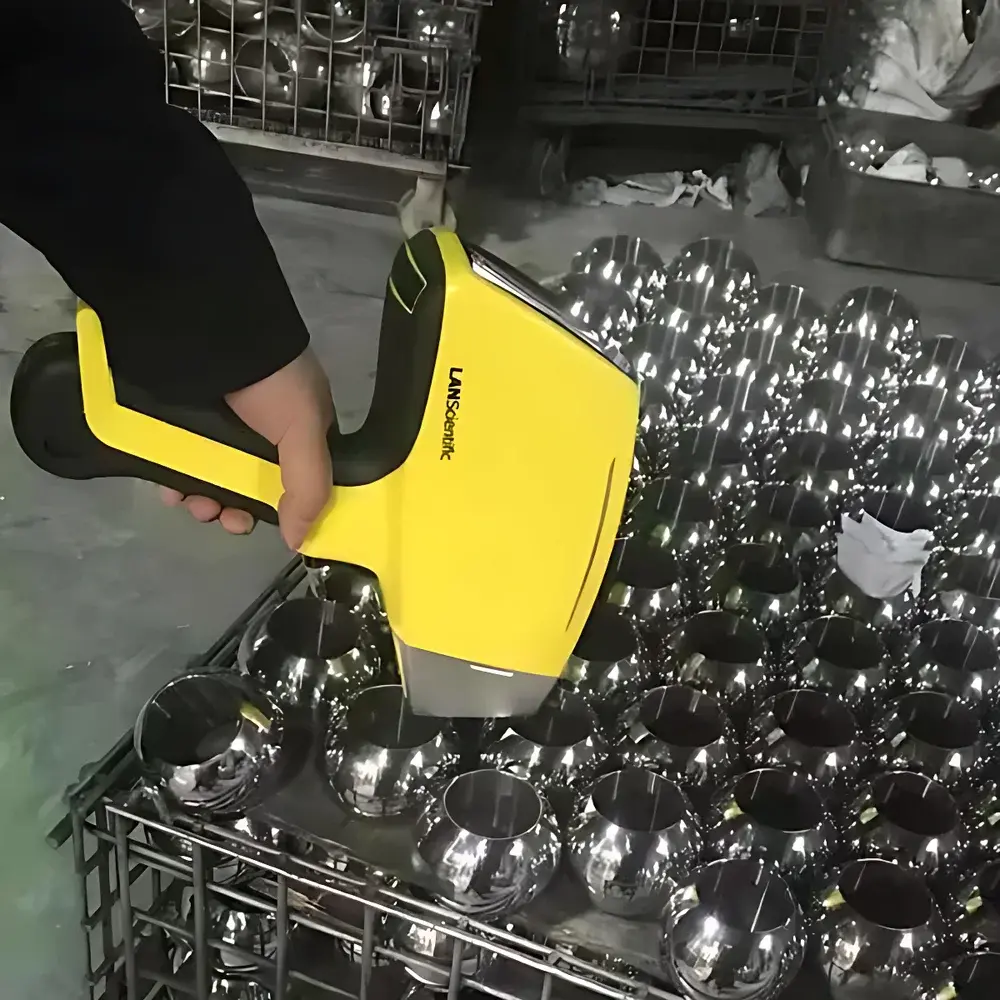
The TrueX 860 is validated for direct analysis of solid metallic samples—including castings, forgings, weldments, scrap fragments, and pipe/tube sections—without surface preparation beyond basic cleaning. It complies with ISO 21043 (XRF performance verification), ASTM E1621 (standard guide for ED-XRF elemental analysis), and supports GLP/GMP traceability through audit-ready data capture. All measurement sessions record operator ID, GPS coordinates (optional), timestamp, instrument configuration, and raw spectrum metadata—enabling full 21 CFR Part 11 compliance when paired with LANScientific’s certified software suite. Radiation safety adheres to IEC 61010-1 and local regulatory limits for occupational exposure (≤1 µSv/h at 5 cm).
Software & Data Management
TrueX Connect™ desktop software provides comprehensive instrument control, spectral review, report generation, and database administration. Users configure customizable report templates—including company logo, QA/QC flags, pass/fail thresholds, and multi-language output (English, Spanish, German, Chinese). Audit trails log all parameter changes, calibration updates, and user authentication events. Data export supports CSV, PDF, XML, and SPC-compliant formats compatible with LIMS integration. Remote firmware updates and diagnostic telemetry are supported over encrypted TLS connections.
Applications
- Positive Material Identification (PMI) in petrochemical plants, power generation facilities, and pharmaceutical manufacturing systems per ASME B31.3 and API RP 578 requirements.
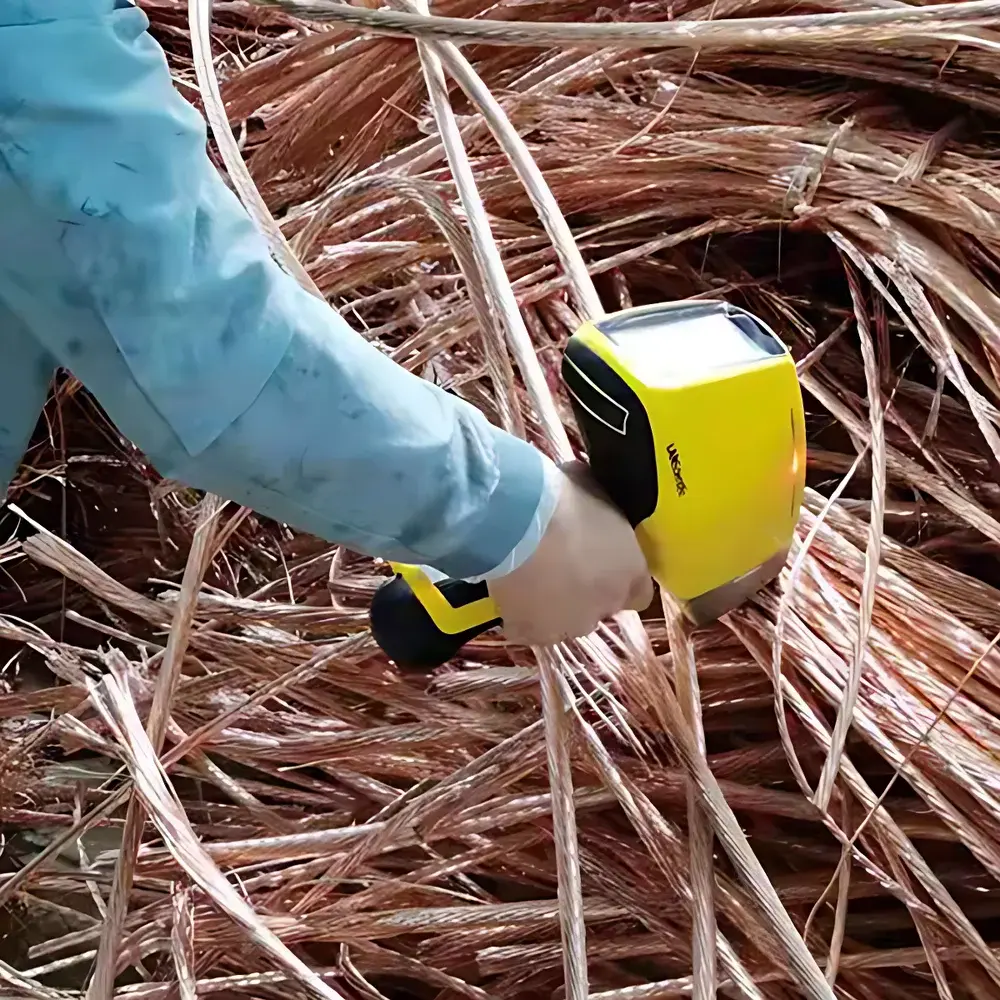
- Scrap metal sorting and recycling operations—rapid classification of Al, Cu, Ti, Ni, Co, and Mg-based alloys with real-time grade matching and contamination screening (e.g., Pb, Cd, Hg).
- Incoming material inspection for aerospace component suppliers verifying compliance with AMS, NADCAP, and EN 4179 standards.
- Field verification of heat-treated or coated components where lab-based techniques (e.g., OES, ICP-MS) are impractical due to size, geometry, or accessibility constraints.
- Quality assurance during fabrication—monitoring elemental segregation, weld dilution, and plating thickness via empirical calibration curves.
FAQ
What regulatory standards does the TrueX 860 meet for field use in North America and the EU?
It carries CE marking (EMC & LVD directives), FCC certification (USA), and RoHS 2011/65/EU compliance. Radiation safety follows IEC 62495 and national regulations (e.g., FDA 21 CFR 1020.40 in USA, IR(ME)R in UK).
Can the instrument analyze light elements such as magnesium and aluminum in air mode?
Yes—optimized helium purge path (optional accessory) or vacuum mode enables reliable quantification of Mg, Al, Si, P, and S; air-mode detection limits for Mg are ~100 ppm in low-absorption matrices.
Is method validation required before deployment in GxP environments?
Yes—users must perform system suitability testing per their internal SOPs, including precision (RSD ≤5% for major elements), accuracy (CRM recovery 95–105%), and limit of detection verification using certified reference materials (e.g., NIST SRM 2581, 2582).
How is data integrity ensured during wireless transfer?
All Wi-Fi communications use WPA2-Enterprise encryption; spectra and reports are digitally signed using SHA-256 hashing to prevent tampering and ensure non-repudiation.
Does the analyzer require annual recalibration by the manufacturer?
No—built-in X-ray tube and detector stability monitoring enables user-performed daily verification with check standards; formal recalibration is recommended every 12 months or after impact events, per ISO/IEC 17025 clause 6.5.2.
Related Products





