
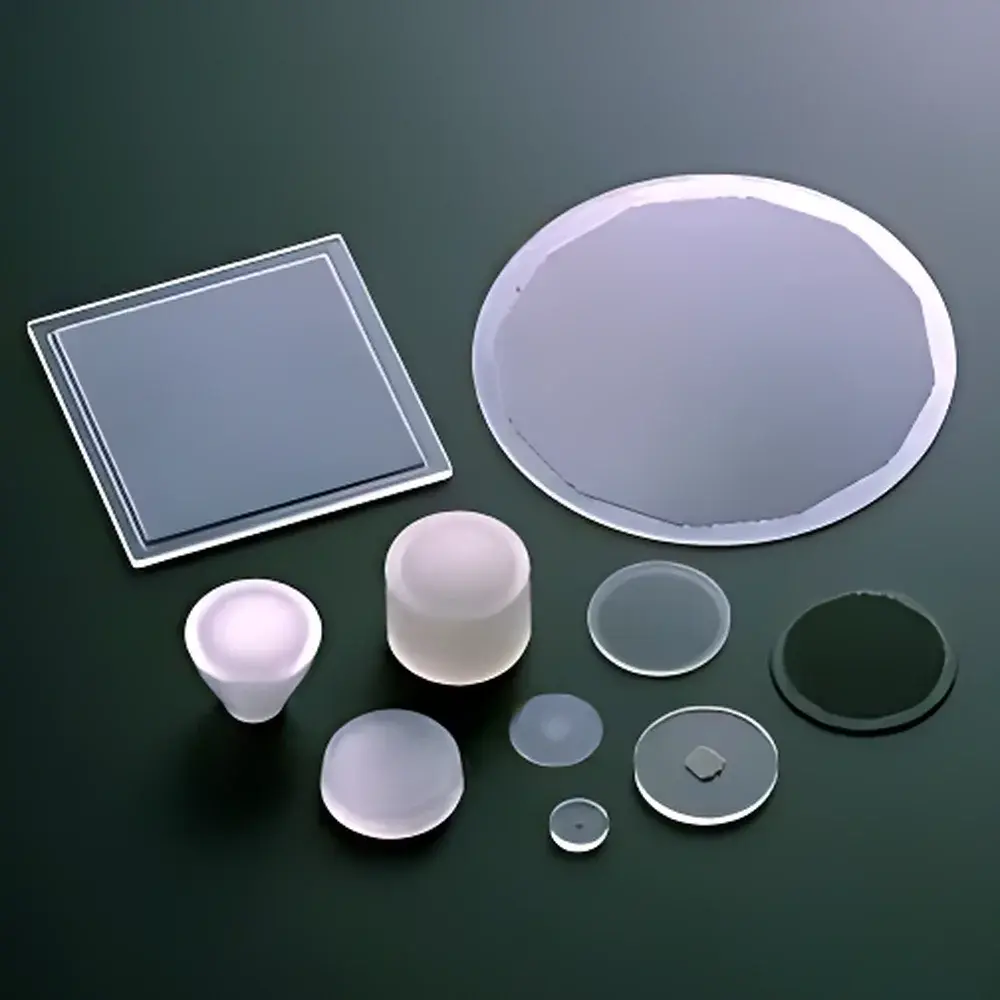
Hamamatsu J5 Series Precision Micro-Orifice Plates
| Brand | Hamamatsu |
|---|---|
| Origin | Japan |
| Manufacturer Type | Original Equipment Manufacturer (OEM) |
| Import Status | Imported |
| Model | J5 |
| Component Category | Optical Element |
| Dimensions & Specifications | Multiple configurations available — e.g., Ø5 mm plate with 0.8 mm orifice, 12 μm thickness, 1 mm overall thickness |
| Compliance | Designed for integration into optical alignment, beam conditioning, and particle-based metrology systems per ISO 10110-7 (optical element surface imperfection standards) and JIS B 7153 (precision aperture specifications) |
Overview
The Hamamatsu J5 Series Precision Micro-Orifice Plates are high-tolerance optical components engineered for critical beam definition, spatial filtering, and particle trajectory control in advanced photonic and microfluidic instrumentation. Fabricated from optically stable, low-thermal-expansion fused silica or precision-machined stainless steel substrates, each plate integrates one or more precisely dimensioned apertures—ranging from sub-millimeter to centimeter-scale—with micron-level control over orifice diameter, wall parallelism, and edge finish. These plates operate on the principle of physical aperture limiting: they spatially constrain incident light beams or particle streams to define collimation quality, establish reference geometries for calibration, or serve as fixed-dimension flow restrictors in microscale fluidic circuits. Unlike standard pinholes, J5 plates are designed for repeatable mechanical mounting, thermal stability under prolonged illumination, and compatibility with vacuum-compatible and cleanroom-grade optical benches.
Key Features
- Sub-micron dimensional repeatability: Orifice diameters held within ±0.5 µm tolerance across production lots, verified via traceable interferometric metrology.
- Controlled orifice geometry: Circular or rectangular apertures with sharp, burr-free edges and wall perpendicularity < 1 arcmin, minimizing diffraction artifacts and scattering.
- Multi-material substrate options: Fused silica (UV–NIR transmission), stainless steel (high rigidity, vacuum-compatible), and silicon (for IR applications); all substrates polished to λ/10 surface flatness (RMS).
- Standardized mounting interface: Compatible with industry-standard kinematic mounts (e.g., Thorlabs KM100, Newport UMB series) via concentric alignment features and M4 or M6 tapped holes.
- Thermal stability: Coefficient of thermal expansion matched to common optical breadboards (e.g., aluminum 6061-T6), ensuring positional fidelity over temperature ranges from –20 °C to +60 °C.
Sample Compatibility & Compliance
The J5 Series supports integration into laser safety interlocks, confocal microscopy pinhole assemblies, particle image velocimetry (PIV) calibration targets, and microfluidic cytometry flow cells. Each batch is supplied with a certificate of conformance referencing ISO 10110-7 (surface imperfections), ISO 10110-3 (surface form tolerances), and JIS B 7153 (aperture dimensional verification). Plates intended for regulated environments meet ASTM E2919 requirements for optical component documentation traceability. No biological or chemical coatings are applied; all surfaces are solvent-cleaned and certified residue-free per ISO 14644-1 Class 5 cleanroom protocols.
Software & Data Management
As passive optical elements, J5 micro-orifice plates require no embedded firmware or driver software. However, Hamamatsu provides downloadable dimensional CAD models (STEP, IGES) and optical simulation files (Zemax .ZAR, CODE V .SEQ) for system-level modeling. Metrology data—including individual plate serial numbers, measured orifice diameter, thickness, and surface flatness—is archived in Hamamatsu’s secure OEM database and accessible upon request for GLP/GMP audit compliance. Integration into automated optical alignment workflows is supported via standardized mechanical datums compatible with machine vision coordinate measurement systems (CMMs) and robotic handling platforms.
Applications
- Laser beam profiling: Used as hard-edged spatial filters to remove higher-order modes and improve M² measurement accuracy.
- Confocal and multiphoton microscopy: Serve as detection pinholes to enhance axial resolution and signal-to-noise ratio.
- Microfluidic particle sorting: Function as deterministic lateral displacement (DLD) array elements or inertial focusing constriction points.
- Calibration of optical encoders and position-sensitive detectors (PSDs): Provide geometrically defined reference targets for sub-pixel centroiding validation.
- Vacuum UV spectroscopy: Stainless-steel variants enable use in UHV chambers (<10⁻⁹ Torr) where outgassing must be minimized.
FAQ
Are J5 micro-orifice plates suitable for high-power laser applications?
Yes—fused silica variants are rated for continuous-wave irradiance up to 5 kW/cm² at 1064 nm when properly cooled and aligned; damage threshold data is provided per ISO 21254-2 test reports.
Can custom orifice patterns be manufactured?
Yes—Hamamatsu offers OEM pattern customization including linear arrays, hexagonal lattices, and asymmetric multi-aperture layouts, subject to minimum order quantities and NRE tooling fees.
What mounting hardware is recommended?
We recommend kinematic mounts with spring-loaded clamping (e.g., Thorlabs KCB1P/M) to avoid distortion-induced aperture misalignment; torque specification: 0.3–0.5 N·m.
Is surface coating available?
Anti-reflective (AR) coatings optimized for specific wavelength bands (e.g., 355 nm, 532 nm, 1064 nm) can be applied upon request; coating adhesion is qualified per MIL-C-48497A.
How is dimensional traceability maintained?
Each plate undergoes dual-stage verification: first via non-contact optical profilometry (Keyence VR-6000), then by calibrated scanning electron microscopy (SEM) cross-section analysis—both traceable to NMIJ (Japan) primary standards.





