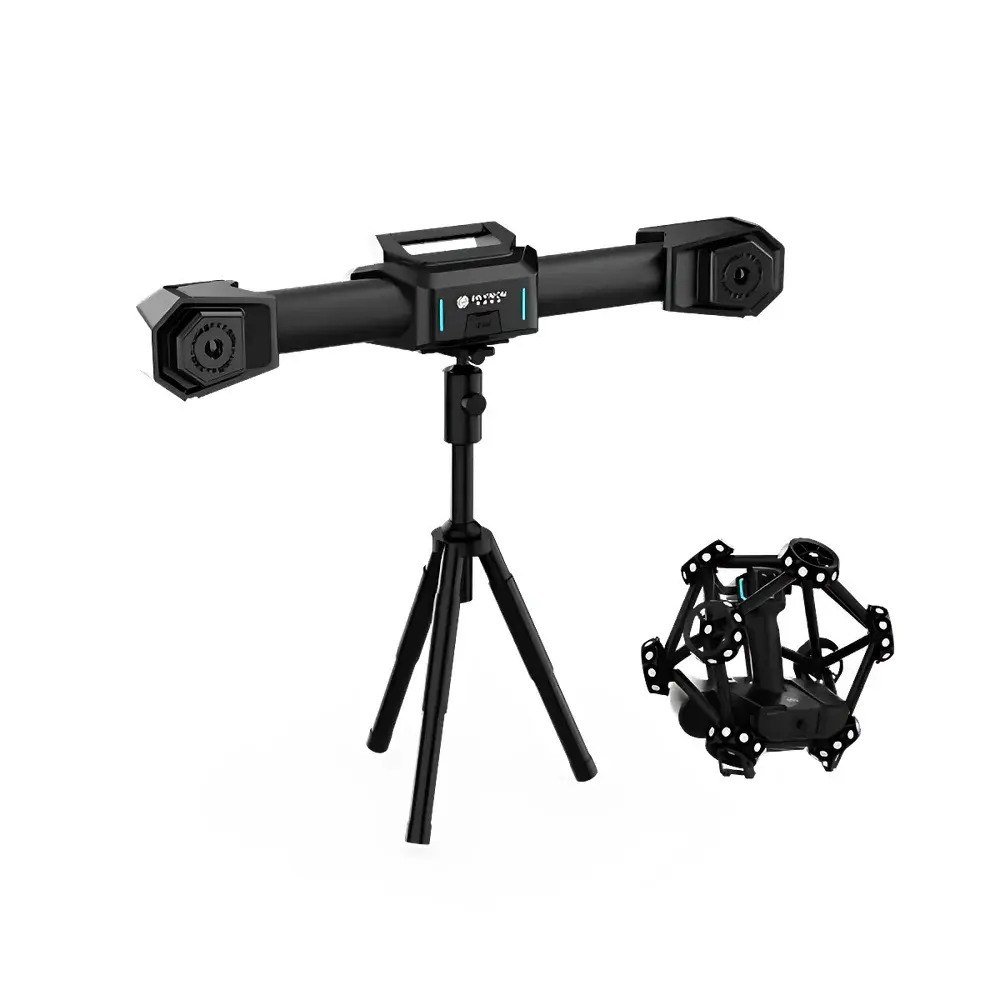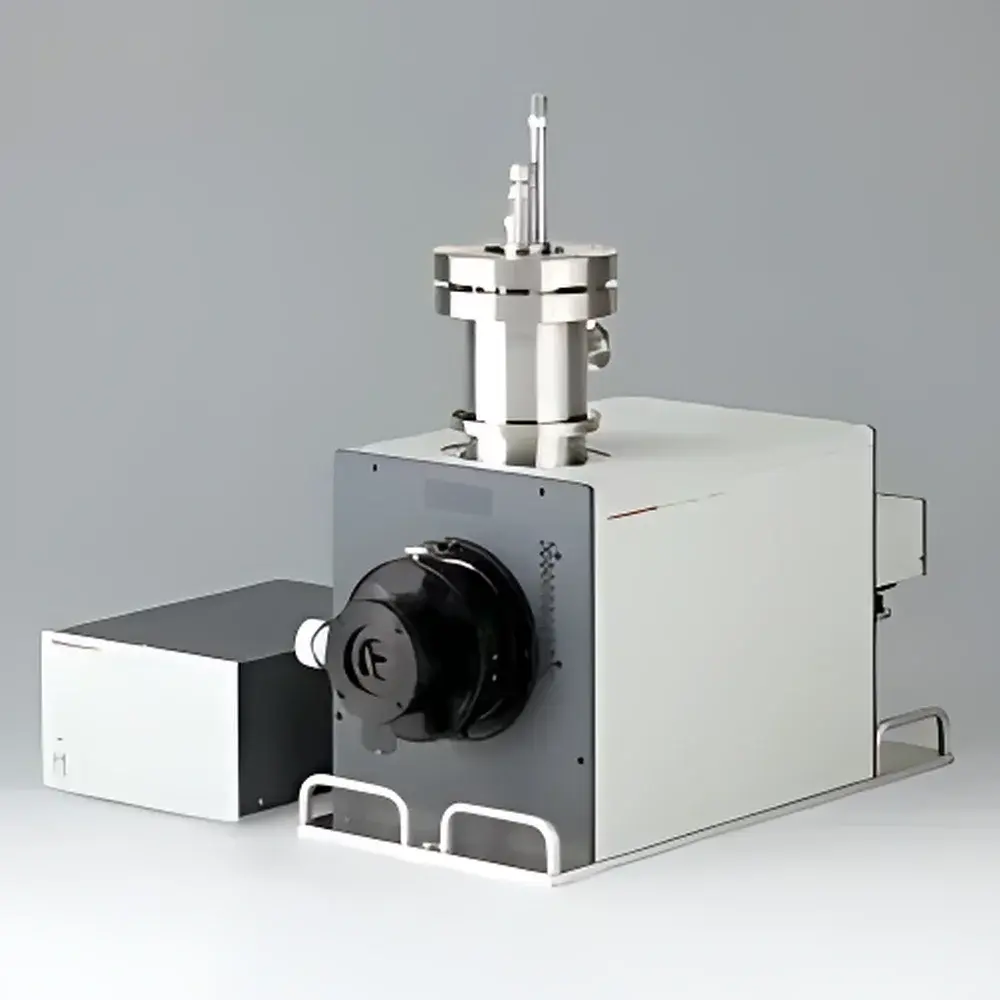
Hamamatsu C11293-02 Near-Infrared Streak Camera
| Brand | Hamamatsu |
|---|---|
| Origin | Japan |
| Manufacturer Type | Manufacturer |
| Origin Category | Imported |
| Model | C11293-02 |
| Price | Upon Request |
| Spectral Response Range | 1000 nm – 1650 nm |
| Time Resolution | <20 ps |
| Scan Repetition Frequency | 20 MHz |
| Scan Duration Range | 1 ns – 10 ms |
| Effective Photocathode Length | 4.5 mm |
| Photocathode Material | InP/InGaAs |
| Photocathode Operating Temperature | −100 °C |
| Cooling Method | Thermoelectric + Optional Cryogenic Support |
Overview
The Hamamatsu C11293-02 Near-Infrared Streak Camera is a high-performance ultrafast optical diagnostic instrument engineered for time-resolved photonic measurements in the short-wave infrared (SWIR) spectral band. It operates on the principle of streak tube imaging, where incident photons strike a photocathode, generating photoelectrons that are accelerated and deflected by time-varying electric fields across a phosphor screen—converting temporal profiles into spatial intensity distributions along a single axis. This enables direct, single-shot acquisition of optical transients with sub-20 picosecond temporal resolution. The system integrates a custom InP/InGaAs semiconductor photocathode optimized for quantum efficiency between 1000 nm and 1650 nm—a range critical for characterizing III–V compound semiconductors, low-bandgap photovoltaic absorbers, and telecom-band light sources. Its thermoelectrically cooled photocathode stabilized at −100 °C suppresses dark current to <0.1 pA/cm² and enhances signal-to-noise ratio (SNR) by over two orders of magnitude compared to uncooled configurations, ensuring fidelity in low-flux applications such as spontaneous emission from quantum dots or weak luminescence from carbon nanotubes.
Key Features
- Sub-20 ps intrinsic time resolution validated per ISO 11146-3 for ultrafast pulse characterization
- Integrated scan unit supporting continuous repetition rates up to 20 MHz, enabling high-throughput transient acquisition without external synchronization hardware
- 4.5 mm effective photocathode length optimized for spatial dispersion uniformity and linearity across the full 1000–1650 nm response window
- Active photocathode cooling to −100 °C via multi-stage thermoelectric modules, compatible with optional liquid-nitrogen-assisted stabilization for extended dark-current suppression
- Compact, vacuum-integrated architecture compliant with Class 100 cleanroom handling protocols and electromagnetic interference (EMI)-shielded enclosure design
- Built-in delay generator with 100 fs timing resolution for precise pump-probe synchronization in time-correlated single-photon counting (TCSPC) configurations
Sample Compatibility & Compliance
The C11293-02 accommodates free-space optical input with standard C-mount or FC/PC fiber coupling interfaces (adapters available separately). It supports non-destructive, non-contact measurement of optically thin and thick samples—including epitaxial wafers, photonic crystal slabs, plasmonic metasurfaces, and packaged laser diodes—without requiring electrical contact or vacuum chamber integration. All optical and electronic subsystems comply with IEC 61326-1 (EMC for laboratory equipment) and IEC 61010-1 (safety requirements for electrical equipment). Data acquisition workflows meet GLP audit-trail requirements when used with Hamamatsu’s HCImage Live software configured under 21 CFR Part 11 mode (electronic signatures, user access control, immutable metadata logging). Calibration certificates traceable to NIST standards are provided with each unit.
Software & Data Management
Control and analysis are performed using Hamamatsu’s HCImage Live v4.x platform, a Windows-based application supporting real-time streak image preview, region-of-interest (ROI) extraction, temporal profile fitting (Gaussian, exponential decay, convolution models), and batch processing of multi-frame acquisitions. Raw data are saved in HDF5 format with embedded metadata (exposure time, scan velocity, photocathode temperature, trigger latency), ensuring FAIR (Findable, Accessible, Interoperable, Reusable) data principles. API support via MATLAB and Python (PyHamamatsu SDK) enables integration into automated test benches and machine-learning pipelines for spectral-temporal feature extraction. Export options include CSV, TIFF, and MDF4 for compatibility with third-party tools such as MATLAB Signal Processing Toolbox, OriginLab, and DIAdem.
Applications
- Time-resolved photoluminescence (TRPL) spectroscopy of perovskite solar cells, quantum wells, and type-II heterostructures
- Ultrafast carrier dynamics mapping in graphene, transition metal dichalcogenides (TMDs), and topological insulators
- Characterization of mode-locked fiber lasers, supercontinuum sources, and quantum cascade laser pulses
- Optical time-domain reflectometry (OTDR) validation for next-generation silicon photonics interconnects
- Fundamental studies of exciton–polariton condensation in microcavities operating at telecom wavelengths
- Development and QA testing of SWIR avalanche photodiodes (APDs) and single-photon detectors
FAQ
What is the minimum detectable irradiance for the C11293-02 at 1550 nm?
At −100 °C photocathode temperature and 1 ns sweep duration, the system achieves a noise-equivalent irradiance of ≤120 fW/cm² (rms) within a 10 MHz bandwidth.
Can the camera be synchronized with external femtosecond laser systems?
Yes—the integrated delay generator accepts TTL or LVDS triggers with jitter <500 fs and supports programmable offset from −10 ns to +100 ns relative to the laser pulse.
Is vacuum maintenance required during operation?
No—the streak tube is permanently sealed under ultra-high vacuum (<1×10⁻⁷ Pa) at manufacture; no user-accessible vacuum ports or pumps are present.
Does the system support multi-shot averaging?
Yes—HCImage Live implements hardware-synchronized frame accumulation with live SNR estimation and automatic rejection of outlier frames based on RMS deviation thresholds.
Are calibration files provided for radiometric correction?
Each unit ships with wavelength-dependent quantum efficiency maps and temporal distortion correction coefficients, both referenced to NIST-traceable standards and updated annually upon recalibration.