
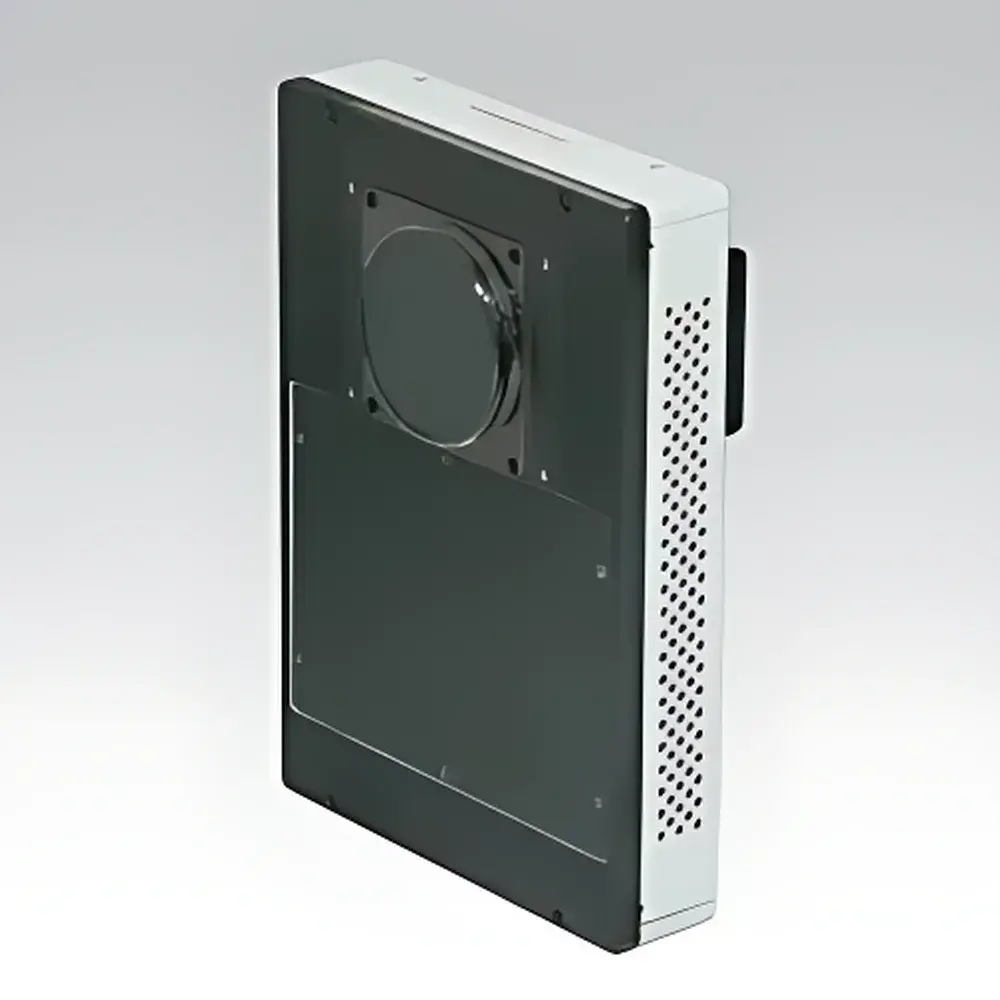
Hamamatsu C10000-701B Time-Delay Integration (TDI) CCD Camera
| Brand | Hamamatsu |
|---|---|
| Origin | Japan |
| Manufacturer Type | Original Equipment Manufacturer (OEM) |
| Product Category | Imported Optical Imaging Instrument |
| Model | C10000-701B |
| Pricing | Upon Request |
Overview
The Hamamatsu C10000-701B is a high-performance, back-illuminated Time-Delay Integration (TDI) CCD camera engineered for demanding optical imaging applications requiring simultaneous high sensitivity, high speed, and exceptional signal-to-noise ratio under low-light conditions. Unlike conventional line-scan or area-scan CCDs, the C10000-701B implements TDI architecture—a synchronized charge-transfer technique in which photogenerated electrons are shifted row-by-row across 128 parallel TDI stages at precisely matched velocity to the motion of the target object. This enables coherent integration over multiple lines, effectively amplifying weak signals without sacrificing spatial resolution or temporal fidelity. The camera operates across a broad spectral range—from ultraviolet (200 nm) to near-infrared (1000 nm)—leveraging its deep-depletion, back-illuminated sensor design for quantum efficiency exceeding 90% at 600 nm. Its 4096 × 128 pixel format (12 µm pitch), 16-tap parallel readout, and real-time on-chip black-point correction make it suitable for integration into precision industrial inspection, semiconductor metrology, flat-panel display (FPD) testing, and quantitative fluorescence imaging systems where photon-starved scanning is routine.
Key Features
- Back-illuminated TDI CCD sensor with 4096 (H) × 128 (V) effective pixels and 12 µm × 12 µm pixel pitch
- Configurable TDI operation with bidirectional charge transfer and programmable line rates from 0.45 kHz to 100 kHz
- 16-output TDI mode (256 × 16) supporting 30 MHz/pixel clock and up to 100 kHz line scan rate; 8-output frame-readout mode (512 × 8) for rapid focusing and system alignment
- On-chip lateral overflow drain (LOD) providing 100× anti-blooming protection and maintaining dynamic range integrity during high-illumination transients
- Full-well capacity of 80,000 e⁻ (typ.), read noise of 100 e⁻ rms at 20 °C, and 800:1 dynamic range (12-bit A/D)
- Real-time internal black-point correction and background subtraction—implemented in hardware without host CPU overhead
- Programmable analog gain (1×–5×, 16 steps), 2×2 binning capability, and flexible exposure control via serial command or external TTL trigger
- Camera Link interface (Medium Configuration, 2× taps) with Mini-Camera Link (SDR) connectors and DC +12 V power input
Sample Compatibility & Compliance
The C10000-701B is optimized for continuous-motion imaging of extended or high-aspect-ratio specimens—including silicon wafers, OLED substrates, PCB assemblies, biological tissue sections, and microfluidic channels. Its M72 × 0.75 lens mount ensures compatibility with telecentric, UV-grade, and NIR-corrected optics used in automated optical inspection (AOI) and wafer-level metrology platforms. The camera conforms to industrial environmental specifications: operational temperature range 0–40 °C, storage range −10–+50 °C, and non-condensing humidity ≤70% RH. While not certified as medical device hardware, its stable analog signal chain, deterministic timing behavior, and reproducible gain/offset calibration support GLP-aligned workflows in R&D laboratories. Data acquisition integrity is maintained through deterministic trigger latency (<1 µs jitter) and precise synchronization of TDI stage clocks—critical for ISO/IEC 17025-compliant measurement systems.
Software & Data Management
Hamamatsu provides the HCImage Live software suite for configuration, real-time visualization, and basic image processing—including TDI parameter tuning, gain/offset mapping, and ROI-based histogram analysis. For OEM integration, the camera supports standard Camera Link protocol compliance and offers register-level access via ASCII serial commands over RS-232 or USB-to-serial bridge. All firmware updates, calibration files (e.g., pixel defect maps), and timing diagrams are distributed through Hamamatsu’s secure developer portal. While the C10000-701B does not natively implement FDA 21 CFR Part 11 audit trails or electronic signatures, its deterministic register state and timestamped metadata export (via user-defined headers) facilitate traceability when embedded within validated instrument control frameworks compliant with GMP or ISO 13485 quality management systems.
Applications
- High-throughput semiconductor wafer inspection and defect classification using UV-enhanced TDI scanning
- Flat-panel display (FPD) manufacturing: RGB subpixel uniformity assessment, mura detection, and touch sensor patterning verification
- Fluorescence-based cytology and histopathology slide scanning—particularly for low-expression biomarkers requiring long dwell times
- Electron beam lithography overlay metrology and mask inspection in vacuum-compatible configurations
- Automated visual inspection of printed electronics, battery electrode coatings, and fiber-reinforced composites
- Time-resolved emission spectroscopy (TRES) coupling with pulsed laser excitation sources
FAQ
What distinguishes TDI mode from standard frame-readout mode?
TDI mode synchronizes pixel charge transfer with object motion to accumulate signal across 128 rows, enhancing SNR in moving-scene applications; frame-readout mode freezes the entire 4096 × 128 array for static focus verification but disables TDI integration.
Can the C10000-701B operate in vacuum or controlled-atmosphere environments?
The camera is rated for ambient air operation only; vacuum use requires custom hermetic housing and thermal management—contact Hamamatsu Technical Support for OEM enclosure options.
Is external triggering supported for TDI line-rate synchronization?
Yes—external TTL triggers can initiate and gate TDI acquisition with sub-microsecond edge alignment; both start-of-scan and line-sync inputs are available via dedicated Camera Link strobe lines.
How is pixel defect compensation handled?
Factory-measured dead/hot pixel coordinates are stored in non-volatile memory and applied automatically during black-point correction; users may update maps via serial command if recalibration is performed.
Does the camera support GenICam-compliant configuration?
No—the C10000-701B uses Hamamatsu’s proprietary register map and serial command protocol; GenICam wrappers require third-party middleware development.




