Hamamatsu C11209-110 MPPC (Silicon Photomultiplier) Module
| Brand | Hamamatsu |
|---|---|
| Origin | Japan |
| Manufacturer Type | Original Equipment Manufacturer (OEM) |
| Import Status | Imported |
| Model | C11209-110 |
| Pricing | Upon Request |
| Sensor Type | Non-cooled MPPC (S12571-010C) |
| Active Area | 1 × 1 mm² |
| Pixel Count | 10,000 |
| Pixel Pitch | 10 µm |
| Operating Voltage | +5 V DC |
| Spectral Response Range | Enhanced short-wavelength sensitivity (peak ~420 nm) |
| Temperature Compensation | Integrated analog circuitry |
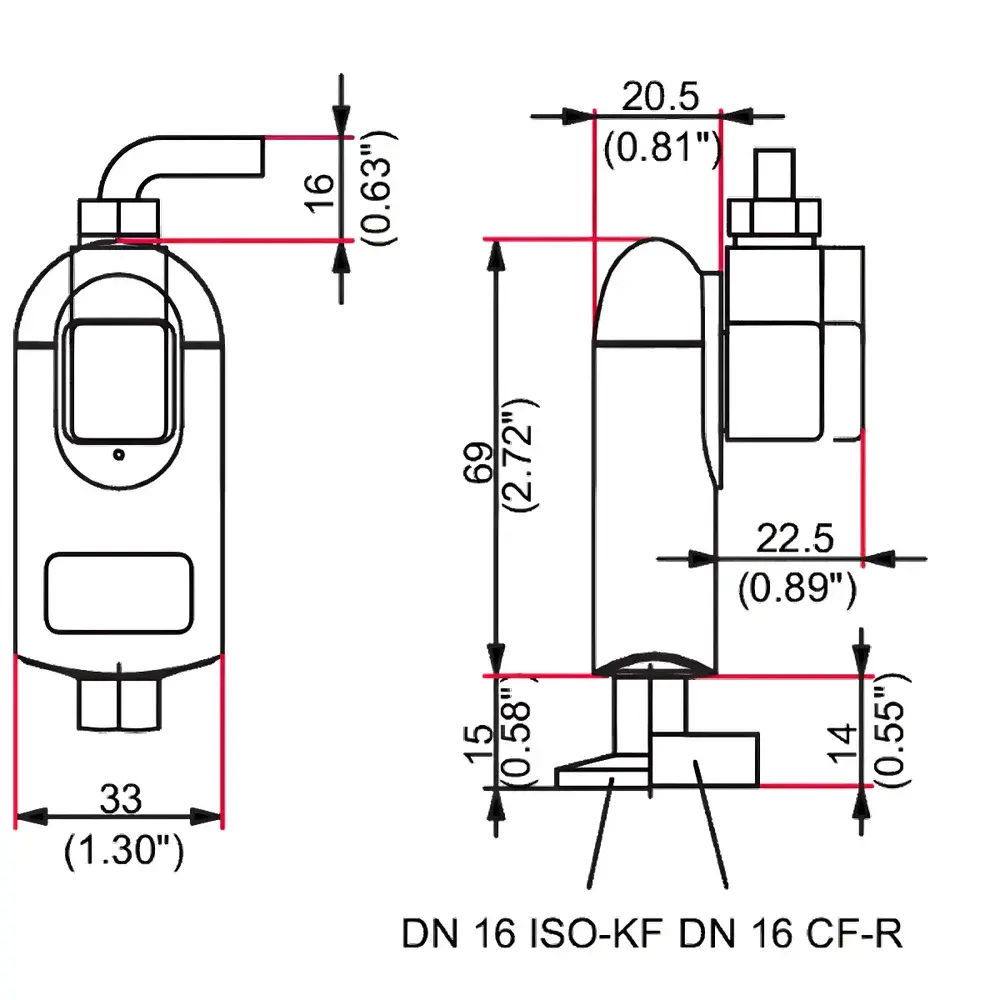
| Package Dimensions | Compact OEM module (see mechanical drawing per datasheet) |
Overview
The Hamamatsu C11209-110 is a fully integrated, non-cooled silicon photomultiplier (MPPC) measurement module engineered for high-sensitivity, high-speed detection of low-light optical signals. At its core resides the S12571-010C MPPC sensor—a solid-state photon-counting device composed of 10,000 microcells arranged in a 100 × 100 array with a uniform 10 µm pixel pitch. This architecture enables single-photon sensitivity combined with linear response over a wide dynamic range (typically >6 decades), making the C11209-110 suitable for applications demanding both temporal resolution and quantitative intensity fidelity—including time-resolved fluorescence, LIDAR receiver front-ends, scintillation pulse readout, and low-light spectroscopy. Unlike PMT-based solutions, the module operates at room temperature without thermoelectric cooling, reducing system complexity and power overhead while maintaining stable gain via on-board analog temperature compensation.
Key Features
- Integrated MPPC sensor (S12571-010C) with 1 × 1 mm² active area and 10,000 microcells
- High quantum efficiency in the blue-to-near-UV region (peak QE ≈ 40% at 420 nm), optimized for scintillator and fluorescent light emission spectra
- Sub-nanosecond rise time and <1 ns FWHM pulse width, supporting GHz-class timing resolution in coincidence or time-of-flight configurations
- On-module high-voltage generation (programmable bias up to ~70 V) and signal amplification chain, eliminating external HV supply requirements
- Analog temperature compensation circuit maintains gain stability across ambient temperatures from –20 °C to +60 °C (±0.5% gain drift typical)
- OEM-friendly design: compact footprint (32.5 × 22.5 × 12.5 mm), lightweight (<25 g), and powered solely by a single +5 V DC supply
Sample Compatibility & Compliance
The C11209-110 is compatible with standard optical coupling methods including direct fiber pigtailing (e.g., FC/PC or SMA-905), lensed interfaces, or free-space illumination onto the bare sensor window. Its non-cooled operation eliminates condensation risks and thermal cycling stress, enhancing long-term reliability in field-deployable instrumentation. The module complies with RoHS Directive 2011/65/EU and meets IEC 61326-1:2013 requirements for electromagnetic compatibility (EMC) in laboratory and industrial measurement environments. While not certified for medical or safety-critical systems out-of-the-box, its design supports integration into ISO 13485-compliant analytical platforms when embedded within validated host instrumentation.
Software & Data Management
As a hardware-level analog output module, the C11209-110 delivers a differential or single-ended voltage signal proportional to incident photon flux—requiring external digitization (e.g., via PCIe digitizers, oscilloscopes, or FPGA-based acquisition systems). Hamamatsu provides comprehensive technical documentation, including SPICE models for circuit simulation, spectral responsivity curves, dark count rate (DCR) vs. temperature datasets, and recommended PCB layout guidelines for noise minimization. For traceable calibration, users may reference NIST-traceable light sources and apply correction factors derived from Hamamatsu’s published photon detection efficiency (PDE) maps. When integrated into regulated environments (e.g., pharmaceutical QC labs), the module supports audit-ready data workflows under FDA 21 CFR Part 11 when paired with compliant acquisition software featuring electronic signatures and immutable audit trails.
Applications
- Time-correlated single-photon counting (TCSPC) systems for fluorescence lifetime imaging (FLIM) and decay analysis
- Pulsed laser ranging and atmospheric backscatter detection in compact LIDAR modules
- Scintillation detector readout for radiation monitoring (e.g., NaI(Tl), LYSO, plastic scintillators)
- Low-light flow cytometry and particle sizing where high signal-to-noise ratio at kHz–MHz repetition rates is essential
- UV-visible absorption and reflectance measurements in portable spectrometers and process analyzers
- Quantum optics experiments requiring scalable, multi-channel photon detection with synchronized gating
FAQ
Does the C11209-110 require external cooling?
No—it is explicitly designed for non-cooled operation, with integrated analog temperature compensation ensuring gain stability across industrial ambient conditions.
What is the maximum recommended bias voltage for the onboard HV circuit?
The internal HV generator is factory-set for optimal PDE and DCR trade-off; nominal operating voltage is 65–70 V—adjustment beyond this range requires consultation with Hamamatsu application engineering.
Can the module be used in vacuum or high-humidity environments?
The housing is rated for standard laboratory environments (IEC 60529 IP20); extended environmental operation requires custom hermetic sealing or conformal coating per user-specific qualification protocols.
Is there a digital interface option (e.g., SPI or I²C) available?
No—the C11209-110 outputs analog voltage only; digital conversion must be performed externally using user-selected ADC hardware.
How is linearity maintained over the full dynamic range?
Linearity relies on microcell saturation recovery dynamics and is specified as ±2% deviation up to 10⁶ photons/pulse under calibrated pulsed illumination conditions (FWHM < 10 ns).