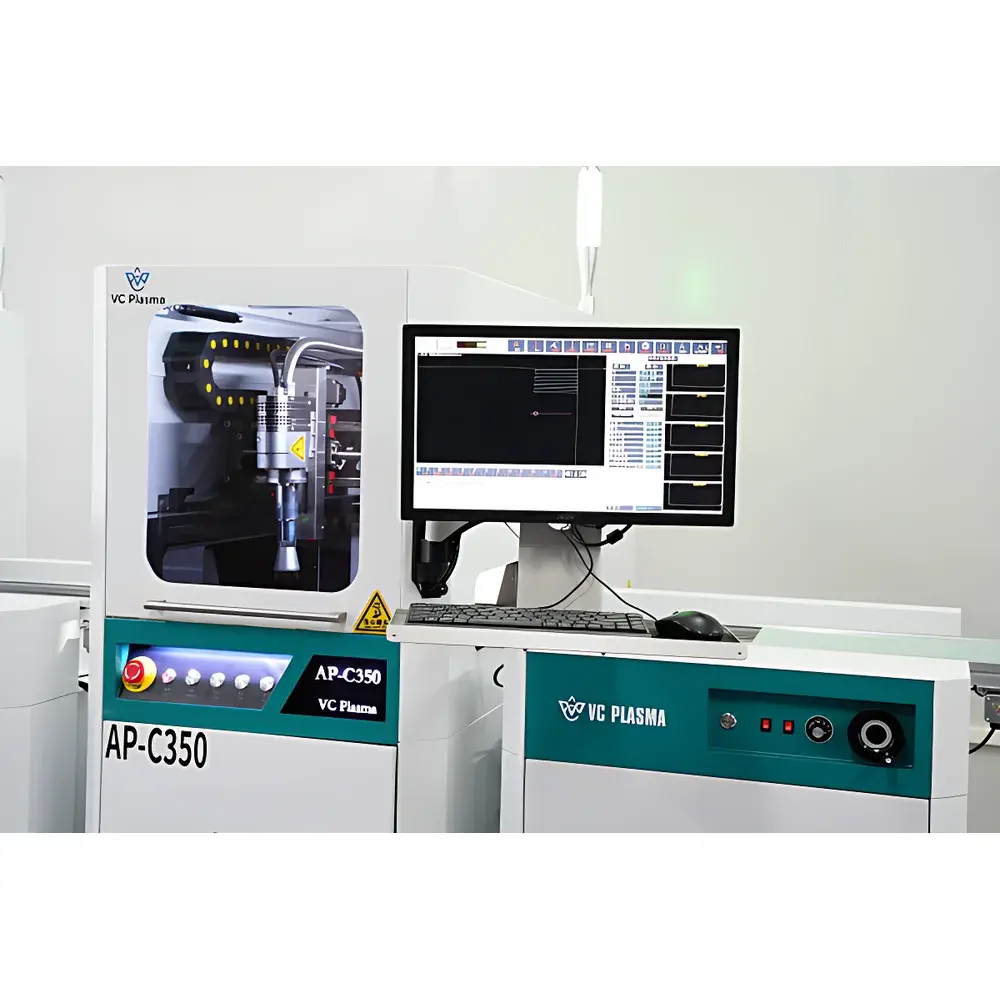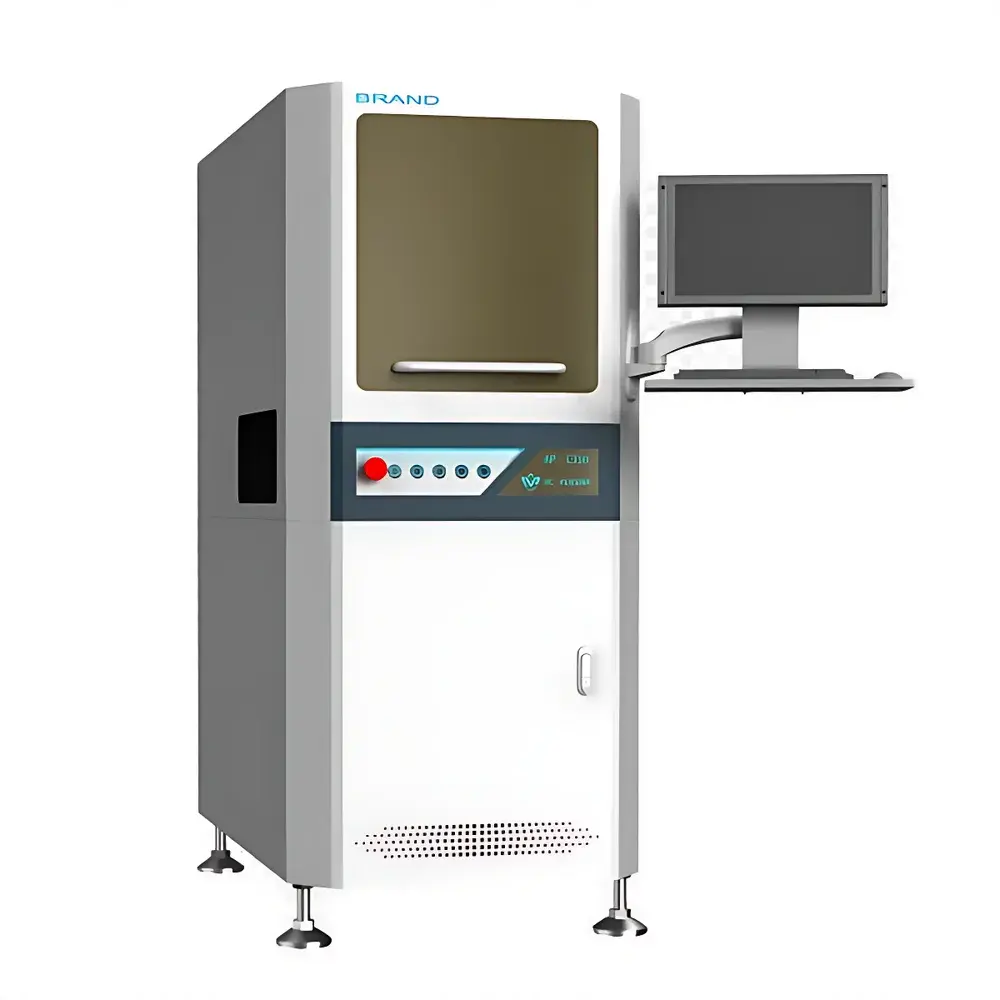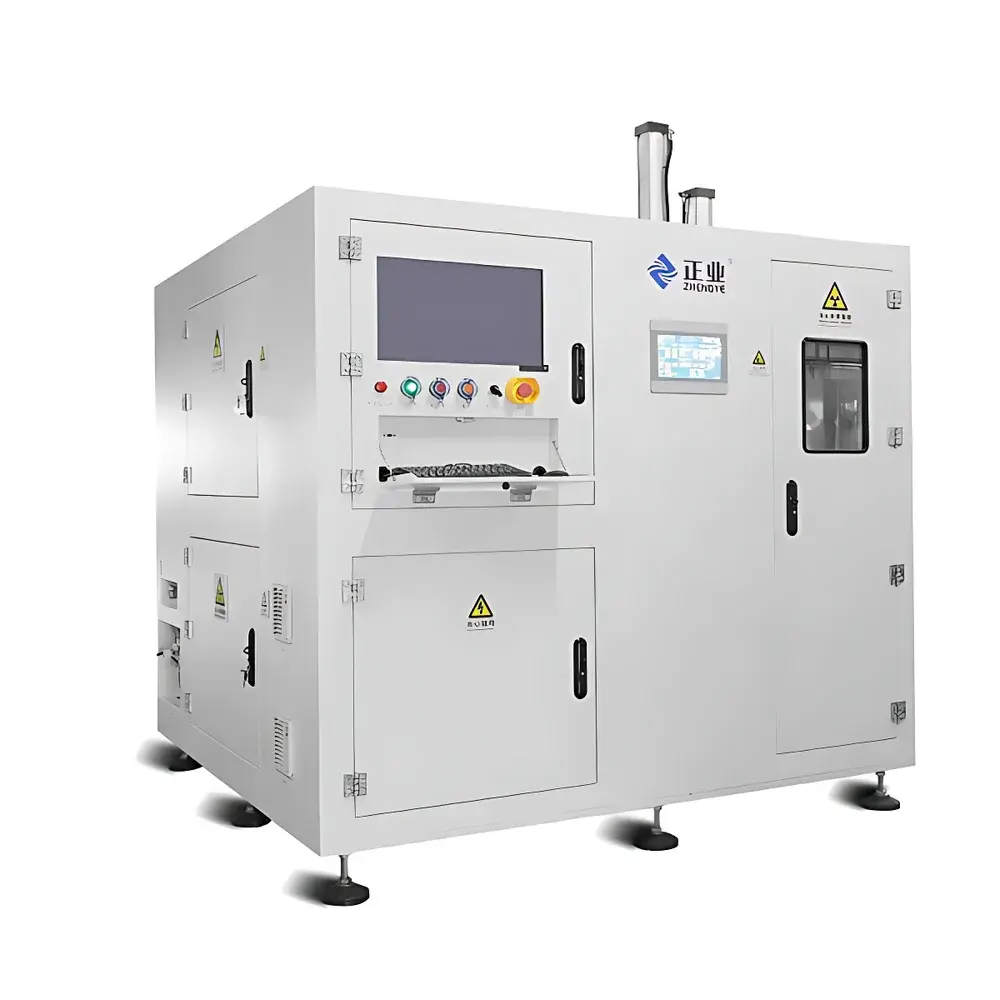
Zhengye Semiconductor X-Ray Inline Automatic Inspection System DV-7/11/13
| Brand | Zhengye |
|---|---|
| Origin | Guangdong, China |
| Manufacturer Type | OEM/ODM Manufacturer |
| Country of Origin | China |
| Model | DV-7/11/13 |
| Price Range | USD 112,000 – 140,000 |
Overview
The Zhengye Semiconductor X-Ray Inline Automatic Inspection System DV-7/11/13 is an industrial-grade, fully automated non-destructive testing (NDT) platform engineered for high-throughput inline inspection of discrete semiconductor components—such as diodes, transistors, MOSFETs, and power modules—on standard JEDEC trays. Utilizing microfocus X-ray generation (typically 90–130 kV, <5 µm focal spot), transmission imaging, and high-resolution flat-panel detector (FPD) technology, the system captures real-time radiographic projections of internal package structures—including bond wire integrity, die attach voids, lead frame alignment, solder bridging, and foreign object debris (FOD). Unlike manual or semi-automated benchtop systems, the DV-7/11/13 integrates seamlessly into SMT and final test lines via programmable motion control, enabling continuous, unattended operation with minimal human intervention. Its core architecture follows ISO 17025-aligned metrology principles, supporting traceable image acquisition, calibrated grayscale response, and repeatable geometric magnification (up to 1000× digital zoom with sub-pixel interpolation).
Key Features
- Multi-Tray Adaptive Handling: Supports automatic recognition and precise positioning of JEDEC-standard trays (7″, 11″, and 13″) via integrated CCD-based vision guidance; no mechanical retooling required between tray sizes.
- Four-Axis Robotic Loading/Unloading: High-repeatability SCARA-style robotic arm with vacuum end-effector ensures gentle, contact-free handling of fragile wafers and packaged devices; cycle time ≤ 3 minutes per 7″ tray (≈3,000 units).
- Real-Time Re-Trace Algorithm Suite: Proprietary software enables concurrent image acquisition and pixel-level defect mapping—NG locations are georeferenced to tray coordinates in real time, allowing downstream pick-and-place systems to isolate defective units by exact row/column index.
- Comprehensive Defect Classification Engine: Trained on >50,000 annotated semiconductor radiographs, the algorithm detects and classifies wire bonding anomalies (e.g., lifted bonds, shorted wires, missing bonds), die tilt, cavity voids, mold compound delamination, and metallic contamination with ≥99.2% sensitivity and <0.8% false call rate (per internal validation under ISO/IEC 17025 conditions).
- Integrated Factory Interface Layer: Native support for SECS/GEM, OPC UA, and RESTful API protocols; bidirectional communication with MES (e.g., Camstar, Siemens Opcenter) including barcode/2D code scanning, lot traceability logging, and electronic signature capture compliant with FDA 21 CFR Part 11 Annex 11 requirements.
- Radiation Safety Architecture: Triple-layer interlock system (door sensors, beam shutter feedback, radiation monitor output) certified to IEC 61000-6-4 and GBZ 138–2022; surface dose rate <0.5 µSv/h at all accessible points during operation.
Sample Compatibility & Compliance
The DV-7/11/13 accommodates discrete semiconductor packages ranging from SOT-23 and TO-252 up to large-format power modules (e.g., D2PAK, TOLL, H2PAK) mounted on standard plastic or metal trays. Tray compatibility includes JEDEC J-STD-033-compliant moisture-sensitive level (MSL) carriers. All image data and inspection logs adhere to ASTM E2737-21 (Standard Practice for Digital Radiographic Testing) and ISO 11452-2 (Electromagnetic immunity for NDT equipment). The system is designed for GLP/GMP environments and supports full audit trail generation—including operator ID, timestamp, parameter revision history, and raw DICOM image archiving—with optional integration into enterprise LIMS platforms.
Software & Data Management
Zhengye’s proprietary XRayInsight™ v4.2 software provides a browser-accessible interface (HTML5/WebGL) with role-based access control (RBAC), multi-user concurrency, and encrypted local/cloud backup (AES-256). Image processing pipelines include dynamic range optimization, noise suppression (non-local means filtering), edge-enhanced segmentation, and AI-assisted anomaly clustering. All inspection results are exportable in CSV, XML, and PDF formats with embedded DICOM headers. Software validation documentation—including IQ/OQ/PQ protocols, failure mode analysis (FMEA), and cybersecurity risk assessment (per IEC 62443-3-3)—is provided upon delivery to support regulatory submissions.
Applications
- Final visual inspection of discrete semiconductors post-assembly and pre-shipment
- Process validation and root cause analysis for wire bonding and encapsulation processes
- Failure analysis (FA) support for customer returns and field failure investigations
- Qualification of new package designs (e.g., copper clip, double-side cooling)
- Automated quality gate enforcement in Industry 4.0 production cells with AGV-integrated material flow
FAQ
Does the system support custom defect rule sets for proprietary packaging designs?
Yes—XRayInsight™ allows engineers to define application-specific inspection templates using geometric ROI masking, intensity thresholding, and morphological filters without coding. Custom rules undergo version-controlled deployment and can be validated against reference standards.
Can the DV-7/11/13 be integrated into an existing 12-inch wafer fab’s AMHS?
While optimized for discrete component trays, optional SEMI E40-compliant interface modules enable integration with 300mm FOUP-handling infrastructure via SECS/GEM handshake and OHT dispatch coordination.
Is remote diagnostics and firmware update capability available?
Yes—the system includes secure TLS 1.3-enabled remote maintenance port with dual-factor authentication; over-the-air updates are staged, verified via SHA-256 hash, and require supervisor approval prior to installation.
What is the recommended calibration frequency and traceability chain?
Annual calibration is recommended per ISO/IEC 17025; Zhengye provides NIST-traceable X-ray output verification reports and FPD uniformity certification from an ILAC-MRA accredited lab.
How does the system handle trays with mixed part numbers or heterogeneous layouts?
The CCD vision system performs tray-level optical character recognition (OCR) and layout reconstruction; each unit is assigned a unique positional ID independent of part number, ensuring consistent traceability even in mixed-lot scenarios.