
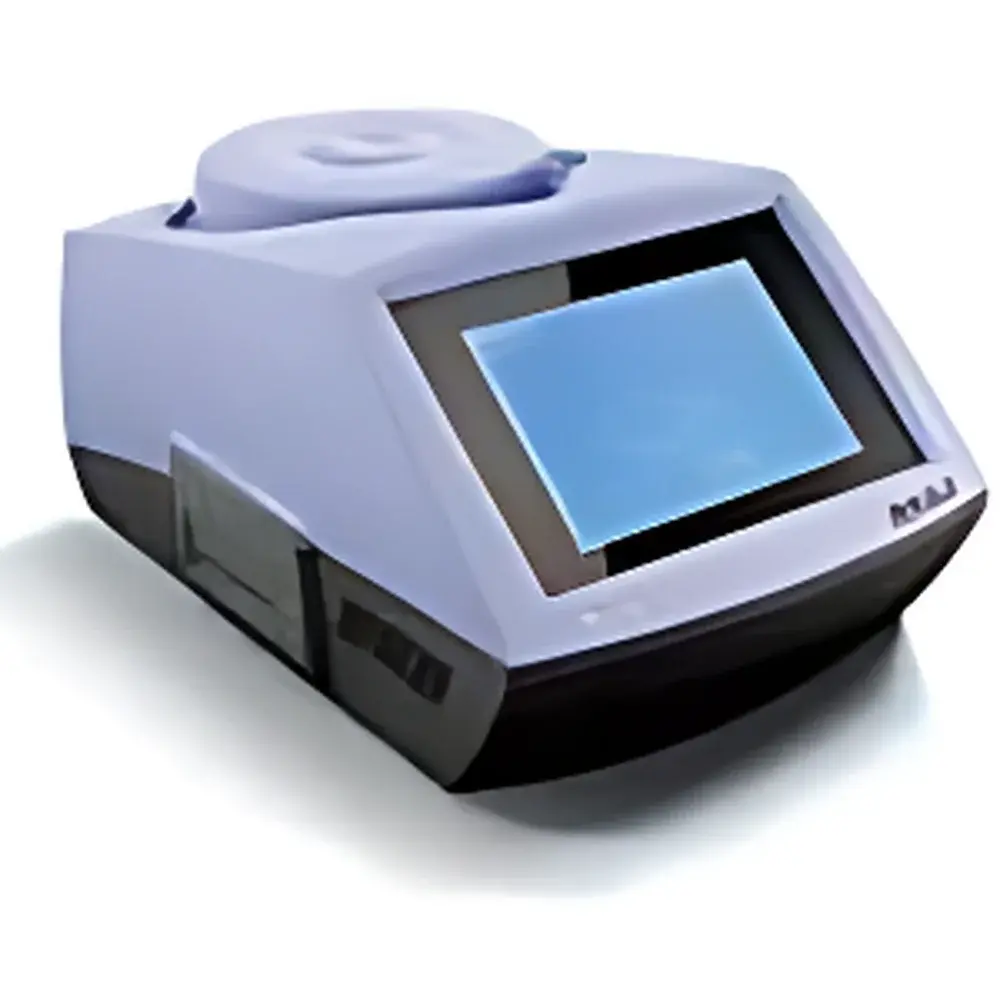
BHP9514 Drinking Water Safety Rapid Toxicity Analyzer
| Origin | Hebei, China |
|---|---|
| Manufacturer Type | Distributor |
| Origin Category | Domestic |
| Model | BHP9514 |
| Price | Upon Request |
| Sample Positions | 18 |
| Minimum Detection Time | 5 min |
| Detector Core | Photomultiplier Tube (PMT) |
| Spectral Detection Range | 300–650 nm |
| Display | LCD Touchscreen |
| Data Output | Built-in Micro Printer & PC Interface |
| Environmental Operating Range | 5–40 °C, 10–90% RH (at 25 °C) |
| Toxicity Indicator | LED Status Lights (Pass/Fail) |
Overview
The BHP9514 Drinking Water Safety Rapid Toxicity Analyzer is a dedicated bioluminescence-based toxicity screening instrument engineered for field-deployable and laboratory-based assessment of acute aquatic toxicity in drinking water and related aqueous matrices. It leverages the well-established principle of bacterial bioluminescence inhibition—specifically utilizing freeze-dried or lyophilized Vibrio fischeri (formerly Photobacterium phosphoreum) as the biological endpoint. These marine luminescent bacteria emit stable, quantifiable blue-green light (λmax ≈ 490 nm) under optimal physiological conditions. Upon exposure to toxicants—including heavy metals (e.g., Cu²⁺, Hg²⁺, Cd²⁺), organic pollutants (e.g., phenols, pesticides, PAHs), disinfection by-products, and antimicrobial agents—the electron transport chain and cellular ATP synthesis are disrupted, resulting in rapid, dose-dependent suppression of light output. The BHP9514 measures this luminometric response within minutes, enabling quantitative estimation of sample toxicity as percentage inhibition relative to a non-toxic control. Designed for compliance with ISO 11348-3 (Water quality — Determination of the inhibitory effect of water samples on the light emission of Vibrio fischeri — Part 3: Method using freeze-dried bacteria), it supports tiered risk assessment in emergency response, routine surveillance, and regulatory monitoring workflows.
Key Features
- High-throughput analysis with 18 independent sample positions, permitting parallel processing of multiple field-collected or lab-prepared samples
- Ultra-rapid detection cycle: full measurement completed in as little as 5 minutes post-reconstitution and mixing
- High-sensitivity photomultiplier tube (PMT) detector optimized for low-light bioluminescence quantification across 300–650 nm spectral range
- Integrated 7-inch capacitive touchscreen interface with intuitive icon-driven navigation, real-time curve visualization, and on-device result interpretation
- Built-in thermal micro printer for immediate hard-copy documentation of inhibition rates, sample IDs, timestamps, and pass/fail status
- LED status indicators provide at-a-glance visual feedback: green (≤20% inhibition, compliant), yellow (21–49%, caution), red (≥50%, non-compliant)
- Robust environmental tolerance: operational between 5–40 °C ambient temperature and 10–90% relative humidity (25 °C), suitable for mobile labs and on-site deployment
Sample Compatibility & Compliance
The BHP9514 accepts raw or filtered aqueous samples without pre-concentration or derivatization. Compatible matrices include finished drinking water, source water (surface/groundwater), wastewater influent/effluent, industrial process water, food-grade rinse water, sediment pore water extracts, and pharmaceutical effluents. It detects cumulative toxic effects arising from synergistic, additive, or antagonistic interactions among mixed contaminants—particularly relevant for complex matrices where single-analyte methods (e.g., ICP-MS, GC-MS) may underestimate hazard potential. The system conforms to ISO 11348-3 and is referenced in Chinese EPA Technical Guidelines for Emergency Toxicity Monitoring (HJ 506-2009). While not inherently GLP-compliant out-of-the-box, audit-ready data export (CSV/TXT) and timestamped measurement logs support integration into validated QA/QC frameworks aligned with ISO/IEC 17025 requirements.
Software & Data Management
Instrument control, calibration management, and data acquisition are handled via embedded firmware with optional Windows-compatible desktop software (BHP-DataLink v3.x). All measurements are time-stamped and stored internally (≥10,000 records). Data export options include USB flash drive transfer and direct serial/USB connection to laboratory PCs. Exported files contain raw luminescence counts, normalized inhibition percentages, sample metadata, operator ID, and environmental sensor readings (if enabled). The software supports batch reporting, statistical summary (mean, SD, CV%), and customizable pass/fail thresholds per application protocol. For regulated environments, optional 21 CFR Part 11–compliant modules (user authentication, electronic signatures, audit trail logging) are available under separate validation package.
Applications
- Rapid field triage during chemical spills, pipeline breaches, or natural disasters affecting municipal water supplies
- Process monitoring of drinking water treatment plants—evaluating coagulation efficiency, disinfectant residual impact, and filtration performance
- Toxicity profiling of wastewater treatment plant influent and effluent to assess biological treatment efficacy and receiving water risk
- Screening of industrial cooling water and boiler feed water for residual biocides (e.g., glutaraldehyde, DBNPA) and corrosion inhibitors
- Pharmaceutical manufacturing: rapid verification of antibiotic removal in purification train effluents prior to discharge
- Environmental health laboratories: supporting national drinking water safety standards (e.g., GB 5749-2022) and CDC/EPA Tier 1 toxicity screening protocols
FAQ
What biological indicator does the BHP9514 use?
It employs lyophilized Vibrio fischeri cells, supplied in standardized, QC-tested vials with defined light output stability and sensitivity profiles.
Can the instrument differentiate between specific toxicants?
No—it provides a holistic measure of total acute toxicity. Compound identification requires complementary analytical techniques (e.g., LC-HRMS, ICP-OES).
Is sample pretreatment required?
Turbid or particulate-laden samples should be filtered through 0.45 µm membrane filters; highly saline or acidic samples may require pH adjustment to 6.5–8.5 prior to testing.
How often must the PMT be calibrated?
Factory calibration is performed before shipment; users perform daily background and control checks. Full recalibration is recommended every 6 months or after detector replacement.
Does the system support remote diagnostics or cloud connectivity?
Standard configuration includes local data storage and PC export only; IoT-enabled variants with secure MQTT telemetry and cloud dashboard integration are available upon request.
Related Products







