
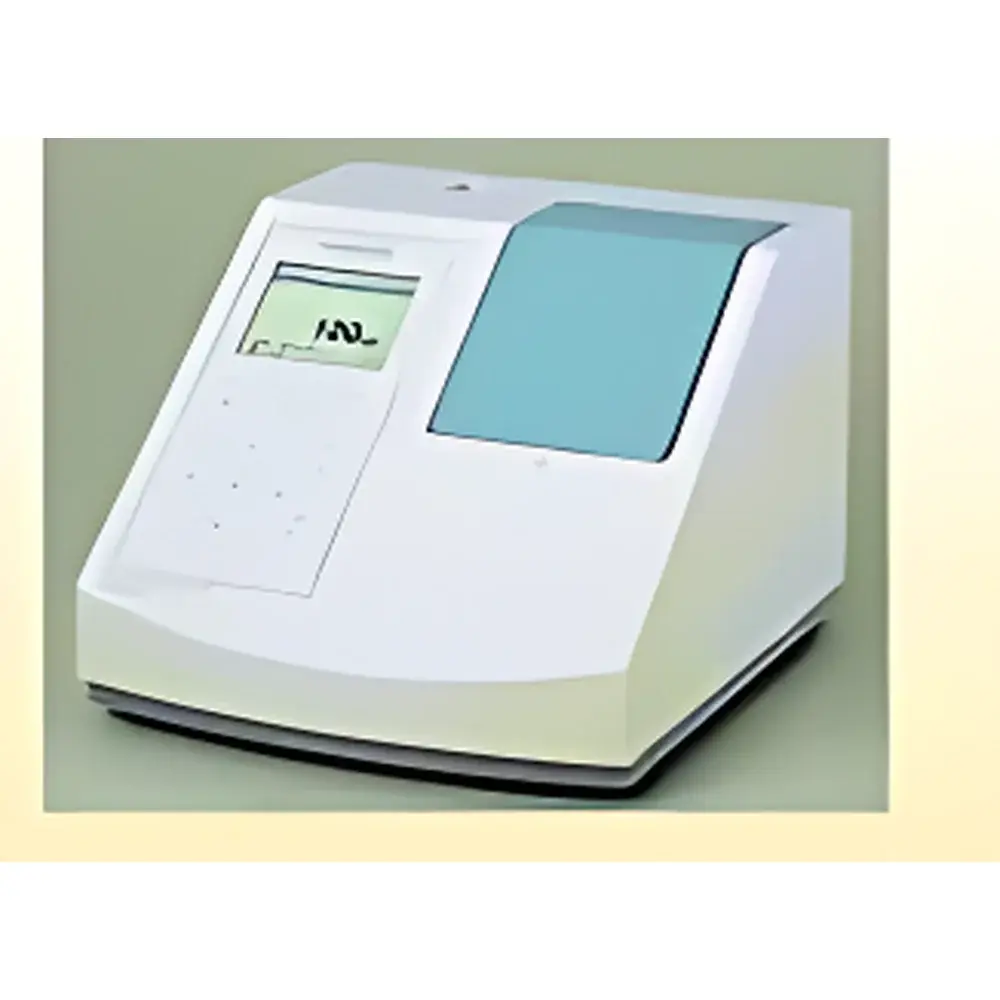
HORIBA OCMA-550 Portable Oil Content Analyzer
| Brand | HORIBA |
|---|---|
| Origin | Japan |
| Model | OCMA-550 |
| Instrument Type | Portable |
| Measurement Principle | Non-Dispersive Infrared (NDIR) Absorption at ~3.4 µm |
| Measurement Range | 0–200 mg/L, 0–1000 mg/kg, 0–1 Abs |
| Accuracy | ±1% of reading (for mg/L scale) |
| Resolution | 0.1 mg/L (0–99.9 mg/L), 1 mg/L (100–200 mg/L), 0.001 Abs (0–1 Abs) |
| Detection Limit | 0.1 ppm (as oil in aqueous phase) |
| Solvent | S-316 (trichloroethylene-free, non-absorbing at 3.4 µm) |
| Dimensions | 250 × 200 × 285 mm (W × H × D) |
| Power Supply | 230 V AC, 50 Hz |
| Display | Backlit LCD with timestamping |
| Data Interface | RS-232C serial port & parallel printer port |
| Compliance | Designed for ASTM D7066, ISO 9377-2, and EPA Method 1664B-aligned workflows |
Overview
The HORIBA OCMA-550 is a portable, field-deployable oil content analyzer engineered for rapid, quantitative determination of hydrocarbon contaminants in water, soil extracts, and surface residues. It operates on the principle of non-dispersive infrared (NDIR) absorption spectroscopy, specifically targeting the C–H stretching vibration band near 3.4 µm — a spectral region where petroleum-based hydrocarbons exhibit strong, characteristic absorbance, while the proprietary extraction solvent S-316 remains optically transparent. This selective detection ensures high specificity for total petroleum hydrocarbons (TPH) without interference from water, polar organics, or common matrix constituents. Unlike fluorescence-based instruments, the OCMA-550 delivers robust performance across diverse sample types—including turbid effluents, solvent-extracted soil leachates, and metal part rinsates—without reliance on fluorophore presence or excitation stability. Its compact architecture and battery-independent AC operation make it suitable for on-site environmental screening, wastewater compliance monitoring, and industrial hygiene verification under GLP-aligned laboratory or field conditions.
Key Features
- Triple-unit display capability: switch seamlessly between concentration units — mg/L (aqueous phase), mg/kg (soil/solid extract), and absorbance (Abs) — enabling direct comparison with regulatory reporting formats.
- Integrated timestamping and data logging: all measurements are automatically annotated with date/time stamps; results can be viewed locally on the backlit LCD or exported via RS-232C to LIMS or spreadsheet software.
- Optimized optical path: uses a fixed-pathlength quartz cuvette (10 mm) with precision-matched thermal compensation, minimizing drift during extended field use.
- Automated zero calibration: initiated upon power-up or user command, using solvent-only baseline measurement to ensure consistent photometric referencing before each analysis cycle.
- Low detection limit: achieves quantification down to 0.1 ppm (as oil in water) with demonstrated linearity across three decades (0.1–200 mg/L), validated per ISO/IEC 17025 traceable protocols.
- Modular solvent handling: compatible with optional SR-300/SR-305 solvent regeneration systems, reducing S-316 consumption and supporting sustainable lab operations compliant with ISO 14001 waste minimization objectives.
Sample Compatibility & Compliance
The OCMA-550 is designed for post-extraction analysis of samples prepared using standardized solvent-based protocols. It accepts aqueous extracts obtained via liquid–liquid extraction (e.g., EPA Method 1664B), solid-phase extraction (SPE), or Soxhlet-derived soil eluates — provided the final extract is dissolved in S-316. The instrument meets technical requirements for routine use in facilities adhering to ISO 9377-2 (water quality — determination of hydrocarbon oil index), ASTM D7066 (standard test method for oil and grease in water by infrared spectrophotometry), and EU Water Framework Directive Annex II analytical criteria. While not inherently 21 CFR Part 11 compliant, its audit-ready data output (with timestamp, operator ID placeholder, and raw Abs values) supports integration into validated GxP environments when paired with controlled electronic records systems.
Software & Data Management
No proprietary PC software is required for basic operation; however, the RS-232C interface enables ASCII-formatted data streaming (including sample ID, Abs value, calculated concentration, unit selection, and timestamp) to third-party acquisition platforms or custom scripts. The parallel printer port supports direct hardcopy generation using standard EPSON-compatible dot-matrix printers — facilitating immediate documentation for chain-of-custody logs. All internal memory retains the last 100 measurements with full metadata. Firmware updates are performed via serial terminal emulation (e.g., Tera Term) using HORIBA-provided HEX files, ensuring long-term maintainability without cloud dependency.
Applications
- Environmental site assessment: rapid screening of groundwater, surface water, and sediment pore water for petroleum hydrocarbon contamination following spill events or remediation activities.
- Industrial wastewater compliance: monitoring of effluent discharge from refineries, metalworking facilities, textile mills, and electroplating lines against local limits (e.g., <5 mg/L oil & grease).
- Surface cleanliness validation: quantitative verification of residual lubricants, cutting fluids, or stamping oils on machined components prior to coating, welding, or assembly — critical in aerospace and semiconductor manufacturing.
- Process control in cleaning systems: real-time feedback for ultrasonic, vapor degreasing, or aqueous wash systems used in precision optics or MEMS fabrication.
- Regulatory reporting support: generation of auditable, timestamped concentration data aligned with ISO 17025 accredited testing workflows for third-party certification bodies.
FAQ
What extraction solvent is required for OCMA-550 operation?
S-316 (1,1,2-trichloro-1,2,2-trifluoroethane substitute) is the only validated solvent; it exhibits zero absorbance at 3.4 µm and ensures accurate hydrocarbon-specific quantification.
Can the OCMA-550 measure emulsified or dispersed oil without extraction?
No — the instrument requires solvent-based extraction to isolate hydrophobic fractions; it does not analyze intact emulsions or suspended oil droplets directly.
Is calibration traceable to NIST standards?
Yes — HORIBA provides certified reference standards (e.g., B-grade heavy oil) with CoA referencing NIST SRM 2721; users may establish in-house calibration curves per ISO/IEC 17025 Section 6.4.
Does the OCMA-550 support multi-point calibration?
Yes — manual entry of up to five calibration points is supported via front-panel interface, enabling polynomial curve fitting for enhanced accuracy across wide dynamic ranges.
What maintenance is required for long-term stability?
Annual verification of detector responsivity and optical path cleanliness is recommended; quartz cuvettes must be cleaned with lint-free wipes and S-316 to prevent residue buildup affecting baseline reproducibility.







