
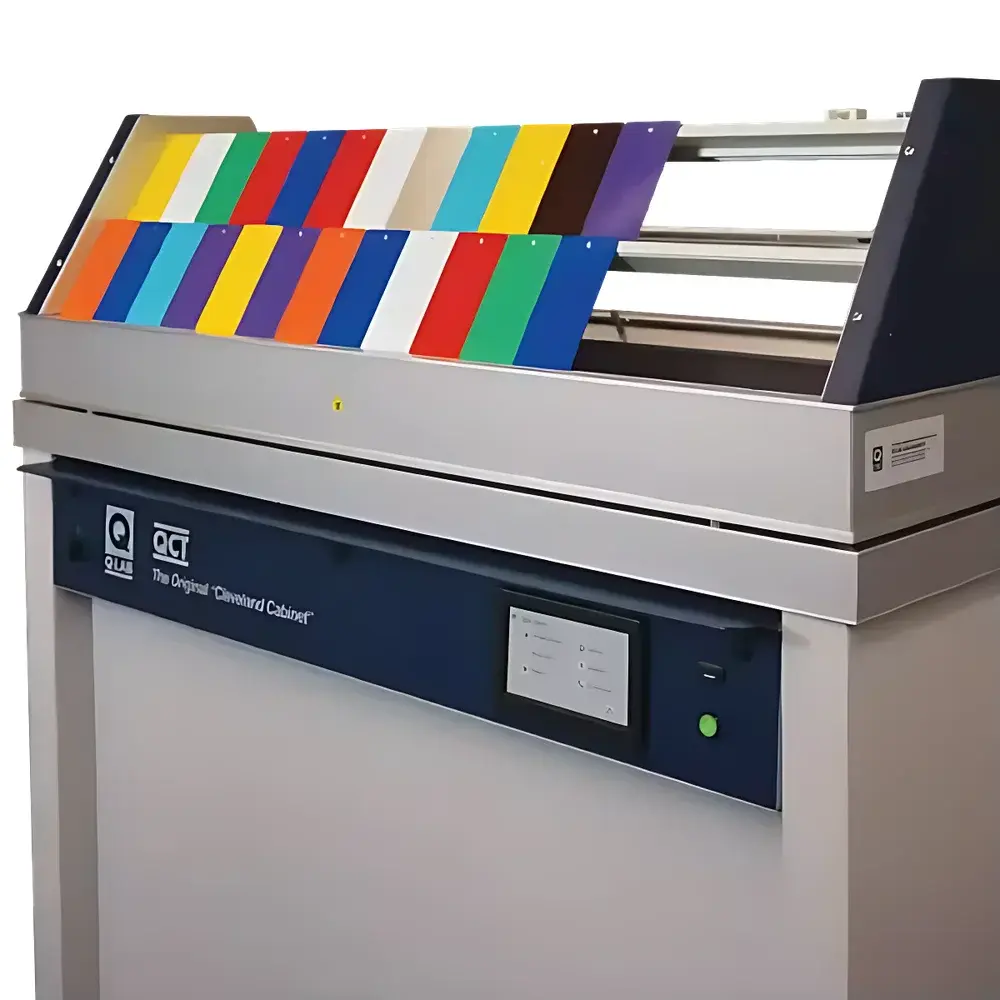
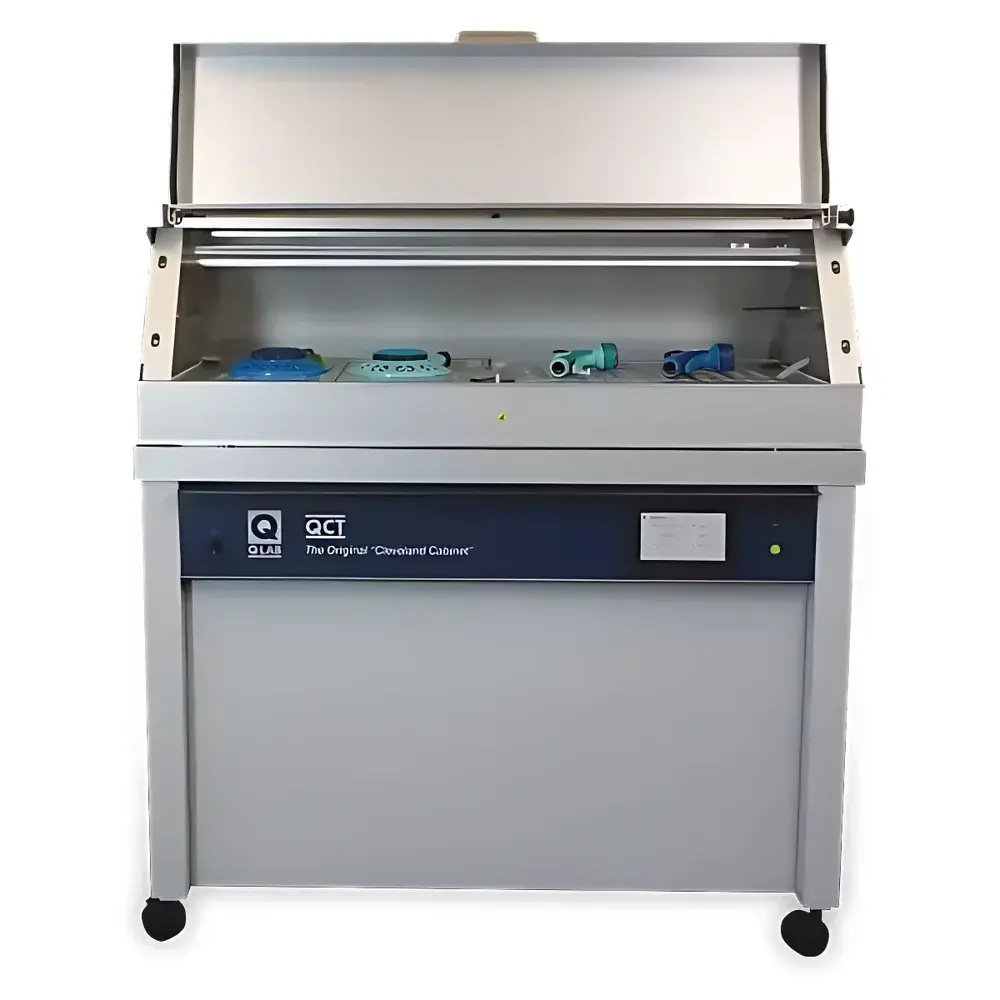
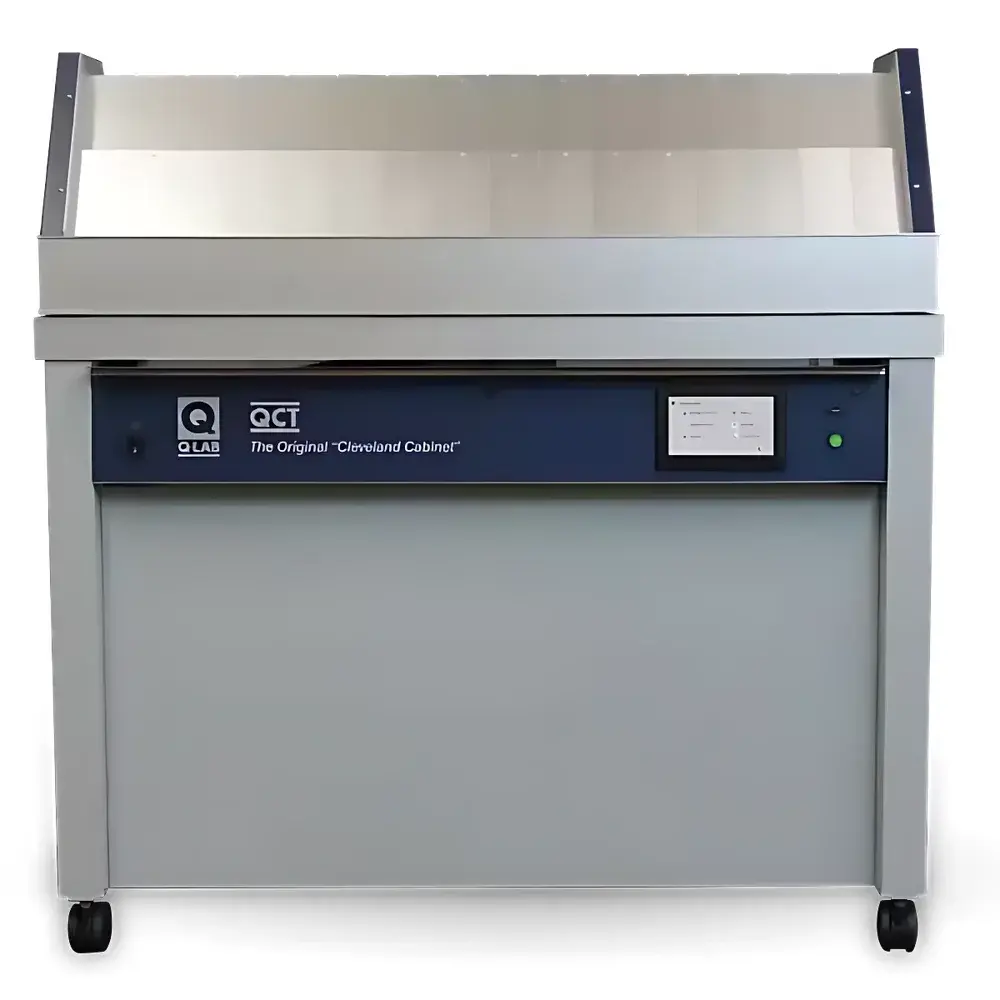
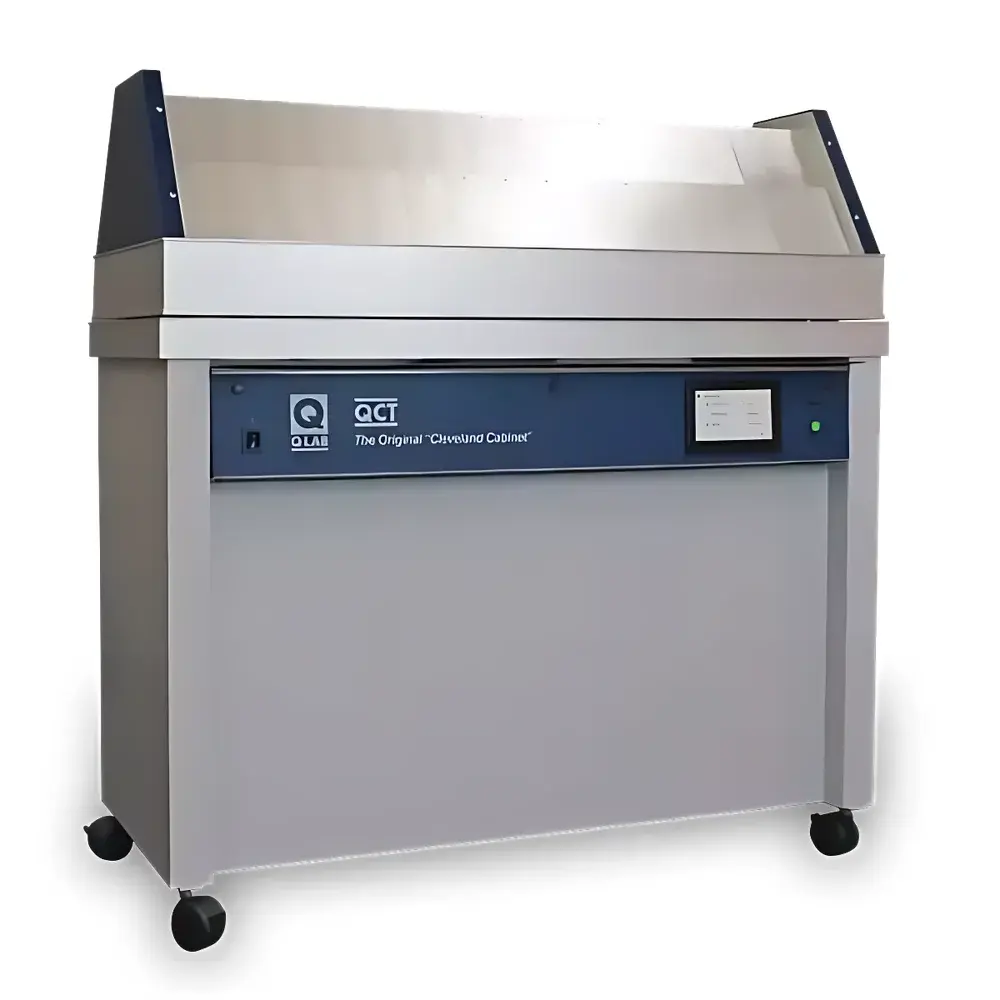
Q-LAB QCT Condensation Test Chamber
| Brand | Q-LAB |
|---|---|
| Origin | USA |
| Manufacturer Type | Manufacturer |
| Origin Category | Imported |
| Model | QCT |
| Price Range | USD 25,000 – 65,000 |
Overview
The Q-LAB QCT Condensation Test Chamber is an engineered environmental test system designed to replicate and accelerate the damaging effects of outdoor dew and condensation exposure on materials. Unlike conventional humidity chambers that rely on saturated air or steam injection, the QCT employs a fundamentally distinct physical principle: controlled surface condensation via thermal gradient-driven water vapor phase change. It achieves this by maintaining a warm, heated water reservoir beneath the test specimen while actively cooling the specimen surface—typically via ambient air convection—thereby inducing 100% pure, oxygen-saturated condensate formation directly on the sample. This “active water” closely mimics natural dew chemistry and transport mechanisms, including oxygen diffusion through coatings and interfacial corrosion initiation. First introduced in 1956, the QCT remains the industry benchmark for standardized condensation testing per ASTM D4585, ISO 6270-1/6270-2, and BS 3900 Part F9. Its design eliminates reliance on distilled or deionized water—ordinary tap water is sufficient, as evaporation and re-condensation inherently purify the medium.
Key Features
- Patented thermal-gradient condensation mechanism: precise control of surface temperature differential between heated water pan and cooled specimen
- 100% condensation-only exposure—no spray, immersion, or humidified air required
- Temperature range: ambient to 70 °C for condensation cycles; optional dry-off phases extend operational flexibility
- Programmable cycle capability: static condensation, alternating wet/dry sequences, or custom time-temperature profiles
- Self-contained operation: minimal infrastructure—only standard electrical supply (120/240 VAC) and potable water inlet needed
- Compact footprint and low heat/water vapor output—suitable for office, lab, or production floor deployment without dedicated HVAC
- Intuitive touchscreen interface with 17 built-in languages, including English, German, Japanese, Chinese, Spanish, and Russian
- Integrated Ethernet port supporting remote monitoring, data logging, and firmware updates
- Comprehensive self-diagnostic system with real-time fault alerts and predictive service reminders
Sample Compatibility & Compliance
The QCT accommodates flat-panel specimens up to 150 mm × 300 mm (6″ × 12″), including coated metals, painted substrates, polymer films, wood composites, and corrosion-sensitive alloys. Its condensation methodology is explicitly validated for evaluating blistering resistance (e.g., ASTM D4585), moisture-induced delamination, fungal growth inhibition (per ISO 846), and coating adhesion degradation under cyclic wetting. The chamber meets full compliance with ASTM D4585 (Standard Practice for Testing Protective Coating Systems by Controlled Condensation), ISO 6270-1 (Single-Sided Condensation), ISO 6270-2 (Condensation in Heated-Water-Bath Chambers), and BS 3900-F9 (Determination of Resistance to Moisture—Continuous Condensation). It supports GLP-aligned documentation workflows, with timestamped event logs traceable to system diagnostics and user actions—enabling audit readiness for regulated environments governed by FDA 21 CFR Part 11 requirements when paired with compliant LIMS integration.
Software & Data Management
The QCT operates via embedded firmware with no external PC dependency. All test parameters—including setpoints, cycle durations, ramp rates, and hold times—are configured directly on the device’s high-resolution color touchscreen. Real-time status indicators display chamber temperature, water level, and active phase (condense/dry). Logged data—including start/stop timestamps, temperature history, and diagnostic events—is stored internally and exportable via USB or Ethernet to CSV format. Optional Q-LAB’s Q-Support software enables centralized fleet management, historical trend analysis, and automated report generation aligned with ISO/IEC 17025 documentation standards. Audit trails retain immutable records of all user-initiated changes, satisfying traceability requirements for quality assurance systems operating under ISO 9001 or IATF 16949.
Applications
- Rapid assessment of paint and coating blistering resistance at 55 °C over 7+ days
- Evaluation of rust-preventive oils under accelerated condensation stress (e.g., 120 °C for ≤38 hours)
- Hour-scale reactivity screening of cold-rolled galvanized steel surfaces
- Moisture barrier performance validation for architectural wood finishes—including blistering, swelling, and mold resistance
- Corrosion kinetics studies on aluminum, copper, and zinc-coated substrates under oxygen-rich condensate
- Validation of sealant integrity and adhesive bond durability in automotive and aerospace component testing
- Support for material qualification per OEM specifications requiring condensation-based aging (e.g., GMW14872, Ford CETP 00.00-L-467)
FAQ
How does the QCT differ from a standard humidity chamber?
The QCT generates condensation via direct thermal gradient across the specimen surface—not by saturating air. This produces chemically active, oxygen-saturated water identical to natural dew, whereas humidity chambers produce inert, non-diffusive moisture.
Is distilled water required?
No—potable tap water is used. Evaporation and condensation naturally distill the water, eliminating mineral carryover and scaling risk.
Can freeze-thaw cycles be performed?
Yes—specimens may be manually transferred from the QCT into a freezer during the wet phase to simulate freeze-thaw degradation, then returned for continued condensation exposure.
What maintenance is required?
Routine tasks include periodic water pan cleaning and inspection of the air-cooling path; no consumables or calibration gases are needed.
Is remote monitoring supported?
Yes—via built-in Ethernet, users can access live status, download logs, and trigger manual overrides using standard web browsers or Q-LAB’s Q-Support platform.



