
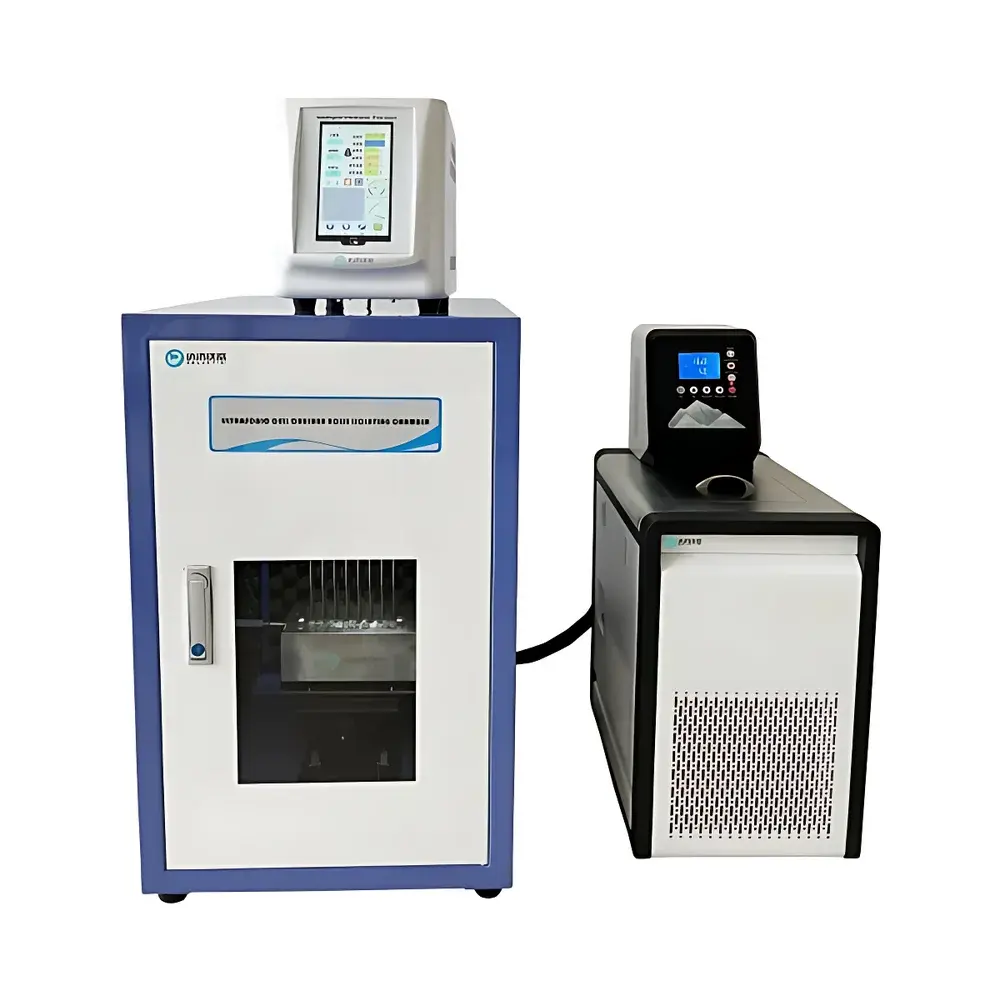
Daxluot Daxluot-8S 8-Channel High-Intensity Ultrasonic Cell Disruptor
| Brand | Daxluot |
|---|---|
| Origin | Shanghai, China |
| Model | Daxluot-8S |
| Ultrasonic Power | 20–2000 W (adjustable) |
| Operating Frequency | 20–25 kHz (auto-tracking) |
| Temperature Control Range | −5 to 100 °C |
| Sample Volume per Channel | 5–100 mL |
| Number of Simultaneous Samples | 8 |
| Probe Material | Titanium Alloy (Ti-6Al-4V) |
| Amplitude Regulation | Automatic Load-Compensated |
| Data Storage | 20 Preset Protocols |
| Display | 7-inch TFT Touchscreen |
| Input Power | AC 220 V ±5%, 50 Hz |
| Safety Protections | Overtemperature, Overpower, Overtime |
Overview
The Daxluot Daxluot-8S is an engineered 8-channel high-intensity ultrasonic cell disruptor designed for reproducible, scalable, and parallel sample lysis in life science laboratories. It operates on the principle of cavitation-induced mechanical shear: high-frequency acoustic energy (20–25 kHz) is transmitted via titanium alloy probes into liquid suspensions, generating transient microbubbles that collapse violently near cellular structures—disrupting membranes, organelles, and macromolecular complexes without significant thermal denaturation when properly temperature-controlled. Unlike single-probe sonicators, the Daxluot-8S enables true parallel processing of eight independent samples under identical acoustic parameters, eliminating inter-sample variability caused by sequential treatment and minimizing operator-dependent procedural drift. Its architecture supports both benchtop batch workflows and integration into automated sample preparation pipelines for genomics, proteomics, and biomanufacturing applications requiring strict adherence to GLP-compliant documentation standards.
Key Features
- Parallel 8-channel design with independently mounted titanium alloy (Ti-6Al-4V) probes—each rated for continuous duty at up to 2000 W output, corrosion-resistant across pH 1–14 and organic solvent exposure.
- Real-time auto-frequency tracking ensures stable resonance coupling between transducer and load, maintaining consistent cavitation intensity regardless of viscosity or volume fluctuations during sonication.
- Integrated Peltier-based cooling system enables precise temperature control from −5 °C to +100 °C, critical for preserving labile biomolecules (e.g., chromatin, RNA, membrane proteins) during lysis.
- Microprocessor-controlled amplitude regulation dynamically compensates for load changes—maintaining constant tip displacement (±1.5% deviation) across varying sample densities and volumes (5–100 mL per channel).
- 7-inch capacitive TFT touchscreen interface with password-protected user access; stores up to 20 fully parameterized protocols including pulse-on/pulse-off timing (0.1–99.9 s), total cycle duration (up to 99 h 59 min 59 s), and temperature ramp profiles.
- Comprehensive hardware safety suite: real-time monitoring of transducer surface temperature, instantaneous power draw, and cumulative operating time—triggering audible/visual alerts and automatic shutdown upon exceedance of preset thresholds.
Sample Compatibility & Compliance
The Daxluot-8S accommodates standard centrifuge tubes (1.5–50 mL), custom cryovials, and jacketed reaction vessels compatible with external recirculating chillers. It supports lysate preparation from Gram-positive/negative bacteria, yeast, mammalian cells, plant tissues, viral particles, and spores—validated per ISO 13406-2 for optical alignment stability and ASTM E2295-03 for ultrasonic power calibration traceability. All firmware operations log timestamped event records (start/stop, parameter changes, fault codes), satisfying audit requirements for FDA 21 CFR Part 11–compliant environments when paired with optional RS-232/USB data export. The instrument meets IEC 61010-1:2010 safety standards for laboratory electrical equipment and carries CE marking for EMC and low-voltage directive compliance.
Software & Data Management
Protocol execution and system diagnostics are managed exclusively through the embedded Linux-based OS—no external PC dependency required for routine operation. Optional USB-to-serial adapter enables raw data export (CSV format) of all sensor outputs (temperature, RMS power, frequency deviation, elapsed time) for post-acquisition analysis in MATLAB, Python (Pandas), or LabChart. Audit trail functionality records operator ID, protocol name, start/end timestamps, and any parameter modifications—retained for ≥12 months in non-volatile memory. Firmware updates are performed via secure signed .bin files loaded from FAT32-formatted USB drives, with rollback capability and cryptographic signature verification.
Applications
- Chromatin shearing for ChIP-seq and ATAC-seq library prep—achieving fragment size distributions centered at 200–500 bp with coefficient of variation <8% across 8 replicates.
- High-yield extraction of intracellular enzymes and recombinant proteins from E. coli BL21(DE3) cultures, reducing aggregation by 32% versus pulsed single-probe sonication (data per internal validation report #DL-UL-2023-087).
- Homogenization of fibrous plant tissues (e.g., Arabidopsis thaliana roots, rice husks) for metabolomic profiling—enabling complete cell wall disruption without polysaccharide degradation.
- Preparation of nanosuspensions for drug delivery research: uniform dispersion of hydrophobic APIs (e.g., paclitaxel, curcumin) in aqueous media with particle size distribution D90 < 250 nm (measured by DLS).
- Accelerated enzymatic digestion kinetics studies—e.g., collagenase-mediated tissue dissociation at 37 °C with simultaneous temperature stabilization and acoustic enhancement.
FAQ
What is the maximum recommended total processing time per session?
Continuous operation is rated for ≤4 hours at full 2000 W output per channel. For extended protocols (>2 h), we recommend ≤70% duty cycle (e.g., 3 s on / 1 s off) with active cooling to maintain probe integrity.
Can the Daxluot-8S be integrated into a robotic liquid handling platform?
Yes—via TTL-triggered start/stop signals (optional I/O module) and RS-232 command set (AT-style ASCII protocol), enabling synchronization with third-party automation controllers.
Is probe sterilization possible using autoclaving?
Titanium alloy probes are autoclavable at 121 °C, 15 psi for 20 minutes. However, repeated autoclaving may accelerate piezoelectric stack fatigue; we recommend ethanol wipe + UV-C surface decontamination for routine use.
How is acoustic output calibrated and verified?
Each unit ships with NIST-traceable calibration certificate (per ASTM E2295-03) measured using calorimetric method (±2.3% uncertainty). Field recalibration is supported using optional calorimetry kit DL-CAL-2024.
Does the system support remote monitoring or cloud-based data logging?
Local network connectivity (Ethernet/Wi-Fi) is available as a factory-installed option (firmware v3.2+), enabling HTTP API access to real-time sensor streams and protocol logs—compatible with AWS IoT Core and Microsoft Azure IoT Hub ingestion pipelines.




