
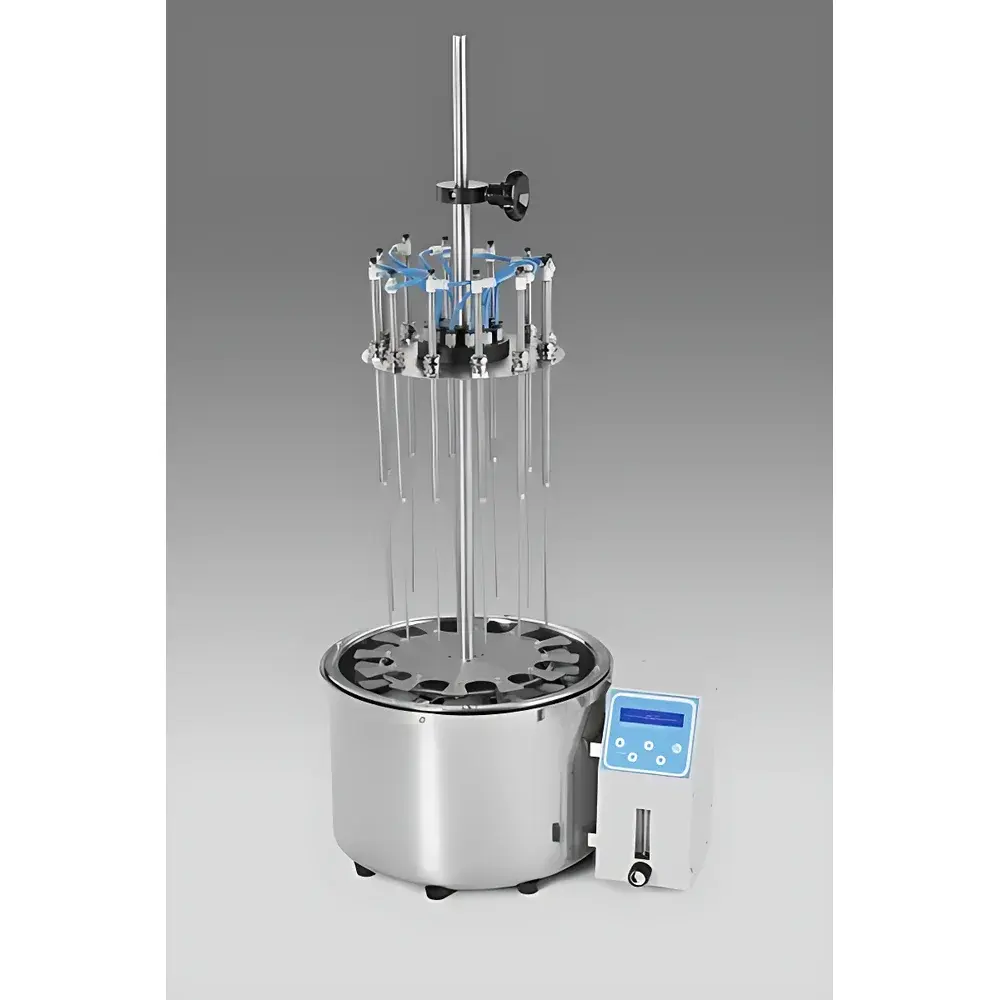
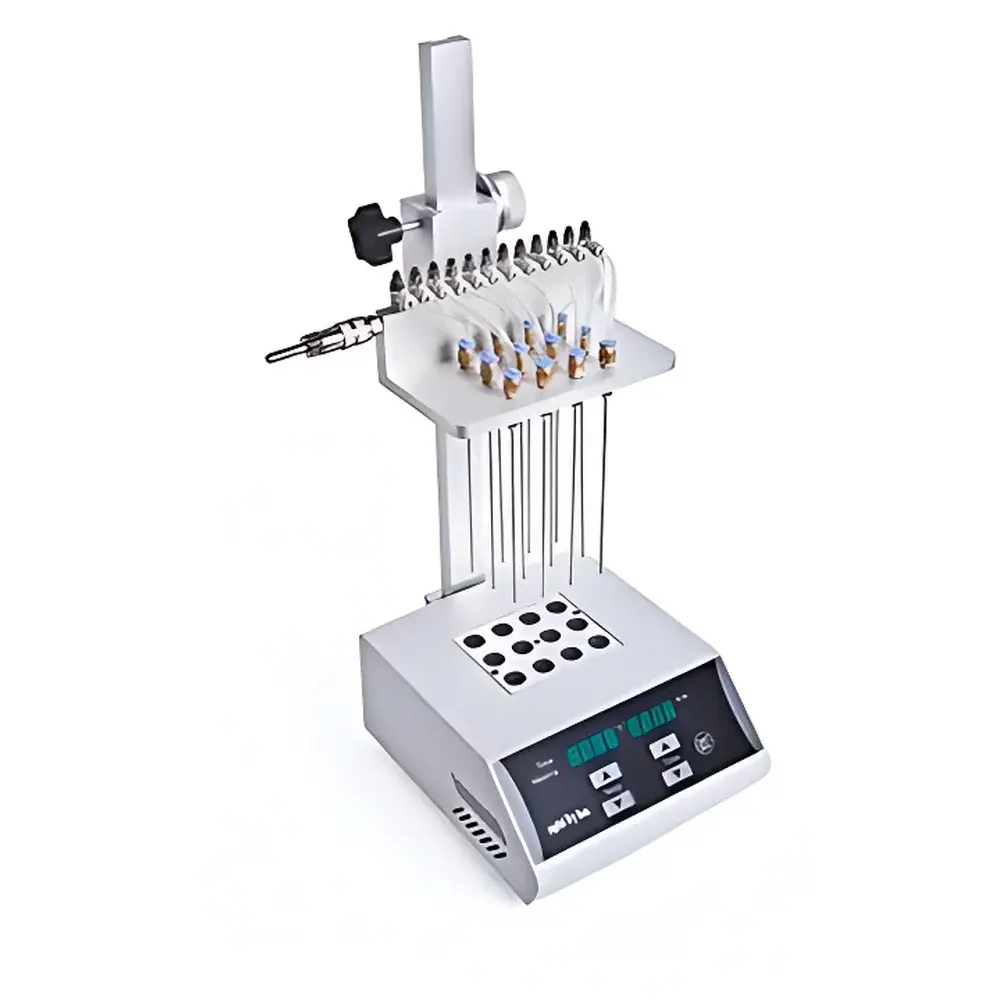
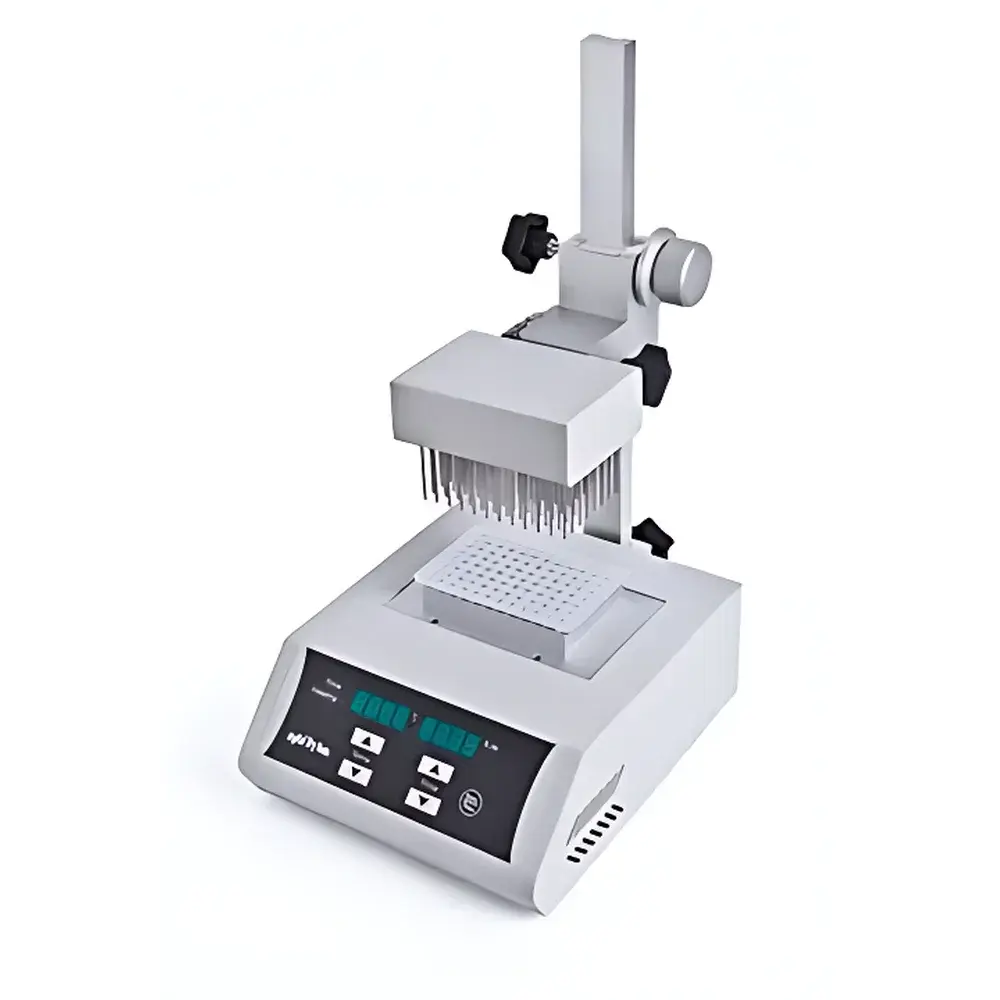
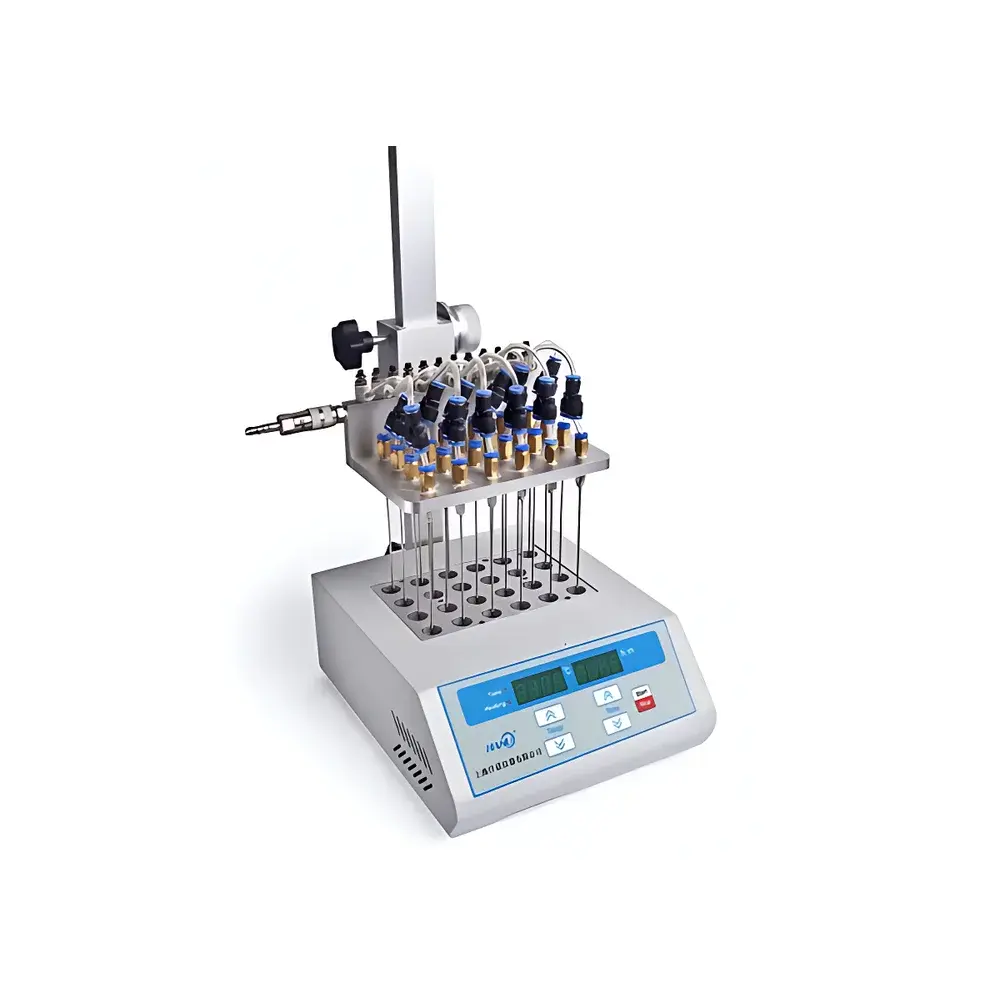
Hanuo HNWD-1000 Circular Stainless Steel Water Bath Nitrogen Evaporator
| Brand | Hanuo |
|---|---|
| Origin | Shanghai, China |
| Model | HNWD-1000 |
| Heating Method | Water Bath |
| Temperature Range | Ambient +5°C to 99°C |
| Temperature Stability | ≤±1°C |
| Sample Capacity | 12 positions |
| Tube Diameter Compatibility | 10–29 mm |
| Gas Flow Rate | 15 L/min |
| Heating Power | 1000 W |
| Maximum Vertical Travel | 200 mm |
| Max Operating Pressure | 200 kPa |
| Display Resolution | ±0.1°C |
| Temp Uniformity (@60°C) | ≤±1°C |
| Warm-up Time (40°C → 99°C) | ≤30 min |
| Dimensions (L×W×H) | 390×300×850 mm |
| Weight | 10 kg |
Overview
The Hanuo HNWD-1000 Circular Stainless Steel Water Bath Nitrogen Evaporator is a precision-controlled sample concentration system engineered for reproducible, oxygen-free solvent removal in analytical laboratories. It operates on the principle of gentle, regulated nitrogen gas impingement onto the surface of heated liquid samples—accelerating evaporation while minimizing thermal degradation, oxidation, or cross-contamination. Unlike dry-block or air-based evaporators, the water bath design ensures uniform thermal transfer across all 12 sample positions via convection-stabilized liquid medium, delivering superior temperature homogeneity and reduced risk of localized overheating. The unit integrates a microprocessor-based PID temperature controller with digital display, enabling stable setpoint maintenance within ±1°C across the full operating range (ambient +5°C to 99°C). Its circular configuration allows 360° rotational access to the sample rack, facilitating ergonomic loading/unloading without repositioning the instrument.
Key Features
- Stainless steel construction throughout—chamber, sample holder, gas manifold, and needle guides—ensuring long-term resistance to organic solvents, acids, and alkaline reagents.
- 12-position circular sample platform with spring-loaded, numbered tube clamps accommodating tubes from 10 mm to 29 mm diameter (1–50 mL volume).
- Individually adjustable stainless steel gas delivery needles with precision needle valves—each controllable for independent flow regulation up to 15 L/min total capacity.
- Motorized or manual vertical lift mechanism (200 mm travel) enabling precise positioning of gas nozzles relative to meniscus height for optimized evaporation kinetics.
- Digital timer function supporting duration settings from 1 minute to 99 hours 59 minutes—or continuous operation mode (∞).
- Integrated level sensor with audible alarm and automatic heater cutoff to prevent dry-bath operation and protect heating element integrity.
- Front-panel digital interface with real-time temperature readout (0.1°C resolution), programmable setpoints, and calibration offset adjustment capability.
Sample Compatibility & Compliance
The HNWD-1000 supports broad sample format compatibility—including round-bottom test tubes, conical centrifuge tubes, and small-volume vials—without requiring adapters. Its open architecture permits direct integration with common autosampler racks and custom labware. All wetted surfaces comply with ISO 8573-1 Class 3 compressed air purity standards when used with filtered, oil-free nitrogen supply. While not certified to IEC 61010-1 as a standalone medical device, the instrument meets general laboratory safety requirements for Class II equipment under GB 4793.1–2007 (Chinese equivalent of IEC 61010-1), including overtemperature protection, grounding continuity, and insulation resistance validation. For GLP/GMP environments, audit trails may be generated externally via RS232/USB data logging (optional accessory), supporting alignment with FDA 21 CFR Part 11 requirements when paired with validated software.
Software & Data Management
The HNWD-1000 operates as a stand-alone instrument with embedded firmware; no proprietary software is required for basic operation. Optional USB-to-serial and RS232 interfaces enable connection to third-party laboratory information management systems (LIMS) or custom Python/Matlab scripts for remote parameter control and time-stamped temperature/gas event logging. Exported CSV logs include timestamp, setpoint, actual bath temperature, elapsed time, and user-defined batch ID—facilitating traceability in regulated workflows. Firmware updates are delivered via secure manufacturer portal and applied through USB flash drive, ensuring version control and change documentation per internal QA procedures.
Applications
This evaporator is routinely deployed in pharmaceutical QC/QA labs for residual solvent analysis (ICH Q3C), pesticide residue quantification (AOAC 2007.01), and metabolite isolation prior to LC-MS/MS. In environmental testing, it supports EPA Method 505 and 525.3 sample prep for chlorinated hydrocarbons and PAHs in aqueous matrices. Clinical research labs use it for plasma steroid extraction, urinary catecholamine derivatization, and serum vitamin D metabolite enrichment. Food safety applications include mycotoxin cleanup (EN 15634-1), fatty acid methyl ester (FAME) concentration, and ethanol removal prior to GC-FID analysis. Its inert stainless steel environment and low-oxidation nitrogen purge make it suitable for redox-sensitive analytes such as glutathione, nitric oxide metabolites, and labile phospholipids.
FAQ
What is the maximum recommended nitrogen pressure for safe operation?
The system is rated for inlet pressures up to 200 kPa (2 bar); exceeding this may compromise seal integrity or cause erratic flow distribution.
Can the HNWD-1000 be used with solvents boiling below 40°C?
Yes—by setting bath temperatures 10–15°C below solvent boiling point and adjusting gas flow to avoid splashing or foaming, low-boiling solvents (e.g., dichloromethane, pentane) can be safely concentrated.
Is calibration traceable to national standards?
The unit includes a factory calibration certificate; users may perform field verification using NIST-traceable RTD probes and adjust offset values via the front panel.
Does the instrument support external temperature probe input for sample-specific monitoring?
No—the HNWD-1000 monitors only bath temperature; direct sample temperature measurement requires insertion of an external probe into individual vessels (not integrated into control logic).
What maintenance intervals are recommended for routine operation?
Daily visual inspection of tubing and needle tips; quarterly cleaning of water bath chamber and descaling (if using tap water); annual verification of temperature uniformity and gas flow linearity using calibrated reference instruments.



