
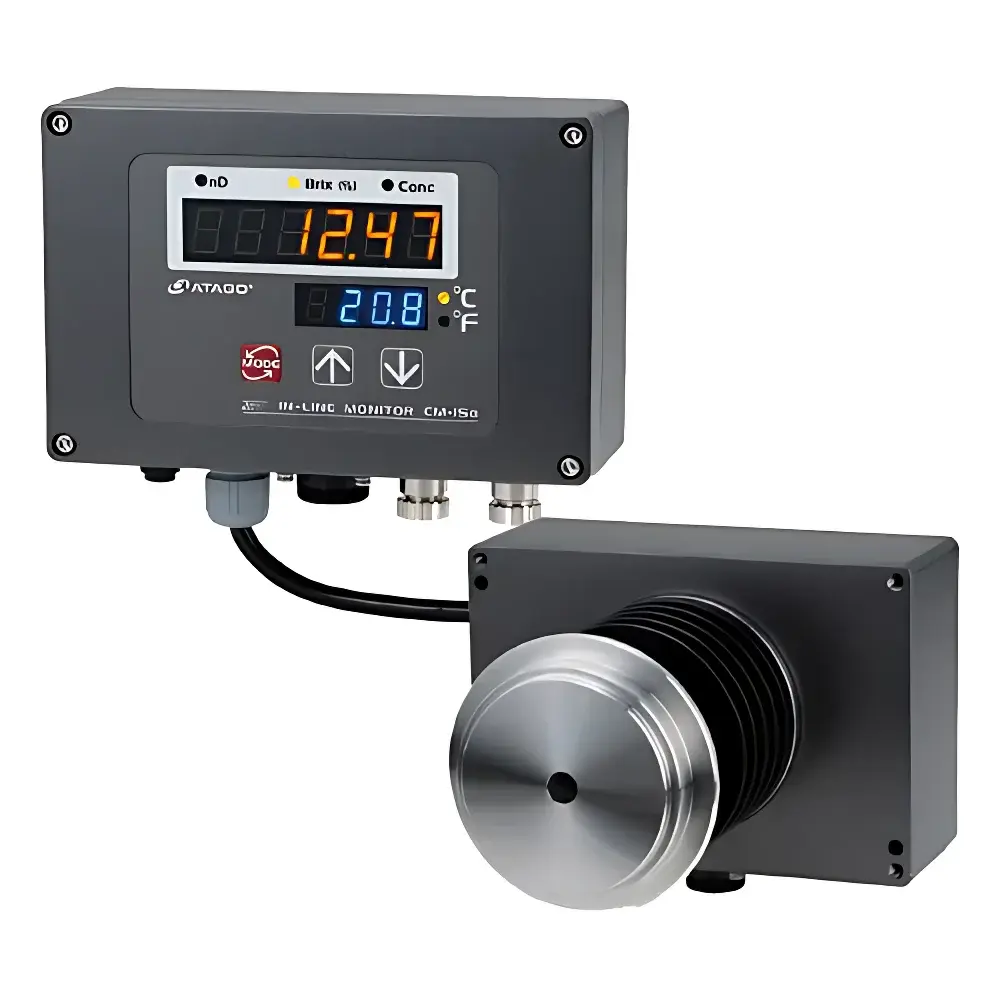
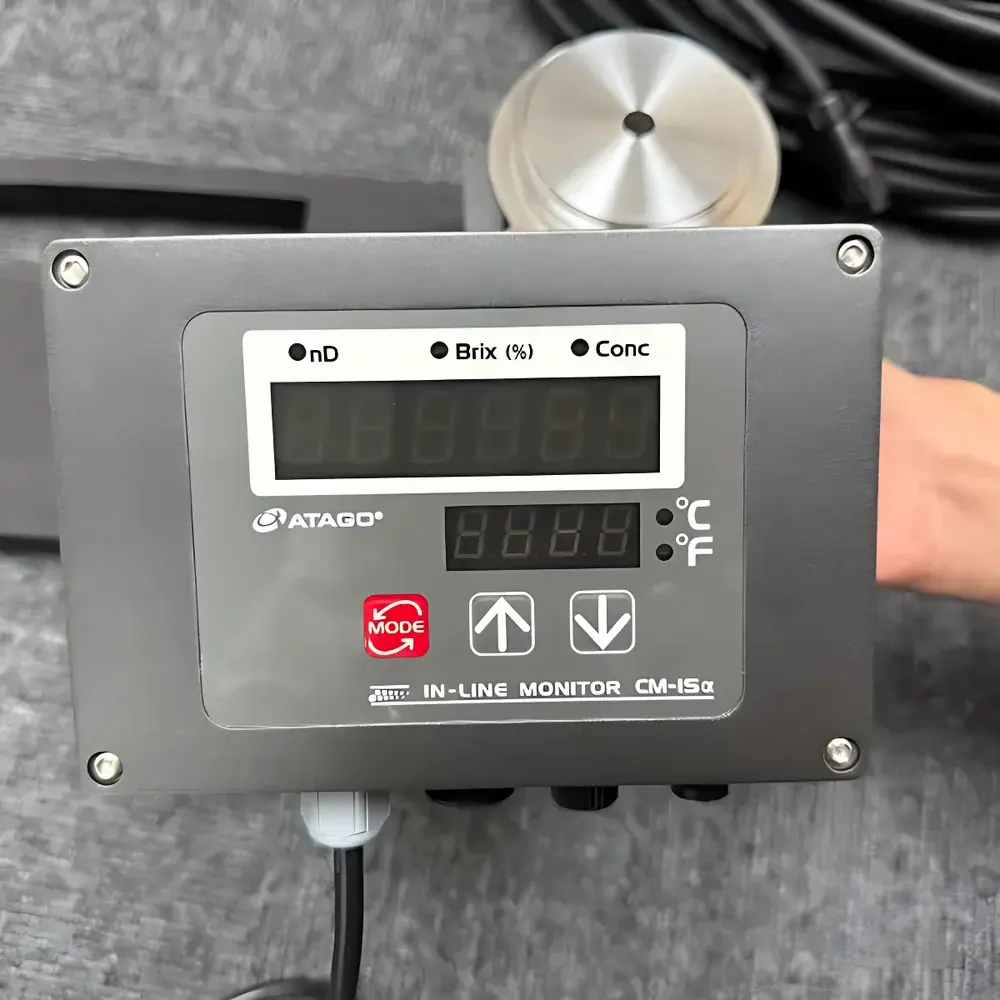
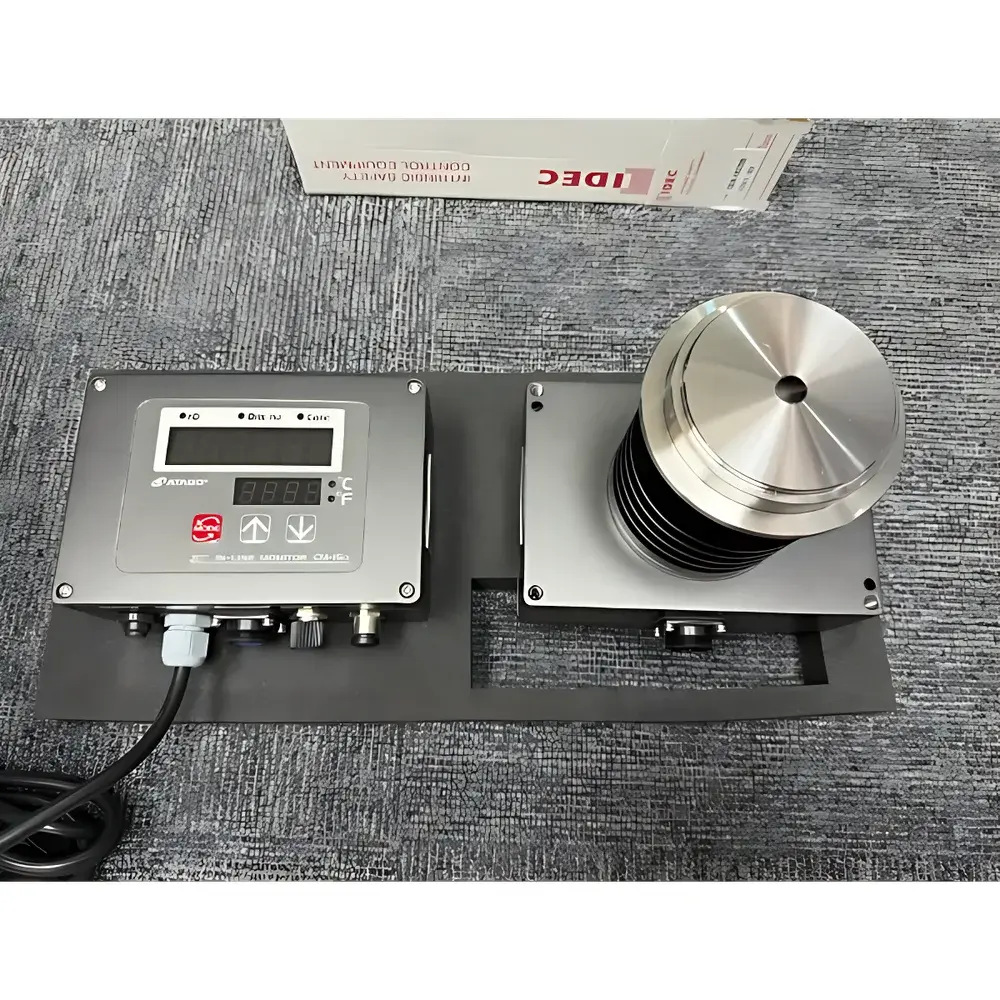
ATAGO CM-ISα Intrinsically Safe In-Line Refractometer for DMAC
| Brand | ATAGO |
|---|---|
| Origin | Japan |
| Model | CM-ISα |
| Type | In-Line Refractometer |
| Temperature Control | Yes |
| Digital Display | Yes |
| Measurement Range | Brix 0.0–80.0% |
| Refractive Index Accuracy | ±0.0002 |
| Brix Accuracy | ±0.1% |
| Temperature Range | −15 to 160 °C |
| Resolution | RI 0.00001, Brix 0.01% or 0.1%, Temp 0.1 °C |
| ATC Range | 5–100 °C |
| Output | 4–20 mA DC or RS-232C |
| Power Supply | 24 V DC |
| Explosion Protection | Ex ia IIB T3 Ga TA |
Overview
The ATAGO CM-ISα Intrinsically Safe In-Line Refractometer is a process-grade optical instrument engineered for continuous, real-time concentration monitoring of dimethylacetamide (DMAC) and other transparent, homogeneous liquid solutions in hazardous industrial environments. Based on the fundamental principle of critical-angle refractometry, the CM-ISα measures the refractive index (RI) of process streams with high optical stability and thermal robustness. As RI exhibits a well-characterized, monotonic relationship with solute concentration—particularly for single-solute systems like DMAC/water—the instrument delivers traceable, non-invasive concentration data without sampling, reagents, or flow interruption. Its intrinsically safe design complies with IEC 60079-0 and IEC 60079-11 standards, enabling direct installation in Zone 0/1 classified areas where explosive atmospheres containing Group IIB gases (e.g., DMAC vapors) may be present. The sensor head is constructed from 316 stainless steel with sapphire optical windows, ensuring chemical resistance to aggressive organic solvents and long-term measurement integrity under thermal cycling.
Key Features
- Intrinsically safe certification: Ex ia IIB T3 Ga TA — suitable for continuous operation in Zone 0 hazardous locations.
- Integrated Peltier-based temperature control and high-resolution Pt100 RTD sensing for active thermal stabilization and automatic temperature compensation (ATC) across 5–100 °C.
- Dual-mode digital display: Local 4-digit LCD showing real-time RI, Brix, concentration (% w/w), and temperature simultaneously.
- High-precision optical path: Sapphire prism interface with <0.0002 RI accuracy and 0.00001 RI resolution, validated per ISO 21542 calibration protocols.
- Industrial analog/digital outputs: Isolated 4–20 mA current loop (HART-compatible) and RS-232C serial interface for integration into DCS, PLC, or SCADA systems.
- Robust process interface: DN25/DN40 flange mounting (ANSI/ISO standards), IP67-rated electronics housing, and optional sanitary tri-clamp adapters.
Sample Compatibility & Compliance
The CM-ISα is optimized for clear, low-turbidity liquids with stable optical transmission above 400 nm. It is routinely deployed for DMAC concentration control in pharmaceutical solvent recovery, polymer synthesis (e.g., polyacrylonitrile fiber production), and electronic-grade chemical manufacturing. It meets material compatibility requirements per ASTM D471 for elastomer seals and is compatible with common process wetted materials including 316SS, Hastelloy C-276, and FKM fluoroelastomers. Regulatory alignment includes support for 21 CFR Part 11-compliant data logging when paired with ATAGO’s optional Data Logger Software (v3.2+), providing audit trails, user access control, and electronic signature capability. The instrument satisfies GLP/GMP documentation requirements for concentration-critical unit operations and is referenced in multiple internal SOPs for API intermediate purification.
Software & Data Management
The CM-ISα supports bidirectional communication via RS-232C using ASCII command protocol (ATAGO Standard Protocol v2.1). Configuration, calibration, and alarm thresholds are managed through ATAGO’s PC-based CM Manager Software, which logs timestamped measurements at user-defined intervals (1–3600 seconds). Export formats include CSV and Excel-compatible .xls; raw data files retain metadata such as sensor ID, calibration date, ATC status, and diagnostic flags (e.g., prism fouling warning, temperature out-of-range). When integrated into a validated environment, the software supports IQ/OQ documentation packages and generates PDF reports compliant with ISO/IEC 17025 reporting guidelines.
Applications
- Real-time DMAC concentration control during solvent stripping and distillation in pharmaceutical active ingredient (API) synthesis.
- Continuous monitoring of DMAC/water azeotrope composition in membrane-assisted separation units.
- Concentration feedback loop for automated feed-forward control of evaporation rate in PAN precursor spinning dope preparation.
- In-line quality verification of electronic-grade DMAC prior to wafer cleaning baths in semiconductor front-end processes.
- Batch release testing support for GMP-compliant solvent inventory management in contract manufacturing organizations (CMOs).
FAQ
What safety certifications does the CM-ISα hold for hazardous area installation?
It carries full Ex ia IIB T3 Ga TA certification per IEC 60079-11, permitting use in Zone 0 gas environments with ignition temperature >200 °C and maximum surface temperature ≤100 °C.
Can the CM-ISα measure solutions other than DMAC?
Yes—it supports custom calibration curves for any binary or pseudo-binary system with known RI-concentration relationship (e.g., NMP, DMSO, ethylene glycol, sucrose solutions); factory-loaded Brix and RI modes are standard.
Is temperature compensation automatic and traceable?
Yes—integrated Pt100 RTD provides NIST-traceable temperature measurement; ATC algorithm applies polynomial correction per ISO 1042 and ASTM D1218.
How is prism fouling detected and managed?
The instrument monitors signal-to-noise ratio of the critical-angle detection photodiode array; sustained deviation >5% triggers a maintenance alert and reduces measurement confidence flag in output registers.




