
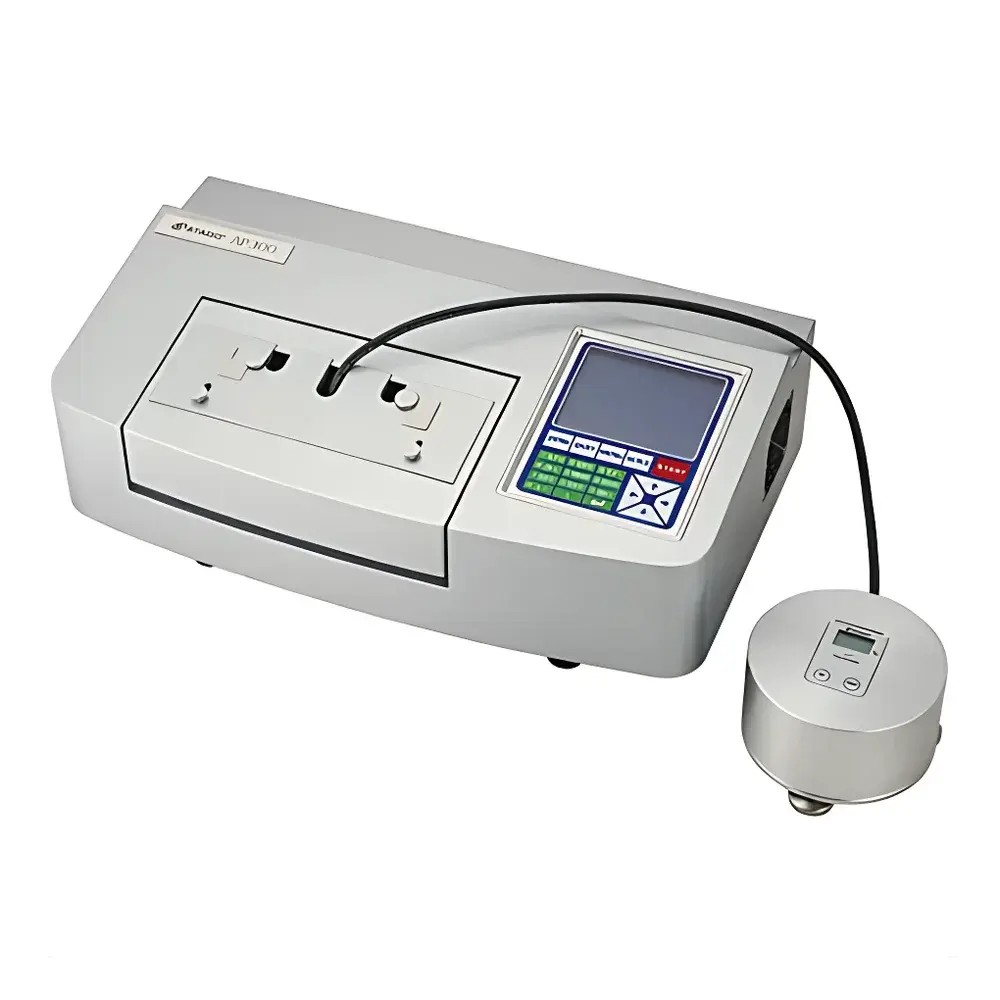
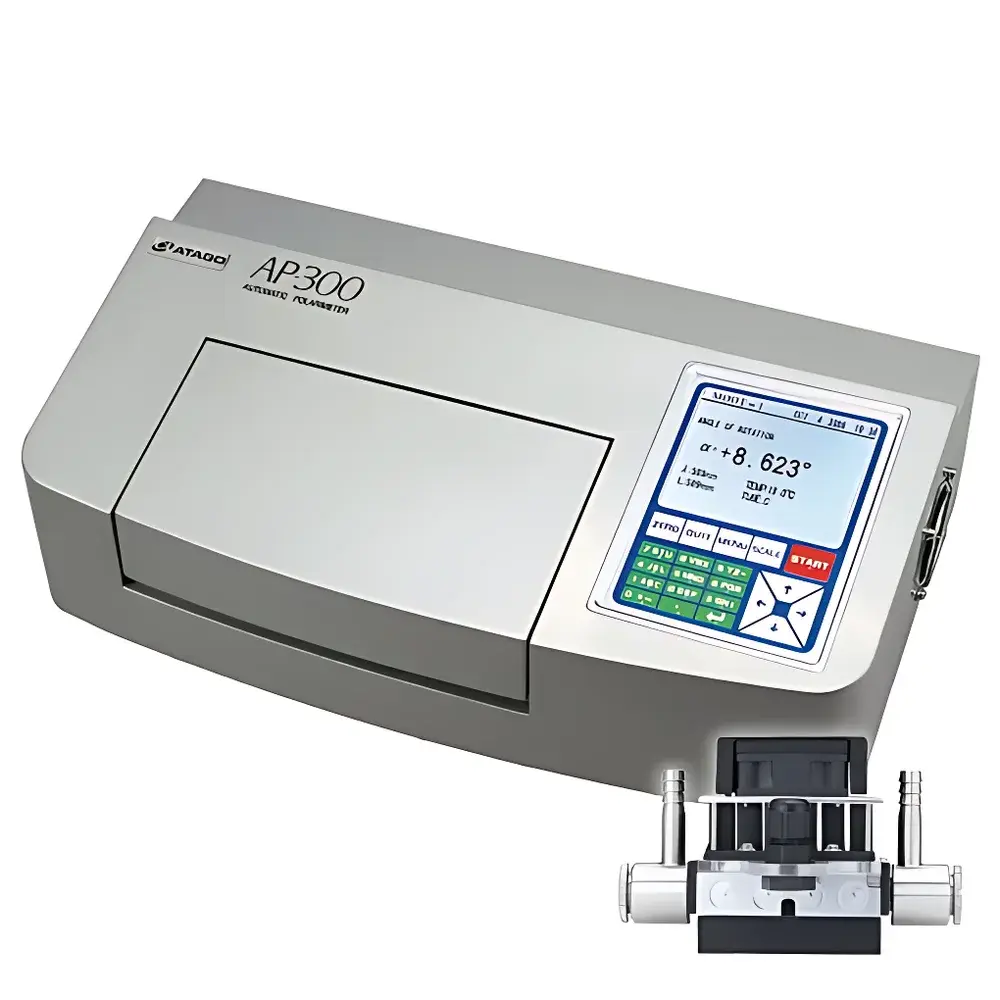
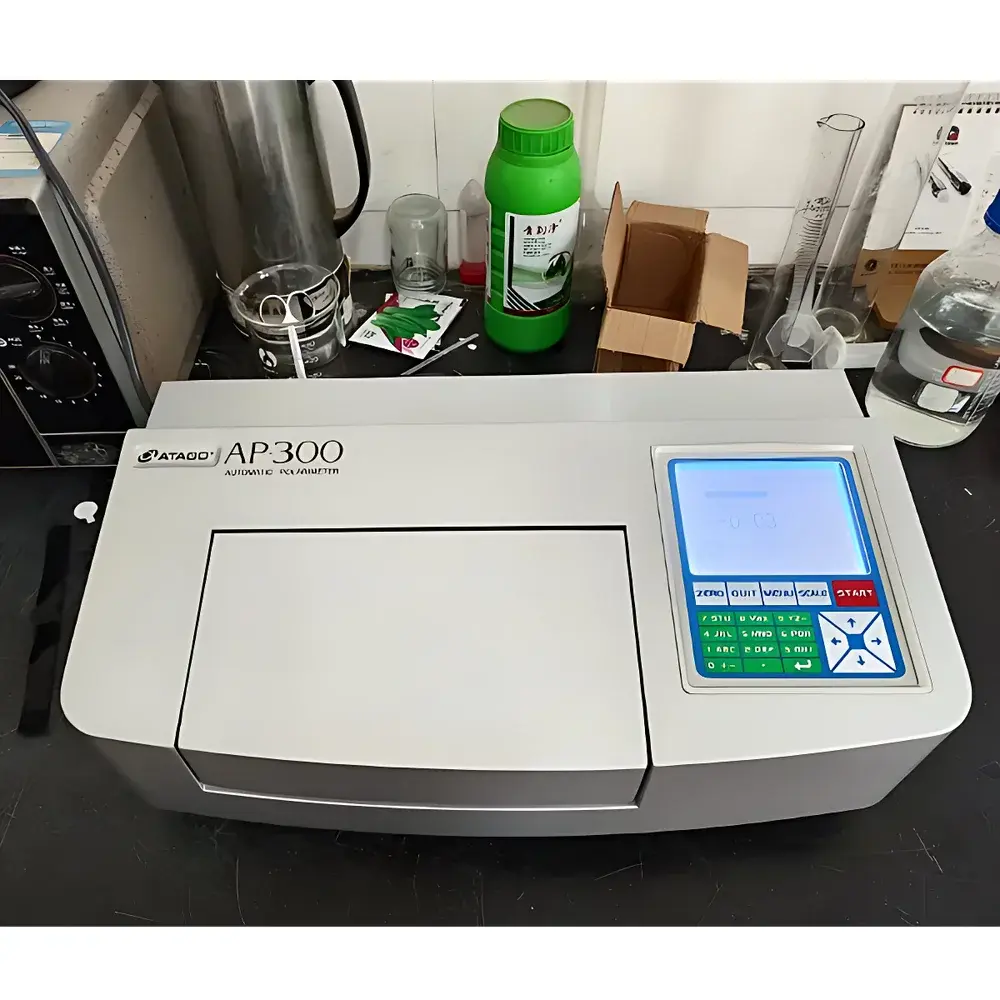
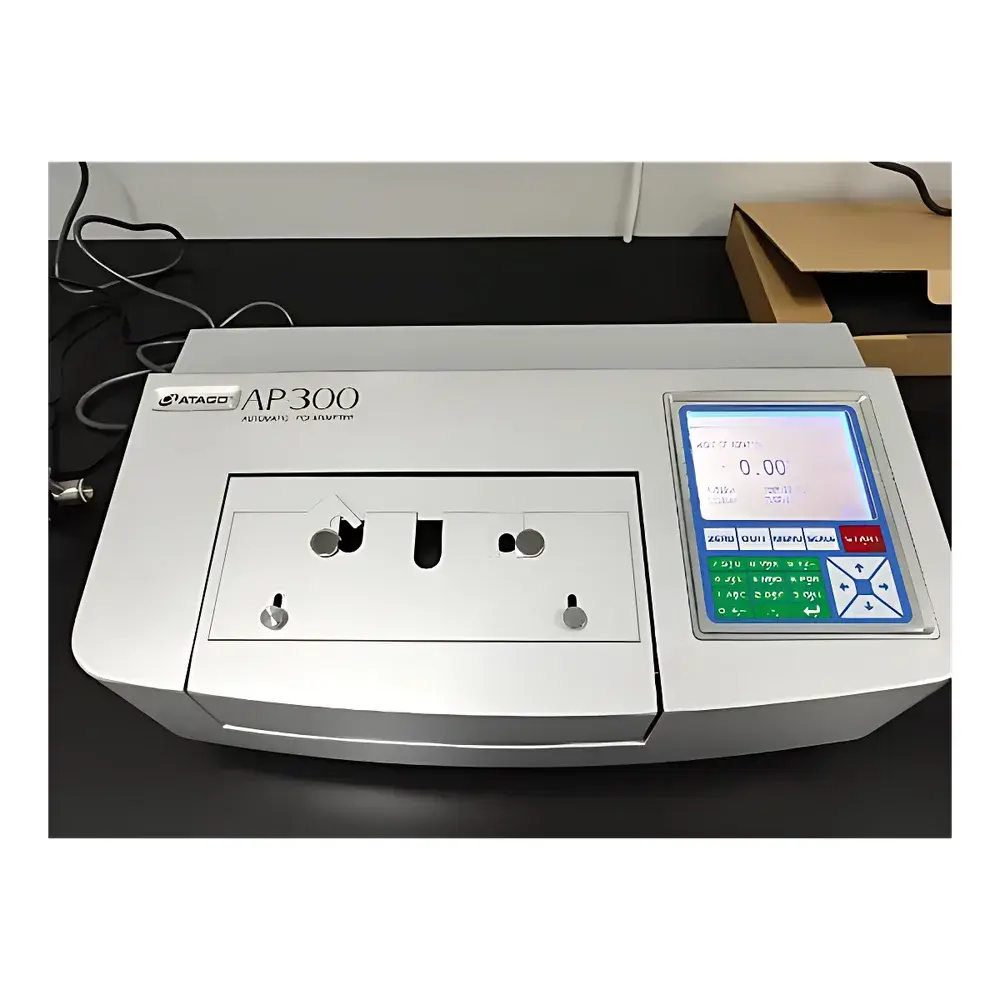
ATAGO AP-300 Automated Temperature-Controlled Polarimeter
| Brand | ATAGO |
|---|---|
| Origin | Japan |
| Model | AP-300 |
| Light Source | White LED (589 nm approx. D-line) |
| Measurement Range | Optical Rotation: −89.999 to +89.999° |
| International Standard Sucrose Scale (ISS) | −130.000 to +130.000°Z |
| Temperature Control Range | 10.0 to 30.0°C |
| Resolution | 0.001° / 0.001°Z (selectable) |
| Accuracy | ±0.01° (AR, −35.00 to +35.00°), ±0.03°Z (ISS, −101.00 to +101.00°Z) |
| Temperature Accuracy | ±0.5°C |
| Display | Color backlit LCD |
| Interface | RS-232C for printer & PC connectivity |
| Power | AC 100–240 V, 50/60 Hz, 140 VA |
| Dimensions (W×D×H) | 48.5 × 28.5 × 17.5 cm |
| Weight | 14.4 kg (main unit only) |
| Compliance | FDA 21 CFR Part 11, ICUMSA, GLP-ready audit trail support |
Overview
The ATAGO AP-300 Automated Temperature-Controlled Polarimeter is a precision optical instrument engineered for high-reproducibility measurement of optical rotation and International Standard Sucrose Scale (ISS) values in chiral solutions. Based on the fundamental principle of polarimetry—detection of angular rotation of plane-polarized light induced by optically active compounds—the AP-300 delivers traceable, temperature-stabilized measurements critical for quantitative analysis in regulated environments. Its integrated Peltier-based thermal control system maintains sample temperature within ±0.5°C across a 10.0–30.0°C range, enabling compliance with ICUMSA Method GS4/3-11 (sugar analysis) and USP requirements for temperature-sensitive determinations. The instrument operates at a stabilized 589 nm wavelength (near sodium D-line), using a solid-state white LED source for long-term photometric stability and reduced maintenance compared to traditional sodium lamps. Designed for routine QC labs and R&D facilities, the AP-300 supports direct determination of optical rotation (α), specific rotation ([α]), concentration, purity, and ISS—without manual calculation—through embedded algorithms aligned with ISO 5725 (accuracy and precision) and ASTM E287 (standard practice for polarimetric measurements).
Key Features
- Integrated Peltier temperature control system with real-time monitoring (10.0–30.0°C range, ±0.5°C accuracy) and automatic temperature compensation for ISS readings (18.0–30.0°C)
- High-resolution detection: 0.001° and 0.001°Z selectable resolution for optical rotation and ISS, respectively
- FDA 21 CFR Part 11–compliant architecture, including user authentication, electronic signatures, audit trail logging, and password-protected method storage (up to 30 protocols)
- Automated averaging function: configurable repeat measurements (1–9 cycles) with statistical summary (mean, SD, CV%) displayed and exported
- Color backlit LCD interface with intuitive icon-driven navigation; no external PC required for basic operation
- RS-232C port for bidirectional communication with LIMS, ELN, or legacy data acquisition systems; compatible with standard thermal printers
- Manual calibration capability via certified quartz control plates; traceable to NIST-traceable reference standards
- Compact benchtop footprint (48.5 × 28.5 × 17.5 cm) with robust aluminum housing designed for continuous operation in ISO 17025-accredited laboratories
Sample Compatibility & Compliance
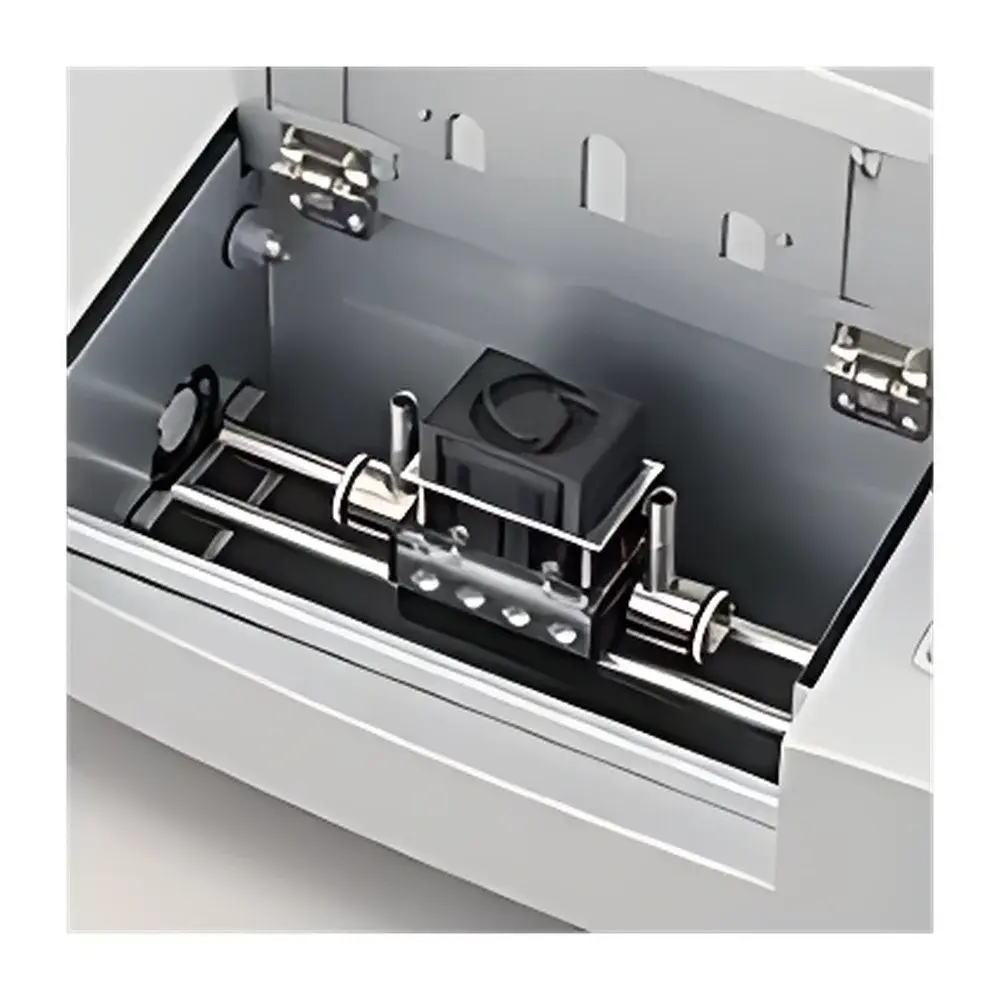
The AP-300 accommodates standard 100 mm and 200 mm pathlength polarimeter tubes (5 mL and 10 mL volumes), supporting aqueous, alcoholic, and low-viscosity organic solutions typical in pharmaceutical, food, and chemical applications. It is validated for use with sucrose, glucose, fructose, ascorbic acid, sodium glutamate, menthol, limonene, and other optically active analytes per pharmacopoeial monographs (USP, EP, JP). Instrument performance conforms to ICUMSA GS4/3-11 for raw sugar purity assessment and meets the metrological requirements of ISO/IEC 17025:2017 for testing laboratories. Temperature-controlled operation ensures adherence to GLP and GMP documentation standards, with full audit trail generation—including operator ID, timestamp, parameter settings, raw data, and calibration history—for regulatory submissions.
Software & Data Management
While fully functional as a standalone instrument, the AP-300 supports seamless integration into digital lab infrastructures. All measurement records—including raw angle values, compensated ISS, calculated concentration/purity, and environmental metadata (temperature, date/time, operator)—are stored internally with time-stamped entries. Export is supported via RS-232C to CSV or TXT formats compatible with Excel, LabWare LIMS, or custom QA databases. Audit trail logs meet FDA 21 CFR Part 11 Subpart B requirements: each record includes immutable timestamps, user login credentials, and event-type categorization (e.g., “measurement,” “calibration,” “parameter change”). No proprietary software installation is required; configuration and data retrieval can be performed using standard terminal emulators or vendor-supplied lightweight utilities.
Applications
The AP-300 serves as a primary analytical tool across multiple regulated sectors:
- Pharmaceuticals: Identity confirmation and assay of chiral APIs (e.g., levodopa, ibuprofen, chloramphenicol); stability-indicating quantification in dissolution and degradation studies
- Food & Beverage: Sucrose content verification in syrups, juices, and confectionery; authenticity testing of honey and maple syrup per Codex Alimentarius standards
- Chemical Manufacturing: Purity assessment of enantiomerically enriched intermediates; batch release testing for fine chemicals and agrochemicals
- Academic & Research Labs: Teaching polarimetric theory and experimental methodology; kinetic studies of enzymatic hydrolysis (e.g., invertase activity via sucrose→glucose+fructose conversion)
- Regulatory Testing: Compliance with AOAC Official Method 952.07 (sugar analysis), USP , and EP 2.2.7 for optical rotation specifications
FAQ
Does the AP-300 comply with FDA 21 CFR Part 11 for electronic records and signatures?
Yes. The instrument implements role-based access control, electronic signature capture, and tamper-evident audit trails meeting all technical and procedural requirements of Subpart B.
Can the AP-300 measure samples outside the 10–30°C temperature range?
No. The built-in Peltier system is rated for 10.0–30.0°C only. Ambient temperature must remain within 15–35°C for stable thermal regulation.
Is temperature compensation applied automatically for all measurement modes?
Temperature compensation is enabled by default for ISS mode (18.0–30.0°C range); optical rotation mode provides raw uncorrected α-values unless manually adjusted using the [α] calculation function.
What calibration standards are recommended for routine verification?
ATAGO-certified quartz control plates (e.g., QP-10, QP-20) traceable to NIST SRM 882a are recommended for daily verification; calibration should be performed at the same temperature as sample measurement.
How is data integrity ensured during power interruption or unexpected shutdown?
All measurement and audit trail data are written to non-volatile memory prior to display update, preventing loss during transient power events. Internal clock battery backup preserves time/date functionality for ≥72 hours.




