
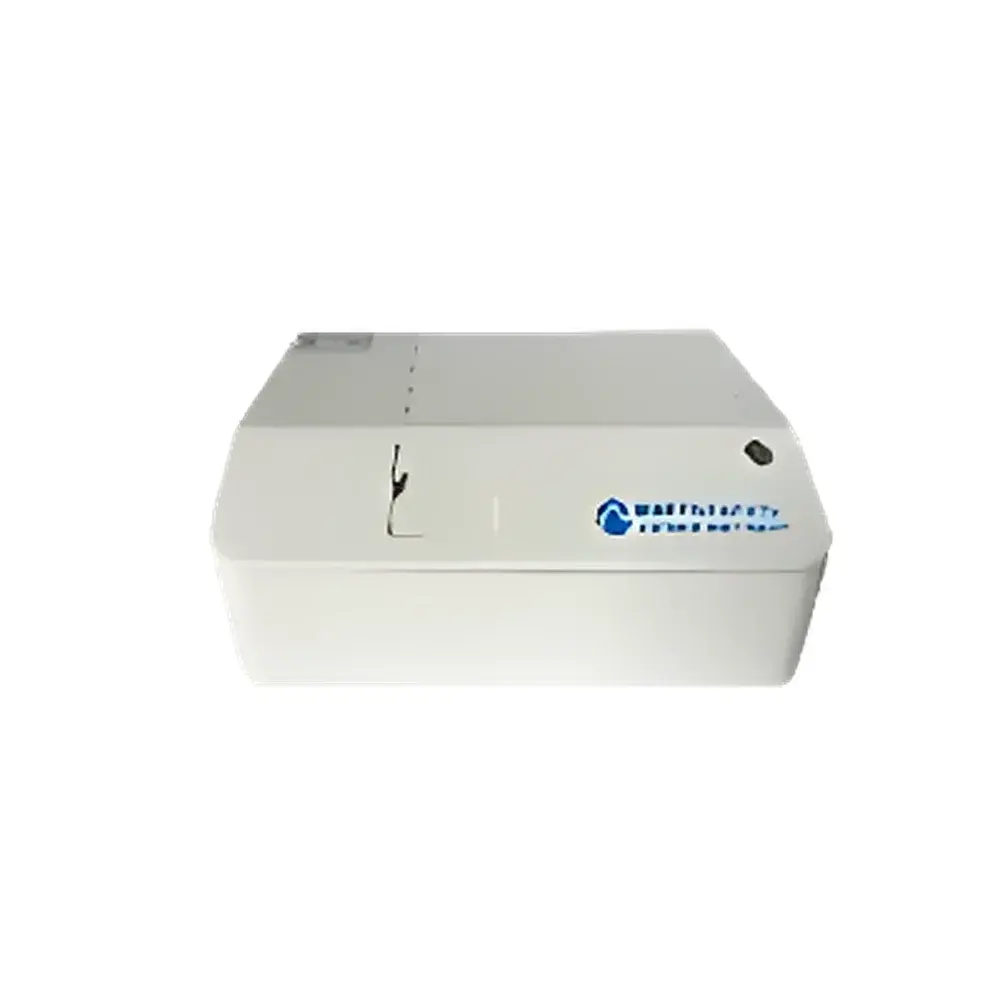
Online Instrument OL1010 Infrared Spectrophotometric Oil Content Analyzer (Manual Operation)
| Brand | Online Instrument |
|---|---|
| Origin | Shanghai, China |
| Manufacturer Type | Direct Manufacturer |
| Product Category | Domestic |
| Model | OL1010 |
| Instrument Type | Laboratory Benchtop Analyzer |
| Measurement Principle | Infrared Spectrophotometry (C–H Stretch Absorption at 2930 cm⁻¹, 2960 cm⁻¹, and 2850 cm⁻¹) |
| Measurement Range | 0–50,000 mg/L |
| Detection Limit | 0.06 mg/L |
| Accuracy | ±2% of reading |
| Resolution | 0.001 mg/L |
| Analysis Time per Sample | <60 s |
| Light Source | Switching Power Supply–Driven IR Emitter |
| Wavelength Selection Method | Motorized Precision Grating Drive |
| Zero Calibration | Real-time Dual-Signal Auto-Zero (Illuminated & Dark Current Compensation) |
| Extraction Solvent | Perchloroethylene (C₂Cl₄) |
| Calibration Modes | Certified Reference Standards, Multi-point Calibration Curve, Single-point Rapid Calibration |
| Compliance | Meets HJ 637–2018 (China), ASTM D7066–22 (Standard Test Method for Determination of Oil and Grease in Water by Infrared Spectrophotometry), ISO 9377-2:2000 (Water Quality — Determination of Hydrocarbon Oil Index) |
Overview
The Online Instrument OL1010 Infrared Spectrophotometric Oil Content Analyzer (Manual Operation) is a dedicated laboratory-grade instrument engineered for precise quantification of total petroleum hydrocarbons (TPH), mineral oil, and non-polar organic contaminants—including animal and vegetable oils—in aqueous matrices. It operates on the fundamental principle of mid-infrared absorption spectroscopy, specifically targeting the asymmetric and symmetric C–H stretching vibrations of aliphatic hydrocarbons at characteristic wavenumbers (2960 cm⁻¹, 2930 cm⁻¹, and 2850 cm⁻¹). This spectral signature enables selective detection of extractable hydrocarbon compounds following liquid–liquid extraction with perchloroethylene (C₂Cl₄), a solvent compliant with HJ 637–2018 and ASTM D7066–22. Unlike broadband or filter-based photometers, the OL1010 employs a motor-driven precision diffraction grating system to isolate narrow spectral bands, ensuring high specificity, minimal interferences from humic substances or surfactants, and long-term baseline stability. Its compact optical architecture—featuring a short-path, detachable integrated optical module—minimizes stray light, maximizes photon throughput, and enhances signal-to-noise ratio (SNR > 10⁴:1), critical for trace-level analysis down to 0.06 mg/L.
Key Features
- Detachable monolithic optical assembly: Enables rapid field maintenance, thermal stabilization, and reduced mechanical drift without realignment.
- Switch-mode IR source: Delivers stable radiant output while minimizing heat generation and eliminating moving chopper mechanisms—improving MTBF and reducing calibration drift.
- Real-time dual-signal auto-zero: Simultaneously acquires illuminated and dark-current signals during each measurement cycle, enabling dynamic electronic zero compensation independent of ambient temperature fluctuations.
- Motorized grating drive with microstep control: Ensures repeatable wavelength positioning accuracy (<±0.2 cm⁻¹) and eliminates manual slit adjustment errors.
- Electromagnetically shielded PCB layout: Complies with IEC 61326-1 Class A for laboratory electromagnetic compatibility (EMC), ensuring robust operation near centrifuges, stirrers, or RF-emitting equipment.
- Modular hardware design: Supports future upgrade paths to fully automated configurations—including robotic sample handling, integrated extraction modules, and sequential solvent management—without replacing the core spectrophotometric engine.
Sample Compatibility & Compliance
The OL1010 is validated for use with environmental water samples including municipal wastewater, industrial effluents, cooling tower water, groundwater, surface runoff, and seawater (post-filtration and salinity correction). It accommodates standard 4-cm pathlength quartz cuvettes and supports both direct measurement of extracted organic phases and background-subtracted differential absorbance protocols. The instrument meets regulatory requirements for data integrity under GLP and ISO/IEC 17025–accredited laboratories: audit trails record operator ID, timestamp, calibration history, raw absorbance spectra, and QC flag status for every analysis. Firmware enforces mandatory calibration verification before sample runs and logs all deviations per HJ 637–2018 Section 7.4. Data export complies with ASTM E1382–21 (Standard Practice for Digital Data Exchange in Environmental Testing) and supports CSV, XML, and PDF report generation with embedded spectral plots.
Software & Data Management
The bundled OL-Analysis Suite v3.2 provides intuitive workflow-driven operation via USB-connected Windows PCs. It supports full spectral scanning (2800–3100 cm⁻¹), peak integration, baseline correction algorithms (Rubberband and Asymmetric Least Squares), and multi-component deconvolution for mixed oil sources. All calibration curves are stored with metadata (certified reference lot numbers, expiration dates, analyst signatures) and enforced against USP analytical instrument qualification criteria. Electronic records comply with FDA 21 CFR Part 11 requirements when deployed with optional digital signature and role-based access control modules. Raw spectral data (.spc format) and processed results are archived with SHA-256 hash verification to prevent tampering. Export options include LIMS-ready HL7 and ASTM E1382-compliant files.
Applications
- Regulatory compliance testing for discharge permits (e.g., EPA NPDES, EU WFD Annex V).
- Wastewater treatment plant influent/effluent monitoring per ISO 9377-2:2000.
- Leak detection and spill response in petrochemical facilities and port operations.
- Food processing facility rinse water screening for lubricant carryover.
- Research applications in aquatic toxicology, bioremediation kinetics, and oil weathering studies.
- Method development and validation support for ISO 16703, EN ISO 9377-2, and GB/T 16488–1996 equivalents.
FAQ
What extraction solvent is required, and why is perchloroethylene specified?
Perchloroethylene (C₂Cl₄) is mandated by HJ 637–2018 and ASTM D7066–22 due to its high extraction efficiency for C₁₀–C₄₀ hydrocarbons, negligible IR absorption in the target C–H region, and immiscibility with water. Alternative solvents (e.g., hexane, Freon-113) introduce spectral interference or regulatory noncompliance.
Can the OL1010 be used for solid-phase or soil extracts?
Yes—when paired with standardized Soxhlet or ultrasonic extraction per ISO 16703, the instrument quantifies total extractable hydrocarbons in soil, sediment, and sludge leachates after solvent evaporation and reconstitution in C₂Cl₄.
Is method validation documentation provided?
Each unit ships with a Factory Performance Qualification (FPQ) report, including linearity (R² ≥ 0.9998 over 0–50,000 mg/L), repeatability (RSD ≤ 1.2% at 5 mg/L), and limit-of-quantitation verification per ICH Q2(R2). Full IQ/OQ/PQ templates are available upon request.
Does the system support multi-laboratory collaborative studies?
Yes—the OL-Analysis Suite includes inter-laboratory comparison mode with built-in Z-score calculation, consensus mean determination, and outlier detection per ISO 5725-2:2019.
Related Products







