
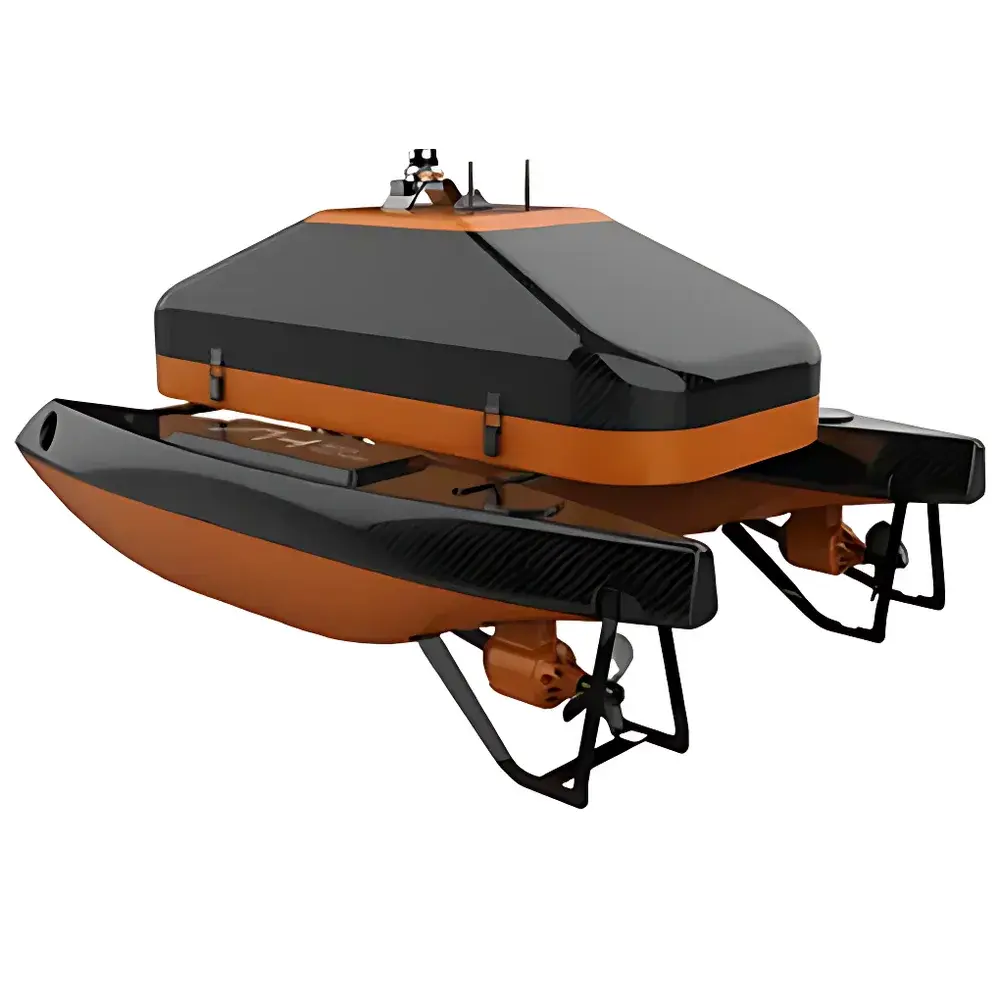
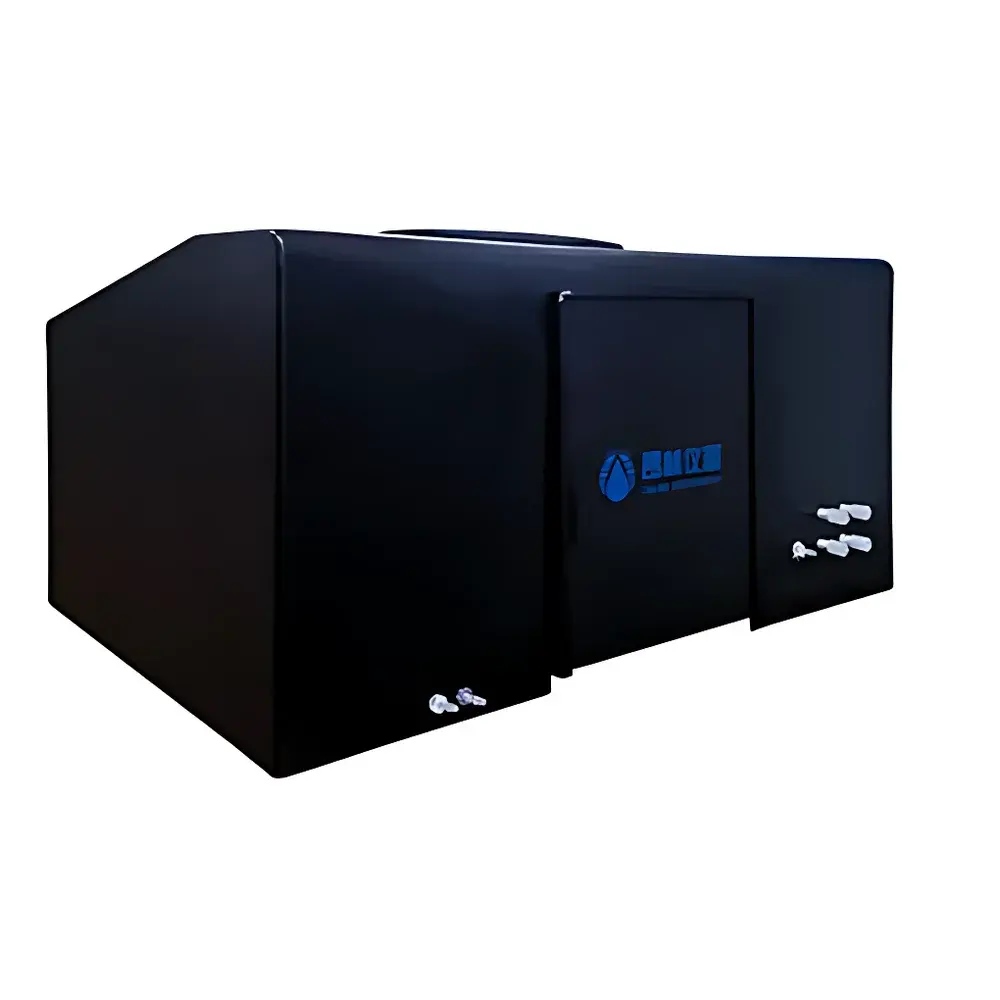
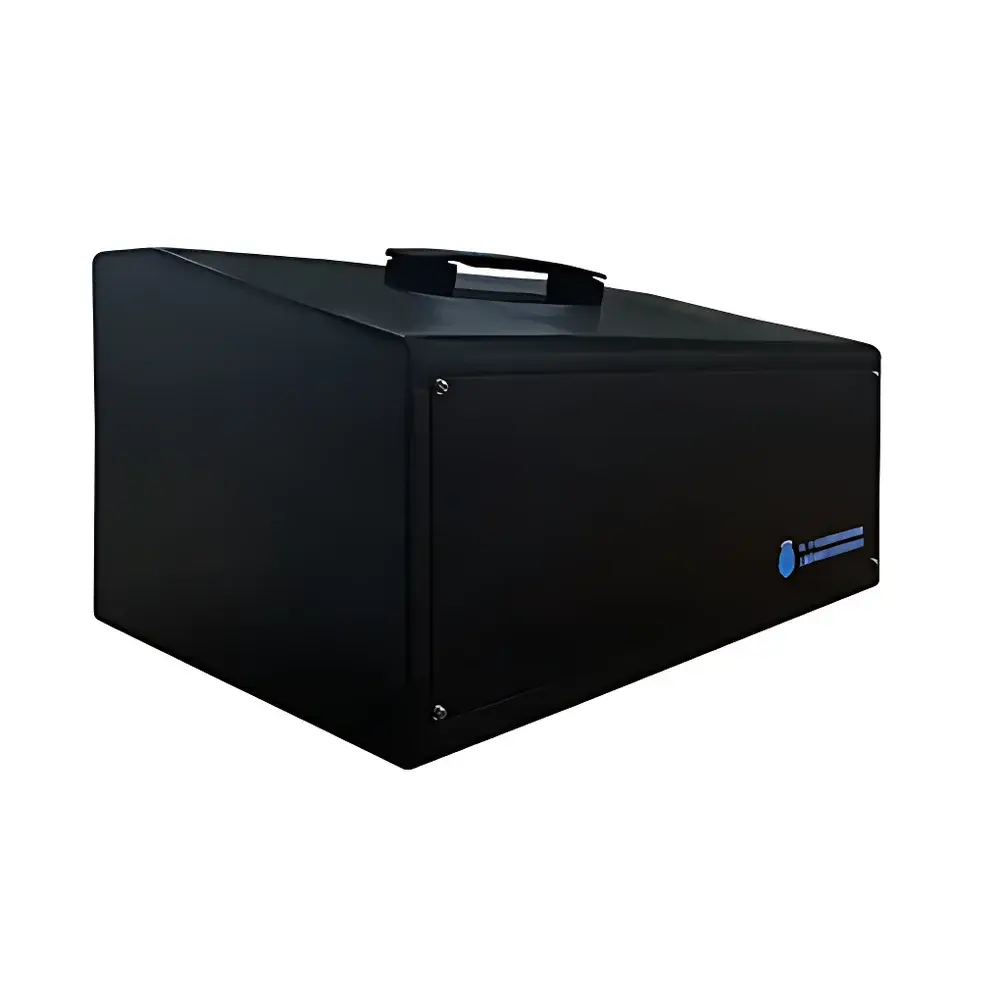
Online Instrument OL1171 Fully Automated Shipborne Oil Content Analyzer
| Brand | Online Instrument |
|---|---|
| Origin | Shanghai, China |
| Manufacturer Type | Direct Manufacturer |
| Product Category | Domestic |
| Model | OL1171 |
| Instrument Type | Portable |
| Measurement Principle | UV Absorption Spectrophotometry (225 nm) with Continuous-Flow Liquid-Liquid Extraction |
| Measurement Range | 0–16 mg/L (with automatic on-board dilution for over-range samples) |
| Detection Limit | 0.005 mg/L |
| Accuracy | ±2% of reading |
| Resolution | 0.001 mg/L |
| Measurement Frequency | User-Configurable (1–12 measurements/hour typical) |
Overview
The Online Instrument OL1171 Fully Automated Shipborne Oil Content Analyzer is an integrated, portable field instrument engineered for real-time, in-situ quantification of petroleum hydrocarbons (e.g., mineral oil, diesel, crude oil residues) in aqueous matrices. It operates on the principle of ultraviolet absorption spectrophotometry at 225 nm—aligned with standardized methodologies such as ASTM D7066 and ISO 9377-2—following continuous-flow liquid–liquid extraction using n-hexane as the extractant. Unlike discrete batch analyzers, the OL1171 performs end-to-end analysis onboard moving vessels without operator intervention: autonomous sampling, programmable volume adjustment based on preliminary absorbance feedback, solvent-mediated extraction, membrane-assisted phase separation, and photometric quantification are executed sequentially within a single sealed chassis. Its optical path is mechanically stabilized against vessel motion (roll/pitch ≤ ±5°), enabling reliable operation during underway surveys on monitoring boats, coastal patrol vessels, or riverine platforms.
Key Features
- Fully automated workflow: Integrated sampling probe, peristaltic fluid handling, n-hexane delivery, extraction chamber, hydrophobic membrane separator, and UV-Vis photometer—all housed in one IP65-rated marine-grade enclosure.
- Adaptive sampling logic: Real-time pre-scan absorbance triggers dynamic sample volume selection (10–100 mL), optimizing sensitivity across low-concentration (e.g., background seawater) and high-load (e.g., near discharge points) scenarios.
- Triple-phase separation architecture: Combines gravity-assisted settling, coalescing membrane filtration, and density-driven interface retention to achieve >99.2% water–n-hexane phase purity prior to measurement—critical for minimizing emulsion interference.
- Vibration-resilient optical system: Fixed-path UV LED source (225 ± 2 nm) and thermally stabilized silicon photodiode detector mounted on rigid aluminum substrate; no moving parts in the light path.
- Onboard dilution capability: When initial measurement exceeds 16 mg/L, the system autonomously draws additional deionized water, mixes with primary extract, and re-analyzes—ensuring traceability and linearity up to 800 mg/L equivalent.
- Remote operational interface: Web-enabled touchscreen HMI (Android-based) supports local control and encrypted cloud synchronization; compatible with MQTT/HTTPS protocols for integration into national water quality telemetry networks.
Sample Compatibility & Compliance
The OL1171 is validated for use with surface water, groundwater, estuarine, and coastal marine samples containing petroleum hydrocarbons in dissolved, dispersed, or micro-emulsified forms. It meets functional equivalence to EPA Method 1664A (revision B) and Chinese Standard HJ 970–2018 for petroleum hydrocarbon determination. All fluid-contact components (PFA tubing, PTFE membranes, borosilicate glass cuvettes) comply with USP Class VI biocompatibility and FDA 21 CFR 177.1550 for food-contact polymers. Data integrity conforms to ALCOA+ principles: audit trails record timestamped events (sample ID, extraction ratio, dilution factor, raw absorbance, calibration verification), supporting GLP/GMP-aligned environmental monitoring programs subject to regulatory review.
Software & Data Management
Embedded firmware (v3.2+) provides full data provenance: each analysis generates a self-contained .CSV packet including raw spectra (320–280 nm, 1 nm resolution), baseline-corrected peak area at 225 nm, QC flag status (e.g., “separation-failure”, “solvent-depletion”), and GPS-tagged geolocation metadata. Data export supports direct upload to LIMS via SFTP or push to regional water quality dashboards (e.g., China’s National Surface Water Monitoring Platform). Software update mechanism employs signed OTA packages with SHA-256 verification. Audit log retention spans ≥12 months on internal eMMC storage, with optional external NAS backup.
Applications
- Regulatory enforcement: Real-time detection of illicit discharges during maritime patrols or river basin inspections.
- Tidal and estuarine monitoring: High-frequency profiling across salinity gradients to track oil dispersion dynamics.
- Post-spill assessment: Rapid deployment from small craft to map plume extent and decay kinetics without lab turnaround delay.
- Wastewater outfall compliance: Continuous verification of effluent oil content against discharge permits (e.g., EU WFD Annex V thresholds).
- Research cruises: Coupled with CTD profilers to correlate hydrocarbon anomalies with physical oceanographic parameters.
FAQ
Does the OL1171 require daily calibration?
No—factory-calibrated with NIST-traceable oil-in-water standards; verification checks every 24 hours using built-in reference cuvette (absorbance = 0.450 ± 0.005 at 225 nm).
Can it operate unattended for extended periods?
Yes—designed for 72-hour continuous duty with dual 12 V DC input (vessel battery + optional solar regulator); includes low-power sleep mode between cycles.
Is n-hexane the only compatible extractant?
Yes—method validation is specific to n-hexane per ISO 9377-2; substitution with alternative solvents invalidates accuracy claims and voids regulatory acceptability.
How is waste solvent managed onboard?
Separate n-hexane and aqueous waste streams are collected in dedicated, labeled HDPE reservoirs (1.5 L capacity each); residual solvent vapor is adsorbed by activated carbon filter before venting.
What maintenance intervals are recommended?
Membrane replacement every 200 analyses; PFA tubing every 6 months or 1,000 cycles; full optical alignment verification annually by certified service engineer.
Related Products







