
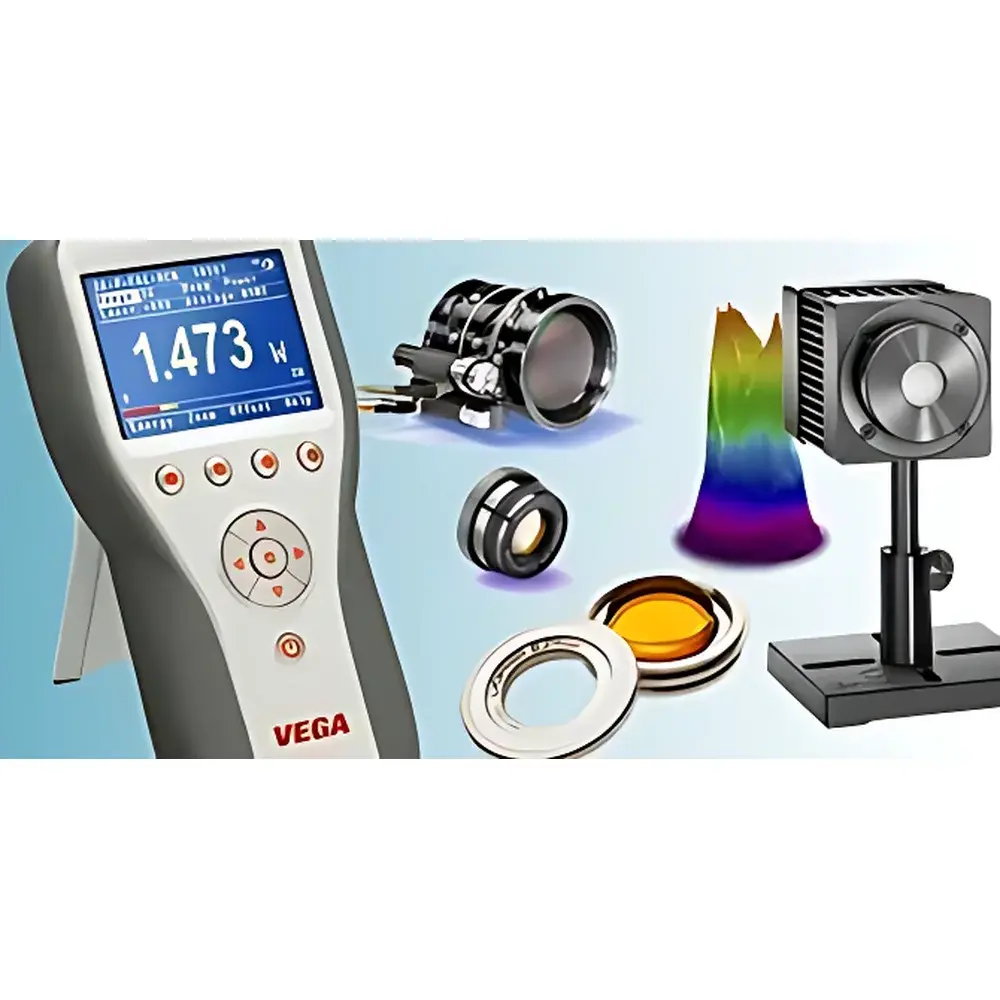
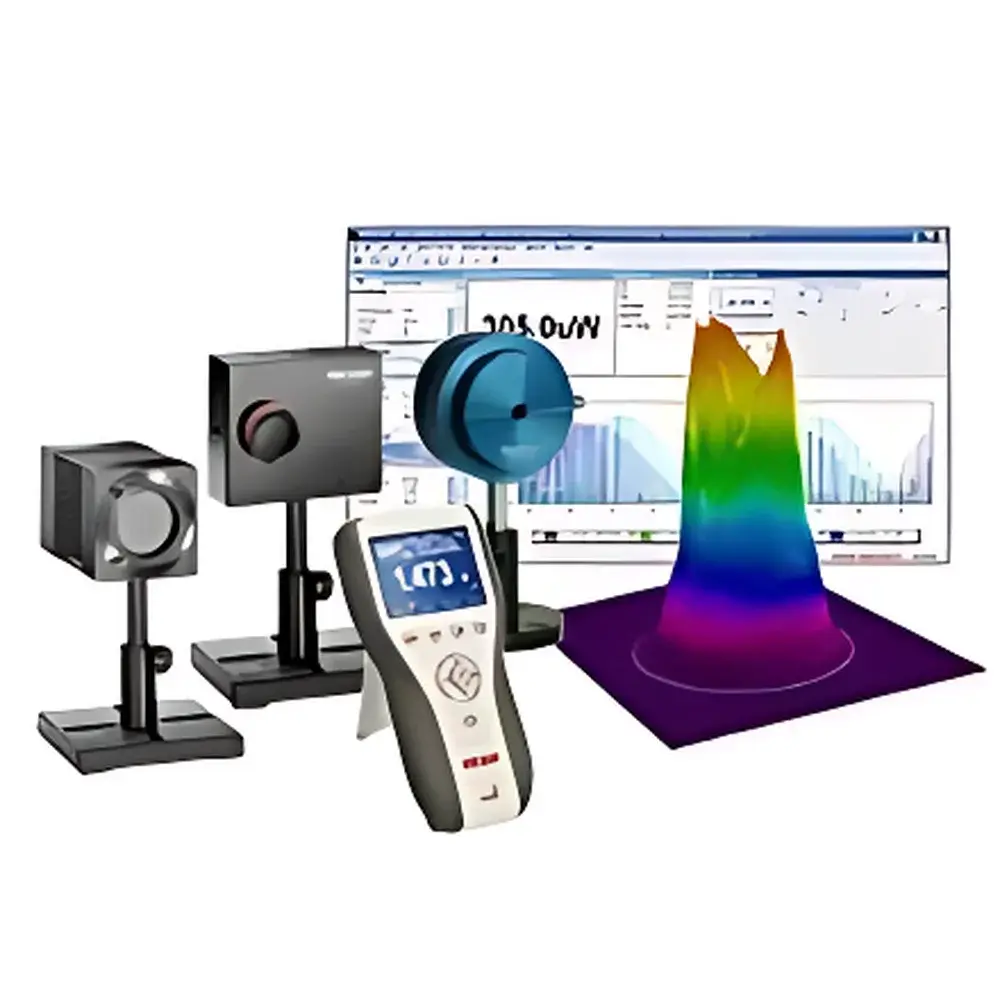
Ophir Laser Power and Energy Meter Systems
| Brand | Ophir |
|---|---|
| Origin | Israel |
| Manufacturer Type | Original Equipment Manufacturer (OEM) |
| Import Status | Imported |
| Model Series | Vega, Nova II, LaserStar, Nova, Orion, BeamTrack |
| Interface Options | USB, RS232, GPIB, Analog Output (1V/2V/5V/10V), Trigger I/O |
| Sampling Rates | Up to 250 kHz (Vega), 2 kHz (Nova II/LaserStar), 1.5 kHz (LaserStar), 10–30 Hz (Nova/Orion) |
| Data Storage | On-device real-time logging, PC-based active storage via USB |
| Software Support | Ophir StarLab v3.x, LabVIEW VIs, ActiveX Controls, FDA 21 CFR Part 11-compliant audit trail (optional), GLP/GMP-ready reporting |
| Detector Compatibility | Thermopile, Photodiode, Pyroelectric, RP (Radiation Pressure), BeamTrack (position & beam diameter) |
Overview
Ophir laser power and energy meter systems—engineered and manufactured in Israel by MKS Instruments (acquired Ophir in 2011)—represent the global benchmark for precision radiometric measurement of continuous-wave (CW) and pulsed laser sources. These instruments operate on well-established physical principles: thermopile sensors convert absorbed optical radiation into proportional thermal voltage via the Seebeck effect; photodiode detectors rely on the photoelectric effect with calibrated spectral responsivity; pyroelectric sensors generate transient charge in response to rapid changes in incident irradiance, enabling accurate single-pulse energy quantification; and BeamTrack sensors integrate quadrant photodiode or position-sensitive detector (PSD) arrays to simultaneously resolve average power, beam centroid position (±0.1 mm accuracy), and Gaussian beam diameter (±5% uncertainty). Designed for traceable metrology in R&D labs, semiconductor manufacturing, medical laser validation, and defense-grade laser testing, Ophir systems comply with ISO/IEC 17025 calibration requirements and support NIST-traceable calibration certificates.
Key Features
- Multi-platform compatibility: Supports over 200 interchangeable sensor heads—including thermopile (30 µW to 10 kW), photodiode (10 pW to 3 W), pyroelectric (0.2 µJ to 40 J), and BeamTrack (power + position + size)—all auto-recognized and configured via StarLab software.
- High-fidelity signal conditioning: Low-noise analog front-end with programmable gain, 16-bit ADC resolution, and hardware-based averaging to suppress thermal drift and electrical noise—critical for sub-milliwatt CW stability and microjoule pulse fidelity.
- Real-time data acquisition: Vega console achieves 250 kS/s sampling with onboard 16 MB buffer; Nova II and LaserStar support up to 2 kHz burst mode for high-repetition-rate pulsed lasers (e.g., ultrafast amplifiers, excimers).
- Ruggedized industrial architecture: IP54-rated enclosures, fan-cooled (FL-series) and water-cooled (L/W-series) thermal management, and damage-threshold-optimized absorber coatings (BB, LP1, PF, HE, IPL) for UV–FIR coverage (193 nm – 20 µm).
- Regulatory-ready software suite: StarLab v3.x includes full 21 CFR Part 11 compliance mode (electronic signatures, role-based access, immutable audit trails), IQ/OQ documentation templates, and automated report generation aligned with ISO 13485 and IEC 60601-2-22 standards.
Sample Compatibility & Compliance
Ophir meters accommodate diverse laser types—including diode, solid-state, fiber, CO₂, excimer, and ultrafast Ti:sapphire—and handle beam diameters from 100 mm (Comet 10K-HD). Sensor selection is governed by wavelength, average power, peak power density, pulse width, and repetition rate. For example: PD300-IRG (800–1700 nm, 10 pW–150 mW) suits telecom pump lasers; PE50BF-DIF-C (0.19–2.2 µm, 200 µJ–10 J, 250 Hz) enables high-damage-threshold Nd:YAG harmonics measurement; L50(300)A-PF-65 (0.15–20 µm, 400 mW–300 W) supports industrial CO₂ cutting validation. All sensors are calibrated per ISO 11554 and ASTM E2758, with optional EU-recognized DAkkS or UKAS accreditation. Traceability extends to NIST, PTB, and NPL standards via factory calibration certificates with uncertainty budgets.
Software & Data Management
Ophir StarLab is a modular, cross-platform application (Windows/macOS/Linux) that unifies instrument control, real-time visualization, statistical analysis, and regulatory reporting. Core capabilities include: multi-channel synchronized acquisition (up to 4 sensors per console), time-domain waveform capture with adjustable trigger thresholds, automatic pulse parameter extraction (energy, FWHM, peak power), moving-average trending, pass/fail limit monitoring with audible alerts, and export to CSV, MATLAB (.mat), or PDF formats. For integration into automated test environments, native LabVIEW VIs, .NET SDKs, and COM/ActiveX interfaces enable seamless linkage with PLCs, motion controllers, or MES platforms. Audit trail functionality records all user actions, parameter changes, and calibration events with timestamps and digital signatures—fully satisfying GLP, GMP, and FDA validation protocols.
Applications
- Laser source characterization: M² verification, power stability assessment (RMS drift <0.5% over 8 h), pulse-to-pulse energy consistency (σ <1.2%), and long-term aging studies.
- Medical device QA: Verification of ophthalmic (193 nm ArF), dermatological (1064/532 nm Nd:YAG), and surgical (CO₂, Er:YAG) laser outputs per IEC 60601-2-22 Annex DD.
- Materials processing: Monitoring of fiber laser welders (1 µm), ultrafast micromachining systems (343/515/1030 nm), and selective laser sintering (SLS) power delivery stability.
- Research instrumentation: Calibration of optical parametric amplifiers (OPAs), supercontinuum sources, and free-electron laser (FEL) beamlines requiring wide-spectrum (UV–FIR) and high-dynamic-range (10¹²) detection.
- Defense & aerospace: High-power directed-energy weapon (DEW) testing, LIDAR transmitter validation, and satellite-borne laser communication terminal alignment using BeamTrack positional feedback.
FAQ
What is the difference between thermopile and pyroelectric sensors?
Thermopiles measure average power (W) by detecting steady-state temperature rise; pyroelectrics respond only to changing irradiance and are used for pulse energy (J) measurement. Thermopiles cover CW and low-repetition-rate pulses; pyroelectrics excel at high-repetition-rate (>100 Hz) and ultrashort (<1 ns) pulses.
Can I use one meter console with multiple sensor types?
Yes. All Ophir consoles (Vega, Nova II, LaserStar, etc.) support hot-swappable sensor heads. StarLab auto-detects connected sensors and loads appropriate calibration coefficients, linearity corrections, and damage-threshold warnings.
How often should I recalibrate my Ophir sensor?
Annual recalibration is recommended for ISO/IEC 17025 compliance. Frequency may increase under heavy usage, exposure to excessive peak power density, or after mechanical shock—particularly for pyroelectric and photodiode sensors.
Does StarLab support FDA 21 CFR Part 11 compliance?
Yes. When enabled, StarLab provides electronic signatures, audit trails with immutable logs, role-based permissions, and secure user authentication—validated for pharmaceutical and medical device quality systems.
What beam parameters can BeamTrack sensors measure simultaneously?
BeamTrack sensors output average power (W), beam centroid X/Y position (±0.1 mm), and Gaussian beam diameter (D4σ, ±5% accuracy), enabling closed-loop beam steering and alignment diagnostics without auxiliary optics.



