
GRINTECH Custom GRIN Lens Assembly – GRIN Fiber Pigtail / Fiber Collimator / Optical Sensor / Lens Array
| Brand | GRINTECH |
|---|---|
| Origin | Canada |
| Manufacturer Type | Authorized Distributor |
| Origin Category | Imported |
| Model | Custom GRIN Lens Assembly |
| Pricing | Upon Request |
| Core Application Domain | Solid-State Laser Systems & Fiber-Optic Integration |
Overview
The GRINTECH Custom GRIN Lens Assembly is a precision-engineered optical component platform built around gradient-index (GRIN) lens technology. Unlike conventional spherical or aspheric lenses, GRIN lenses utilize a radially varying refractive index profile within a homogeneous glass cylinder—enabling compact, alignment-insensitive focusing, collimation, and imaging functions directly at fiber interfaces. This architecture eliminates the need for complex air-gap alignments and minimizes insertion loss in high-stability photonic systems. Designed specifically for integration into solid-state laser systems, fiber-optic sensing architectures, and multi-channel optical interconnects, these assemblies support demanding requirements in biophotonics, optical switching, free-space coupling, and parallel beam conditioning. Each unit is fabricated using thermally matched, low-birefringence SF6 or N-SF11-type GRIN rod materials with controlled index gradients, ensuring wavelength stability across 400–2000 nm and thermal drift < 0.02 µm/°C over −20 to +70°C.
Key Features
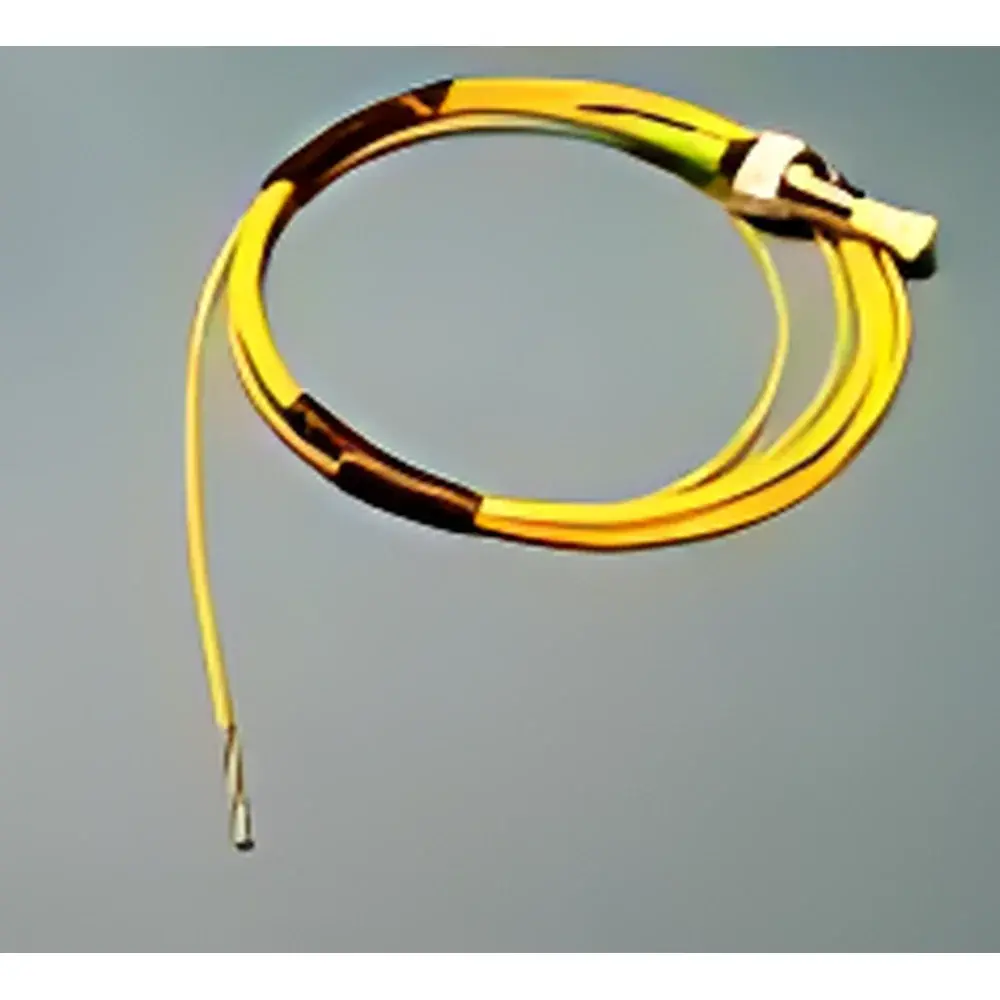
- Monolithic GRIN cylindrical lens elements with nominal numerical apertures of 0.2, 0.35, or 0.5—optimized for single-mode (SM), polarization-maintaining (PM), or specialty fibers (e.g., hollow-core, fluoride, or mid-IR transmitting)
- Standard angular polishing options: 0° (normal incidence) or 8° angled physical contact (APC) endfaces to suppress back reflections (< −60 dB)
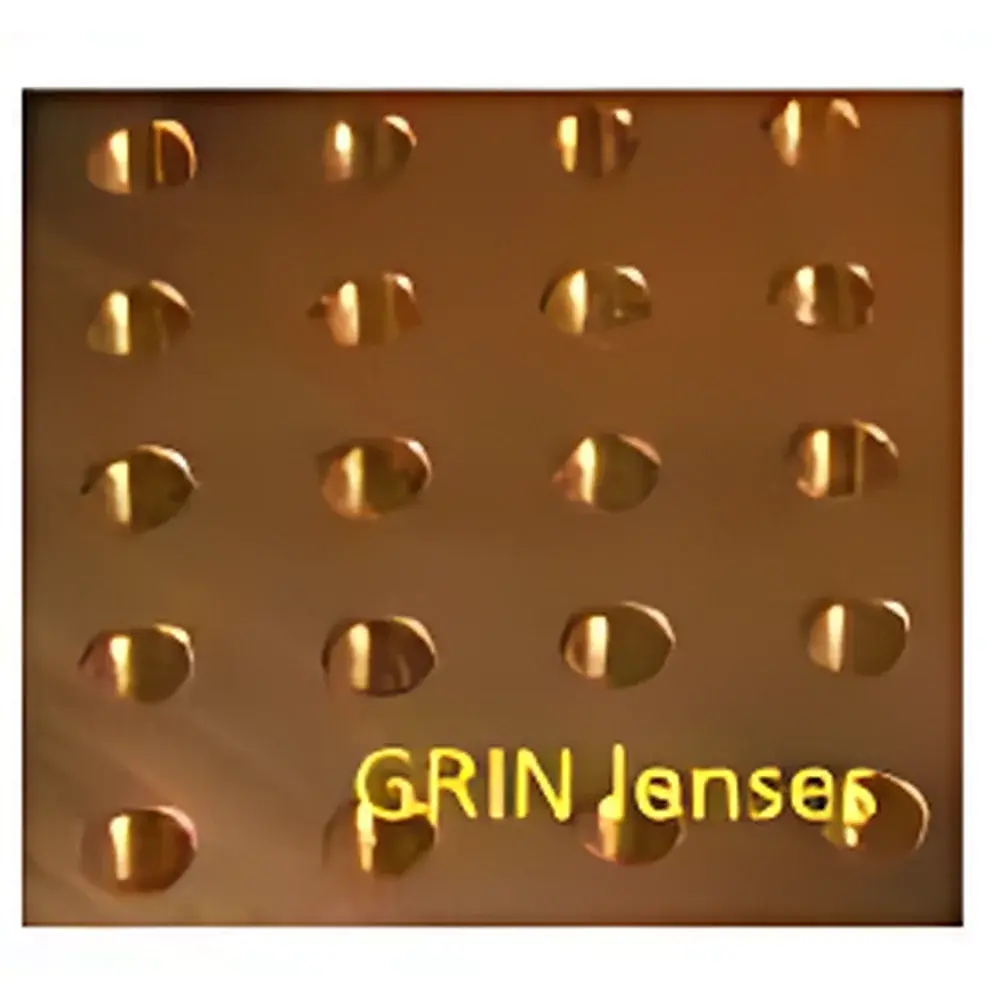
- Customizable lens arrays: 1×8, 1×12, and 1×16 configurations with pitch tolerances of ±1 µm at 250 µm or 500 µm center-to-center spacing
- Precision-ground lens diameters: 240 ±1 µm or 480 ±1 µm—compatible with standard fiber ferrules (FC/PC, FC/APC, SMA905) and micro-optical benches
- Hermetically sealed, epoxy-free bonding using UV-curable optical adhesive compliant with MIL-STD-883H Method 2019 for long-term reliability under thermal cycling and vibration
Sample Compatibility & Compliance
These GRIN lens assemblies are qualified for use with SMF-28, HI1060, PM980, and custom-doped fibers—including photosensitive, radiation-hardened, and fluoride-based variants. All units undergo 100% inspection per ISO 10110-7 for surface quality (scratch-dig ≤ 10–5), wavefront error < λ/8 RMS @ 633 nm, and axial alignment repeatability 5 N). Units intended for medical or aerospace applications may be supplied with full traceability documentation per AS9100 Rev D and ISO 13485 Annex A compliance packages.
Software & Data Management
While inherently passive optical components, GRINTECH assemblies integrate seamlessly into automated alignment workflows via compatible stages (e.g., Thorlabs Kinesis, Newport ESP300). GRINTECH provides standardized Zemax OpticStudio-compatible .ZAR files for each lens configuration—including full GRIN index profile definitions, thermal expansion coefficients, and dispersion data (Sellmeier coefficients). For OEM integration, mechanical drawings (STEP/IGES) and GD&T annotations conforming to ASME Y14.5–2018 are delivered with every order. Traceable calibration certificates include uncertainty budgets calculated per ISO/IEC 17025:2017 Annex A.3.
Applications
- Fiber-to-fiber and fiber-to-free-space coupling in ultrafast amplifier chains and MOPA systems
- Multi-channel collimation for fiber bundle endoscopes and OCT probe heads
- Beam shaping in quantum optics setups requiring uniform phase fronts across >10 spatial modes
- Embedded sensing nodes in distributed temperature/strain monitoring (DTS/DSS) systems using Rayleigh or Brillouin scattering interrogation
- Miniaturized optical switches and reconfigurable add-drop multiplexers (ROADMs) operating at C+L bands
FAQ
What wavelengths are supported by standard GRINTECH GRIN lens assemblies?
Standard units operate from 400 nm to 2000 nm; extended-range versions for 2–5 µm (using Ge-doped GRIN rods) are available upon request.
Can GRIN lens arrays be AR-coated for specific laser lines?
Yes—single-layer or V-coatings for 532 nm, 780 nm, 1064 nm, or 1550 nm are offered with R 5 GW/cm² (10 ns, 10 Hz).
Is polarization-dependent loss (PDL) characterized for PM-fiber-coupled versions?
All PM-configured assemblies are measured for PDL 25 dB maintained post-assembly.
Do you provide environmental testing reports (thermal, shock, humidity)?
Accelerated life testing (HALT) and MIL-STD-810G-compliant environmental validation reports are included for orders exceeding 50 units or upon contractual agreement.
Are CAD models and optical simulation files included with purchase?
Yes—native Zemax (.ZAR), Code V (.SEQ), and Synopsys LightTools (.LTS) files are delivered with every commercial order, along with STEP geometry and tolerance stack-up analyses.



