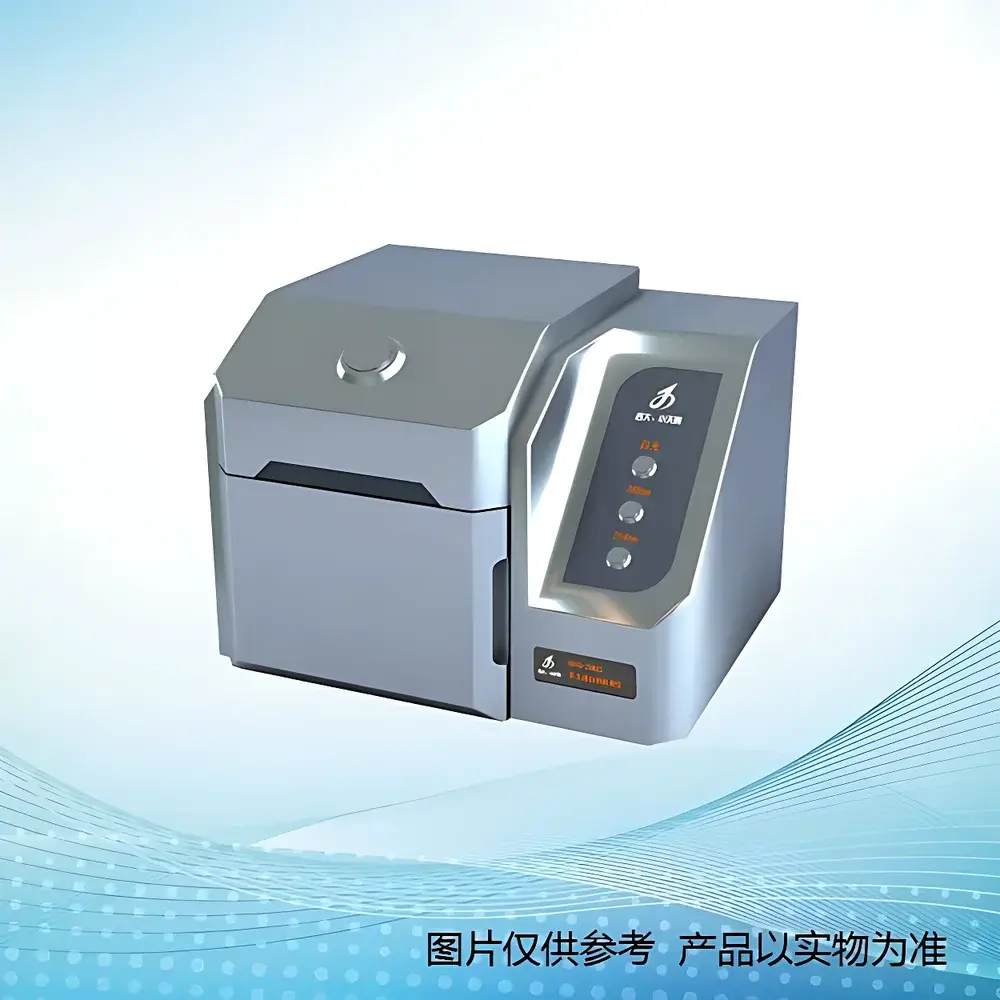
SPL SPL-633W1 Narrow-Linewidth Laser System
| Brand | SPL |
|---|---|
| Origin | Zhejiang, China |
| Manufacturer Type | Authorized Distributor |
| Origin Category | Domestic (China) |
| Model | SPL-633W1 |
| Price | USD 3,500 (FOB Zhejiang) |
| Wavelength | 633 nm |
| Output Power | Up to 60 mW, Continuously Adjustable |
| Beam Mode | TEM₀₀ (Single Transverse Mode) |
| Spatial Output | Collimated Free-Space Beam |
| Linewidth | <1 MHz (typ.) |
| Polarization | Linear, >100:1 Extinction Ratio |
| Beam Diameter (1/e²) | 0.8 ± 0.1 mm |
| Beam Divergence (full angle) | <1.2 mrad |
| Power Stability (RMS, 8h) | <±0.5% |
| Warm-up Time | <15 min to Specified Stability |
| Operating Temperature | 15–35 °C |
| Cooling | Conduction-cooled, Fanless Design |
| Dimensions (L×W×H) | 145 × 85 × 55 mm |
| Weight | 0.9 kg |
Overview
The SPL SPL-633W1 Narrow-Linewidth Laser System is a solid-state diode-pumped laser engineered for high spectral purity and spatial coherence at the helium–neon (He–Ne) standard wavelength of 633 nm. Unlike conventional gas-based He–Ne lasers—characterized by bulky envelopes, limited output power (<5 mW), long warm-up times, and sensitivity to mechanical vibration—the SPL-633W1 leverages intracavity frequency-selective elements and active thermal stabilization to achieve sub-megahertz optical linewidth (<1 MHz typical) while delivering up to 60 mW of continuous-wave (CW) output power. Its TEM₀₀ Gaussian beam profile, collimated free-space output, and compact monolithic housing (145 × 85 × 55 mm) make it suitable for integration into space-constrained optical platforms including interferometers, holographic recording systems, ellipsometers, and metrology-grade alignment tools. The system operates without forced air cooling, relying on passive conduction-based thermal management—a design choice that eliminates airflow-induced beam path disturbances and supports silent, vibration-free operation in precision laboratory environments.
Key Features
- Stable 633 nm emission with 100 m)
- Continuously adjustable output power from 5 mW to 60 mW via analog voltage input (0–5 V) or digital interface, enabling precise intensity control without mode hopping
- Diffraction-limited TEM₀₀ output with M² < 1.1, beam divergence <1.2 mrad (full angle), and 1/e² diameter of 0.8 ± 0.1 mm
- Fanless, conduction-cooled architecture ensures zero acoustic noise and minimal mechanical perturbation—critical for low-vibration optical tables and atomic physics setups
- Integrated thermoelectric cooler (TEC) and PID-controlled temperature regulation maintain wavelength drift <±0.5 pm over 8 hours at constant ambient conditions
- Linear polarization with extinction ratio >100:1, facilitating straightforward integration with waveplates, polarizing beam splitters, and electro-optic modulators
- Compliant with IEC 60825-1:2014 Class 3B laser safety requirements; includes interlock connector, key switch, and emission indicator LED
Sample Compatibility & Compliance
The SPL-633W1 is designed for use with standard optomechanical components compatible with 633 nm wavelength—including fused silica lenses, broadband dielectric mirrors, and interference filters certified to ISO 10110 surface quality standards. Its low-noise intensity stability (<±0.5% RMS over 8 h) and absence of relaxation oscillation spikes support quantitative measurements in photometric calibration and laser-induced fluorescence (LIF) spectroscopy. The unit conforms to CE marking directives (2014/30/EU EMC, 2014/35/EU LVD), RoHS 2011/65/EU, and meets the mechanical robustness requirements of MIL-STD-810G Method 514.6 for transport vibration. While not classified as a medical device, its performance parameters align with ANSI Z136.1-2022 and EN 60825-1 safety protocols applicable to research-grade laser sources used in university and industrial R&D laboratories.
Software & Data Management
The SPL-633W1 supports both analog (0–5 V) and digital (RS-232 or optional USB-C) control interfaces. A vendor-provided Windows/Linux-compatible SDK enables programmable power ramping, real-time power monitoring, and temperature setpoint adjustment via SCPI-like command syntax. All operational parameters—including actual output power, TEC current, heatsink temperature, and fault status—are logged with timestamp resolution of 100 ms. Audit trails comply with GLP documentation requirements when configured with external time-synchronized data acquisition systems. No proprietary runtime or driver installation is required for basic analog operation; RS-232 communication uses standard null-modem wiring and does not depend on signed kernel modules—ensuring compatibility with air-gapped or legacy computing environments common in metrology labs.
Applications
- High-resolution laser interferometry (e.g., displacement metrology, gravitational wave detector prototype testing)
- Optical coherence tomography (OCT) light source seeding and reference arm illumination
- Atomic spectroscopy experiments involving rubidium or cesium D-line transitions where 633 nm serves as a secondary calibration wavelength
- Dynamic light scattering (DLS) and particle sizing systems requiring stable, low-noise coherent illumination
- Photolithography mask alignment and wafer stepper calibration in semiconductor pilot lines
- Education and training platforms for laser physics, coherence theory, and Fourier optics laboratories
FAQ
Is the SPL-633W1 compatible with existing He–Ne optical mounts and kinematic stages?
Yes—the collimated 633 nm output has identical beam height (25 mm above base), mechanical footprint, and mounting hole pattern (M4 threaded holes on 50 mm centers) as standard OEM He–Ne modules.
Does the system support external modulation (e.g., TTL blanking or analog amplitude modulation)?
TTL-compatible blanking is supported via a dedicated input pin (active-low, 5 V logic); analog amplitude modulation bandwidth is DC–10 kHz with <1% harmonic distortion at full scale.
What is the expected lifetime under continuous operation?
Rated MTBF exceeds 20,000 hours at 25 °C ambient, based on accelerated life testing per Telcordia GR-468-CORE for pump diodes and TECs.
Can the laser be operated in a vacuum environment?
No—the housing is not hermetically sealed and contains non-vacuum-rated adhesives and thermal interface materials; operation is specified only for ambient air at 15–35 °C and <70% RH non-condensing.
Is factory recalibration available, and what traceability standards are applied?
Yes—NIST-traceable power calibration (using an Ophir Vega meter with 3A-FS sensor, uncertainty ±1.5% k=2) and wavelength verification (via High-Finesse WS7 wavemeter, uncertainty ±0.3 pm) are offered annually upon request.