
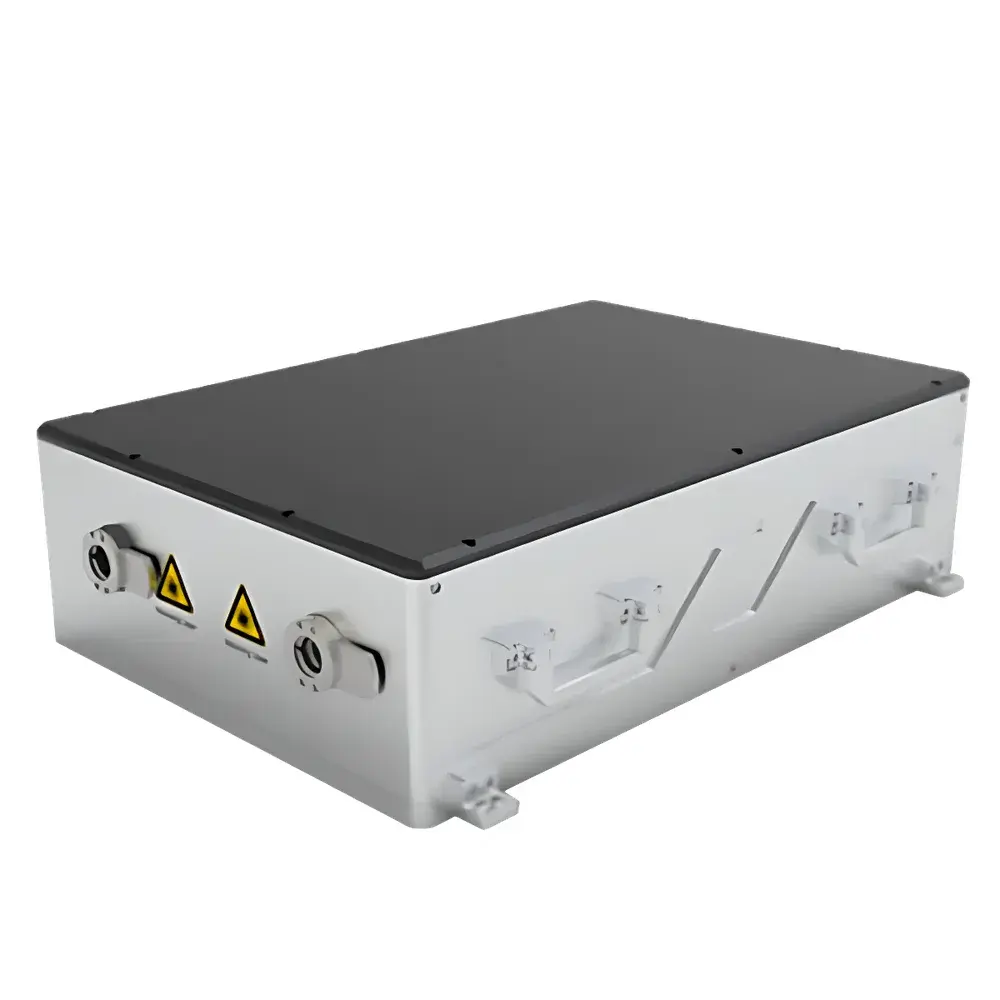
SPL Cati Series Wide-Tuning Mid-Infrared Optical Parametric Oscillator Laser System
| Brand | SPL |
|---|---|
| Origin | Shandong, China |
| Manufacturer Type | Authorized Distributor |
| Country of Origin | China |
| Model | Cati-MIR-OPO |
| Core Technology | Solid-State Pumped Optical Parametric Oscillation (OPO) |
| Key Output Configurations | CW / Nanosecond / Picosecond |
| Tuning Range | 2300–5000 nm |
| Wavelength Accuracy | ≤0.1 nm (CW), ≤1 nm (ns/ps) |
| Avg. Power | ≥2 W @ 3000 nm (CW), ≥5 W @ 3000–3800 nm (ns), ≥200 mW @ 4000–4300 nm (ps) |
| Pulse Repetition Rate | 10–50 kHz (ns), ~80 MHz (ps) |
| Pulse Width | <100 ns (ns), <20 ps (ps) |
| Spectral Linewidth | ≤2 MHz (CW) |
| Beam Diameter | ~2 mm |
| Power Stability (RMS) | ≤2% |
| Polarization | Linear |
| Output Coupling | Free-Space |
| Input Voltage | 220 V AC |
Overview
The SPL Cati Series Wide-Tuning Mid-Infrared Optical Parametric Oscillator (OPO) Laser System is a solid-state, pump-laser-driven coherent light source engineered for high-precision spectroscopic and sensing applications in the molecular fingerprint region (2300–5000 nm). Unlike conventional quantum cascade lasers or lead-salt diodes, the Cati platform leverages intracavity or external-cavity optical parametric oscillation in nonlinear crystals—such as MgO:PPLN or OP-GaAs—to achieve broad, continuous wavelength coverage with narrow spectral linewidth and high temporal coherence. Its fundamental architecture integrates a high-reliability, fiber-coupled Nd:YAG or Yb-fiber pump laser with a thermally stabilized OPO cavity, enabling stable operation across three distinct operational modes: continuous-wave (CW), nanosecond-pulsed (ns), and picosecond-pulsed (ps). This tri-modal flexibility supports both high-resolution absorption spectroscopy and time-resolved nonlinear interactions, making the system suitable for laboratory-based metrology, industrial process monitoring, and fundamental research where mid-IR photon energy and tunability are critical.
Key Features
- Three operational configurations: Cati-MIR-OPO-CW (≤2 MHz linewidth, ≤0.1 nm tuning accuracy), Cati-MIR-OPO-NS (10–50 kHz repetition rate, <100 ns pulse width), and Cati-MIR-OPO-PS (~80 MHz repetition rate, <20 ps pulse width)
- Integrated adaptive cavity-length locking mechanism that actively compensates for thermal drift and mechanical perturbations to maintain long-term frequency stability
- Monolithic, alignment-free OPO module with optimized phase-matching geometry and active temperature control for reproducible output across the full tuning range
- High-power output performance: ≥2 W average power at 3000 nm (CW), ≥5 W in the 3000–3800 nm band (ns), and ≥200 mW in the 4000–4300 nm window (ps)
- Free-space beam delivery with linear polarization, ~2 mm beam diameter, and RMS power stability ≤2% over 8 hours
- Remote diagnostics and parameter adjustment via Ethernet-connected control interface compliant with TCP/IP and SCPI command sets
Sample Compatibility & Compliance
The Cati series is designed for compatibility with standard FTIR spectrometers, gas cells (including multi-pass Herriott and White cells), photoacoustic detection modules, and nonlinear optical setups such as difference-frequency generation (DFG) stages. Its output meets requirements for trace gas analysis per ISO 14077 and ASTM E2912 for mid-IR laser-based sensing instrumentation. While not certified under FDA 21 CFR Part 11, the system’s firmware supports audit-trail logging of configuration changes and operational parameters—facilitating GLP/GMP-aligned validation protocols in regulated environments. All electrical components conform to IEC 61000-6-3 (EMC emission) and IEC 61010-1 (safety for laboratory equipment).
Software & Data Management
The Cati system ships with SPL’s proprietary OPO Control Suite—a Windows-based application providing real-time wavelength calibration, automated sweep sequencing, power stabilization feedback, and spectral logging in HDF5 and CSV formats. The software includes built-in NIST-traceable wavelength reference tables for common molecular transitions (e.g., CO, CH₄, NO₂, H₂O) and supports third-party integration via DLL API and LabVIEW drivers. Remote maintenance functionality enables secure SSH/Telnet access to embedded Linux controller logs, firmware version verification, and diagnostic status reporting without physical disassembly—reducing downtime during field deployment.
Applications
- High-sensitivity open-path and extractive gas detection for environmental monitoring (e.g., atmospheric methane flux, industrial stack emissions)
- Isotope-resolved spectroscopy for nuclear safeguards and geochemical tracing
- Time-resolved mid-IR pump-probe studies of vibrational dynamics in condensed-phase systems
- Calibration source for hyperspectral imaging systems operating in SWIR–MIR bands
- Seed source for difference-frequency generation (DFG) into the far-infrared (THz) regime
- Biomedical tissue characterization via MIR absorption contrast mapping
FAQ
What is the minimum achievable linewidth in CW mode?
The Cati-MIR-OPO-CW achieves ≤2 MHz instantaneous linewidth (FWHM) under active cavity-length stabilization; residual drift remains below ±50 MHz over 1 hour.
Can the system be integrated into a vacuum-compatible optical bench?
Yes—the free-space output port is equipped with a kinematic mount and vacuum-flange options (CF35/CF63) are available upon request.
Does the laser support external triggering and synchronization?
All ns and ps variants provide TTL-compatible sync outputs and accept external trigger inputs with jitter <100 ps RMS.
Is wavelength calibration traceable to national standards?
Calibration data is referenced to NIST-listed molecular absorption lines (e.g., CO R(12) at 2303.529 nm); full calibration reports are provided with each unit.
What cooling method is used for thermal management?
A closed-loop chiller system (integrated or external) maintains crystal and cavity temperatures within ±0.05 °C; air-cooled operation is not supported for sustained high-power output.



