
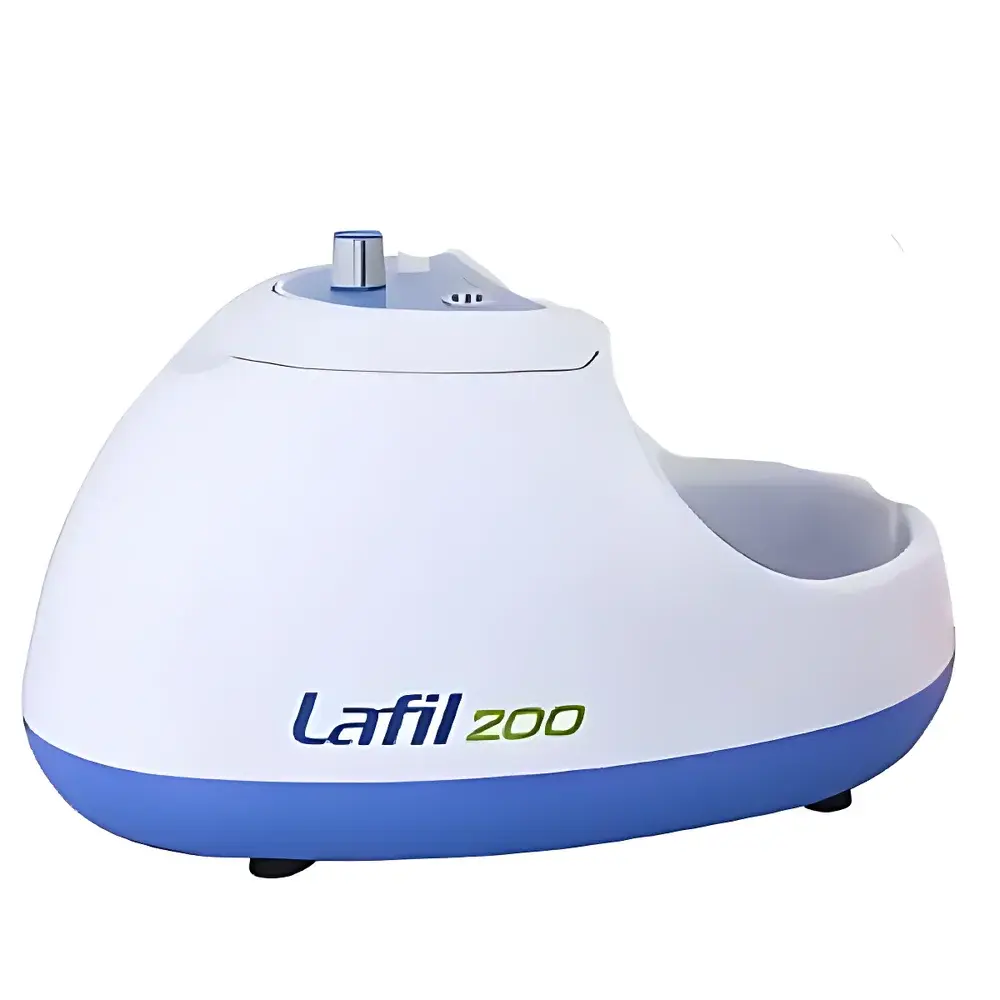
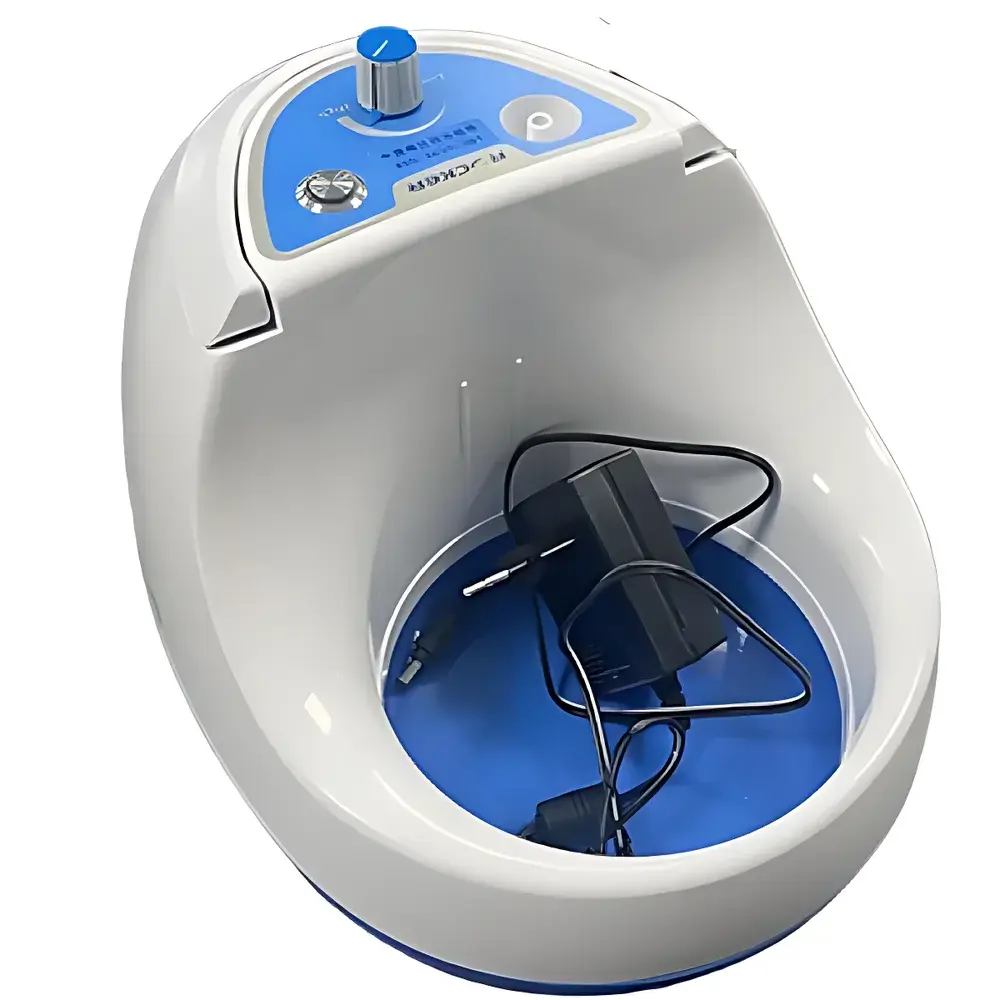
ROCKER Lafil200 Oil-Free Diaphragm Vacuum Pump
| Brand | ROCKER |
|---|---|
| Origin | Taiwan |
| Model | Lafil200 |
| Pump Type | Diaphragm Vacuum Pump |
| Oil-Free Design | Yes |
| Ultimate Vacuum | 213 mbar (600 mmHg) |
| Flow Rate | 10 L/min |
| Dimensions (L×W×H) | 380 × 260 × 220 mm |
| Weight | 2.1 kg |
| Power Input | DC 12 V, 1.5 A max |
| Noise Level | 55 dB(A) |
Overview
The ROCKER Lafil200 is a compact, portable oil-free diaphragm vacuum pump engineered for reliable, contamination-free vacuum generation in life science and general laboratory applications. Unlike oil-lubricated systems, its sealed diaphragm mechanism eliminates risk of oil backstreaming or hydrocarbon contamination—critical for cell culture work, filtration, aspiration, and solvent-sensitive procedures. Operating on a regulated DC 12 V power supply, the Lafil200 delivers stable vacuum performance up to 213 mbar (600 mmHg) with a maximum continuous flow rate of 10 L/min. Its lightweight architecture (2.1 kg), integrated foldable carrying handle, and low acoustic signature (55 dB[A]) make it suitable for benchtop use in biosafety cabinets, laminar flow hoods, teaching labs, and mobile field setups where space, safety, and electrical compatibility are constrained.
Key Features
- Oil-free diaphragm technology ensures zero lubricant migration—compliant with ISO 8573-1 Class 0 air purity requirements for critical vacuum applications.
- Continuously adjustable vacuum control via precision rotary knob enables fine-tuned pressure regulation from atmospheric to 213 mbar, supporting graded filtration or gentle aspiration protocols.
- Integrated fence-style platform securely holds standard GL45-threaded bottles (e.g., serum bottles, PP vacuum flasks), minimizing accidental tipping during operation and enhancing operator ergonomics.
- Compact footprint (380 × 260 × 220 mm) and ultra-lightweight design facilitate deployment in confined spaces, including biosafety cabinets (Class II A2/B2), incubators with external port access, and shared core facilities.
- DC-powered operation enhances electrical safety in humid or splash-prone environments and supports integration with uninterruptible power supplies (UPS) or battery packs for temporary off-grid use.
Sample Compatibility & Compliance
The Lafil200 is compatible with a broad range of vacuum-compatible consumables, including polypropylene (PP) and borosilicate glass vessels (e.g., 3500 mL serum bottles, 4000 mL fast-connect flasks), as well as sterile, single-use aspiration kits (BioDolphin and Plus waste collection systems). Its dry pumping principle avoids chemical interaction with aqueous, mildly acidic, or buffered solutions—making it suitable for routine media filtration (0.22 µm/0.45 µm), supernatant removal, and vacuum-assisted cell harvesting per ASTM D2986 and ISO 16883 guidelines. While not certified for explosive or highly corrosive vapors (e.g., concentrated HCl, HF, or organic solvents above 10% concentration), it meets CE marking requirements for electromagnetic compatibility (EMC Directive 2014/30/EU) and low-voltage safety (LVD Directive 2014/35/EU).
Software & Data Management
The Lafil200 operates as a standalone analog device without embedded firmware, network interface, or digital data logging capability. This design prioritizes mechanical reliability, serviceability, and regulatory simplicity—particularly advantageous in GLP/GMP environments where validation of software components (e.g., FDA 21 CFR Part 11 compliance) would otherwise necessitate extensive documentation and change control. Users may integrate the pump into validated workflows using external pressure transducers and programmable logic controllers (PLCs) for audit-trail-capable vacuum monitoring. ROCKER provides full technical documentation—including dimensional drawings, electrical schematics, and maintenance manuals—in English for IQ/OQ protocol development.
Applications
- Routine vacuum filtration of cell culture media, buffers, and reagents through membrane filters (Nalgene, Whatman, Sartorius).
- Aspiration of supernatants, wash buffers, and spent media in primary cell isolation and stem cell expansion workflows.
- Vacuum-assisted degassing of polymer solutions, agarose gels, and casting matrices prior to solidification.
- Supporting vacuum desiccation in small-scale lyophilization pre-chamber equilibration or sample drying under controlled humidity.
- Educational use in undergraduate biology and biochemistry laboratories requiring safe, intuitive vacuum sources for qualitative experiments.
FAQ
Is the Lafil200 suitable for continuous 24/7 operation?
Yes—when operated within ambient temperatures of 10–35°C and relative humidity ≤80% non-condensing, the Lafil200 is rated for indefinite duty cycle. Thermal protection circuitry automatically interrupts power if internal temperature exceeds safe thresholds.
Can I connect multiple flasks simultaneously to the Lafil200?
The unit features a single inlet port; parallel connection requires a certified vacuum manifold with individual shutoff valves to maintain pressure stability and prevent cross-contamination.
Does ROCKER provide calibration certificates for the Lafil200?
As an analog vacuum source without integrated pressure sensing, formal calibration is not applicable. However, users may verify ultimate vacuum performance using a traceable digital vacuum gauge (e.g., MKS Baratron series) per ISO/IEC 17025-accredited procedures.
What maintenance is required?
No routine lubrication is needed. Annual inspection of the diaphragm assembly and inlet filter (included) is recommended. Replacement parts—including diaphragm kits (P/N 197200-01) and muffler assemblies—are available directly from ROCKER authorized distributors.
Is the Lafil200 compliant with ISO 5 cleanroom standards?
While the pump itself is not classified for cleanroom installation due to particulate generation from motor brushes, it may be located outside the cleanroom envelope with vacuum tubing routed through wall ports—consistent with ISO 14644-1 Annex B guidance for ancillary equipment placement.



