
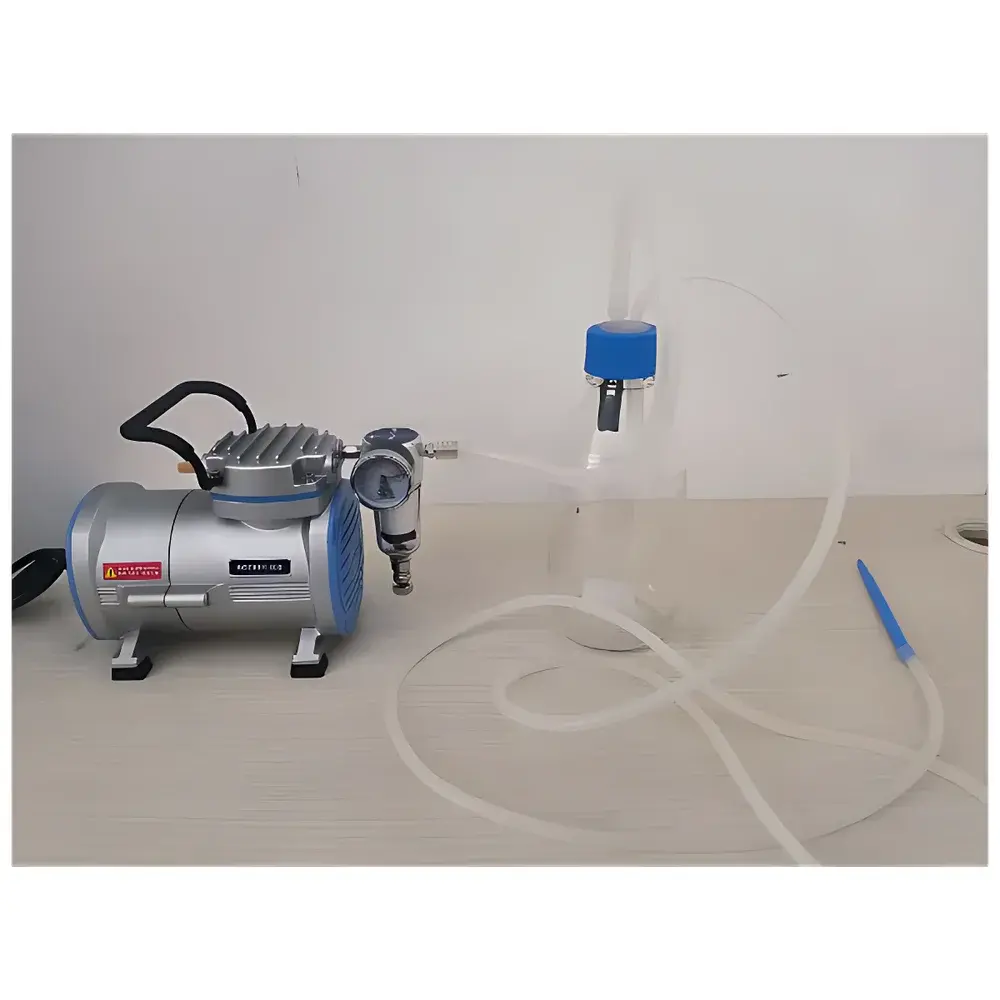
ROCKER R300-1L Vacuum Liquid Aspiration System
| Brand | ROCKER |
|---|---|
| Origin | Taiwan |
| Model | R300-1L |
| Ultimate Vacuum | 105 mbar |
| Maximum Flow Rate | 20 L/min |
| Motor Speed | 1450 rpm |
| Power | 60 W |
| Input | 220 V / 50 Hz |
| Noise Level | 50.0 dB(A) |
| Weight | 4.1 kg |
| Dimensions | 26.8 × 13.5 × 20.4 cm |
| Inlet Hose ID | 5/16 inch (≈8 mm) |
| Sterilizable Components | Bottle, Tubing, Tip, Filter Cap (121 °C, 20 min, autoclave) |
| Safety Certifications | CE, CSA |
| IP Rating | IP30 |
Overview
The ROCKER R300-1L Vacuum Liquid Aspiration System is an engineered solution for precise, contamination-controlled liquid removal in bioscience and cell culture laboratories. It operates on a maintenance-free oil-free diaphragm pump principle—eliminating hydrocarbon vapor contamination, oil carryover, and routine lubrication requirements. The system delivers stable, adjustable vacuum pressure (down to 105 mbar) and controllable aspiration flow (up to 20 L/min), enabling consistent handling of supernatants, spent media, wash buffers, and enzymatic digestion solutions without compromising sterility or sample integrity. Designed for integration into laminar flow hoods, biosafety cabinets, and benchtop workflows, the R300-1L prioritizes operator safety, process repeatability, and compliance-ready operation—particularly in GLP-aligned cell culture, QC microbiology, and upstream bioprocessing environments.
Key Features
- Oil-free diaphragm pump architecture ensures zero risk of oil contamination—critical for sensitive cell lines, primary cultures, and reagent preparation.
- Integrated vacuum regulator and fine-tuned flow control dial allow real-time adjustment of suction intensity to match viscosity, volume, and vessel geometry.
- Standard 1 L GL45 borosilicate glass waste bottle with blue polypropylene cap; compatible with optional 2 L, 3.5 L, and 5 L bottles for high-throughput workflows.
- Autoclavable components include POM (polyoxymethylene) 150 mm aspiration tip, 4 × 8 mm (2 m) liquid intake tubing, 6 × 12 mm (1 m) vacuum line tubing, and float-ball filter cap assembly—validated for 121 °C, 20 min steam sterilization per ISO 17665-1.
- Built-in thermal cut-off switch prevents motor damage during extended use or restricted airflow conditions.
- CE and CSA certified for electrical safety; IP30-rated enclosure provides protection against solid objects ≥2.5 mm—suitable for standard laboratory ambient conditions.
- Low-noise operation (50.0 dB(A)) minimizes acoustic disturbance in shared lab spaces and cleanroom-adjacent areas.
Sample Compatibility & Compliance
The R300-1L supports aspiration of aqueous buffers, serum-containing media, trypsin-EDTA solutions, PBS washes, and low-viscosity biological fluids. Its chemical-resistant POM tip and platinum-cured silicone tubing exhibit compatibility with 70% ethanol, isopropanol, diluted sodium hypochlorite (≤0.5%), and common cell culture disinfectants. All wetted materials comply with USP Class VI biocompatibility standards. The system meets essential requirements of ISO 13485:2016 for medical device manufacturing support equipment and aligns with ASTM F2100 Level 1 fluid resistance benchmarks for aspiration accessories. While not intrinsically designed for hazardous solvent use, its sealed diaphragm design limits exposure pathways—making it suitable for non-volatile, non-corrosive aqueous applications under standard lab safety protocols.
Software & Data Management
The R300-1L is a standalone analog-operated instrument with no embedded microprocessor or digital interface. It does not generate electronic records, audit trails, or time-stamped logs. Consequently, it is exempt from FDA 21 CFR Part 11 requirements but fully compatible with paper-based SOP execution and manual logbook documentation per GLP Annex 11 and ISO/IEC 17025:2017 clause 7.5. For labs requiring traceability, the system integrates seamlessly with external environmental monitoring platforms via analog vacuum-pressure output signals (0–10 V or 4–20 mA transducer options available upon request). All calibration and maintenance activities—including pump performance verification at 105 mbar and flow rate validation at 20 L/min—are documented using ROCKER’s standardized service checklist (Form R300-SVC-01), included with the 2-year parts warranty.
Applications
- Cell culture maintenance: removal of spent medium and wash solutions from T-flasks, roller bottles, and multiwell plates.
- Microbiology: aspiration of broth cultures, agar plate rinsates, and filtration supernatants in ISO 6579-compliant food testing workflows.
- Tissue dissociation: controlled aspiration during enzymatic digestion steps to prevent mechanical shear of fragile primary cells.
- ELISA and immunoassay plate washing: integration with manual or semi-automated wash stations where programmable vacuum sequencing is not required.
- Biobanking: decanting cryopreservation media post-thaw while maintaining temperature stability and minimizing aerosol generation.
- Teaching laboratories: robust, intuitive platform for undergraduate instruction in aseptic technique and vacuum physics fundamentals.
FAQ
Is the R300-1L suitable for aspiration of flammable solvents such as acetone or chloroform?
No. The pump is rated for aqueous and mildly acidic/basic solutions only. Flammable, highly volatile, or strongly oxidizing liquids may degrade diaphragm elastomers and pose ignition risks.
Can the vacuum level be monitored externally during operation?
Yes—via optional analog vacuum transducer (0–10 V output), which interfaces with data acquisition systems or PLC controllers for real-time pressure logging.
What is the recommended maintenance schedule for the diaphragm pump?
None beyond visual inspection of tubing integrity and periodic cleaning of the float-ball filter assembly. The pump requires no oil changes, belt replacements, or internal servicing under normal operating conditions.
Does the 2-year parts warranty cover labor or field service?
The warranty covers replacement of defective components only. Labor and on-site technical support are available under separate service agreements.
How does the float-ball filter assembly prevent overflow-induced contamination?
When liquid reaches the preset fill line in the waste bottle, the buoyant ball seals the inlet port—mechanically interrupting aspiration before backflow or aerosol escape occurs. This passive fail-safe complies with CLSI M29-A4 guidelines for containment integrity.
Related Products



