
Longer JL350-2J High-Capacity Industrial Peristaltic Pump
| Brand | LongerPump |
|---|---|
| Origin | Hebei, China |
| Model | JL350-2J |
| Flow Rate Range | 1.3–35 L/min |
| Speed Range | 30–350 rpm |
| Speed Resolution | 0.6 rpm |
| Control Inputs | 0–5 V, 0–10 V, 4–20 mA (linear) |
| Communication Interface | RS485, Modbus RTU protocol |
| Power Supply | AC 220 V ±20%, 400 W |
| Dimensions (L×W×H) | 417 × 401 × 321 mm |
| Weight | 32 kg |
| IP Rating | IP55 |
| Operating Temperature | 0–40 °C |
| Relative Humidity | <80% |
| Enclosure | Transparent polycarbonate safety guard |
| Pump Head Compatibility | AKZ4888# (for tubing ID 1.3–15 mm), 292# (for tubing ID 3–35 mm) |
Overview
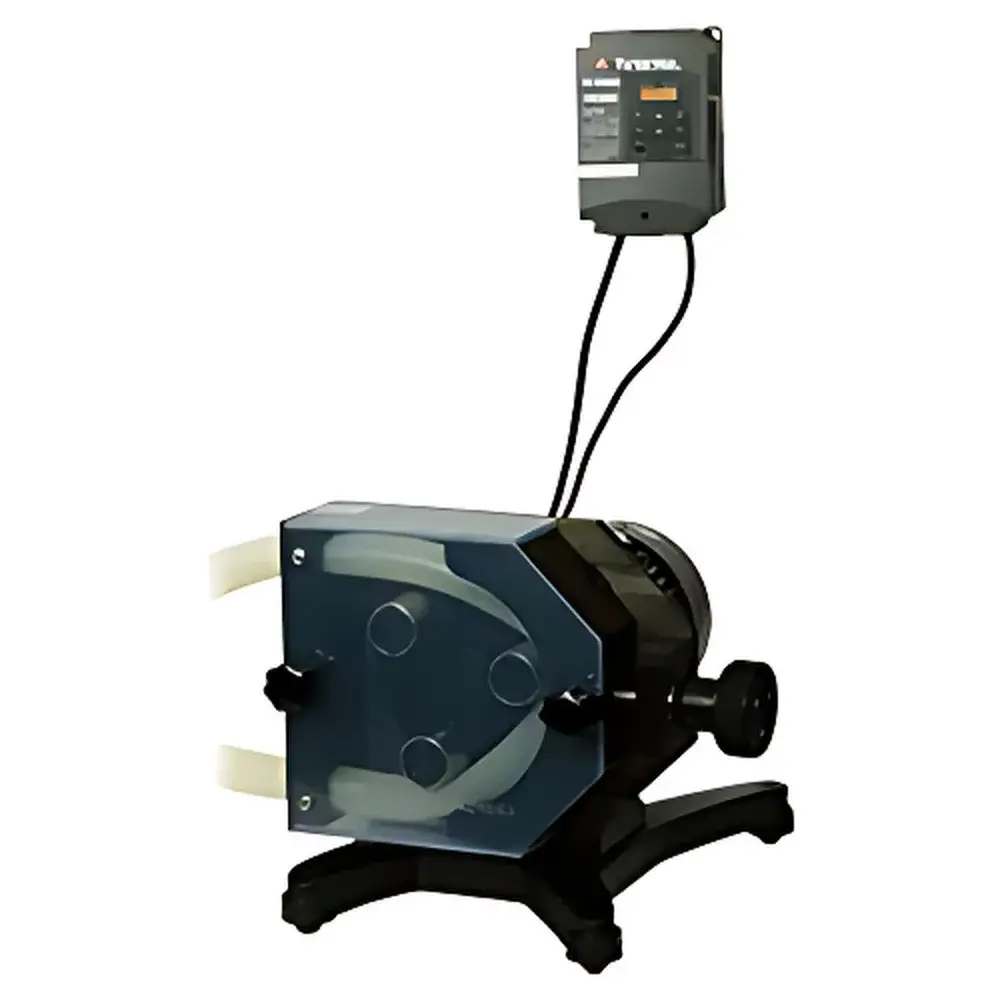
The Longer JL350-2J is a high-capacity, industrial-grade peristaltic pump engineered for continuous, reliable fluid transfer in production and pilot-scale laboratory environments. Based on the positive displacement principle of peristalsis—where rollers compress flexible tubing against a curved housing to generate unidirectional flow—the JL350-2J delivers precise, pulse-minimized volumetric delivery without fluid contact with mechanical components. Its robust AC induction motor coupled with an external variable-frequency drive (VFD) enables stable torque output across the full speed range (30–350 rpm), supporting flow rates from 1.3 L/min up to 35 L/min depending on tubing selection and system backpressure. Designed for integration into automated process lines or standalone operation, the pump meets fundamental requirements for repeatable metering, low-maintenance operation, and compatibility with aggressive or shear-sensitive fluids—including acids, solvents, slurries, and biological media—where contamination-free handling is critical.
Key Features
- Drum-shaped rollers paired with concave pressure blocks ensure self-centering tube alignment, minimizing lateral slip and reducing localized fatigue on tubing walls—extending service life by up to 40% compared to flat-roller designs under equivalent duty cycles.
- Adjustable occlusion gap allows fine-tuning of compression force to match tubing wall thickness and material elasticity (e.g., silicone, Viton®, Santoprene®), optimizing flow consistency and preventing premature tube collapse.
- IP55-rated enclosure with transparent polycarbonate guard provides dust resistance and operator visibility while maintaining compliance with IEC 60529 for industrial indoor use.
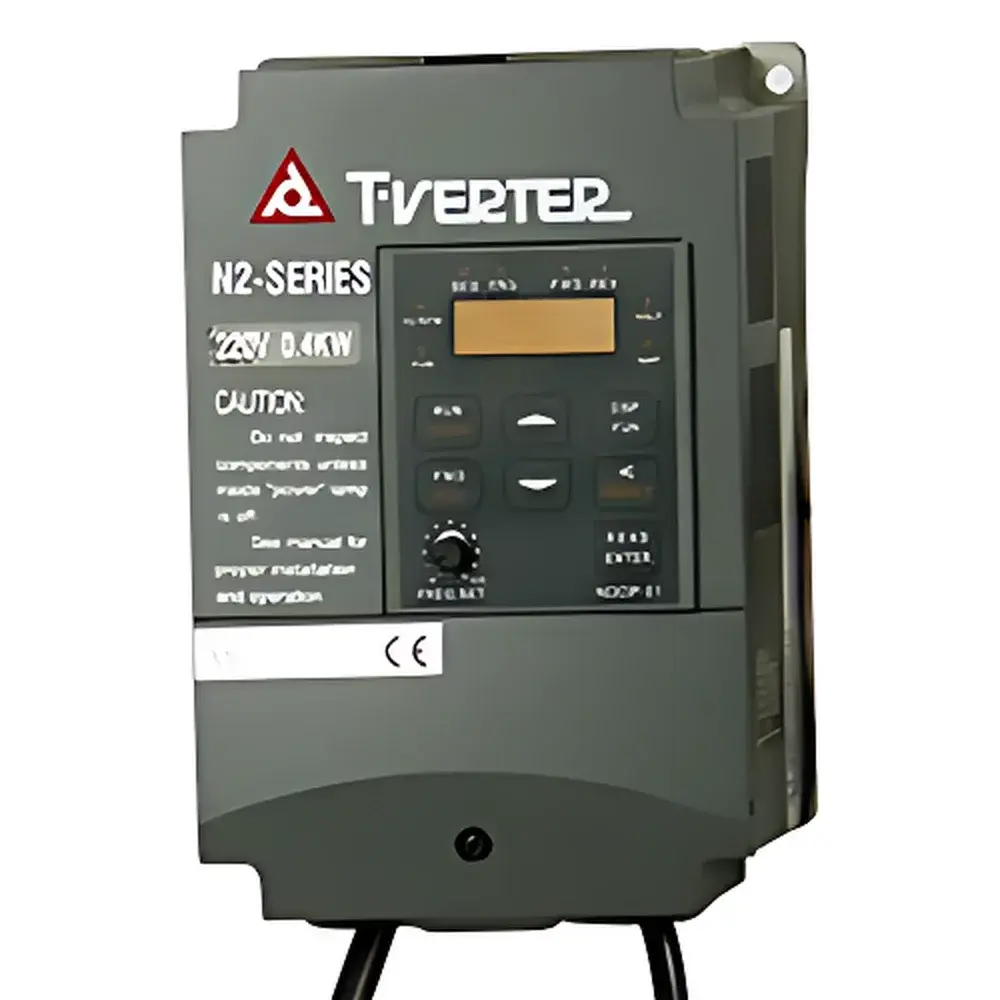
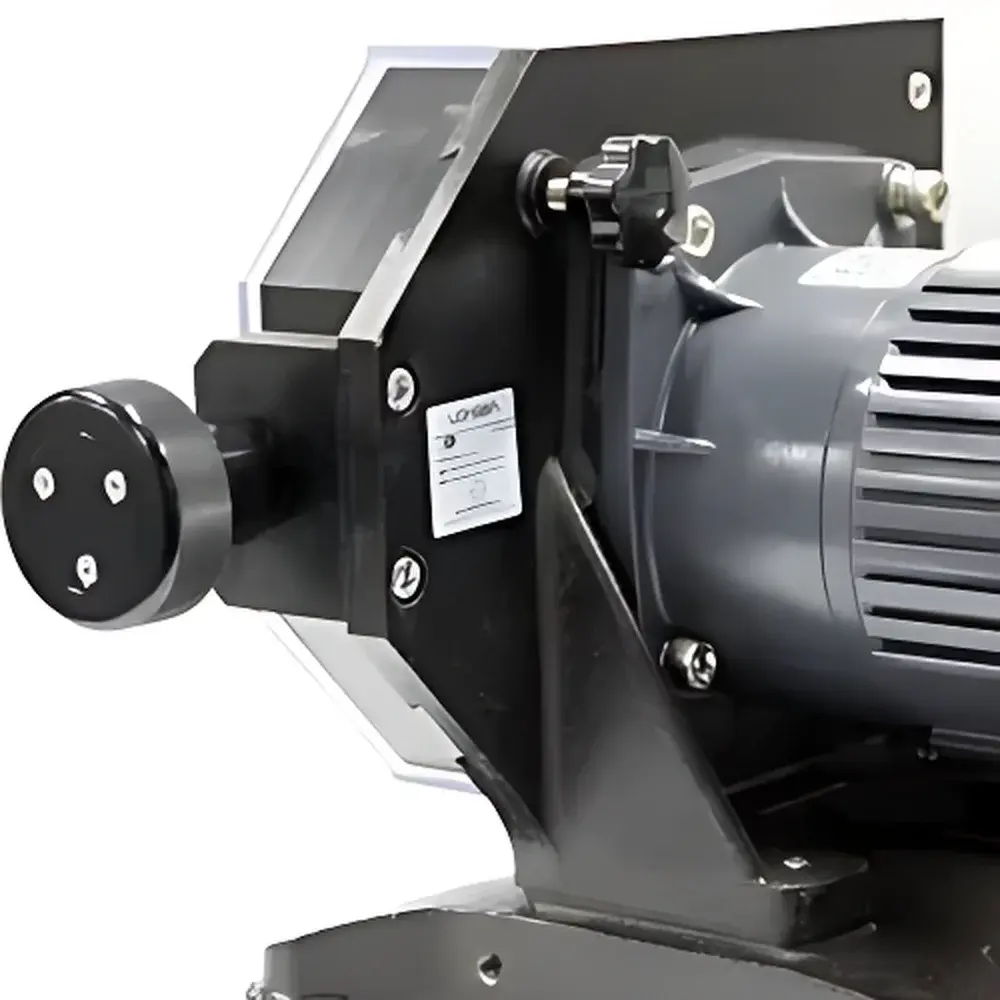
- Modular architecture separates the VFD from the pump head and motor assembly, simplifying installation, heat dissipation management, and field maintenance without requiring full system shutdown.
- Dual-mode control: local operation via intuitive rotary knob + push-button interface with LCD display; remote operation via analog voltage/current signals (0–5 V, 0–10 V, 4–20 mA) or digital command over RS485 using standard Modbus RTU protocol.
- Power-loss recovery function retains operational state (speed, direction, run status) in non-volatile memory, resuming pre-interruption conditions upon power restoration—supporting uninterrupted batch processes.
Sample Compatibility & Compliance
The JL350-2J accommodates a broad spectrum of elastomeric tubing materials certified for pharmaceutical, chemical, and food-grade applications—including USP Class VI silicone, FDA-compliant PVC, and EPDM-lined reinforced hoses. Its dual-pump-head configuration (AKZ4888# and 292#) supports inner diameters from 1.3 mm to 35 mm, enabling seamless transition between low-viscosity aqueous solutions and moderately viscous suspensions (< 5,000 cP). While not inherently compliant with 21 CFR Part 11 out-of-the-box, the pump’s deterministic control logic, audit-ready parameter logging (when integrated with compatible SCADA systems), and traceable analog/digital I/O make it suitable for GMP-aligned workflows when deployed within validated automation frameworks. It conforms to CE marking requirements for electromagnetic compatibility (EN 61326-1) and low-voltage safety (EN 61000-6-2/6-4).
Software & Data Management
The JL350-2J operates as a deterministic peripheral device rather than a smart instrument—it does not embed proprietary firmware-based software. Instead, it interfaces natively with third-party supervisory systems via its RS485 port and Modbus RTU register map (holding registers for setpoint, direction, enable status, actual speed, and fault codes). Analog inputs support closed-loop flow control when paired with external flow meters and PID controllers. For laboratories requiring electronic record integrity, integration with LIMS or MES platforms can be achieved through OPC UA gateways or PLC-based middleware, enabling timestamped event logging, change tracking, and exportable CSV reports—facilitating GLP/GMP documentation requirements.
Applications
- Continuous feedstock dosing in bioreactor inoculation and fermentation media preparation.
- High-volume solvent transfer in extraction and purification skids (e.g., SFE, chromatography buffer delivery).
- Wastewater sampling and reagent addition in online process analyzers (e.g., pH, conductivity, turbidity sensors).
- Cleaning-in-place (CIP) and sterilization-in-place (SIP) circulation loops where metal-free fluid paths are mandated.
- Automated packaging line fillers for viscous products such as adhesives, coatings, and food pastes.
- Environmental monitoring stations requiring long-term, unattended pumping of groundwater or surface water samples to analyzers.
FAQ
What tubing sizes are supported by the JL350-2J?
The pump supports two interchangeable pump heads: AKZ4888# accepts tubing with inner diameters from 1.3 mm to 15 mm; 292# accommodates tubing from 3 mm to 35 mm.
Does the pump support bidirectional flow?
Yes—direction reversal is fully programmable via front-panel buttons or external digital input signal.
Can the pump be integrated into a PLC-controlled system?
Yes—RS485 Modbus RTU and isolated analog/digital I/O provide native compatibility with Allen-Bradley, Siemens, and Mitsubishi PLCs.
Is the pump suitable for sterile applications?
While the pump itself is not autoclavable, its tubing-only wetted path and availability of gamma-sterilizable tubing options (e.g., platinum-cured silicone) allow deployment in aseptic processes when combined with proper SOPs.
What is the maximum allowable system backpressure?
Maximum recommended backpressure is 2 bar (29 psi) at 350 rpm with 16 mm ID tubing; performance degrades linearly above this threshold due to roller slippage and tubing deformation.



