
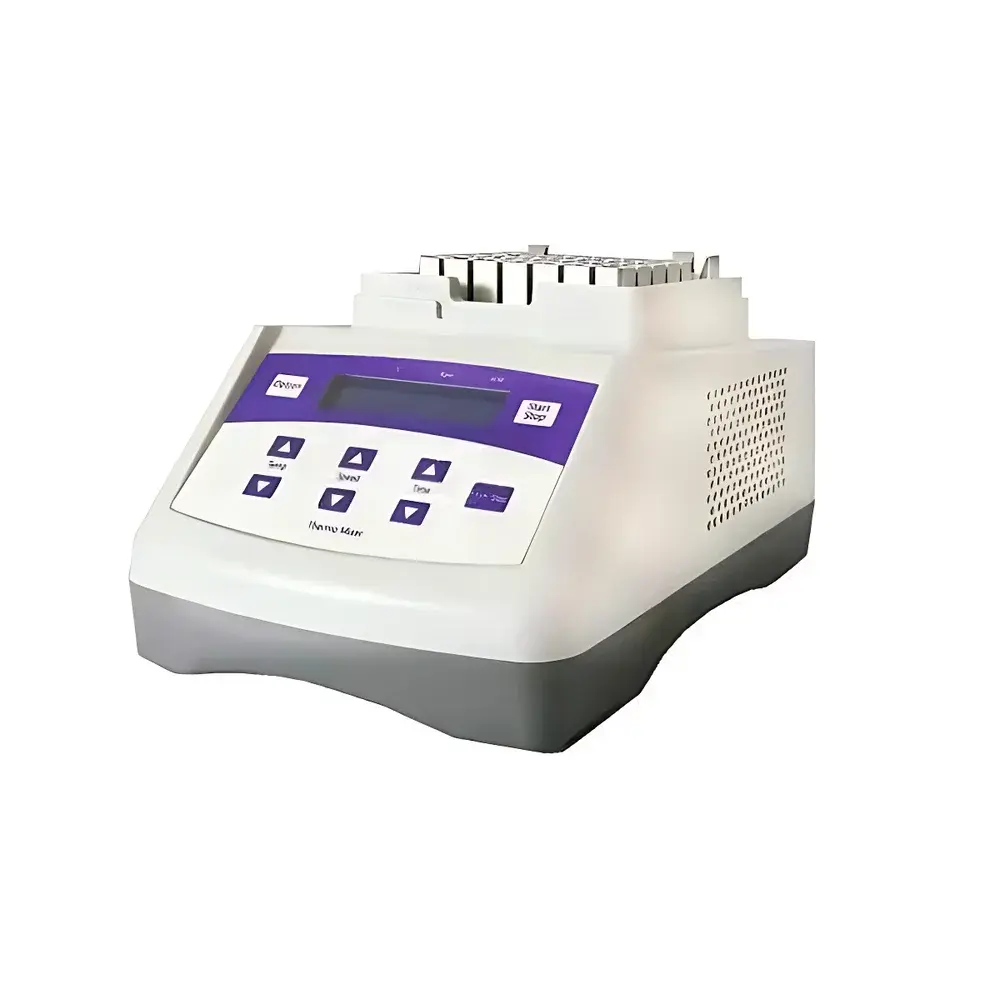
MENTS LCC-100 Refrigerated Metal Block Thermostat
| Brand | MENTS |
|---|---|
| Origin | Beijing, China |
| Manufacturer Type | Direct Manufacturer |
| Model | LCC-100 |
| Temperature Range | –10 °C to 100 °C |
| Temperature Accuracy | ≤ ±0.3 °C |
| Heating Time | ≤ 10 min (25 °C → 100 °C) |
| Cooling Time | ≤ 30 min (ambient → ambient –30 °C, at ≤26 °C ambient) |
| Dimensions (W×D×H) | 260 × 195 × 150 mm |
| Net Weight | 4.5 kg |
| Power Consumption | 150 W |
| Display Resolution | 0.1 °C |
| Timer Range | 1 min – 99 h 59 min |
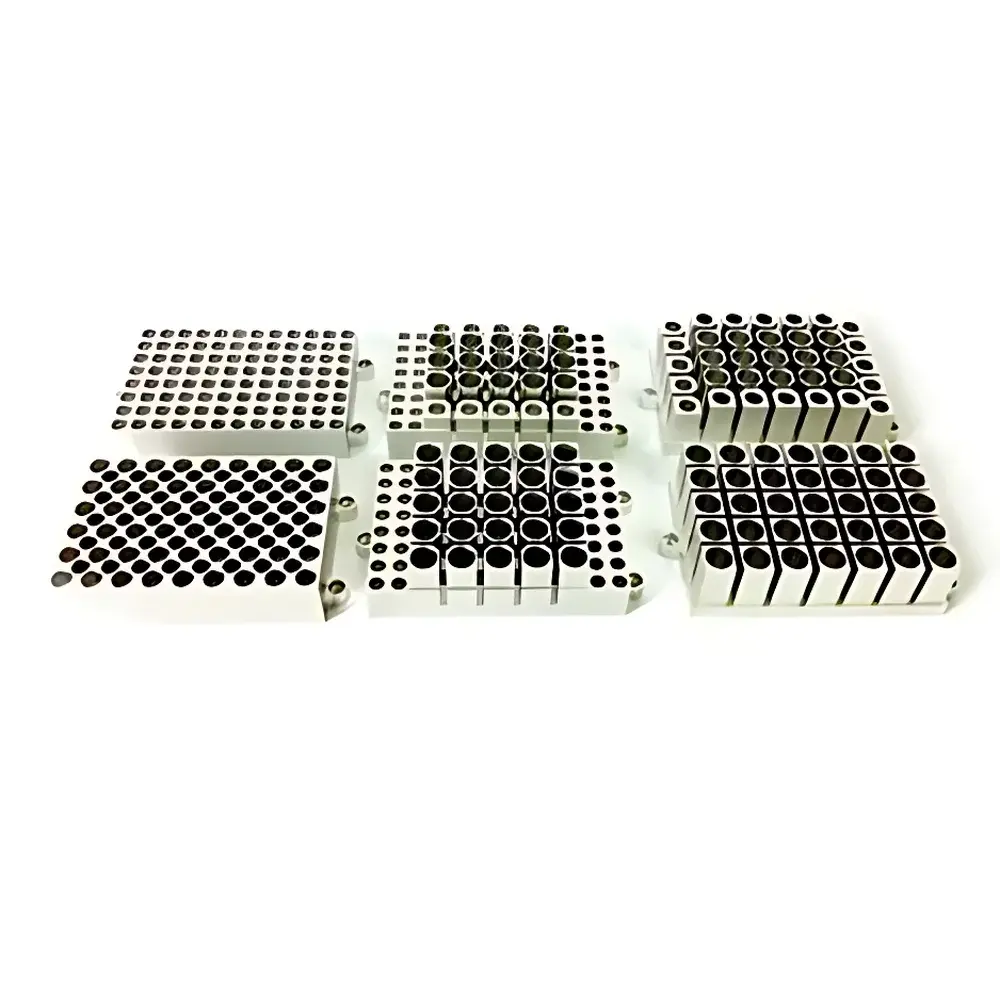
| Module Compatibility | JYC-100 Series (A–J standard configurations |
Overview
The MENTS LCC-100 Refrigerated Metal Block Thermostat is a precision-engineered dry-block temperature control system designed for laboratory applications requiring bidirectional thermal regulation—from sub-ambient cooling to high-temperature incubation. Unlike water baths, it employs a solid aluminum heating/cooling block with integrated Peltier (thermoelectric) modules and microprocessor-based PID control to deliver rapid, stable, and uniform temperature environments across diverse sample formats. Its operational range of –10 °C to 100 °C—combined with ≤ ±0.3 °C temperature accuracy and ≤ 0.3 °C intra-block uniformity at 40 °C—makes it suitable for critical workflows where thermal consistency directly impacts assay reproducibility, including enzymatic reactions, nucleic acid denaturation, serum coagulation, and pre-analytical sample conditioning. The unit’s compact footprint (260 × 195 × 150 mm) and low mass (4.5 kg) enable seamless integration into biosafety cabinets, laminar flow hoods, and benchtop analytical workstations without compromising thermal performance or safety compliance.
Key Features
- High-efficiency thermoelectric (Peltier) cooling and resistive heating architecture, eliminating reliance on refrigerants or external chillers
- Microprocessor-controlled PID algorithm ensuring dynamic compensation for load variation and ambient drift, maintaining ≤ ±0.3 °C stability at setpoints up to 100 °C
- Real-time dual-display interface: temperature (0.1 °C resolution) and countdown timer (1 min – 99 h 59 min)
- Comprehensive safety suite: over-temperature cut-off, self-diagnostic fault detection with audible alarm, and automatic restart after power recovery (configurable)
- Modular aluminum block design supporting 11 standardized interchangeable inserts (JYC-100 series), covering formats from 96-well PCR plates to 50 mL centrifuge tubes
- CE-marked construction compliant with EN 61010-1:2010 for electrical safety in laboratory environments
- Optional factory calibration certificate traceable to NIST standards (available upon request)
Sample Compatibility & Compliance
The LCC-100 accommodates a broad spectrum of common laboratory consumables via its modular insert system—including 0.2 mL PCR strips, 0.5–2.0 mL microcentrifuge tubes, 5–50 mL conical tubes, 96-well deep-well and ELISA plates, and custom-configured blocks. All aluminum inserts are anodized for chemical resistance and autoclavable (up to 121 °C, 20 min), supporting GLP-compliant cleaning protocols. Temperature uniformity data (≤ ±0.3 °C at 40 °C, measured per ASTM E2207–21 Annex A1 methodology) ensures equivalence to calibrated water bath performance for ISO/IEC 17025-accredited testing labs. The device meets IEC 61000-4 electromagnetic compatibility requirements and operates within Class II pollution degree environments per IEC 60664-1.
Software & Data Management
While the LCC-100 operates as a standalone instrument, its embedded firmware supports audit-ready operation under regulated environments. The system logs timestamped event records—including setpoint changes, alarm triggers, and power interruptions—with non-volatile memory retention. Optional RS-232 or USB-to-serial interface (available via accessory kit) enables integration with LIMS or ELN platforms for automated data capture. When used in FDA-regulated settings, the device can be validated per IQ/OQ protocols; its deterministic thermal response and configurable auto-restart behavior support 21 CFR Part 11 compliance when paired with appropriate electronic signature controls in host software.
Applications
- DNA denaturation and annealing steps in PCR setup and hot-start enzyme activation
- Serum coagulation assays requiring precise 37 °C incubation followed by rapid chilling to 4 °C for clot stabilization
- Enzyme kinetics studies demanding tight thermal control across multi-point temperature gradients
- Pre-cooling of reagents, columns, and electrophoresis buffers prior to gel loading or HPLC injection
- Stabilization of thermolabile proteins during purification and buffer exchange steps
- Quality control testing of temperature-sensitive diagnostics kits (e.g., immunoassays, rapid antigen tests)
FAQ
What is the maximum cooling capacity relative to ambient temperature?
The unit achieves ≥30 °C below ambient (e.g., 26 °C → –4 °C) in ≤30 minutes, provided ambient conditions remain ≤26 °C and humidity is <80% RH.
Can the LCC-100 maintain temperature stability during prolonged operation?
Yes—its thermally optimized aluminum block and adaptive PID control ensure ≤ ±0.3 °C deviation over 24-hour continuous operation at any setpoint between –10 °C and 100 °C.
Is calibration documentation available for regulatory submissions?
A factory calibration report (traceable to national standards) is optional; full IQ/OQ validation packages—including uncertainty budgets and probe mapping data—can be supplied upon request.
Are replacement modules available separately?
All JYC-100 series inserts (A–J) are stocked and sold individually; custom geometries (e.g., for specialized microfluidic cartridges) are manufacturable under NDA.
Does the unit support remote monitoring or network connectivity?
Native Ethernet or Wi-Fi is not integrated, but analog voltage output (0–5 V) and digital TTL signals for status/events are accessible via optional expansion port for third-party SCADA integration.



