
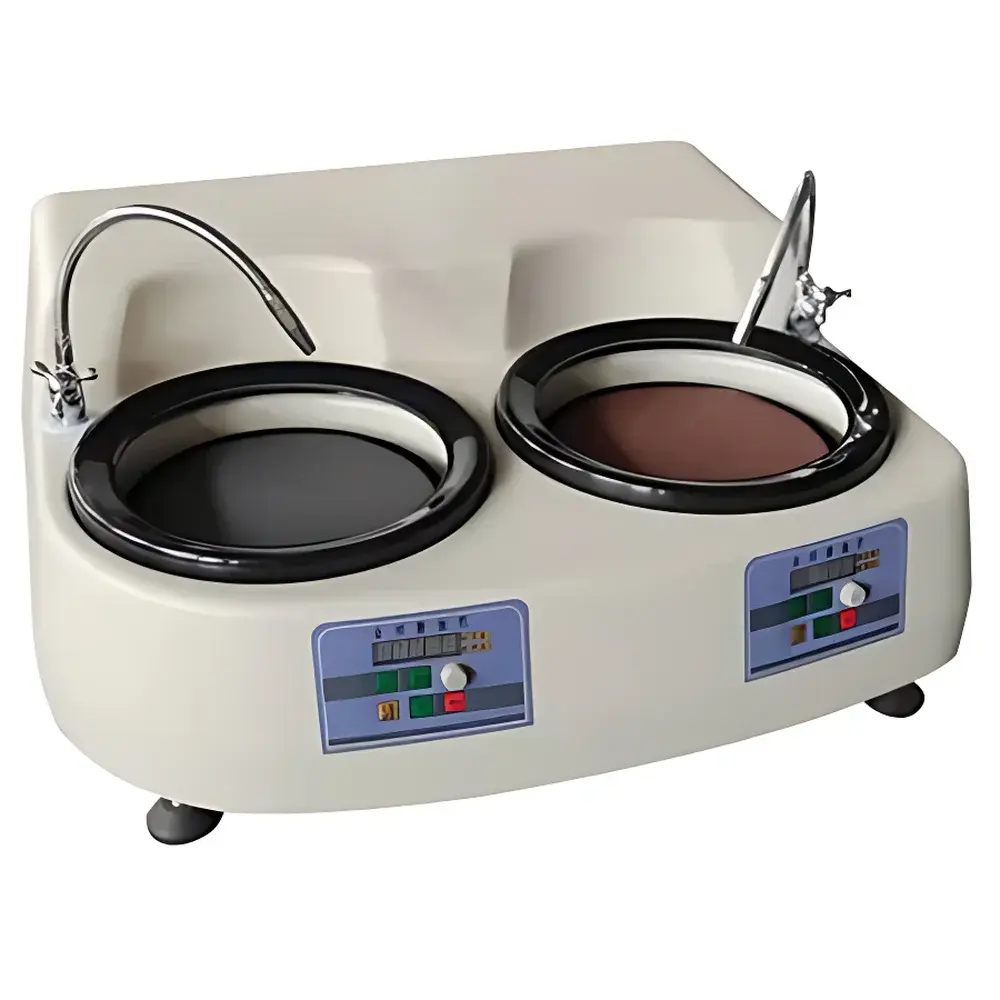
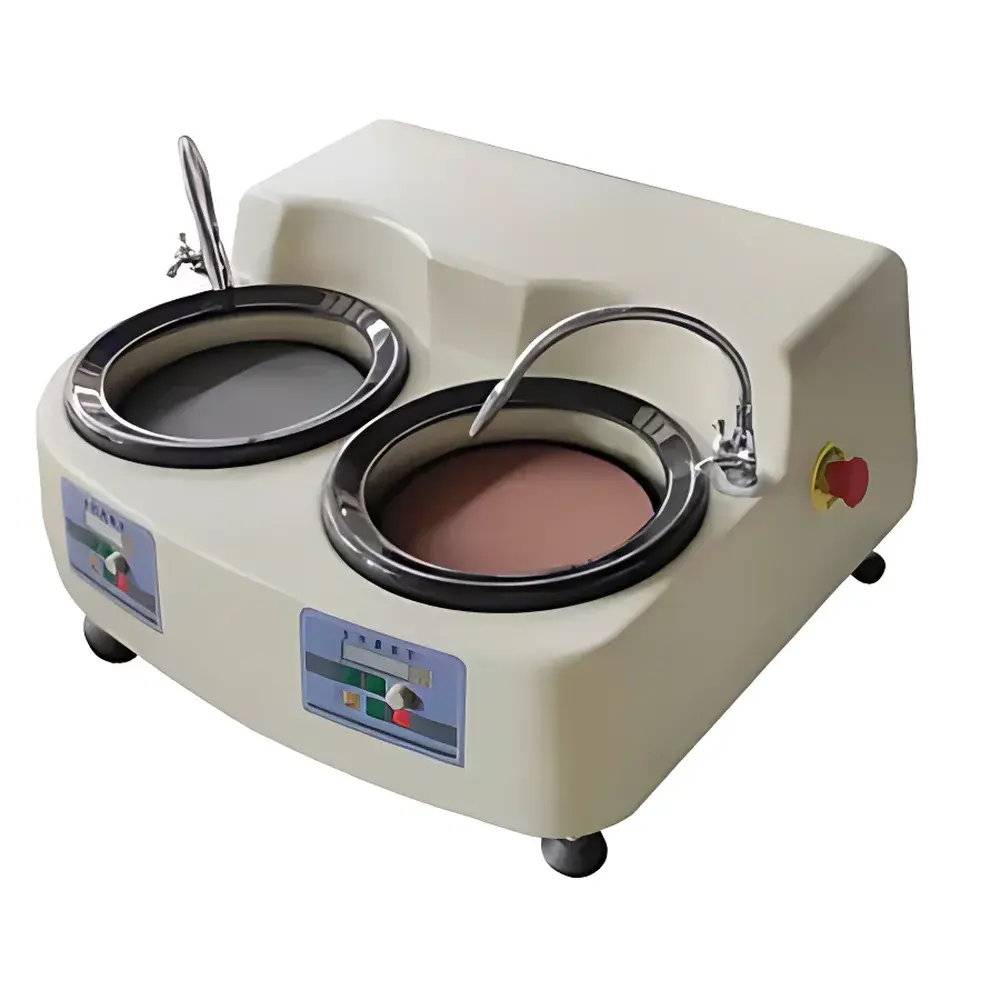
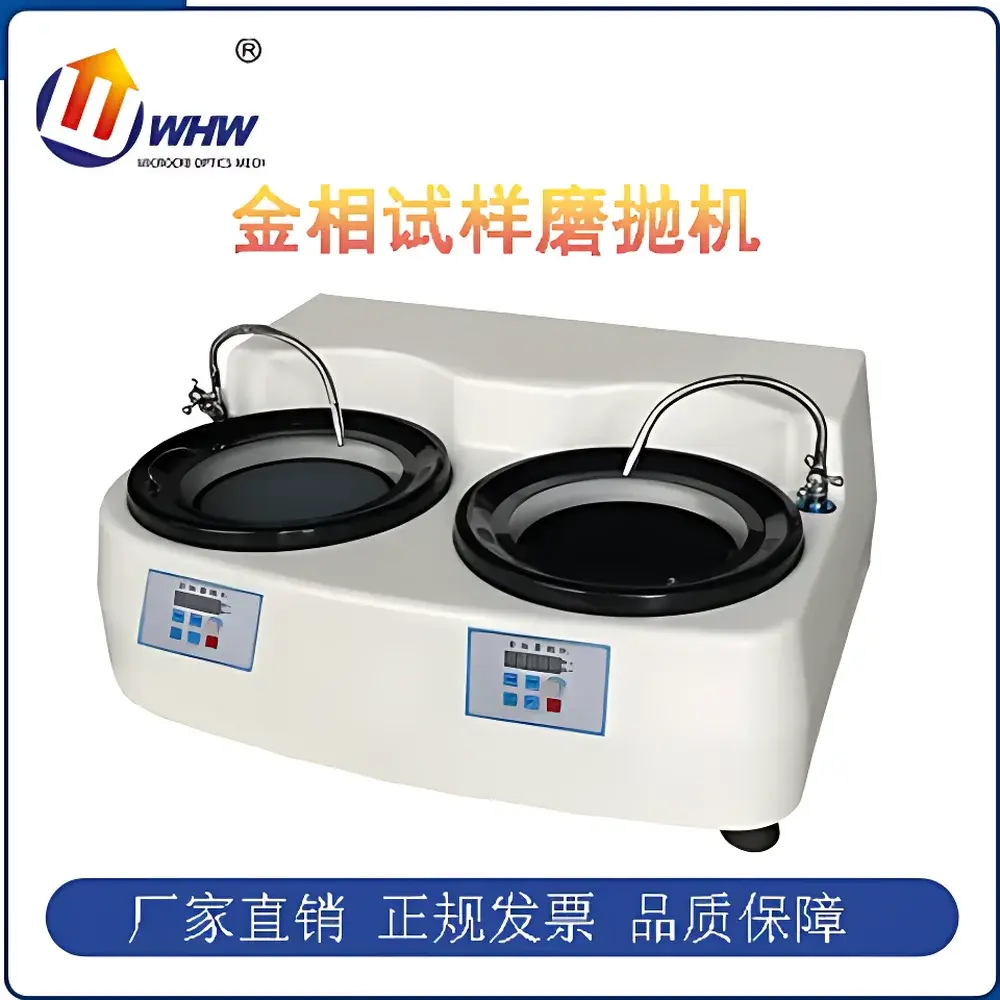
YANRUN MPD-2A Dual-Station Metallographic Grinding and Polishing Machine
| Brand | YANRUN |
|---|---|
| Origin | Shanghai, China |
| Manufacturer Type | Direct Manufacturer |
| Country of Origin | China |
| Model | MPD-2A |
| Price | USD 1,700 (approx.) |
| Speed Control | Dual-mode — Stepless (200–1500 rpm) + Fixed-speed (600 rpm low / 1200 rpm high) |
| Platen Diameter | Standard 230 mm (optional: 200 mm, 250 mm, 300 mm) |
| Number of Platens | 2 |
| Motor Power | 500 W × 2 |
| Dimensions (W×D×H) | 680 × 570 × 320 mm |
| Voltage | 220 V AC, 50 Hz |
| Rotation Direction | Bidirectional (forward/reverse selectable) |
| Water Faucet | 360° swivel, sealed inlet/outlet system |
| Enclosure Material | ABS thermoplastic housing |
| Sample Chamber Depth | Extra-deep design for splash containment |
Overview
The YANRUN MPD-2A Dual-Station Metallographic Grinding and Polishing Machine is an engineered solution for standardized specimen preparation in metallurgical, materials science, and quality control laboratories. Designed around the fundamental requirements of ASTM E3, ISO 14577, and GB/T 13298—standards governing metallographic sample preparation—the MPD-2A implements a dual-platen, dual-control architecture to support sequential or parallel grinding and polishing operations. Its core function is mechanical surface conditioning: controlled abrasive removal via rotating platens carrying bonded abrasives (e.g., silicon carbide papers) or soft polishing cloths impregnated with colloidal silica or diamond suspensions. The machine’s sealed water management system isolates fluid pathways from electrical components, ensuring long-term reliability under continuous wet-processing conditions typical of metallography workflows.
Key Features
- Dual independent platen stations with synchronized or isolated operation—enabling simultaneous coarse grinding on one station and fine polishing on the other.
- Bidirectional rotation control (forward/reverse) for optimized abrasive wear distribution and reduced edge rounding during specimen edge retention.
- Hybrid speed regulation: fixed-speed modes (600 rpm for gentle pre-grinding; 1200 rpm for efficient final polishing) plus continuously adjustable stepless drive (200–1500 rpm) for process-specific optimization.
- Sealed, modular water inlet/outlet system with 360° rotatable faucet—prevents cross-contamination between stations and eliminates leakage risks near motor housings or control boards.
- ABS thermoplastic enclosure: impact-resistant, chemically inert to common polishing lubricants (e.g., ethanol-based suspensions, water-soluble coolants), and non-conductive for enhanced operator safety.
- Extra-deep sample chamber (≥120 mm depth) with integrated splash guard geometry—contains coolant overspray during high-pressure grinding of large-area specimens (e.g., weld cross-sections, turbine blade coupons).
- Tool-free platen interchange system supporting industry-standard diameters: 200 mm, 230 mm (standard), 250 mm, and 300 mm—compatible with ISO 6474-compliant backing plates and adhesive-backed consumables.
Sample Compatibility & Compliance
The MPD-2A accommodates a broad spectrum of rigid, solid-phase specimens: ferrous and non-ferrous metals (steel, aluminum, titanium alloys), sintered ceramics (Al2O3, SiC), geological samples (granite, basalt), and microelectronic packaging substrates (FR-4, alumina PCBs). Its mechanical stability and consistent torque delivery (±3% speed regulation accuracy) ensure reproducible material removal rates critical for quantitative image analysis per ASTM E112 (grain size) and ASTM E1245 (inclusion rating). The unit complies with IEC 61000-6-3 (EMC emissions) and IEC 61000-6-2 (immunity), and its insulated housing meets IP22 ingress protection classification for laboratory environments. All electrical components are rated for continuous duty at ambient temperatures up to 40°C and relative humidity ≤80% non-condensing.
Software & Data Management
The MPD-2A operates as a standalone electromechanical instrument without embedded firmware or digital interface. It supports manual process documentation in GLP/GMP-compliant environments through external logbooks or LIMS-integrated SOP execution. Operators may record platen speed, rotation direction, dwell time, abrasive grade, and coolant type per specimen—parameters traceable to ASTM E407 revision history and internal QA checklists. While no onboard data logging is provided, the dual-control panel allows independent parameter locking per station, minimizing procedural drift during multi-step protocols (e.g., 3-step SiC paper progression followed by 2-stage diamond polishing).
Applications
- Preparation of cross-sectional specimens for optical microscopy (OM), scanning electron microscopy (SEM), and electron backscatter diffraction (EBSD).
- Routine QC grinding/polishing of incoming raw materials (ingots, billets) and finished components (bearings, gears, castings) prior to hardness testing or microstructural verification.
- Research-grade specimen fabrication for phase transformation studies, corrosion resistance evaluation (per ASTM G102), and fatigue crack propagation analysis.
- Education labs requiring robust, serviceable equipment for undergraduate metallurgy and materials engineering curricula.
- Failure analysis workflows where edge preservation and subsurface deformation minimization are mandatory—enabled by bidirectional rotation and precise low-rpm control.
FAQ
Is the MPD-2A compliant with ISO/IEC 17025 documentation requirements for accredited labs?
Yes—its dual-control architecture, repeatable speed calibration, and physical parameter lockout support auditable SOP adherence. Full traceability requires external recording of operational parameters per test batch.
Can the machine accommodate vacuum-backed polishing cloths?
Yes—standard 230 mm platens feature threaded mounting holes compatible with commercially available vacuum-backing plates meeting ISO 12780 specifications.
What maintenance intervals are recommended for long-term reliability?
Platen bearing lubrication every 500 operating hours; periodic inspection of ABS housing integrity and water seal gaskets every 6 months under daily use.
Does the unit include overload protection for motor circuits?
Yes—integrated thermal cut-off switches deactivate individual motors if sustained current exceeds 2.5 A per channel, resetting automatically after cooldown.
Are replacement platens and consumable adapters available directly from YANRUN?
Yes—original-equipment 200/230/250/300 mm platens, quick-release backing plates, and coolant hose kits are stocked globally via authorized distributors.



