
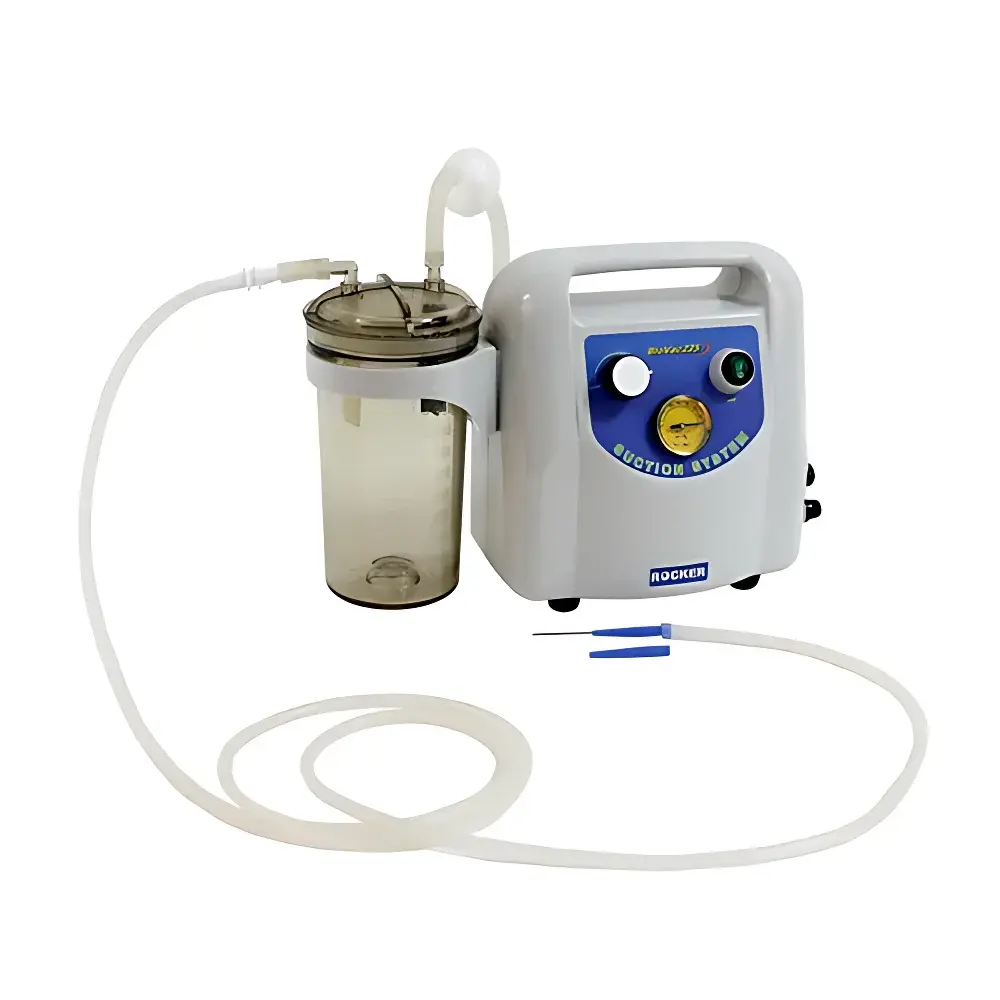
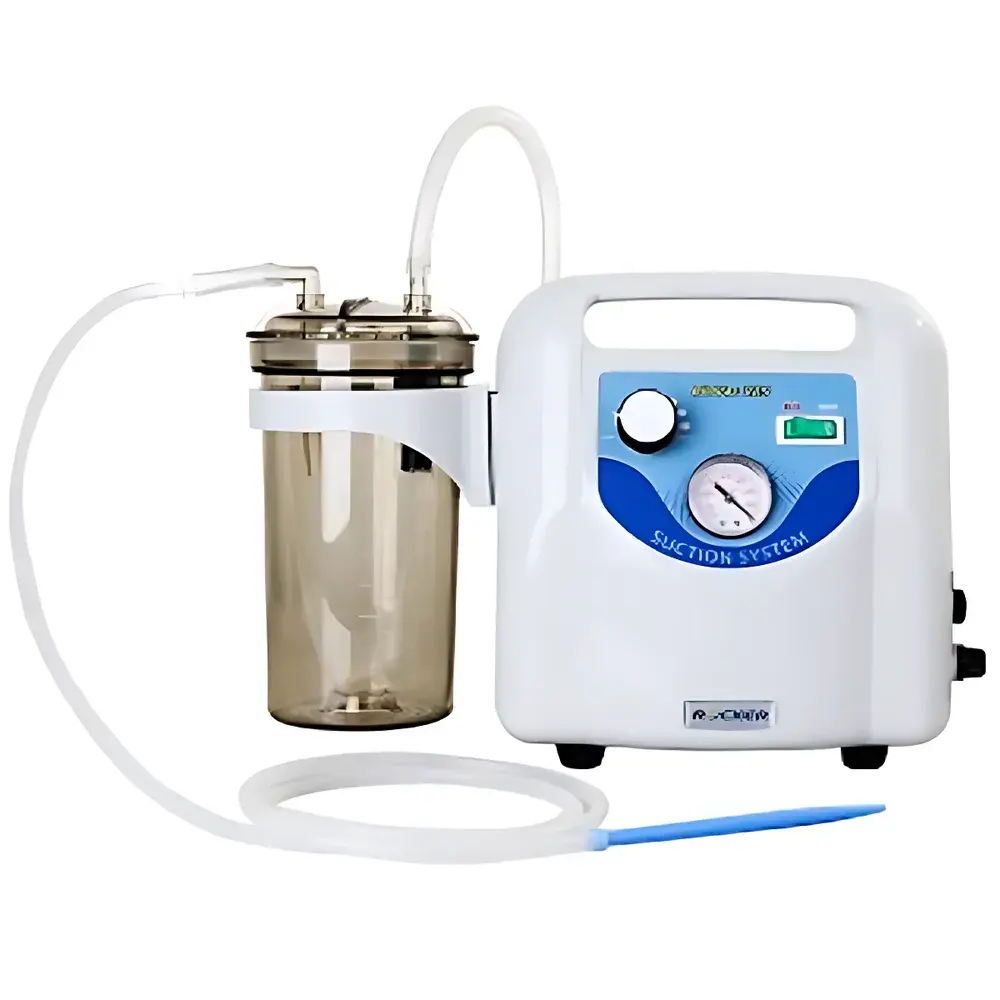
ROCKER BioVac225 Portable Biological Waste Aspiration System
| Brand | ROCKER |
|---|---|
| Origin | Taiwan |
| Model | BioVac225 |
| Ultimate Vacuum | 107 mbar |
| Maximum Flow Rate | 25 L/min |
| Dimensions | 370 × 150 × 250 mm |
| Weight | 4.3 kg |
| Power Supply | 200–240 V AC, 50 Hz (optional 100–120 V, 60 Hz) |
| Vacuum Level | 680 mmHg |
| Hose Connector | 5/16 inch |
| Waste Bottle Capacity | 1000 mL |
| Pump Type | Oil-free Diaphragm Pump |
| Filtration | 0.2 µm PTFE Disc Filter |
| Sterilization Compatibility | Autoclavable (121 °C, 20 min) |
| Overfill Protection | Dual-stage (float valve + inline filter) |
| Thermal Cut-off Protection | Yes |
| Certifications | CE |
Overview
The ROCKER BioVac225 is a compact, oil-free portable aspiration system engineered for safe, reliable, and contamination-controlled removal of biological waste liquids in biosafety cabinets, laminar flow hoods, and general laboratory workspaces. It operates on a diaphragm vacuum principle—generating negative pressure without lubricated mechanical components—to ensure consistent suction performance while eliminating oil vapor contamination risks. Designed specifically for cell culture maintenance, media exchange, and routine liquid waste handling, the BioVac225 delivers precise control over aspiration dynamics under Class II biosafety conditions. Its modular architecture integrates seamlessly into GLP-compliant workflows and supports adherence to ISO 13485–aligned lab practices through traceable operation and sterilizable components.
Key Features
- Oil-free diaphragm pump technology ensures zero oil carryover, eliminating cross-contamination risk and reducing long-term maintenance requirements.
- Dual-stage overfill protection: a mechanical float valve inside the 1000 mL autoclavable polycarbonate waste bottle prevents overflow, complemented by an inline 0.2 µm hydrophobic PTFE disc filter positioned between the bottle and pump head.
- Full autoclave compatibility: both the waste bottle and PTFE filter are validated for steam sterilization at 121 °C for 20 minutes, supporting reuse in aseptic applications per USP & ISO 11140 standards.
- Integrated thermal cut-off switch provides automatic shutdown during prolonged operation or ambient overheating, enhancing equipment longevity and operator safety.
- Low-noise operation (<52 dB(A)) enables use in shared or noise-sensitive environments including core facilities and teaching labs.
- Compact footprint (370 × 150 × 250 mm) and lightweight design (4.3 kg) facilitate transport between biosafety cabinets, incubators, and cleanrooms without requiring permanent installation.
Sample Compatibility & Compliance
The BioVac225 is compatible with standard laboratory-grade silicone or PVC aspiration tubing (5/16 inch ID), and accepts common sterile disposable tips and pipette adapters. All wetted surfaces—including the waste bottle, cap gasket, and filter housing—are chemically resistant to alcohols, dilute acids/bases, and common cell culture reagents. The system complies with EU Machinery Directive 2006/42/EC and carries CE marking for electrical safety and electromagnetic compatibility (EMC). While not classified as a medical device, its construction and sterilization validation support alignment with ISO 15189 quality management requirements for clinical laboratories and GMP Annex 1 environmental monitoring protocols.
Software & Data Management
The BioVac225 is a standalone analog-operated system with no embedded firmware or digital interface. As such, it requires no software installation, network connectivity, or data logging functionality—making it ideal for environments where cybersecurity restrictions, IT policy limitations, or regulatory simplicity are priorities. Its manual on/off rocker switch and intuitive vacuum control eliminate dependency on proprietary drivers or cloud-based platforms. For laboratories operating under FDA 21 CFR Part 11 or EU Annex 11 requirements, the absence of electronic records simplifies audit preparation; operational logs may be maintained manually within lab notebooks or LIMS-integrated workflows using standard SOP documentation.
Applications
- Aspiration of spent culture media from T-flasks, multi-well plates, and bioreactors during routine mammalian or insect cell passaging.
- Removal of supernatant following centrifugation steps in molecular biology and immunology workflows.
- Drainage of buffer solutions and wash liquids in histology and tissue processing labs.
- Supporting decontamination procedures in BSL-2 containment areas via connection to HEPA-filtered exhaust manifolds.
- Field-deployable liquid waste management in mobile diagnostic units or temporary research installations.
FAQ
Can the BioVac225 be used inside a CO₂ incubator?
No—the unit is designed for ambient temperature operation (10–40 °C) and is not rated for humidified, elevated-CO₂ environments. Use only outside incubators, with tubing routed through dedicated ports.
Is the PTFE filter reusable after autoclaving?
Yes—the 0.2 µm hydrophobic PTFE disc filter is validated for up to five autoclave cycles (121 °C, 20 min, 15 psi); visual inspection for discoloration or warping is recommended prior to reuse.
Does the system meet UL or CSA certification requirements?
It holds CE marking per EN 61000-6-2 (immunity) and EN 61000-6-3 (emissions), but does not carry UL or CSA listing. Custom voltage configurations (e.g., 120 V / 60 Hz) are available upon request for North American distribution partners.
What is the expected service life of the diaphragm pump under continuous use?
Rated for ≥10,000 hours of intermittent operation (typical duty cycle: 30% ON time); actual lifespan depends on ambient particulate load, aspiration frequency, and adherence to filter replacement schedules.
Can I connect multiple aspiration points simultaneously?
The BioVac225 features a single inlet port; daisy-chaining or manifold setups are not supported due to vacuum loss and inconsistent flow distribution—use one dedicated unit per aspiration station for optimal reproducibility.



