
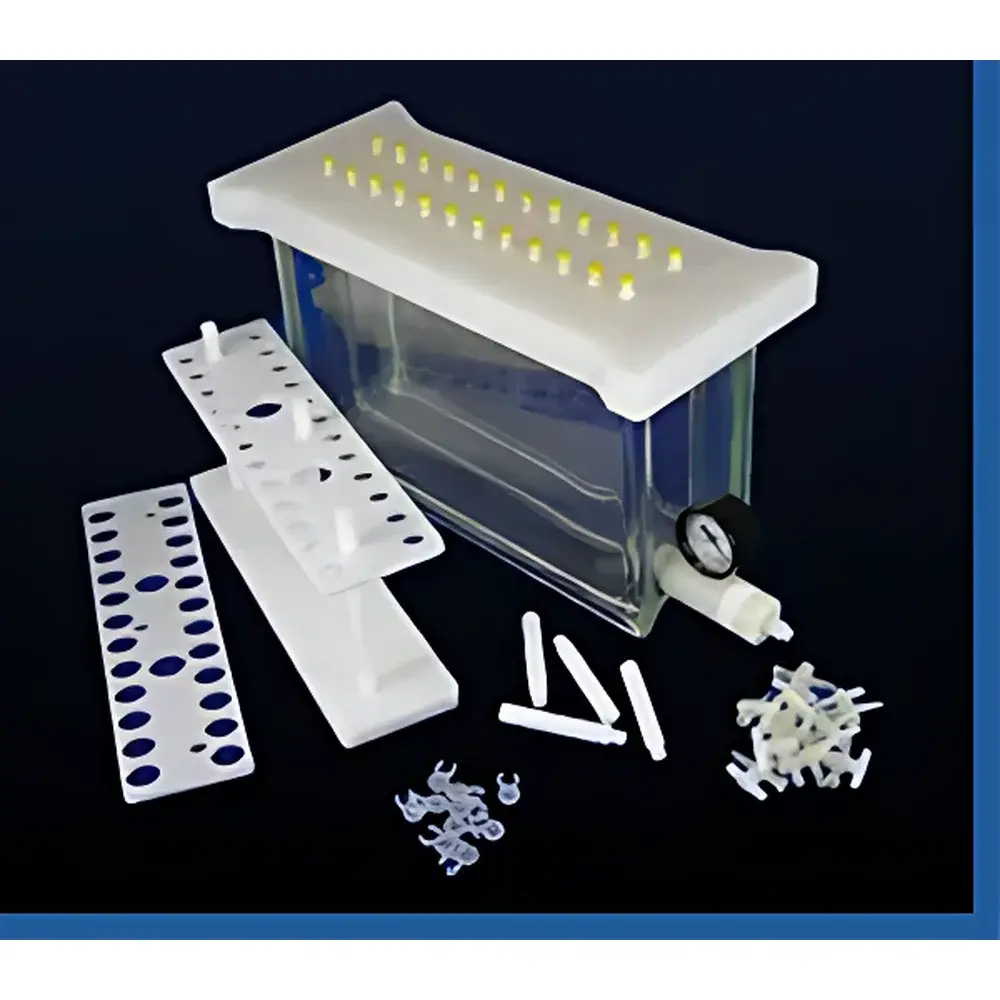
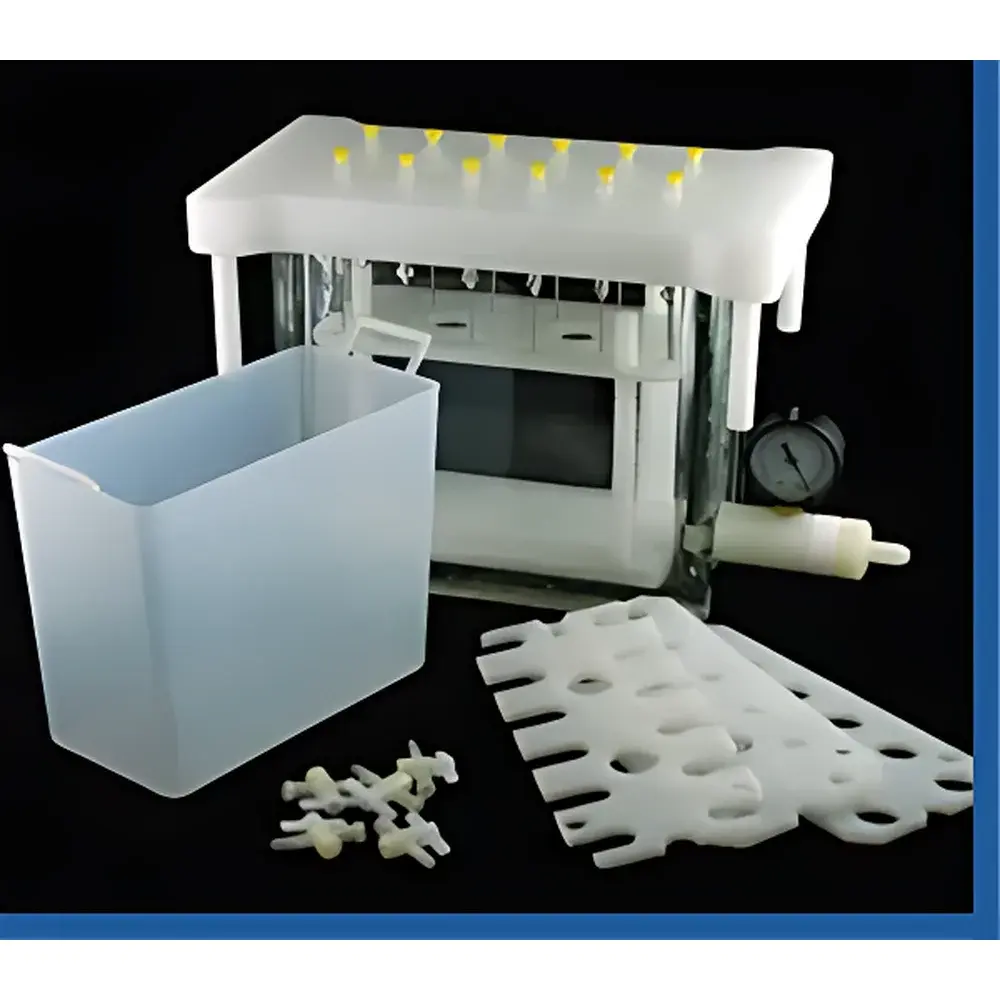
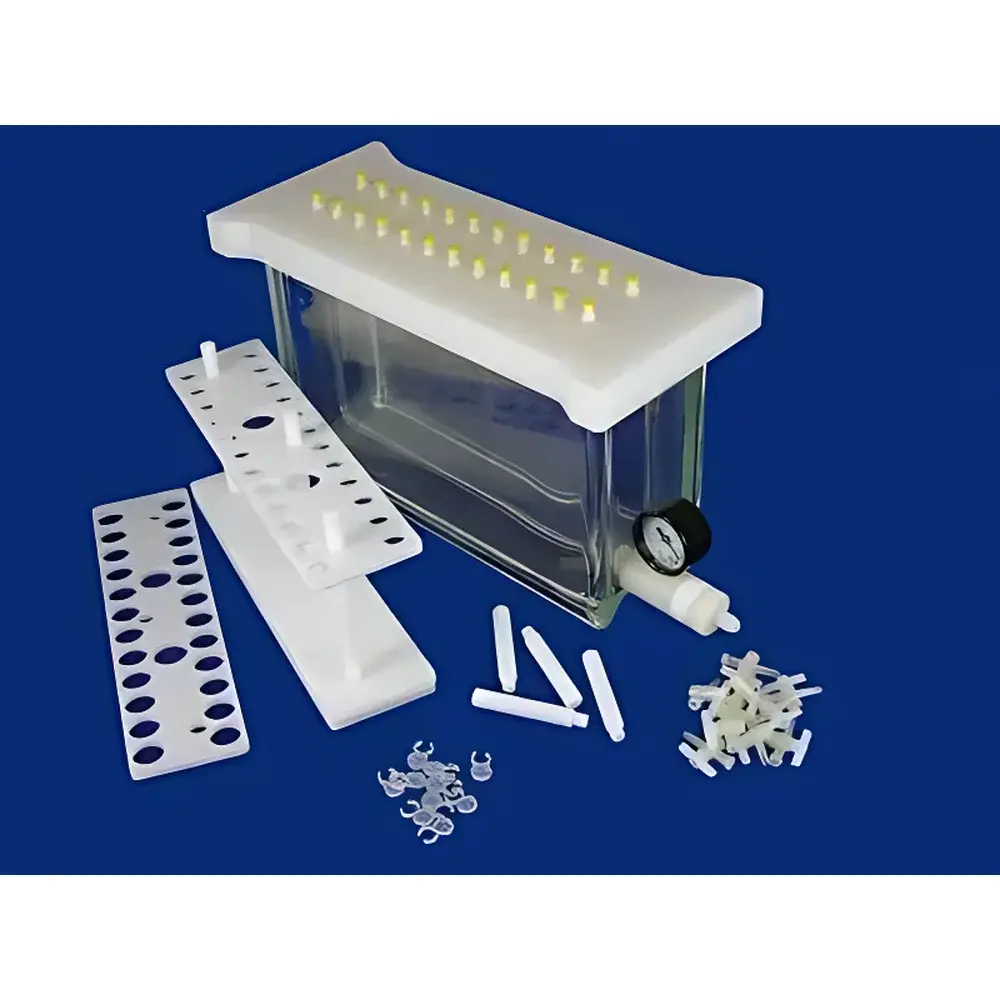
MENTS SPE-24 Vacuum Solid Phase Extraction Manifold
| Brand | MENTS |
|---|---|
| Origin | Beijing, China |
| Manufacturer Type | Direct Manufacturer |
| Product Category | Domestic |
| Model | 12-Port & 24-Port Configurations |
| Automation Level | Manual |
| Channel Count | Multi-Channel |
| Extraction Method | Column-Based SPE |
| Flow Rate Control Range | 0–10 mL/min |
| Solvent Reservoir Capacity | 5 Independent Solvent Inlets |
| Sample Capacity | 12 Samples per Run |
| Sample Loading Volume | Up to 6 mL per Port |
| Wetted Materials | PTFE (Teflon®), Borosilicate Glass, Polypropylene (PP), Stainless Steel |
Overview
The MENTS SPE-24 Vacuum Solid Phase Extraction Manifold is an engineered manual platform for reproducible, high-throughput sample preparation in analytical laboratories. Designed around the fundamental principles of solid-phase extraction—adsorption, selective retention, and controlled elution—the system enables efficient isolation and concentration of target analytes from complex liquid matrices (e.g., water, plasma, urine, food extracts) prior to chromatographic or spectroscopic analysis. Unlike automated systems, the SPE-24 leverages vacuum-driven flow control to ensure consistent pressure application across all ports, minimizing inter-channel variability and preserving column integrity during conditioning, loading, washing, and elution steps. Its modular architecture supports standardized SPE workflows compliant with EPA Method 500/600 series, ISO 17025-accredited protocols, and internal SOPs requiring trace-level recovery and low carryover.
Key Features
- Vacuum manifold constructed with borosilicate glass chamber and PTFE-sealed stopcocks for chemical resistance and long-term stability under organic solvent exposure
- Adjustable height collection rack accommodates diverse receiver formats: 13 mm test tubes, 16 mm culture tubes, autosampler vials (8–12 mm OD), volumetric flasks (up to 100 mL), and conical Erlenmeyer flasks
- Dual-port vacuum gauge with integrated bleed valve allows real-time pressure monitoring and fine-tuned flow regulation without breaking vacuum
- PTFE-coated stainless steel or polypropylene guide needles minimize cross-contamination between samples; all fluid-path components are inert to common SPE solvents (methanol, acetonitrile, ethyl acetate, dichloromethane, hexane)
- Modular port configuration: available in 12-port (SPE-12) and 24-port (SPE-24) variants—both support simultaneous processing of up to 12 samples per cycle using standard 1 mL, 3 mL, and 6 mL SPE cartridges
- Included waste reservoir (PP) features graduated markings and leak-proof gasketing to simplify waste handling and maintain clean bench operation
- Optional high-volume sampler accessory enables direct loading of up to 500 mL per sample without intermediate transfer, reducing manual handling and evaporation loss
Sample Compatibility & Compliance
The SPE-24 is compatible with all commercially available SPE sorbents—including silica-based C18, C8, SCX, SAX, Florisil®, alumina, and mixed-mode resins—as well as custom-packed columns. It supports both reversed-phase and ion-exchange extraction modes, making it suitable for applications ranging from pesticide residue analysis (per EU SANTE/11312/2021 guidelines) to pharmaceutical impurity profiling (aligned with ICH Q2(R2) validation expectations). All wetted materials comply with USP Class VI biocompatibility standards and FDA 21 CFR Part 11–ready documentation practices when paired with laboratory notebook integration. The system’s mechanical design meets CE marking requirements for laboratory equipment (2014/30/EU EMC Directive and 2014/35/EU LVD Directive).
Software & Data Management
As a manually operated vacuum manifold, the SPE-24 does not incorporate embedded firmware or proprietary software. However, its standardized hardware interface enables seamless integration into GLP/GMP-compliant environments through external documentation systems. Users may log operational parameters—including vacuum setpoint (kPa), dwell time per step, solvent type per port, and lot numbers of SPE cartridges—in validated electronic lab notebooks (ELN) such as LabArchives or Benchling. Audit trails for method execution, operator identity, and date/time stamps can be maintained externally, satisfying regulatory expectations for data integrity under ALCOA+ principles.
Applications
- Environmental testing: extraction of PAHs, PCBs, organochlorine pesticides, and pharmaceuticals from surface water, wastewater, and soil leachates
- Clinical toxicology: cleanup of blood plasma or urine prior to LC-MS/MS quantification of opioids, benzodiazepines, and stimulants
- Food safety: removal of matrix interferences (e.g., lipids, pigments) from fruit juice, dairy, and meat homogenates before GC-ECD or HPLC-UV analysis
- Forensic chemistry: selective enrichment of illicit drugs and metabolites from biological specimens under ISO/IEC 17025–accredited workflows
- Method development labs: rapid screening of sorbent selectivity and solvent strength combinations via parallel multi-solvent inlet capability
FAQ
What vacuum source is recommended for optimal performance?
A diaphragm vacuum pump capable of sustaining −80 kPa (−600 mmHg) with oil-free operation is recommended to prevent contamination and ensure stable flow across all ports.
Can the SPE-24 accommodate 96-well plate SPE formats?
No—the SPE-24 is designed exclusively for individual cartridge-based SPE; 96-well plate compatibility requires a dedicated plate manifold (e.g., MENTS SPE-96 series).
Is replacement gasket material available separately?
Yes—PTFE-composite gaskets (Part No. 81204) and full seal kits are stocked and supplied with batch-certified dimensional verification reports.
How is cross-contamination prevented during sequential runs?
By using dedicated PTFE-lined guide needles per solvent type and performing post-run blank rinses with methanol/water (50:50) followed by air-drying under vacuum.
Does the system support positive-pressure elution?
No—this is a vacuum-driven manifold only; positive-pressure elution requires a separate nitrogen manifold or syringe-based system.



