
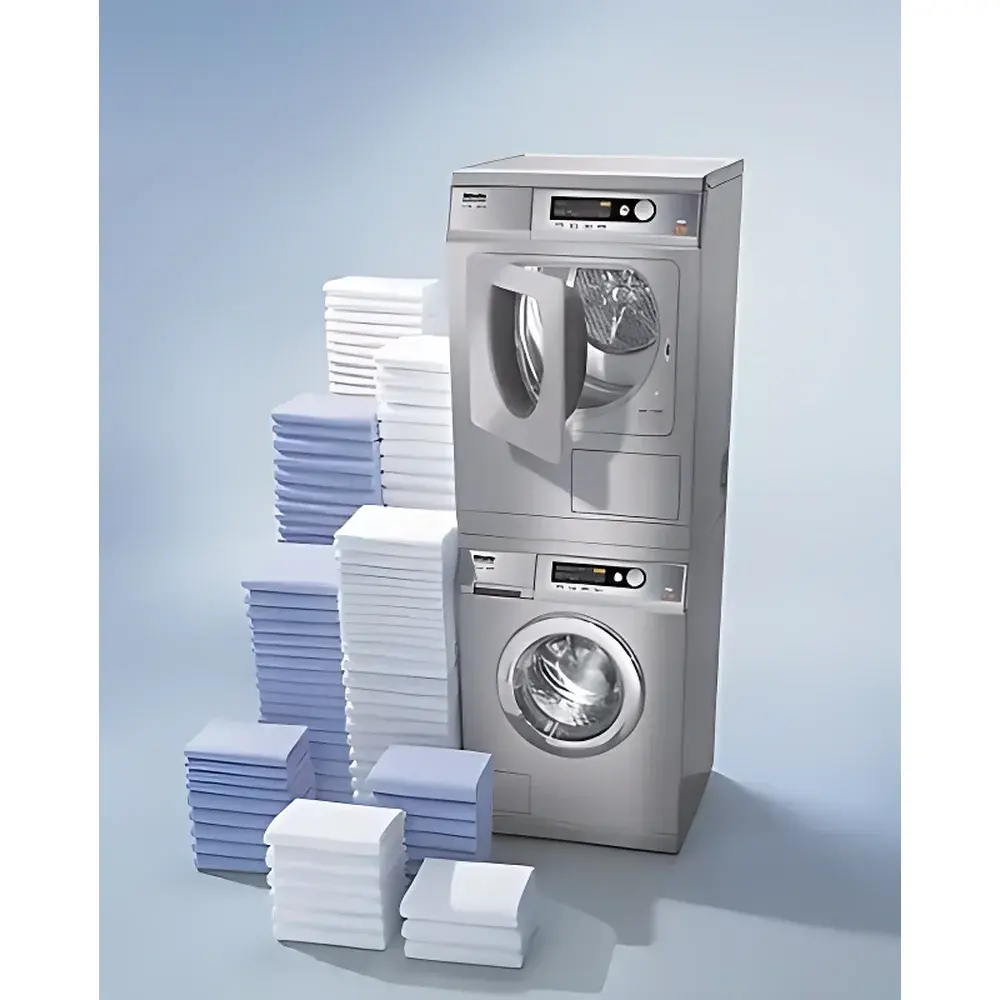
Miele Lab W Series Professional Laboratory Textile Decontamination and Sterilization Washing System
| Brand | Miele |
|---|---|
| Origin | Germany |
| Model | Miele Lab W Series |
| Type | Fully Imported Laboratory Laundry System with Dust Extraction and Microbial Inactivation |
| Compliance | Designed for ISO 14644-1 Class 5–7 (ISO Class 5 = EU GMP Grade A/B equivalent), GLP/GMP-aligned operation |
| Certification | CE, VDE, EN 61000-6-3/6-4, EN 60335-1 |
Overview
The Miele Lab W Series Professional Laboratory Textile Decontamination and Sterilization Washing System is an engineered solution for controlled-environment laboratories requiring validated, repeatable decontamination of reusable lab textiles—including gowns, scrubs, coveralls, face masks, and cage bedding—under stringent biosafety and cleanroom protocols. Unlike standard commercial laundry equipment, the Lab W Series operates on a dual-phase principle: first, mechanical removal of particulate contaminants (e.g., skin squames, hair, aerosolized debris) via high-efficiency drum airflow dynamics and multi-stage filtration; second, thermal-chemical inactivation of microorganisms (bacteria, viruses, spores) through precisely controlled wash cycles meeting EN ISO 15883-1/-4 requirements for washer-disinfectors. The system integrates HEPA-filtered exhaust recirculation, condensate recovery, and closed-loop detergent dosing to minimize environmental footprint while maintaining full traceability per ISO 9001 and ISO 13485 quality management frameworks.
Key Features
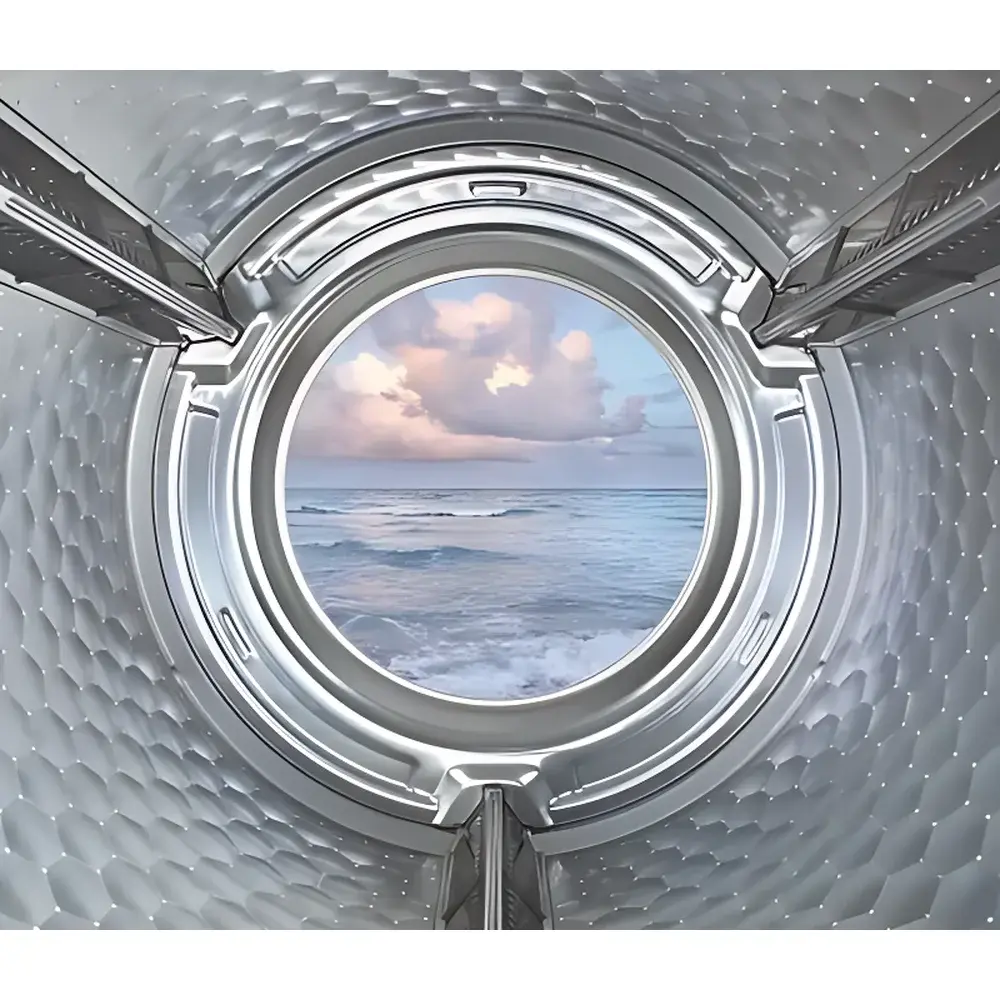
- Patented Honeycomb Drum Architecture: Optimized drum perforation geometry ensures uniform water distribution, reduced mechanical stress on fabric fibers, and >99.9% particle retention during spin extraction (tested per ISO 14644-3 airborne particle count methodology).
- Autoclean Self-Disinfection Cycle: Automated thermal disinfection of internal wetted surfaces (drum, sump, hoses, pump) at ≥93°C for ≥10 minutes, compliant with EN ISO 15883-4 Annex B for reprocessing equipment hygiene validation.
- Integrated Dust Extraction Module: Captures airborne lint and bioaerosols generated during loading/unloading via Class H14 HEPA filtration (≥99.995% @ 0.3 µm), ducted to external exhaust or recirculated after secondary carbon filtration.
- GLP/GMP-Ready Operation: Full audit trail logging (cycle parameters, temperature/time profiles, detergent usage, door interlock status) with optional 21 CFR Part 11-compliant electronic signature module.
- Modular Detergent & Disinfectant Dispensing: Precision metering of EN 14561-certified alkaline and acidic agents, plus low-foaming enzymatic formulations compatible with ISO 15883-1 Annex C bioburden reduction validation.
Sample Compatibility & Compliance
The Lab W Series processes all common laboratory textile substrates—polyester-cotton blends, Tyvek®-reinforced gowns, nonwoven masks, and autoclavable mesh cages—without compromising structural integrity or electrostatic dissipation properties. Wash programs are pre-validated for compatibility with ISO 14971 risk management principles and aligned with ASTM F2763 (Standard Guide for Validation of Laundry Processes for Healthcare Facilities). All cycles meet minimum log6 microbial reduction requirements for vegetative bacteria (per EN 14885) and log4 for enveloped viruses (per EN 14476), verified using Bacillus atrophaeus and Phi6 bacteriophage challenge testing. System design conforms to EU Directive 2014/34/EU (ATEX) for use in classified zones where flammable solvents are not employed.
Software & Data Management
Equipped with Miele Professional LabControl™ v4.2 firmware, the system supports Ethernet/IP and OPC UA connectivity for integration into centralized laboratory infrastructure monitoring platforms (e.g., LabVantage, Thermo Fisher SampleManager). Cycle data—including real-time temperature curves, conductivity-based rinse endpoint detection, and motor torque signatures—are stored locally for ≥36 months and exportable in CSV or PDF-A format. Optional cloud-based remote diagnostics enable predictive maintenance alerts based on pump pressure decay trends and filter differential pressure thresholds. Audit logs comply with FDA 21 CFR Part 11 Subpart B requirements, including user authentication, electronic signatures, and immutable record retention.
Applications
- Cell Culture Core Facilities: Decontamination of laminar flow hood gowns and pass-through bag liners to prevent mycoplasma and fungal cross-contamination.
- P2/P3 Biosafety Laboratories: Processing of reusable respirator hoods and splash-resistant aprons under OSHA 1910.120 and WHO Laboratory Biosafety Manual (4th ed.) guidelines.
- GLP-Compliant Animal Research Units: Sterilization of cage bedding and technician scrubs in AAALAC-accredited vivaria, ensuring IACUC-mandated pathogen exclusion.
- Molecular Diagnostics Labs: Elimination of PCR amplicon carryover from lab coats and gloves via alkaline hydrolysis wash protocols validated per CLSI EP22-A.
- HACCP-Certified Food Microbiology Suites: Reusable textile handling in ISO/IEC 17025-accredited environments where ISO 22000 Clause 8.2.2 mandates documented contamination control.
FAQ
Does the Lab W Series achieve sterilization (SAL 10−6) or only high-level disinfection?
The system delivers washer-disinfector performance per EN ISO 15883-1, achieving ≥log6 reduction of Bacillus atrophaeus spores under validated cycle conditions—but does not replace autoclaving for sterile barrier packaging applications.
Can it be integrated into existing BMS or LIMS platforms?
Yes—via native Modbus TCP, BACnet MS/TP, or optional OPC UA gateway; full metadata mapping documentation provided upon commissioning.
What validation support is included with installation?
Miele provides IQ/OQ documentation templates, thermocouple placement diagrams, and a certified third-party PQ protocol executed by an ISO/IEC 17025-accredited partner.
Is detergent residue testing required post-cycle?
Residue verification is recommended per USP and ISO 15883-5; Miele supplies validated rinse efficiency test kits (conductivity ≤2.0 µS/cm) and residue extraction SOPs.
How often must the HEPA filter be replaced?
Filter service intervals are dynamically calculated based on cumulative airflow hours and differential pressure; typical replacement occurs every 12–18 months under continuous Class 5 cleanroom operation.
Related Products



