
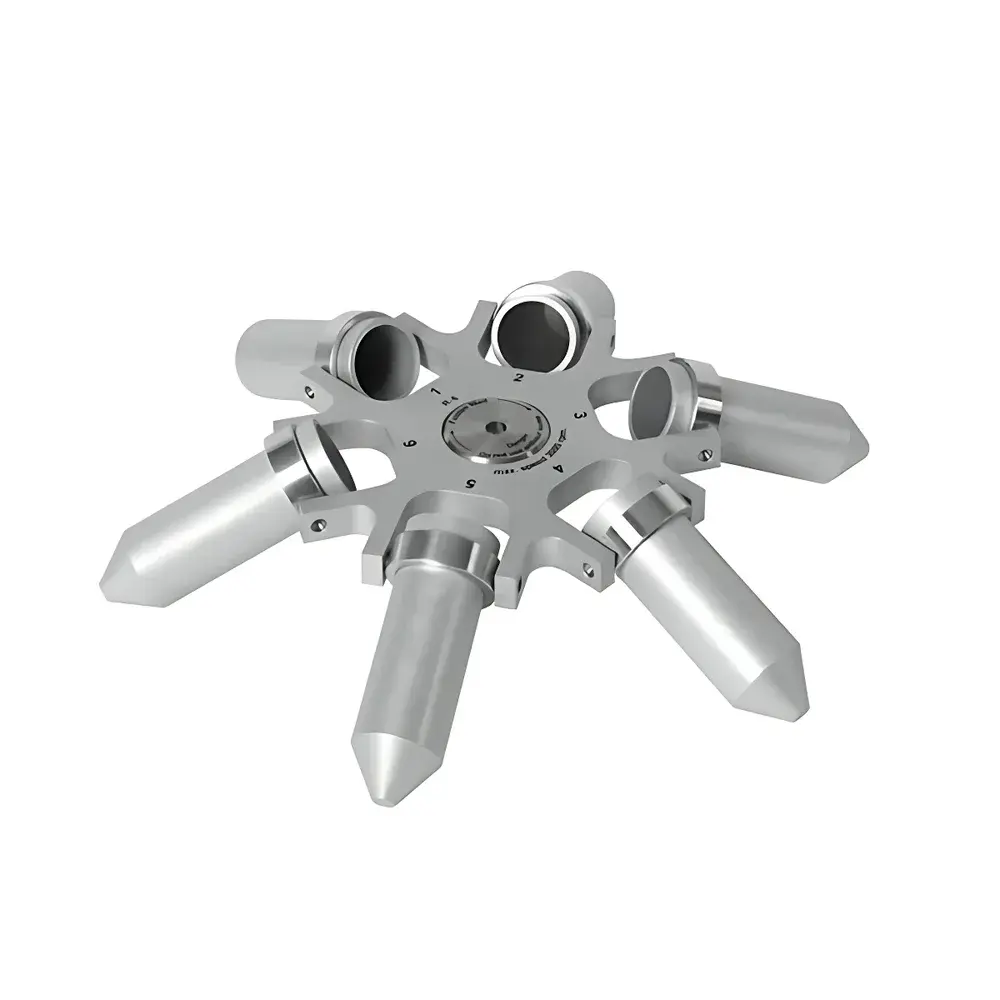
R-6 Rotational Viscometer
| Origin | United Kingdom |
|---|---|
| Manufacturer Type | Authorized Distributor |
| Origin Category | Imported Instrument |
| Model | R-6 |
| Pricing | Available Upon Request |
Overview
The R-6 Rotational Viscometer is a precision-engineered laboratory instrument designed for the reliable and repeatable measurement of dynamic viscosity across a broad range of Newtonian and non-Newtonian fluids. Operating on the principle of rotational shear, the R-6 employs a coaxial cylinder (Couette) geometry—comprising a stationary outer cup and a rotating inner bob—to generate controlled shear rates while measuring the resulting torque. This architecture ensures high reproducibility under standardized test conditions and aligns with fundamental rheological measurement practices defined in ISO 2555 and ASTM D2196. The instrument is calibrated traceably to NPL (National Physical Laboratory, UK) standards and supports both single-point and multi-point viscosity profiling, making it suitable for routine quality control as well as method development in formulation laboratories.
Key Features
- Microprocessor-controlled motor drive delivering stable rotational speeds from 0.1 to 200 rpm in 0.1-rpm increments
- Integrated temperature-compensated torque sensor with ±1.0% full-scale accuracy over the operational range
- Modular spindle system compatible with standard L-series spindles (L1–L4), enabling viscosity measurements from 1 mPa·s to 2 × 10⁶ mPa·s depending on configuration
- Digital display interface with real-time readout of viscosity (mPa·s or cP), shear rate (s⁻¹), shear stress (Pa), and % torque
- RS-232 serial port for external data logging and integration with LIMS environments
- Robust aluminum alloy housing with thermal mass stabilization to minimize ambient drift during extended measurements
Sample Compatibility & Compliance
The R-6 accommodates samples ranging from low-viscosity solvents (e.g., ethanol, acetone) to highly structured gels and pastes, provided sample volume exceeds 15 mL for standard cup-and-bob geometry. Optional small-volume adapters (SVAs) reduce minimum sample requirement to 2 mL for high-value or hazardous materials. All wetted parts are constructed from anodized aluminum and stainless steel 316, ensuring chemical resistance to common organic solvents, aqueous buffers, and mild acids/bases. The instrument complies with CE marking requirements under the EU Machinery Directive 2006/42/EC and EMC Directive 2014/30/EU. Its operational protocol supports GLP-compliant workflows through manual logbook documentation; optional software packages provide audit-trail-enabled data capture aligned with FDA 21 CFR Part 11 principles when used with validated PC-based acquisition systems.
Software & Data Management
While the R-6 operates autonomously via its front-panel interface, optional Windows-compatible software (ViscoLink™ v3.2) enables automated test sequencing, customizable report generation (PDF/CSV), and statistical analysis including Bingham plastic and power-law model fitting. Data files include timestamps, operator ID fields, calibration certificate references, and environmental metadata (ambient temperature/humidity if externally logged). Exported datasets conform to ASTM E1447-22 guidelines for digital data integrity and are structured for seamless import into JMP, MATLAB, or LabWare LIMS platforms. Firmware updates are delivered via encrypted USB key and require authenticated access credentials to maintain system integrity.
Applications
- QC testing of industrial lubricants, transformer oils, and hydraulic fluids per ASTM D445 and ISO 3104
- Rheological screening of pharmaceutical suspensions, ointments, and topical gels during formulation development
- Monitoring viscosity stability of polymer solutions and latex emulsions over time and temperature
- Evaluation of thixotropic recovery behavior using programmable step-shear protocols
- Teaching core rheology concepts—including yield stress estimation and flow curve construction—in university analytical chemistry and materials science laboratories
FAQ
Is the R-6 supplied with factory calibration documentation?
Yes — each unit ships with a UKAS-accredited calibration certificate valid for 12 months, covering torque, speed, and temperature sensors.
Can the R-6 be used for yield stress determination?
It supports indirect yield stress estimation via controlled-stress ramp tests when paired with optional software and appropriate spindle geometry, though dedicated yield stress instruments (e.g., vane or cone-plate rheometers) offer higher sensitivity.
What maintenance is required for long-term accuracy?
Annual recalibration is recommended; routine cleaning of spindles and cups with isopropanol and inspection of bearing play every 6 months ensure optimal performance.
Does the R-6 meet ISO/IEC 17025 requirements for accredited testing labs?
The instrument itself is not certified to ISO/IEC 17025, but its metrological traceability, documented uncertainty budgets, and compatibility with validated procedures enable its use within ISO/IEC 17025-accredited laboratories when operated per established SOPs.
Related Products



