
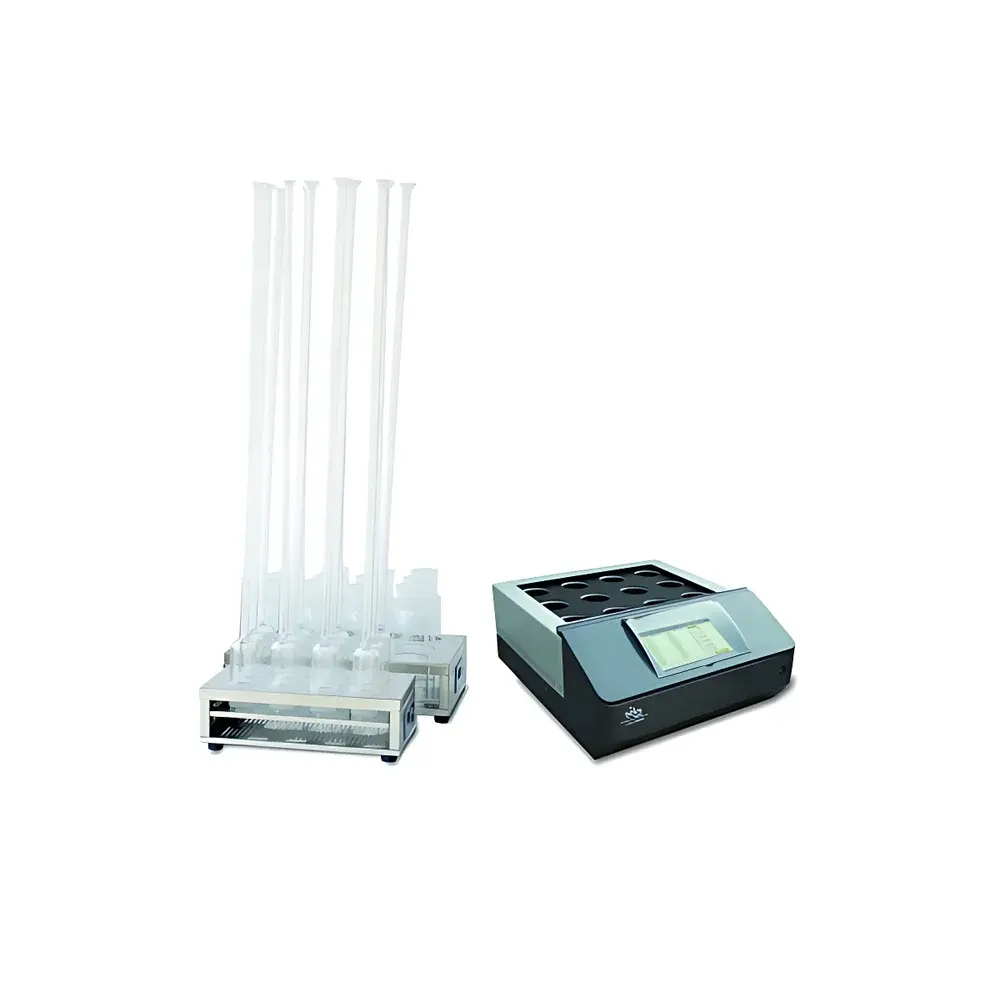
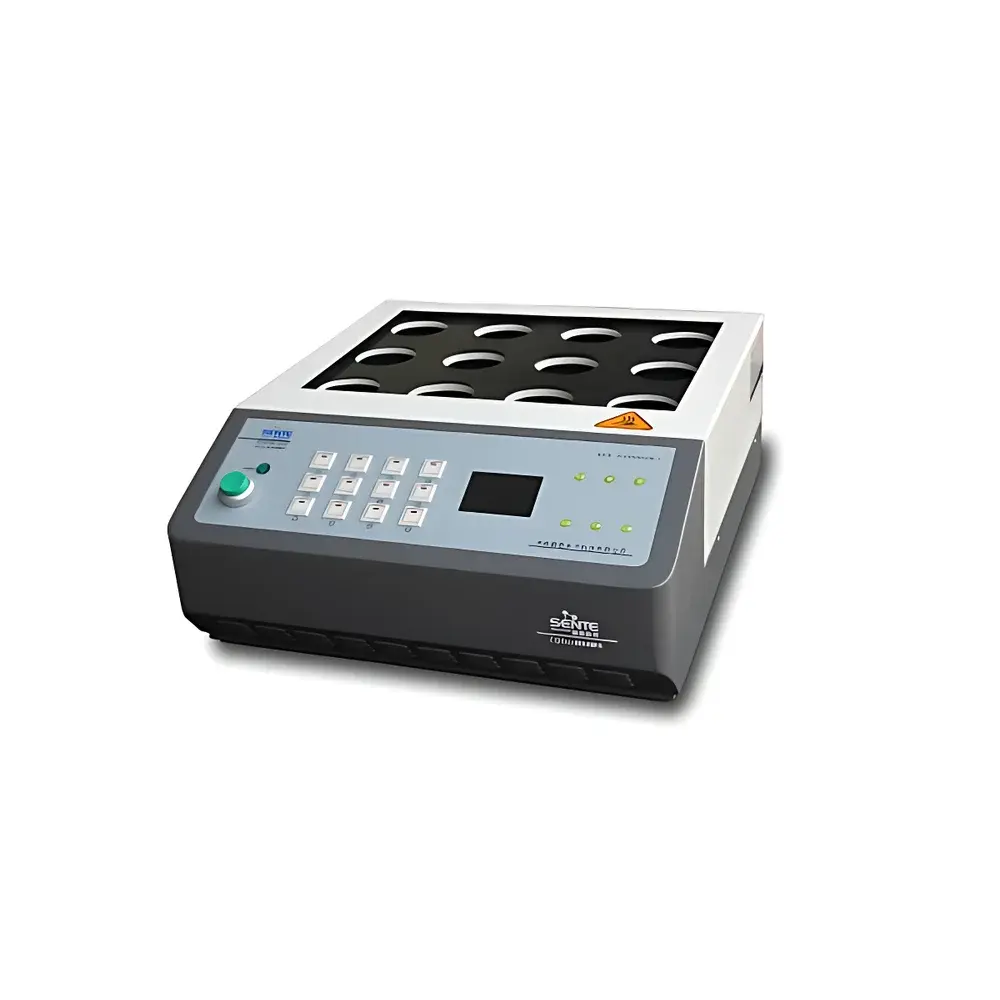
Sentte ST106B1 Graphite Block COD Reflux Digestion System
| Brand | Sentte |
|---|---|
| Origin | Shandong, China |
| Manufacturer Type | Direct Manufacturer |
| Instrument Type | Graphite Block Digestion System |
| Automation Level | Fully Automatic |
| Digestion Positions | 12 |
| Temperature Range | 0–300 °C |
| Temperature Control Accuracy | ±1 °C |
| Heating Principle | Far-Infrared Radiant Heating |
| Display | Color LCD Screen |
| Temperature Uniformity (Inter-Position) | ±1 °C |
| Digestion Time Range | 0–150 min (individually programmable per position) |
| Vessel Capacity | 350 mL |
| Vessel Dimensions | Ø58 mm × 200 mm |
| Rated Power | 2400 W |
| Heating Element | Corrosion-Resistant Graphite Block |
| Cooling Method | Forced-Air Convection |
| Ramp Time (Ambient to 150 °C) | 15–20 min |
| External Dimensions (W×D×H) | 510 mm × 500 mm × 210 mm |
Overview
The Sentte ST106B1 Graphite Block COD Reflux Digestion System is an ISO/IEC 17025-aligned, fully automated digestion platform engineered for precise, reproducible implementation of the HJ 828–2017 standard method—“Determination of Chemical Oxygen Demand (COD) in Water by Dichromate Oxidation.” Unlike conventional open-heating reflux systems, this instrument employs a high-density, acid-resistant graphite block with integrated far-infrared heating elements, enabling uniform thermal distribution across all 12 digestion positions. Each position features independent PID temperature control and real-time feedback, ensuring compliance with the critical 120-minute micro-boiling requirement at 150 °C specified in HJ 828–2017. The system replaces water-cooled condensers with a regulated forced-air convection cooling module, eliminating tap water dependency while maintaining stable reflux conditions. Designed for routine environmental laboratories performing wastewater, surface water, and effluent analysis, the ST106B1 delivers metrological traceability, operator safety, and full audit readiness for GLP and ISO 17025 accreditation.
Key Features
- 12-position graphite digestion block with individual far-infrared heating zones—no cross-contamination or thermal crosstalk;
- PID-controlled temperature regulation per position, achieving ±1 °C accuracy and inter-position uniformity ≤±1 °C across the full 0–250 °C operational range;
- Color LCD interface displaying real-time temperature, countdown timer, and status for each digestion channel simultaneously;
- Programmable digestion time (0–150 min), with automatic power cutoff and audible alert upon completion;
- Integrated air-cooling reflux module with adjustable airflow rate—eliminates plumbing, reduces lab water consumption, and avoids condensate backflow risks;
- 350 mL borosilicate digestion vessels (Ø58 mm × 200 mm) compatible with direct titration post-digestion—no sample transfer required;
- Corrosion-resistant graphite construction rated for prolonged exposure to concentrated H2SO4, K2Cr2O7, and Ag2SO4 reagents per HJ 828–2017;
- Front-panel one-touch start function with preloaded HJ 828–2017 default protocol (150 °C, 120 min); user-defined methods storable in non-volatile memory.
Sample Compatibility & Compliance
The ST106B1 accommodates standard 350 mL digestion vessels used in regulatory COD testing and supports heterogeneous sample matrices—including municipal wastewater, industrial effluents (e.g., textile, pharmaceutical, food processing), and surface water with suspended solids up to 100 mg/L. Its design conforms to key performance criteria outlined in HJ 828–2017, including thermal stability during micro-boiling, consistent reflux condensation, and minimal reagent loss. The instrument meets mechanical safety requirements per IEC 61010-1:2010 (Laboratory Equipment Safety) and electromagnetic compatibility per IEC 61326-1:2020. While not FDA 21 CFR Part 11–certified out-of-the-box, its event-logged operation (time-stamped start/stop, temperature setpoint, actual profile) supports data integrity documentation for GLP/GMP environments when paired with laboratory information management systems (LIMS).
Software & Data Management
The ST106B1 operates via embedded firmware with no external PC dependency. All method parameters—including temperature setpoints, ramp rates, hold times, and cooling delay—are stored in EEPROM with battery-backed retention. The color LCD logs and displays the complete thermal history of each run: timestamped start, peak temperature, average deviation from setpoint, and final cooldown confirmation. Optional RS-232 or USB-to-serial interface (available on request) enables export of CSV-formatted digest logs for integration into LIMS or electronic lab notebooks (ELN). Audit trail records include operator ID (via optional keypad login), method version, and hardware self-test results—supporting ISO/IEC 17025 clause 7.7 (result reporting) and clause 8.9 (nonconforming work control).
Applications
- Routine COD analysis in environmental monitoring labs accredited to CNAS (China National Accreditation Service) or equivalent bodies;
- Wastewater treatment plant QC/QA programs requiring daily batch validation against HJ 828–2017;
- Research studies evaluating organic load in agricultural runoff, landfill leachate, or anaerobic digester influent;
- Method validation and inter-laboratory comparison exercises under ISO 5725 guidance;
- Educational use in university analytical chemistry laboratories emphasizing standardized environmental test protocols.
FAQ
Does the ST106B1 comply with HJ 828–2017 without modification?
Yes—the instrument’s thermal profile, reflux stability, vessel geometry, and timing logic are specifically calibrated to replicate the manual method’s critical parameters, including 120-minute micro-boiling at 150 °C.
Can different digestion temperatures be set for individual positions?
Yes—each of the 12 positions supports independent temperature programming (0–250 °C) and time scheduling, enabling parallel multi-method workflows.
Is the air-cooling system sufficient to maintain reflux during extended runs?
Yes—validated under worst-case ambient conditions (35 °C, 60% RH), the forced-air module sustains >95% condensate recovery efficiency over 150-minute cycles.
What maintenance is required for the graphite block?
No periodic recalibration is needed; graphite surfaces require only wipe-cleaning with dilute nitric acid after heavy sulfate residue buildup—no replacement parts or consumables.
Is third-party calibration certification available?
Yes—Sentte offers NIST-traceable temperature verification reports (per ASTM E220) and on-site installation qualification (IQ/OQ) documentation upon request.



