
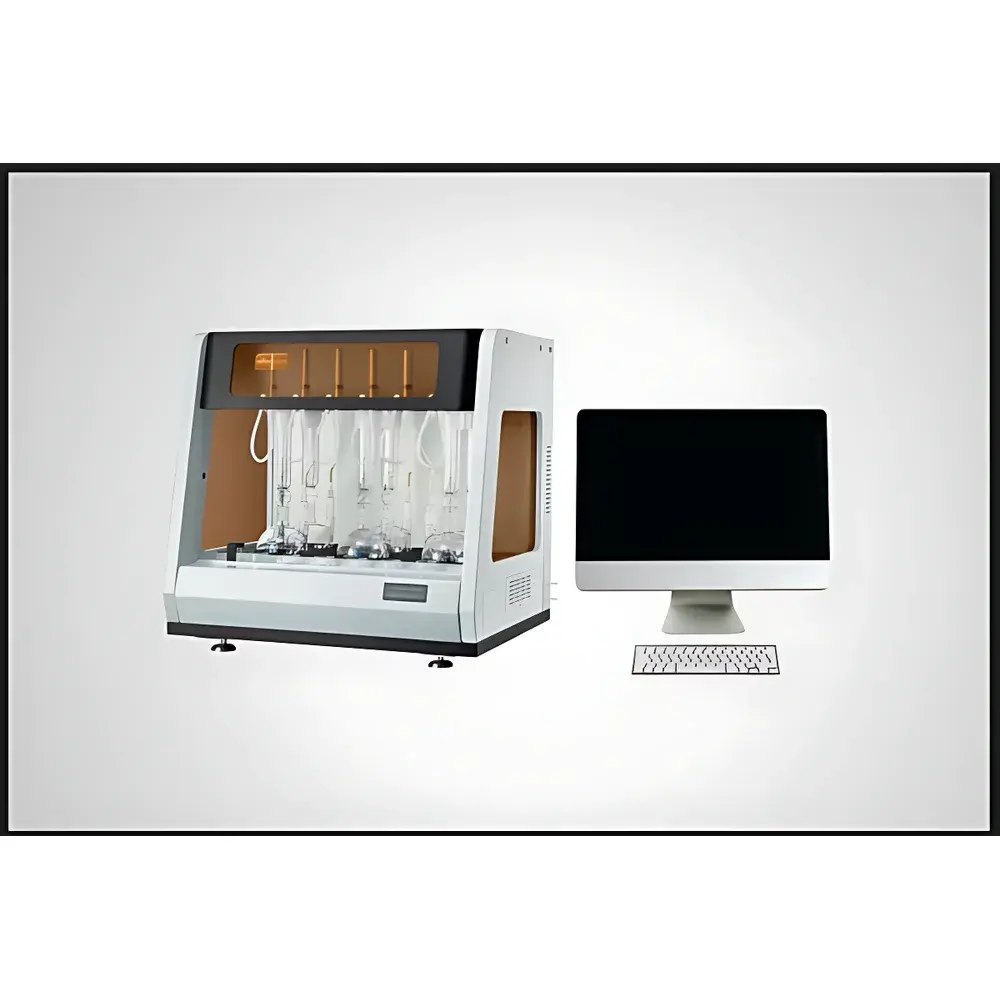
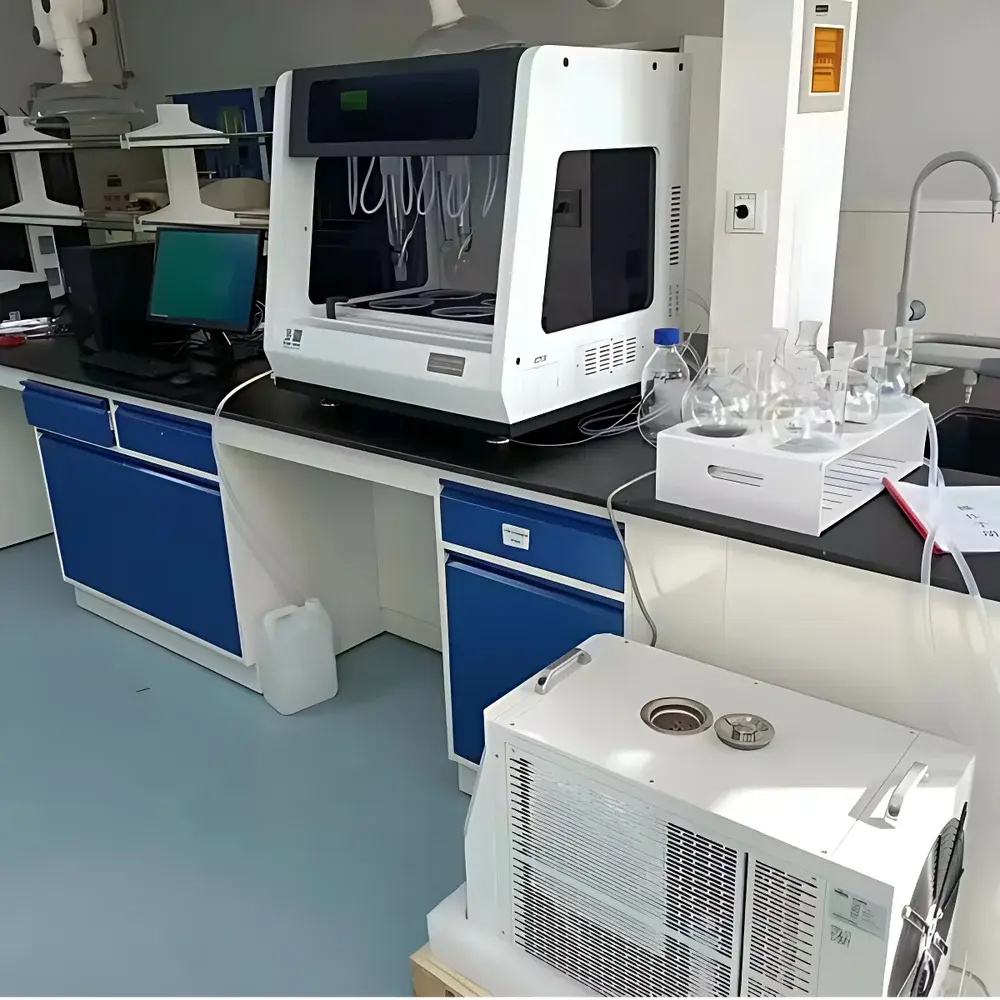
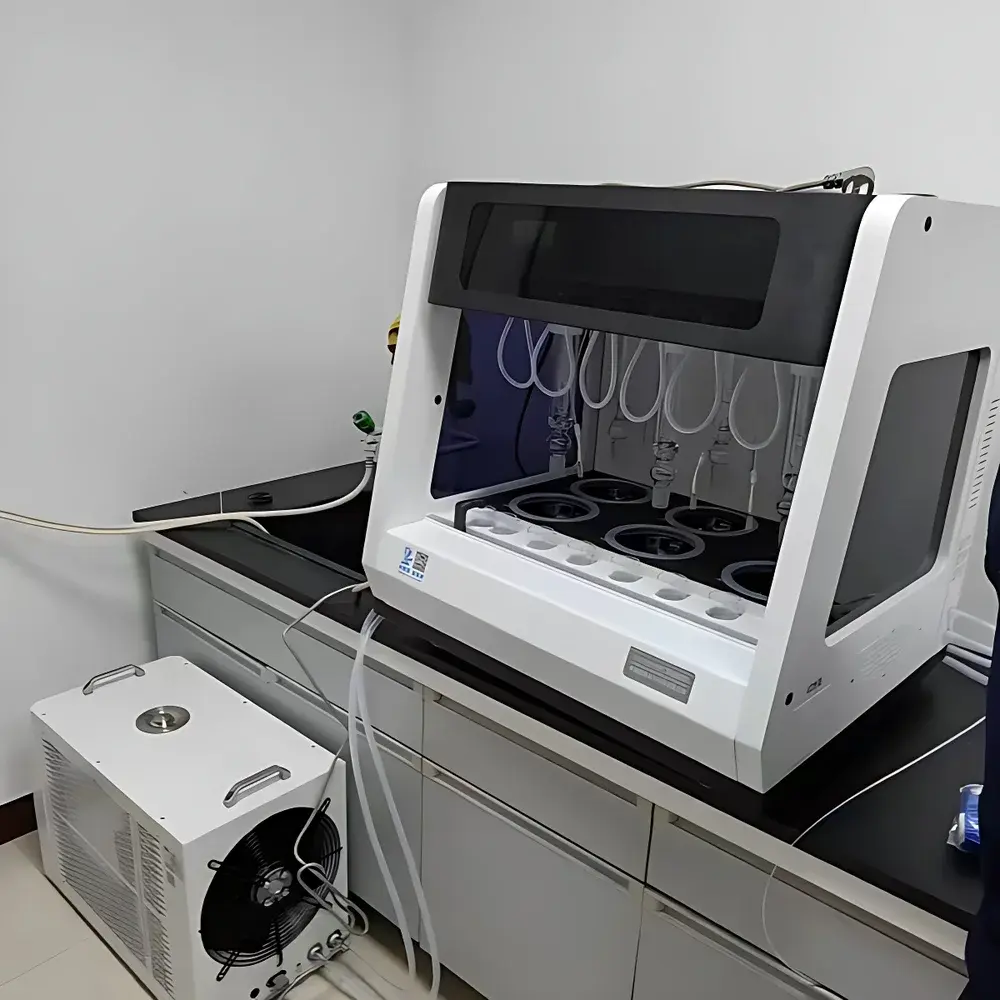
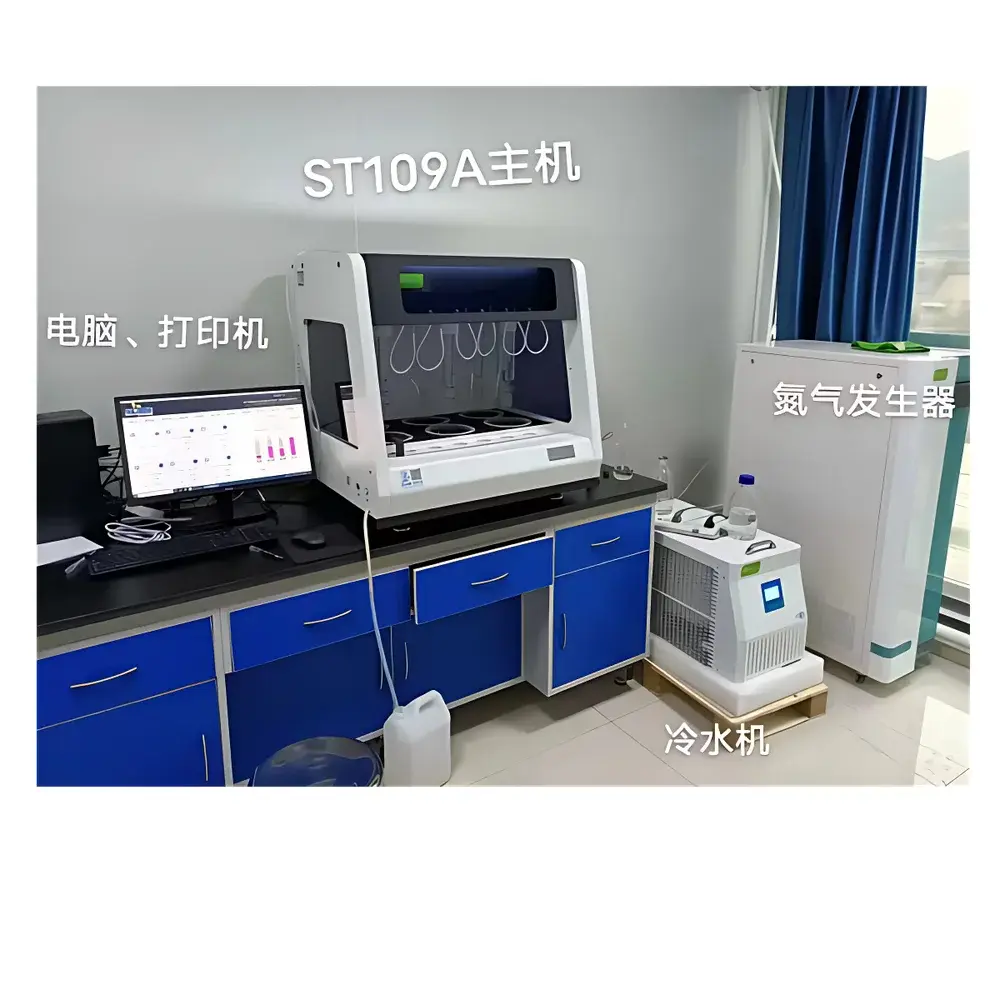
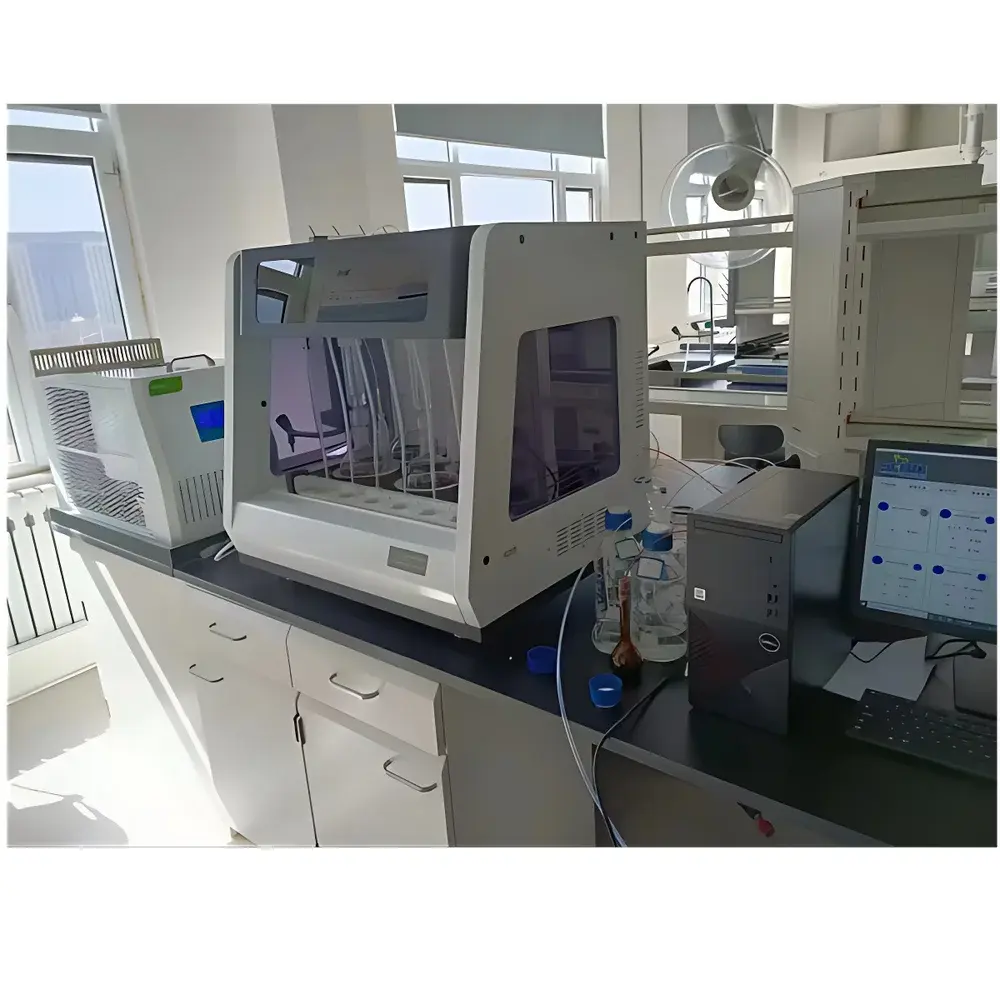
SENTE ST109A Fully Automated SO₂ Analyzer for Food and Pharmaceutical Applications
| Brand | SENTE |
|---|---|
| Origin | Shandong, China |
| Manufacturer | Producer |
| Country of Origin | China |
| Model | ST109A |
| Pricing | Available Upon Request |
Overview
The SENTE ST109A Fully Automated SO₂ Analyzer is an engineered solution designed to meet the stringent analytical requirements of GB 5009.34–2022 “Determination of Sulfur Dioxide in Foods” and the Chinese Pharmacopoeia (ChP) 2016 and 2020 editions for sulfur dioxide quantification in herbal medicines. It implements the official distillation–titration methodology—comprising acid distillation under controlled nitrogen atmosphere, condensation of liberated SO₂, absorption into hydrogen peroxide solution, and subsequent automated iodometric or alkaline titration—within a fully integrated, walk-away platform. Unlike semi-automated or manual setups, the ST109A eliminates operator-dependent variability in heating rate, condensation efficiency, reagent dosing, gas flow uniformity, and endpoint detection. Its architecture adheres to core principles of analytical traceability: consistent thermal energy delivery, precise volumetric reagent dispensing, thermally stabilized condensation geometry, and electrochemical endpoint recognition with digital signal processing.
Key Features
- Intelligent Far-Infrared Ceramic Heating System: Integrated temperature feedback loop enables dynamic power modulation to maintain target distillation intensity—either micro-boiling or vigorous boiling—without risk of dry-burn; ceramic emitters ensure uniform thermal distribution across sample vessels.
- Compressor-Based Active Cooling: Closed-loop refrigeration circuit delivers rapid, stable condenser jacket temperatures (typically maintained at 0–5 °C), ensuring >98% SO₂ recovery efficiency during reflux and minimizing volatile loss.
- Standardized Hidden-Style Reflux Condenser: Complies with GB 5009.34–2022 dimensional and thermal specifications; no external clamps required—reducing mechanical stress and improving inter-unit reproducibility.
- Programmable Distillation Timing: Digital timer range: 0–999 minutes with ±10 s accuracy; supports multi-step protocols (e.g., pre-heating, distillation, post-cooling).
- High-Precision Reagent Dispensing: Peristaltic pump calibrated to ±0.5% volume accuracy for H₂O₂ absorbent and NaOH standard titrant; tubing materials resistant to oxidative degradation.
- Dynamic Nitrogen Flow Regulation: Mass-flow-controlled N₂ distribution system maintains constant 0.2–0.5 L/min per channel across up to 6 parallel samples; eliminates reliance on analog rotameters subject to calibration drift.
- Automated Titration Module: Potentiometric endpoint detection using dual-platinum electrode sensor; real-time derivative analysis of potential vs. volume curve ensures robust identification of equivalence point even in turbid or colored digestates.
Sample Compatibility & Compliance
The ST109A accommodates solid, semi-solid, and liquid matrices—including dried herbs, fruit products, wine, dried seafood, candied fruits, and processed meat—within standardized 500 mL round-bottom flasks. Sample preparation follows ChP and GB 5009.34–2022 guidelines: homogenization, acidification with phosphoric acid, and addition of antioxidant (e.g., EDTA). The system complies with ISO/IEC 17025:2017 requirements for method validation parameters (repeatability, intermediate precision, LOD/LOQ), and its software architecture supports audit trails aligned with FDA 21 CFR Part 11 and GLP documentation standards when deployed in regulated QC laboratories.
Software & Data Management
The embedded control interface provides intuitive protocol configuration, real-time monitoring of temperature, pressure, titrant consumption, and endpoint potential. All raw sensor data, method parameters, user actions, and result calculations are timestamped and stored locally with optional export to CSV or PDF. Audit trail functionality logs operator ID, modification timestamps, and electronic signatures for each analysis batch—enabling full traceability during internal audits or regulatory inspections. Data integrity safeguards include write-protection for historical records and automatic backup to external USB storage.
Applications
- Quantitative determination of total SO₂ in foodstuffs per GB 5009.34–2022, including sulfites (SO₃²⁻), bisulfites (HSO₃⁻), and bound SO₂ forms.
- Routine quality control of traditional Chinese medicinal materials per ChP General Chapter 2331.
- Stability testing of SO₂-preservative formulations in shelf-life studies.
- Method transfer support between R&D, QC, and contract testing laboratories requiring harmonized SOP execution.
- Training platform for analysts mastering pharmacopoeial distillation–titration workflows under GMP-aligned conditions.
FAQ
Does the ST109A comply with both GB 5009.34–2022 and ChP 2020 methods?
Yes—the instrument’s hardware configuration and default method templates are validated against both standards, covering distillation time, N₂ flow, condenser geometry, and titration chemistry.
Can the system handle viscous or particulate-rich samples without clogging?
Yes—sample flasks are designed for direct insertion of homogenized slurries; the distillation head includes a built-in anti-foaming baffle, and the condenser inlet is optimized to prevent aerosol carryover.
Is remote monitoring or LIMS integration supported?
The ST109A features RS-232 and Ethernet ports; optional middleware enables HL7 or ASTM E1384-compliant data export for LIMS ingestion.
What maintenance intervals are recommended for long-term reliability?
Daily: rinse condenser and titration lines with deionized water; quarterly: recalibrate reagent pump volumes and verify N₂ mass flow sensors; annually: full system performance qualification per ISO/IEC 17025 Annex A.3.





