
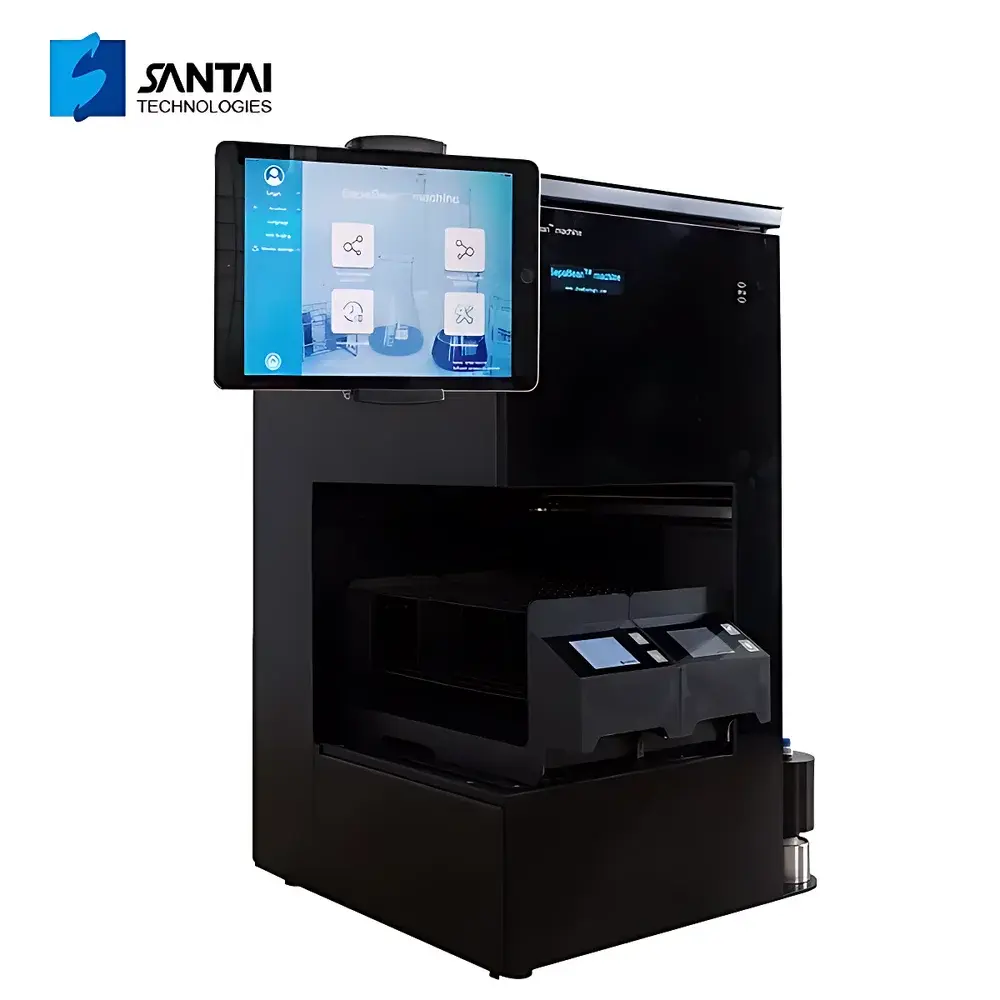
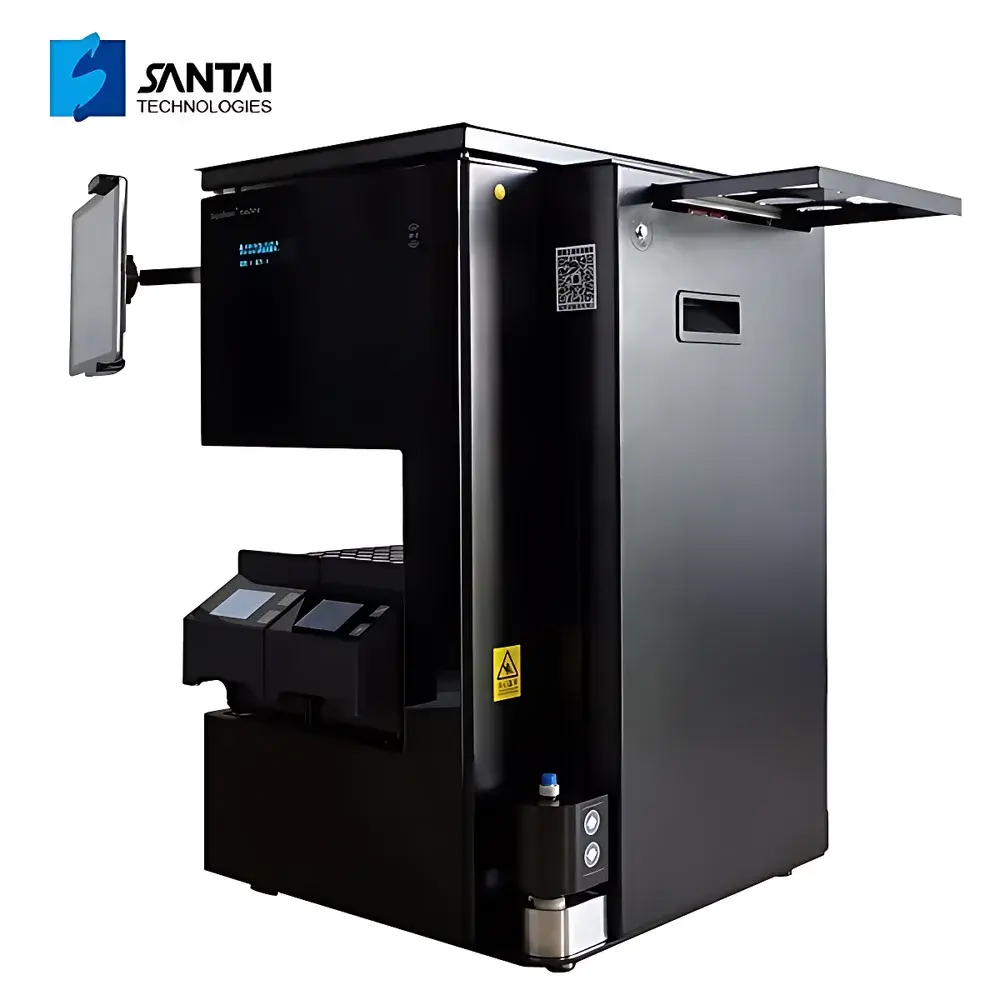
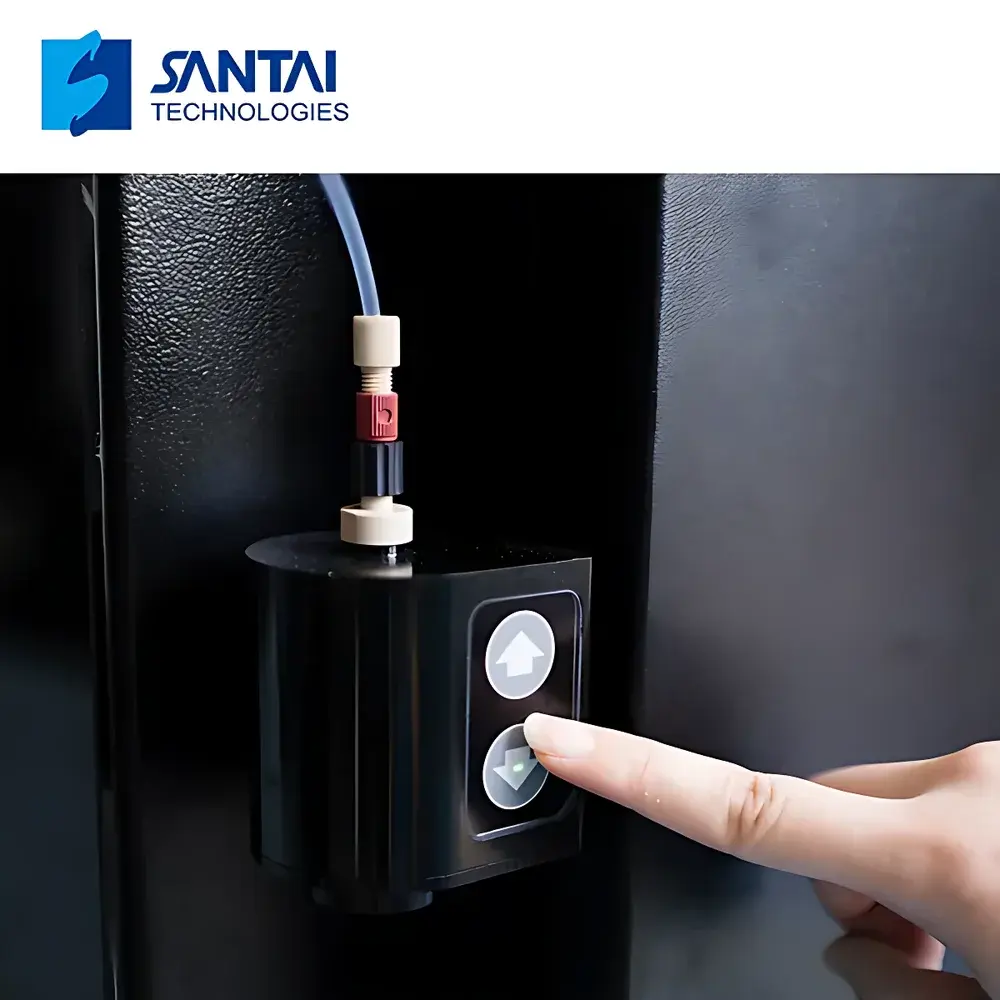
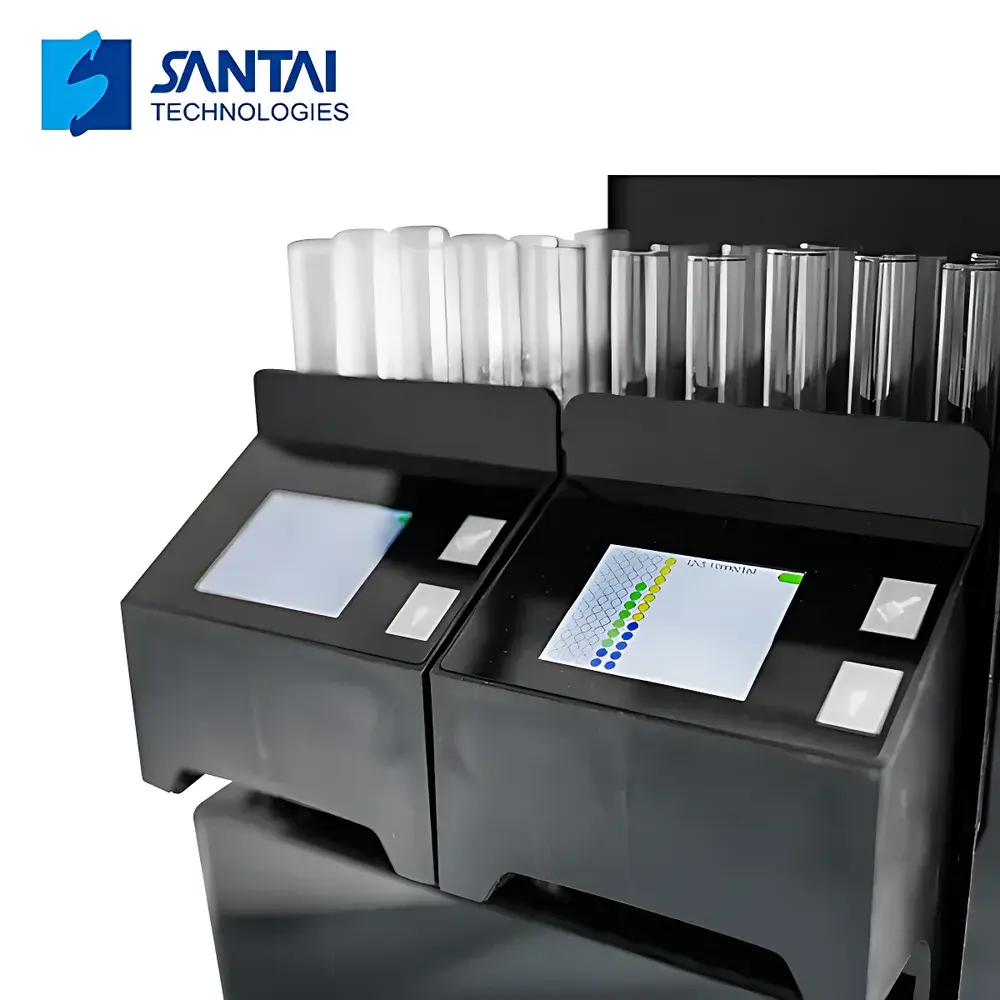
Santai SepaBean Machine Standard Model Preparative Liquid Chromatography System
| Brand | Santai |
|---|---|
| Origin | Jiangsu, China |
| Manufacturer Type | Manufacturer |
| Regional Classification | Domestic |
| Model | SepaBean Machine |
| Price Range | USD 28,000 – 42,500 (FOB) |
| Application Level | Laboratory-Scale |
| Instrument Type | Medium-to-Low Pressure Preparative LC |
| Flow Rate Range | 1–200 mL/min |
| Flow Accuracy | ≤1% |
| Flow Precision (RSD) | ≤2% |
| Maximum Operating Pressure | 200 psi (13.8 bar) |
| Wavelength Range | 200–400 nm / 200–800 nm (DAD) |
| Wavelength Accuracy | ±1 nm |
| Wavelength Reproducibility | ±0.5 nm |
| Baseline Noise | 50 mAU |
| Data Acquisition Frequency | 5 Hz |
| Gradient Configuration | Quaternary Solvent Delivery with High-Pressure Binary Mixing |
| Column Management | RFID-Enabled Auto-Recognition Column Mounting System |
| Fraction Collection | Motorized Rack with Automatic Tube Size Detection (13/15/18/25 mm) and Optional Square Bottles (250/500 mL) |
| Safety Features | Real-Time Solvent Level Monitoring, Leak Detection, Overpressure Protection, Emergency Stop, Power-Fail Recovery |
| Integrated Air Pump Module | Yes |
| Control Interface | Wireless Mobile Device (iOS/Android) via Secure AES-128/AES-256 Encrypted Communication |
| Software Compliance | Audit Trail, User Role-Based Access Control (Admin/Operator/Viewer), Export Permissions Management, GLP-Ready Data Integrity Framework |
Overview
The Santai SepaBean Machine Standard Model is a medium-pressure preparative liquid chromatography (PLC) system engineered for laboratory-scale purification of organic compounds, natural products, pharmaceutical intermediates, and petrochemical fractions. It operates on the principle of differential partitioning between a mobile phase (eluent) and a stationary phase (packed column), enabling high-yield, high-purity isolation of target compounds from complex mixtures. Unlike analytical HPLC systems optimized for detection sensitivity, the SepaBean Machine prioritizes robust flow delivery, precise gradient formation, and intelligent fraction management under controlled pressure constraints (≤200 psi / 13.8 bar). Its architecture integrates a high-pressure binary mixing module fed by four solvent reservoirs, minimizing pulsation and ensuring consistent elution profiles across variable flow rates (1–200 mL/min). The system employs a diode array detector (DAD) with dual spectral ranges—200–400 nm for UV-sensitive analytes and 200–800 nm for broader chromophore coverage—supporting real-time spectral acquisition at 5 Hz for peak identification and purity assessment.
Key Features
- Quaternary solvent delivery with high-pressure binary gradient mixing, delivering superior composition accuracy (<±1% RSD) and minimal pulse amplitude
- RFID-enabled intelligent column mounting system: automatically identifies column dimensions, adjusts clamping force, compensates for thermal expansion, and prevents leakage through dynamic seal pressure regulation
- Motorized fraction collector with auto-detection of tube diameter (13 mm, 15 mm, 18 mm, 25 mm) and optional square bottle support (250 mL, 500 mL); customizable collection logic including threshold-based, full-spectrum-triggered, and waste diversion modes
- Integrated air purge module for post-run column and tubing solvent displacement—reducing carryover, accelerating solvent exchange, and extending column lifetime
- Wireless remote operation via encrypted mobile application (AES-128/AES-256) with multi-user role assignment (admin/operator/viewer), session logging, and permission-controlled data export
- Real-time safety monitoring: continuous solvent level tracking, micro-leak detection via capacitive sensors, pressure override cutoff, hardware emergency stop, and automatic recovery after power interruption
Sample Compatibility & Compliance
The SepaBean Machine accommodates standard silica- and polymer-based preparative columns (i.d. 10–50 mm, length 100–500 mm) and supports both manual sample injection and solid-phase loading via auxiliary column mounts. Its low-pressure design ensures compatibility with conventional flash-grade media (e.g., silica gel 40–63 µm, C18 reversed-phase resins) without requiring ultra-high-pressure hardware. The system conforms to CE marking requirements for electromagnetic compatibility (EMC) and low-voltage directive compliance. Software functionality meets fundamental GLP data integrity expectations: full audit trail (user actions, method changes, run logs), electronic signature readiness, and immutable timestamped records. While not pre-certified for FDA 21 CFR Part 11, its access control, encryption, and export restrictions provide a foundation for internal validation under GMP-aligned quality systems.
Software & Data Management
The proprietary SepaBean Control Suite features an intuitive, workflow-driven interface optimized for rapid method development and routine purification. Key software capabilities include: TLC image capture and automated Rf value extraction for method translation; intelligent gradient scaling based on sample mass and column geometry; wavelength optimization via real-time spectral scanning; and method templating with parameter inheritance. All chromatographic data—including raw absorbance traces, spectra, and collection metadata—are stored in vendor-neutral .csv and .cdf formats. Database encryption, granular user permissions (e.g., “export disabled” for junior analysts), and configurable retention policies ensure regulatory traceability. Remote notifications (push/email) alert users to run completion, anomalies, or maintenance events.
Applications
This system serves synthetic organic chemistry laboratories requiring reliable isolation of reaction products prior to NMR or MS characterization. It is routinely deployed in natural product labs for sequential fractionation of plant extracts, in process R&D for impurity removal during API synthesis, and in academic settings for teaching chromatographic theory and practice. Its flexibility supports isocratic and multi-step gradient elution, making it suitable for both simple separations (e.g., removal of unreacted starting material) and complex orthogonal purifications (e.g., parallel polarity-based fractionation followed by pH-mediated refinement). The DAD’s broad spectral range enables detection of non-UV-absorbing compounds when derivatized or coupled with post-column reagents.
FAQ
What is the maximum column inner diameter supported by the standard column mount?
The RFID-enabled primary column mount accommodates columns up to 50 mm i.d.; auxiliary mounts support tandem columns or solid-loading cartridges.
Does the system support method transfer from analytical HPLC methods?
Yes—the software includes a scale-up calculator that converts analytical gradients to preparative equivalents using linear velocity and column volume normalization.
Can the DAD perform real-time peak purity analysis?
It acquires full spectra at 5 Hz but does not embed chemometric algorithms for automatic purity assessment; spectral overlays and library matching require post-processing in third-party tools.
Is the air purge function programmable within the method sequence?
Yes—users can define purge duration, airflow rate, and timing relative to injection, elution, and collection phases.
What network security protocols are implemented for remote access?
TLS 1.2+ encryption, certificate-based device authentication, and mandatory session timeouts enforce secure wireless communication between mobile clients and the instrument controller.




