
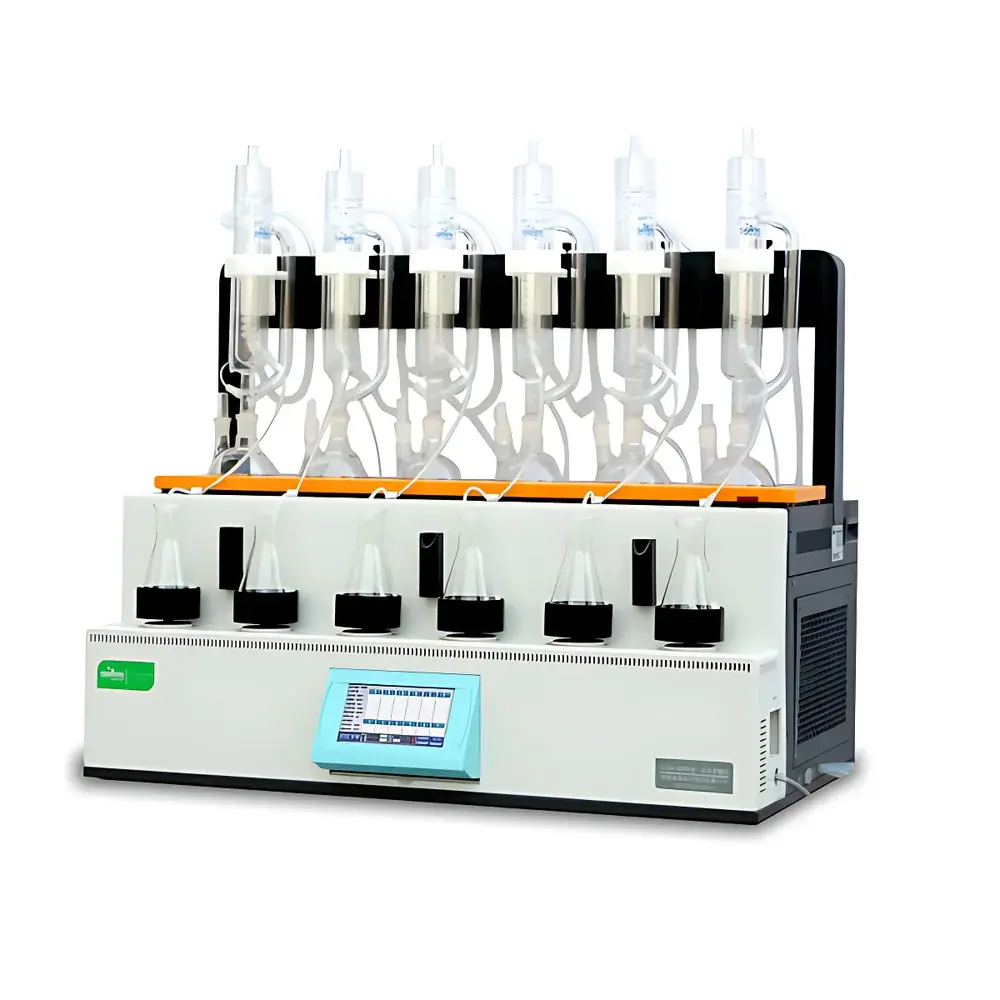
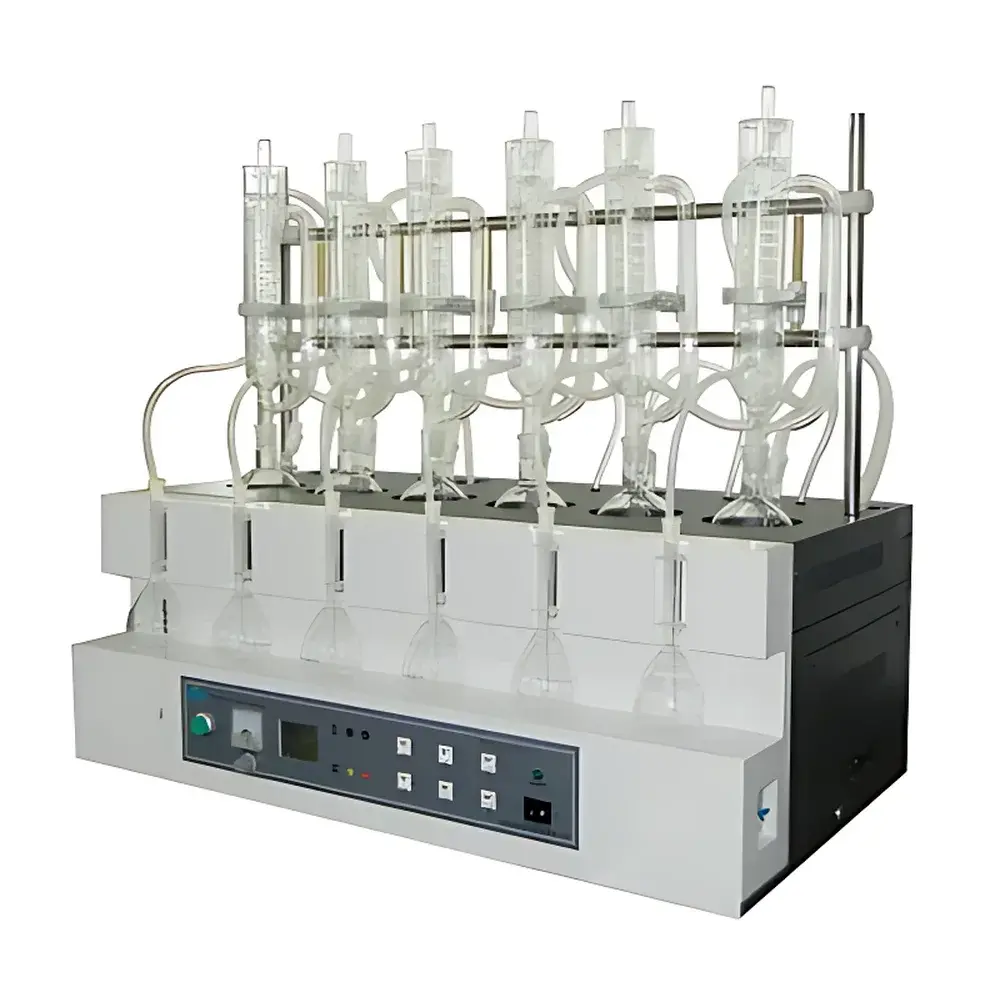
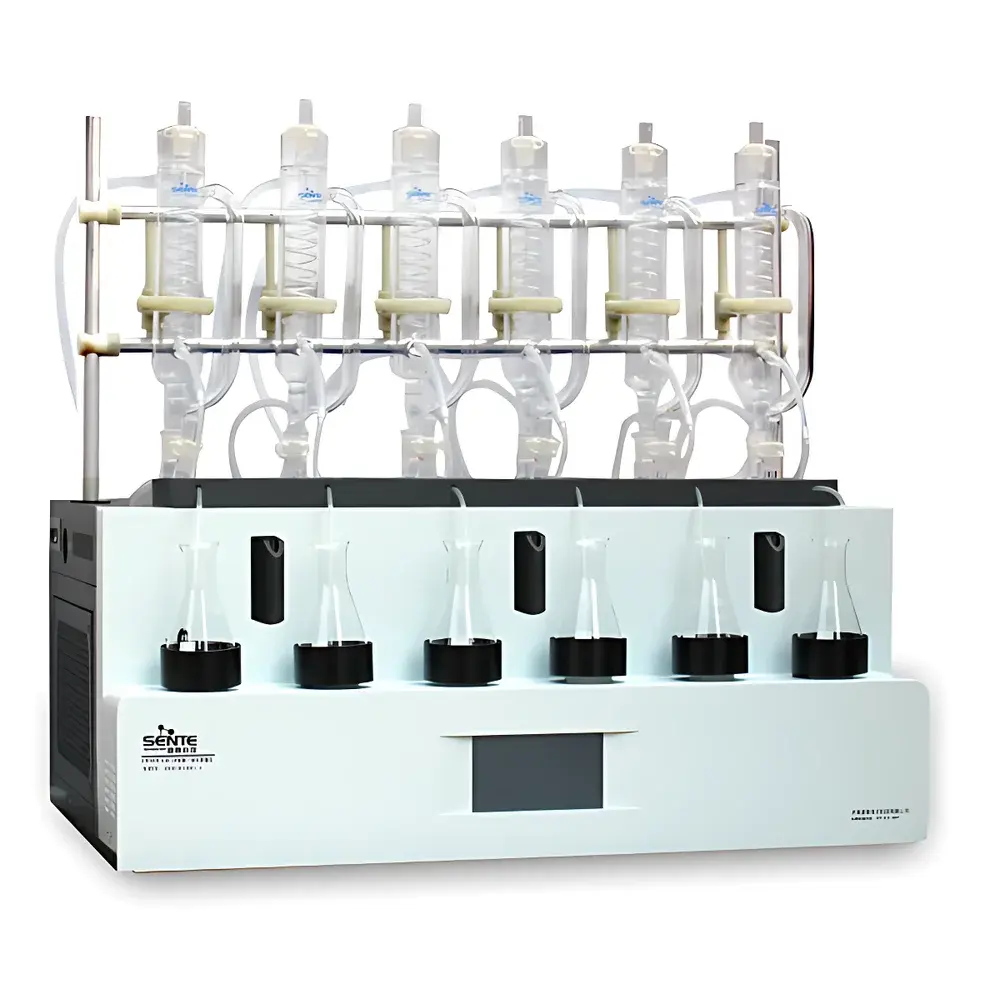
Sentte ST106-3RW Intelligent Integrated Distillation Apparatus
| Brand | Sentte |
|---|---|
| Origin | Shandong, China |
| Manufacturer | Sentte Electronic Technology Co., Ltd. |
| Model | ST106-3RW |
| Instrument Type | Quartz Glass Distillation System |
| Compliance | HJ 503-2009, HJ 484–2009, HJ 537-2009, HJ 745-2015, Q/0102JST002-2015 |
| Certifications | ISO 9001:2008, Chinese National Invention Patent ZL200910019901.4 |
| Cooling | Built-in Compressor-Based Recirculating Chiller |
| Heating | Far-Infrared Ceramic Heater |
| Capacity | 6 Independent Channels, 1–500 mL per Channel |
| Endpoint Control | Programmable Volume-Based Auto-Stop |
| Safety Features | Anti-Suckback Valve, Dry-Run Protection, Overheat Cutoff |
Overview
The Sentte ST106-3RW Intelligent Integrated Distillation Apparatus is an engineered solution for standardized, reproducible distillation in environmental, public health, and food safety laboratories. Designed to replace conventional segmented setups—comprising separate heating mantles, distillation flasks, condensers, and receiving vessels—the ST106-3RW integrates all core functions into a single, compact benchtop platform. Its operational principle relies on controlled thermal vaporization followed by efficient condensation and precise volumetric collection, optimized for analytes requiring clean separation prior to quantification—including phenols (4-aminoantipyrine method), cyanides (titrimetric or spectrophotometric detection), ammonia nitrogen (distillation–acid titration), formaldehyde, sulfur dioxide, and ethanol. Unlike open-flame or resistive-heating systems, the ST106-3RW employs far-infrared ceramic heating elements that deliver uniform, contactless thermal energy to quartz glass distillation flasks—minimizing localized superheating, reducing risk of bumping or flask fracture, and eliminating fire hazards associated with traditional methods.
Key Features
- Six independently controllable distillation channels, each supporting programmable volume-based endpoint detection (1–500 mL range) with automatic heating termination upon target volume achievement;
- Built-in compressor-driven recirculating chiller system—eliminates dependency on municipal water supply, maintains stable condenser inlet temperature (≤10 °C), and ensures consistent condensation efficiency across extended operation cycles;
- Far-infrared ceramic heating modules with digital temperature feedback control (0–400 °C range, ±2 °C accuracy), offering superior corrosion resistance against acidic, alkaline, and organic media compared to standard electric heating mantles;
- Integrated anti-suckback mechanism compliant with HJ 484–2009 and HJ 503–2009 requirements for cyanide and phenol analysis—prevents backflow when the condensate outlet is submerged below absorbent solution level;
- Real-time LCD interface displaying channel-specific parameters: set volume, elapsed time, current heating temperature, and remaining time-to-endpoint;
- Dry-run protection and overtemperature cutoff circuits aligned with IEC 61010-1 safety standards for laboratory electrical equipment.
Sample Compatibility & Compliance
The ST106-3RW is validated for use with aqueous matrices including surface water, wastewater, drinking water, soil leachates, and food extracts. Its quartz glass distillation pathway (including flask, condenser, and receiver) ensures chemical inertness and low blank contribution—critical for trace-level determinations governed by HJ 537–2009 (ammonia nitrogen), HJ 745–2015 (total cyanide in soils), and GB 5009.34–2022 (SO₂ in food). The apparatus meets design and performance criteria outlined in the enterprise standard Q/0102JST002-2015 and conforms to ISO 9001:2008 quality management protocols. All electronic control modules are CE-marked and comply with EMC Directive 2014/30/EU. While not FDA 21 CFR Part 11–enabled out-of-the-box, audit trails and user access logs can be implemented via external LIMS integration for GLP/GMP-aligned workflows.
Software & Data Management
The ST106-3RW operates via embedded firmware without proprietary PC software dependency. All method parameters—including target volume, maximum heating duration (0–150 min), and temperature ramp profiles—are stored locally in non-volatile memory with timestamped execution records retained for ≥1,000 runs. USB export functionality enables transfer of run logs (CSV format) containing channel ID, start/end timestamps, final collected volume, average heater temperature, and fault codes (e.g., “coolant temp high”, “no condensate flow”). For laboratories subject to regulatory review, these logs support traceability under ISO/IEC 17025:2017 clause 7.7 (result reporting) and EPA Method 300.0 verification requirements.
Applications
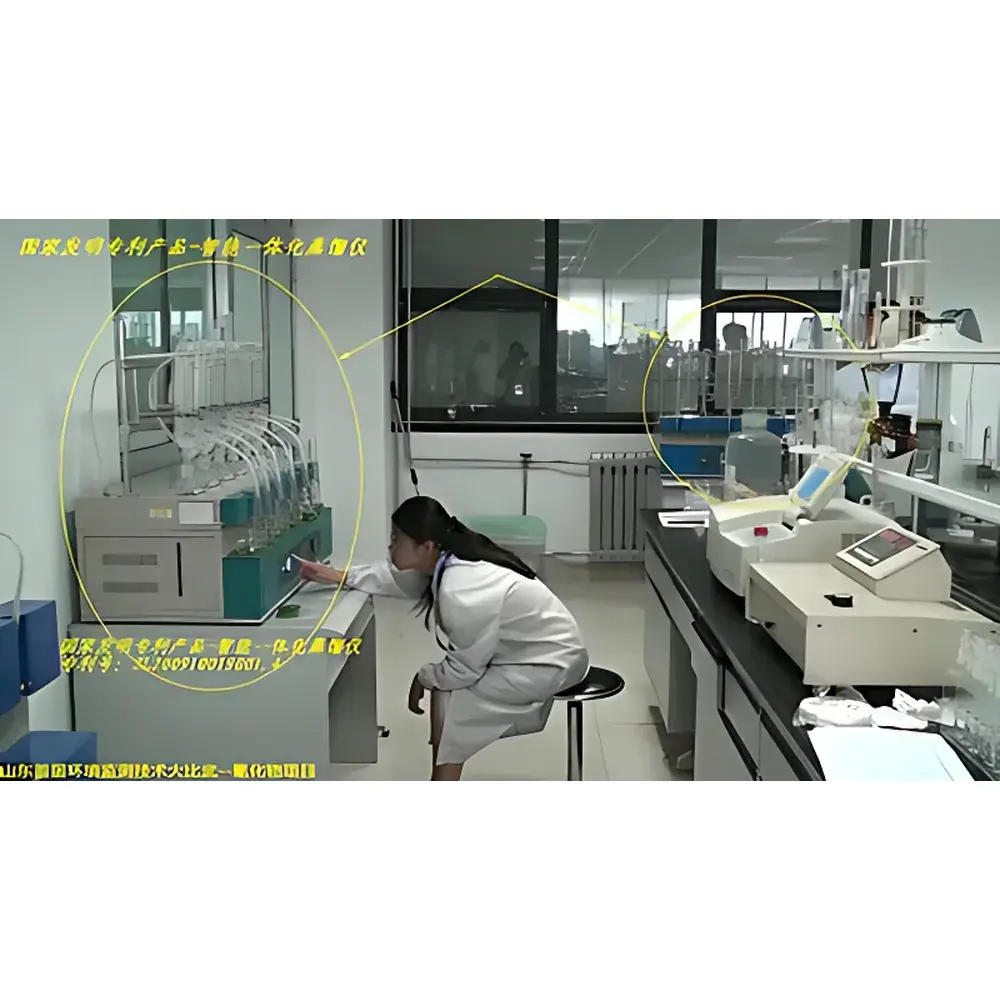
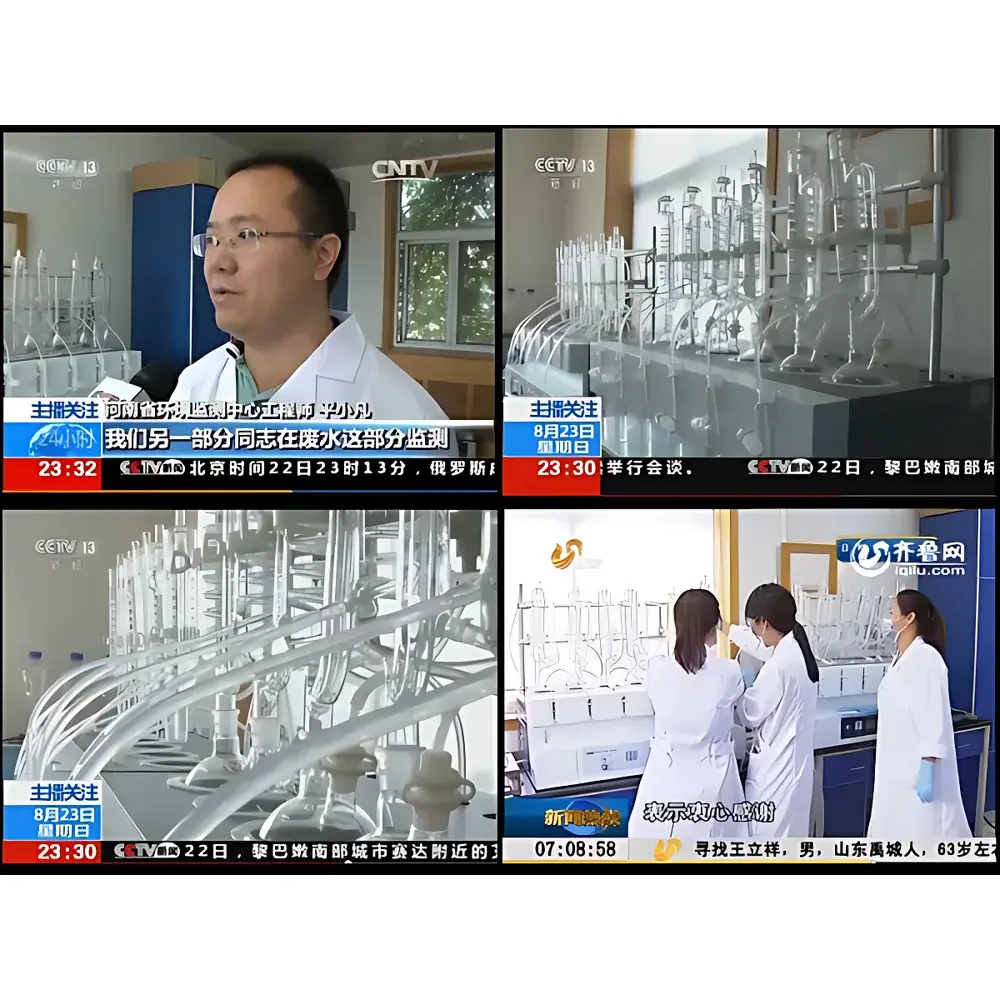
This apparatus is routinely deployed in accredited environmental testing labs for compliance monitoring under China’s Environmental Monitoring Technical Specifications and US EPA-referenced methods (e.g., Method 4500-NH₃ D for ammonia nitrogen). It supports multi-analyte workflows in CDC and provincial CDC laboratories performing national drinking water surveillance. In food safety contexts, it fulfills AOAC Official Method 995.11 (SO₂ in wine) and GB 5009.22–2016 (formaldehyde in starch products) sample preparation protocols. Its six-channel architecture enables parallel processing of heterogeneous samples—e.g., simultaneous distillation of wastewater (cyanide), tap water (ammonia), and vinegar (SO₂)—reducing turnaround time without cross-contamination risk.
FAQ
Is the ST106-3RW compatible with non-aqueous solvents?
No. The system is designed exclusively for aqueous-based distillations per HJ-series environmental standards; organic solvents may degrade seals and compromise infrared heater lifespan.
Can the cooling system operate continuously for >8 hours?
Yes. The compressor chiller has been thermally validated for uninterrupted 12-hour operation at ambient temperatures ≤30 °C and relative humidity ≤70 %.
Does the instrument support calibration verification per ISO/IEC 17025?
Yes. Users may perform volumetric endpoint verification using certified Class A volumetric flasks and NIST-traceable temperature probes—procedures documented in the operator manual Annex B.
What maintenance intervals are recommended?
Quartz components require weekly inspection for etching or residue buildup; chiller coolant should be replaced every 12 months; ceramic heater surfaces should be cleaned with isopropyl alcohol biannually.
Is remote monitoring or Ethernet connectivity available?
Not natively. However, optional RS-485 Modbus RTU interface (ordered separately) enables integration with building SCADA or centralized lab automation platforms.



