
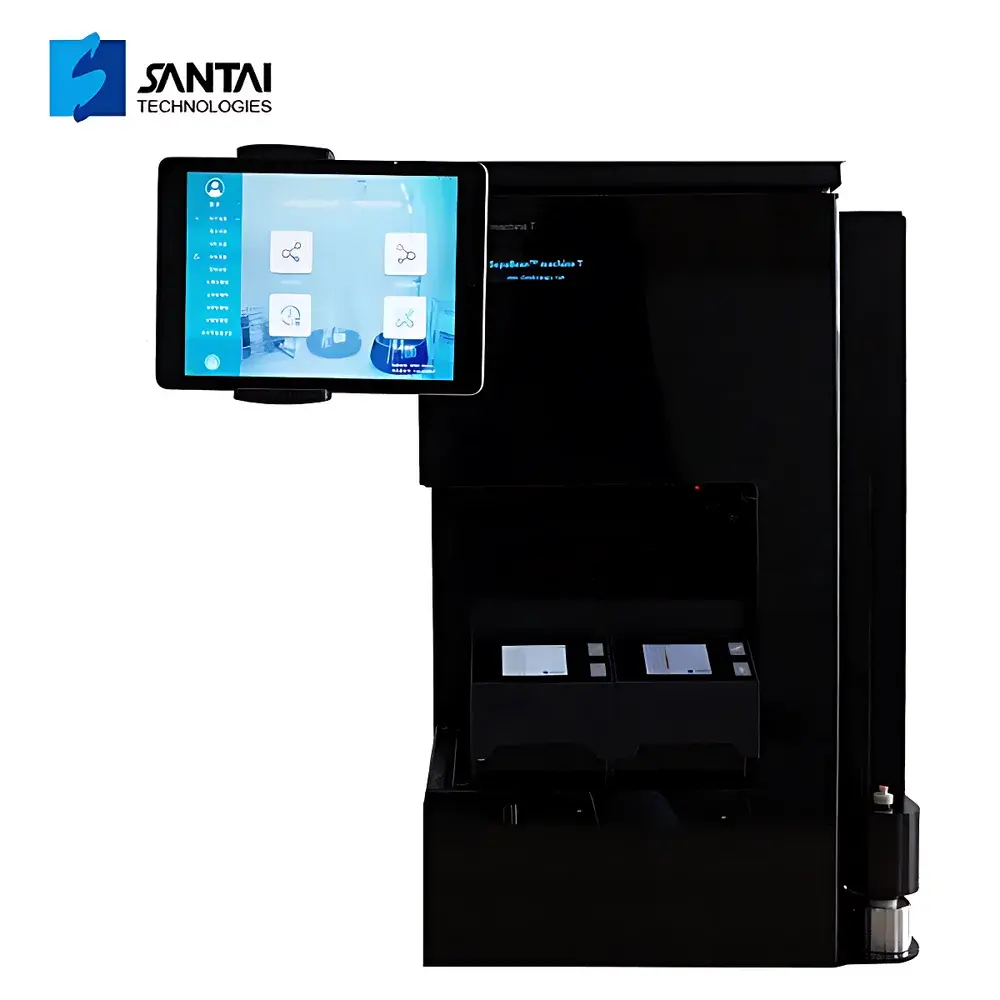
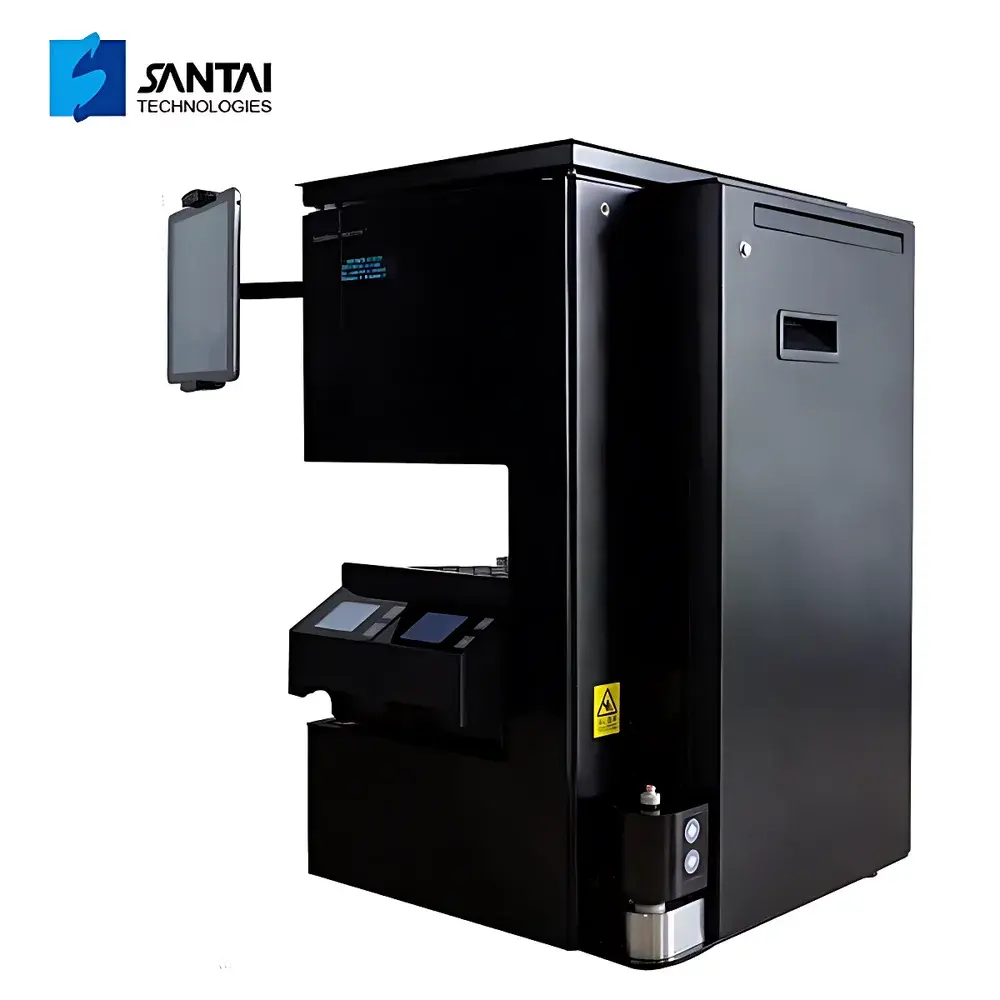
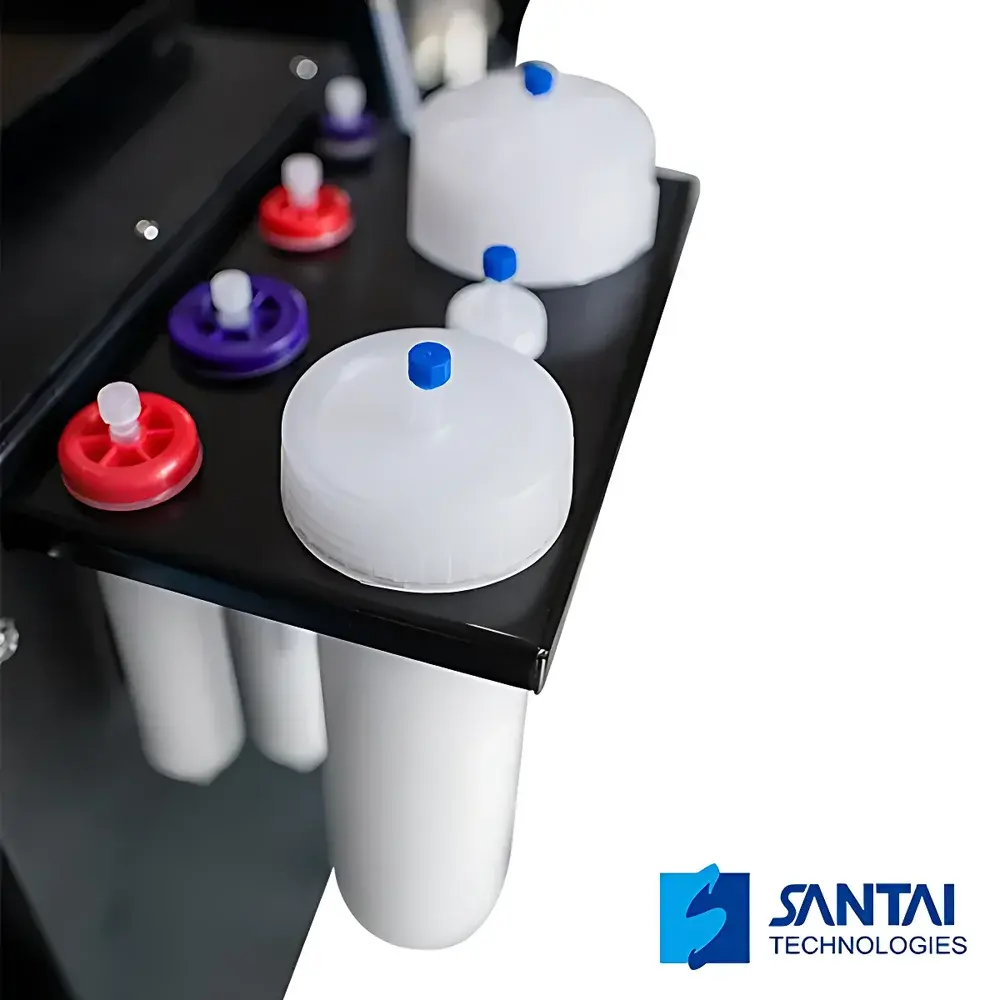
SepaBean Machine T Economic-Grade Preparative Liquid Chromatography System
| Brand | Santai |
|---|---|
| Origin | Jiangsu, China |
| Manufacturer Type | Manufacturer |
| Regional Classification | Domestic |
| Model | SepaBean Machine T – Economic Edition |
| Price Range | USD 14,000–28,000 |
| Application Level | Laboratory-Scale |
| Instrument Type | Medium-to-Low Pressure Preparative LC |
| Flow Rate Range | 1–200 mL/min |
| Flow Accuracy | ≤1% |
| Flow Precision (RSD) | ≤2% |
| Maximum Operating Pressure | 200 psi (13.8 bar) |
| Wavelength Range | 200–400 nm / 200–800 nm (DAD) |
| Wavelength Accuracy | ±1 nm |
| Wavelength Repeatability | ±0.5 nm |
| Baseline Noise | 50 mAU |
| Data Acquisition Frequency | 5 Hz |
| Gradient Capability | Quaternary Solvent Delivery with Optional Tertiary Co-Solvent Line |
| Detection Modes | Single-Wavelength, Dual-Wavelength, Full-Spectrum Scanning |
| Flow Cell Pathlength | 0.3 mm (standard), 2.4 mm (optional) |
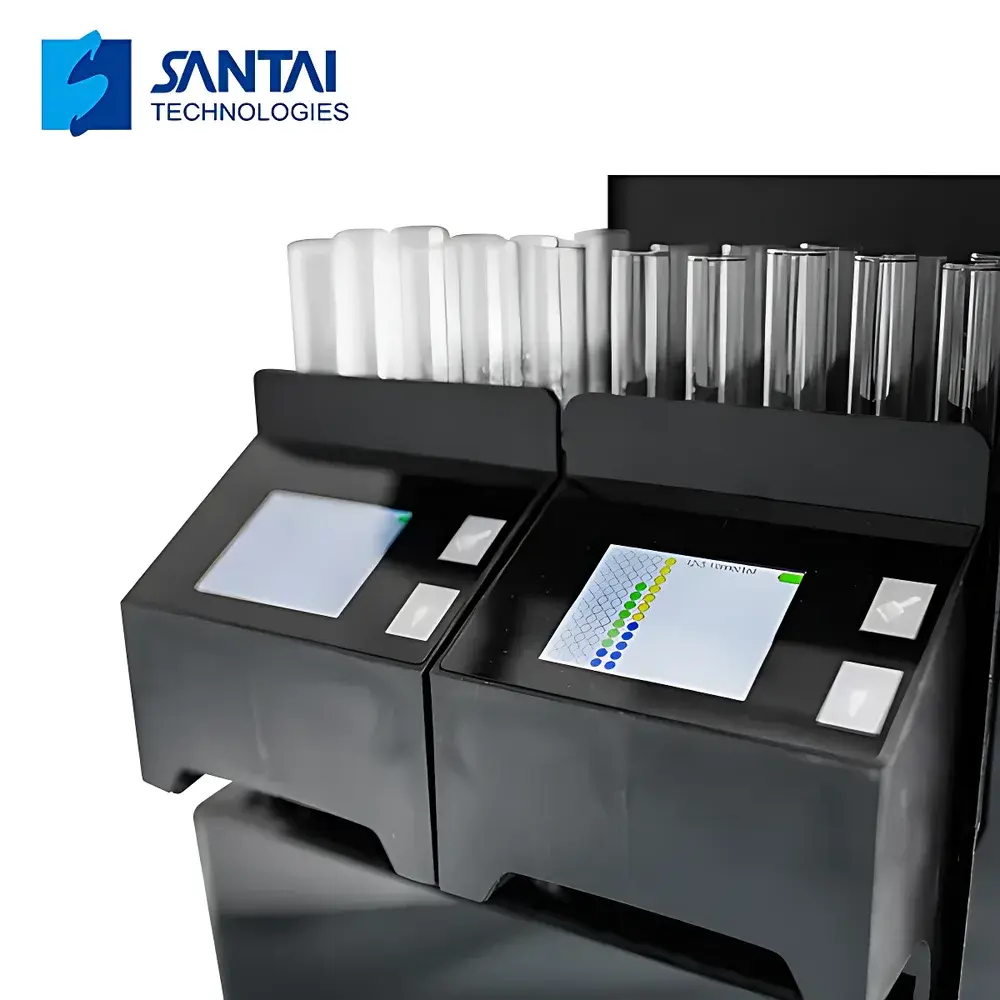
| Fraction Collection | Automated, with Tube Rack Recognition (13/15/18/25 mm tubes), French Square Bottles (250/500 mL), and User-Defined Vessels |
| Safety Features | Real-Time Solvent Level Monitoring, Leak Detection, Overpressure Protection, Emergency Stop, Power-Fail Recovery |
| Integrated Air Pump Module | Yes |
| Wireless Control | iOS/Android via Wi-Fi |
| Data Security | AES-128/AES-256 Encryption for Storage & Transmission |
| User Management | Role-Based Access Control (RBAC), Audit-Trail Capable Login, Export Permission Governance |
| Regulatory Compliance | CE Marked |
| Software Features | TLC Image Recognition-Assisted Method Development, Intelligent Gradient Translation, Column & Flow Rate Recommendation Engine Based on Sample Load, Workflow-Guided Operation Interface |
Overview
The SepaBean Machine T Economic-Grade Preparative Liquid Chromatography System is a medium-pressure, laboratory-scale preparative HPLC platform engineered for reproducible, scalable purification of organic compounds, natural product isolates, pharmaceutical intermediates, and petrochemical fractions. Built upon a robust quaternary solvent delivery architecture, it operates within a pressure envelope of up to 200 psi (13.8 bar), making it suitable for silica-based flash chromatography, reversed-phase C18/C8 separations, and polar-embedded phase applications—without requiring high-pressure infrastructure or specialized maintenance protocols. Its core separation principle relies on differential partitioning of analytes between a mobile phase (gradient or isocratic) and a stationary phase packed in disposable or reusable columns (typically 10–100 mm ID). The integrated diode-array detector (DAD) enables real-time spectral acquisition across 200–400 nm or 200–800 nm, supporting peak purity assessment, co-elution diagnosis, and wavelength-optimized fraction triggering. Designed for operational simplicity without compromising analytical rigor, the system implements a workflow-driven interface that minimizes method development time and reduces operator dependency.
Key Features
- Quaternary solvent delivery system with optional tertiary co-solvent line for flexible gradient programming (linear, step, or isocratic)
- Automated, RFID-free intelligent column mounting system with adaptive pressure compensation and leak-tight sealing verification
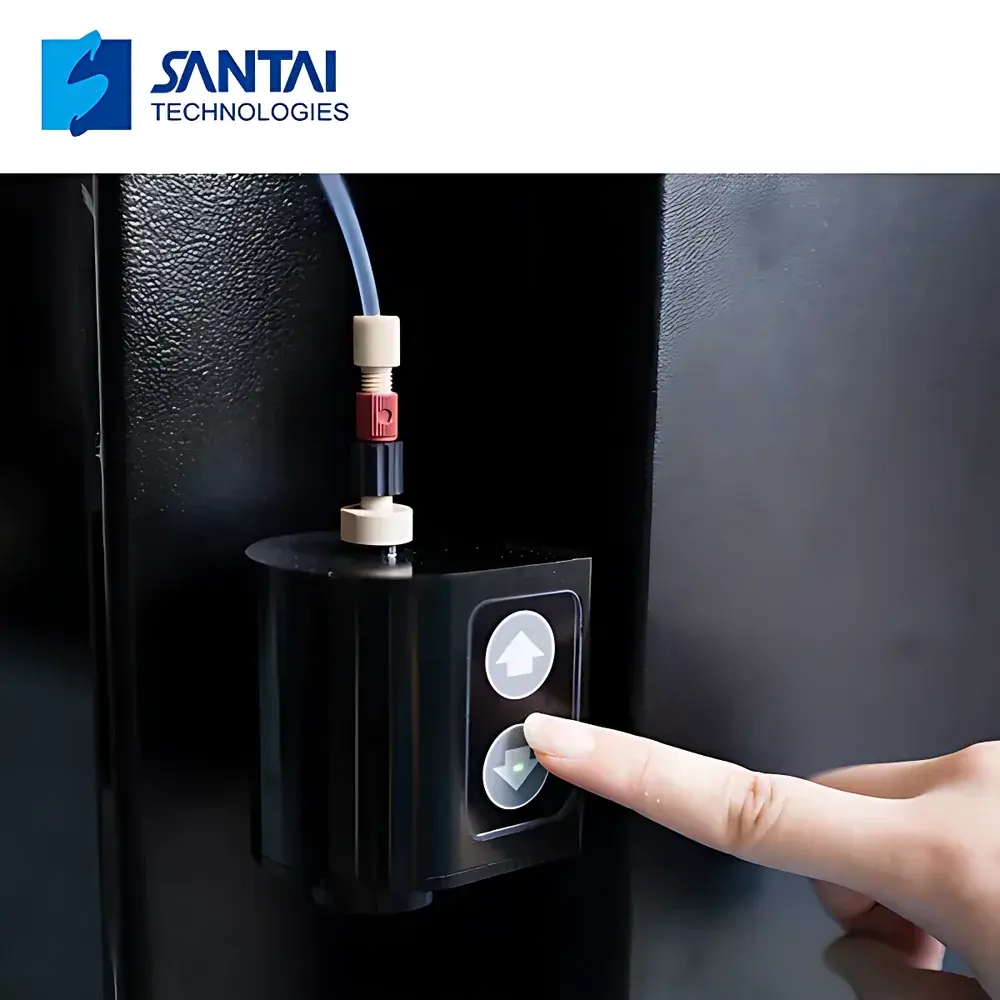
- Integrated air purge module for post-run solvent displacement from tubing and column bed—reducing carryover and enabling rapid solvent switching
- LCD-equipped fraction collector with automatic tube rack recognition (13 mm, 15 mm, 18 mm, 25 mm diameters) and customizable vessel mapping
- Wireless remote operation via secure Wi-Fi connection using iOS or Android devices; supports multi-user role-based authentication
- TLC image capture and pattern-matching algorithm for semi-automated method translation—converting Rf values into initial gradient profiles
- Intelligent method assistant that recommends column dimensions, flow rates, and gradient slopes based on estimated sample mass and polarity profile
- Comprehensive safety architecture: real-time solvent level sensing, continuous leak detection, overpressure shutdown, emergency stop button, and uninterruptible power recovery logic
- AES-128/AES-256 encrypted data storage and transmission, compliant with institutional IT security policies for regulated environments
Sample Compatibility & Compliance
The SepaBean Machine T accommodates a broad range of sample types including crude reaction mixtures, plant extracts, fermentation broths, and synthetic oligomers. It supports both normal-phase (e.g., hexane/ethyl acetate) and reversed-phase (e.g., water/acetonitrile) elution schemes, enabled by its chemically resistant fluidic path (PEEK, stainless steel, and sapphire components). Column compatibility spans standard flash cartridges (15–340 g), analytical-to-prep scale stainless steel columns (10–50 mm ID), and custom-packed glass or PEEK columns. All hardware and firmware comply with CE marking requirements under Directive 2014/30/EU (EMC) and 2014/35/EU (LVD). While not validated for GMP production, the system’s audit-trail-ready software architecture—including user login logs, method change history, and fraction collection metadata—supports GLP-aligned workflows in academic, contract research, and early-stage pharmaceutical development laboratories.
Software & Data Management
The proprietary SepaBean Control Suite provides a browser-like, touch-optimized interface accessible via tablet or smartphone. It records all acquisition parameters, UV spectra, and fraction triggers with timestamped metadata. Raw DAD data are stored in vendor-neutral .csv and .jdx formats; chromatograms export as .cdf or .mzML-compatible structures when coupled with optional mass spectrometry interfaces. The software enforces strict access control: administrators define roles (e.g., “Operator”, “Method Developer”, “Data Reviewer”) with granular permissions over method editing, data export, and report generation. All user actions—including login/logout, method execution, and fraction collection—are logged in an immutable audit trail. Data encryption at rest and in transit meets ISO/IEC 27001-aligned institutional cybersecurity standards. Backups synchronize automatically to network-attached storage (NAS) or cloud endpoints configured per organizational policy.
Applications
- Purification of synthetic intermediates in medicinal chemistry campaigns, where rapid turnaround and column reusability are critical
- Isolation of bioactive alkaloids, flavonoids, and terpenoids from botanical extracts under GRAS-compliant solvents
- Desalting and buffer exchange of peptide libraries prior to MS analysis or biological assay
- Removal of catalyst residues (e.g., Pd, Ru) from cross-coupling reaction products
- Fractionation of polymer oligomer distributions for MALDI-TOF calibration or rheological characterization
- Preparative separation of chiral compounds using immobilized polysaccharide-based columns (e.g., Chiralpak AD-H, OD-H)
FAQ
What is the maximum column inner diameter supported by the SepaBean Machine T?
The system is optimized for columns ranging from 10 mm to 50 mm ID; larger diameters may be accommodated with optional flow-path adapters and recalibrated pump calibration curves.
Does the DAD detector support spectral library matching?
Spectral comparison is available via third-party integration (e.g., Chromeleon, OpenChrom); native library search is not implemented but full-spectrum export enables offline identification.
Can the system be integrated into a LIMS environment?
Yes—via configurable RESTful API endpoints and standardized output formats (.csv, .xml), enabling bidirectional communication with common LIMS platforms.
Is method validation documentation provided?
A comprehensive IQ/OQ protocol template is included, aligned with ASTM E2500-13 and ICH Q2(R2) principles for analytical instrument qualification in non-GMP settings.
What maintenance intervals are recommended for the pump seals and flow cell?
Pump seal replacement is advised every 12 months or after 2,000 hours of operation; flow cell cleaning is performed quarterly using manufacturer-specified regeneration solvents.
Related Products






