
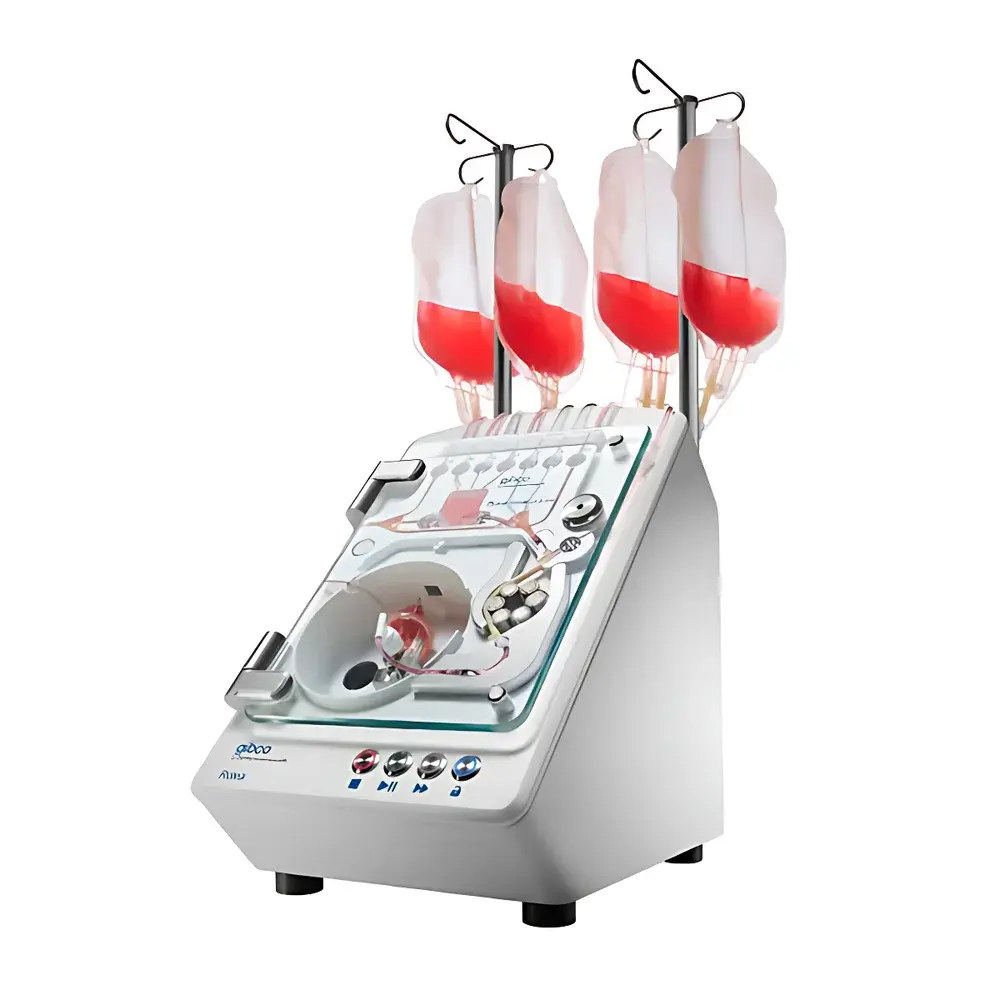
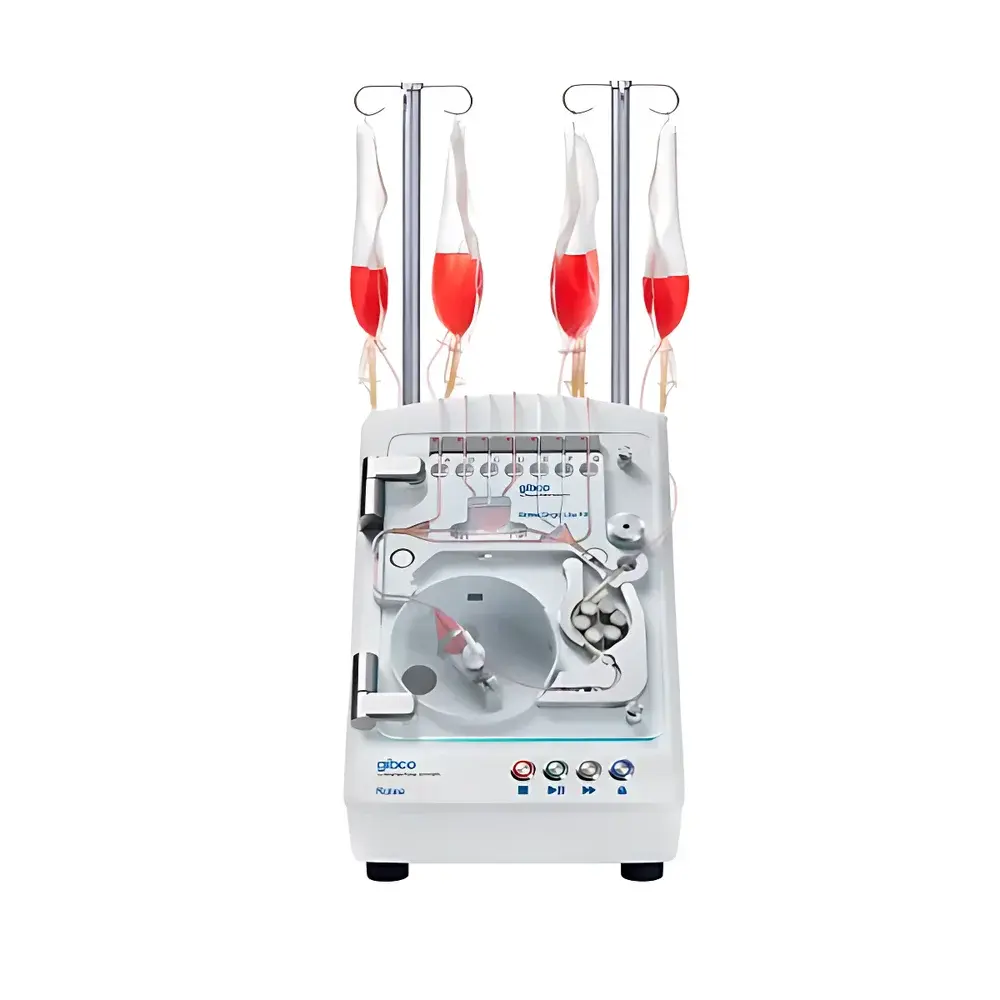
Gibco CTS Rotea Counter-Flow Centrifugation System
| Brand | Thermo Fisher Scientific |
|---|---|
| Origin | Singapore |
| Manufacturer | Thermo Fisher Scientific |
| Product Type | Fully Automated Cell Processing System |
| Model | CTS Rotea |
| Sample Volume Range | 50 mL – 20 L |
| Output Volume Range | As low as 5 mL |
| Sterility | Closed, Single-Use Disposable Kit Based |
| Regulatory Designation | Designed for Clinical and Commercial cGMP Manufacturing of Cell Therapies |
| Software Compliance | Supports 21 CFR Part 11–compliant audit trails and electronic signatures (when configured with Thermo Fisher’s DeltaV-integrated digital platform) |
Overview
The Gibco™ CTS™ Rotea™ Counter-Flow Centrifugation System is an automated, closed, single-use cell processing platform engineered for scalable, reproducible, and regulatory-compliant manufacturing of human cell therapies. It operates on counter-flow centrifugation (CFC), a hydrodynamic separation principle that exploits intrinsic biophysical properties—cell size, density, and sedimentation velocity—without reliance on density gradient reagents (e.g., Ficoll®) or lysis buffers (e.g., ACK). In CFC, cells are suspended in a dynamic fluidized bed within the centrifuge chamber, where a precisely controlled upward flow counterbalances centrifugal force. This enables gentle, continuous concentration, washing, buffer exchange, and volume reduction while minimizing shear stress and preserving membrane integrity, viability, and functional phenotype.
Key Features
- Counter-Flow Centrifugation Technology: Eliminates need for density gradients or chemical lysis; supports label-free, reagent-free isolation of PBMCs, T cells, monocytes, and other primary cell populations.
- Closed & Single-Use Architecture: Integrates with sterile, gamma-irradiated disposable processing kits—ensuring process consistency, reducing cross-contamination risk, and simplifying validation for GMP environments.
- Scalable Volume Handling: Processes input volumes from 50 mL to 20 L and delivers highly concentrated outputs down to 5 mL—with residual buffer volumes < 5%—ideal for downstream electroporation, cryopreservation, or localized administration.
- High Viability & Recovery: Maintains ≥95% cell recovery and >99% post-processing viability across diverse cell types (including activated T cells and MSCs), validated via trypan blue exclusion and flow cytometry.
- Real-Time Process Monitoring: Integrated high-resolution camera provides live visualization of fluidized bed dynamics, enabling empirical optimization of flow rate, rotor speed, and dwell time.
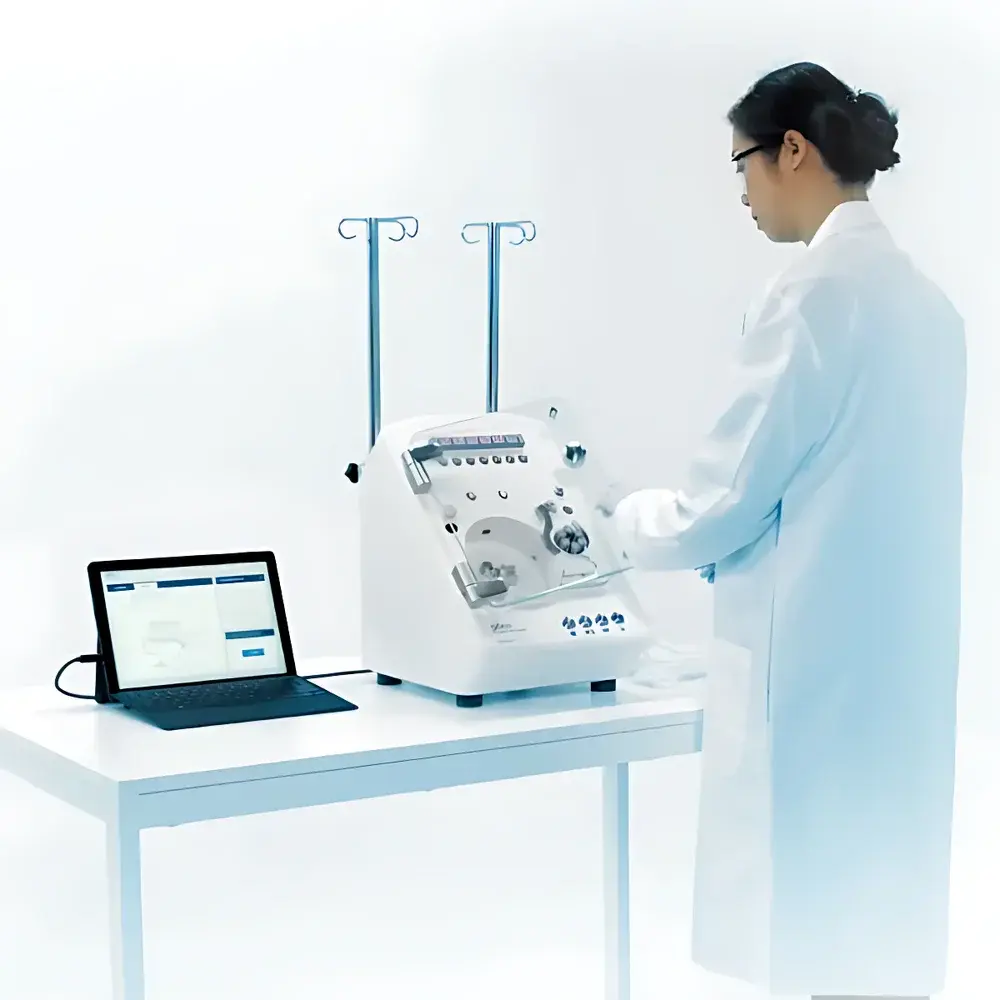
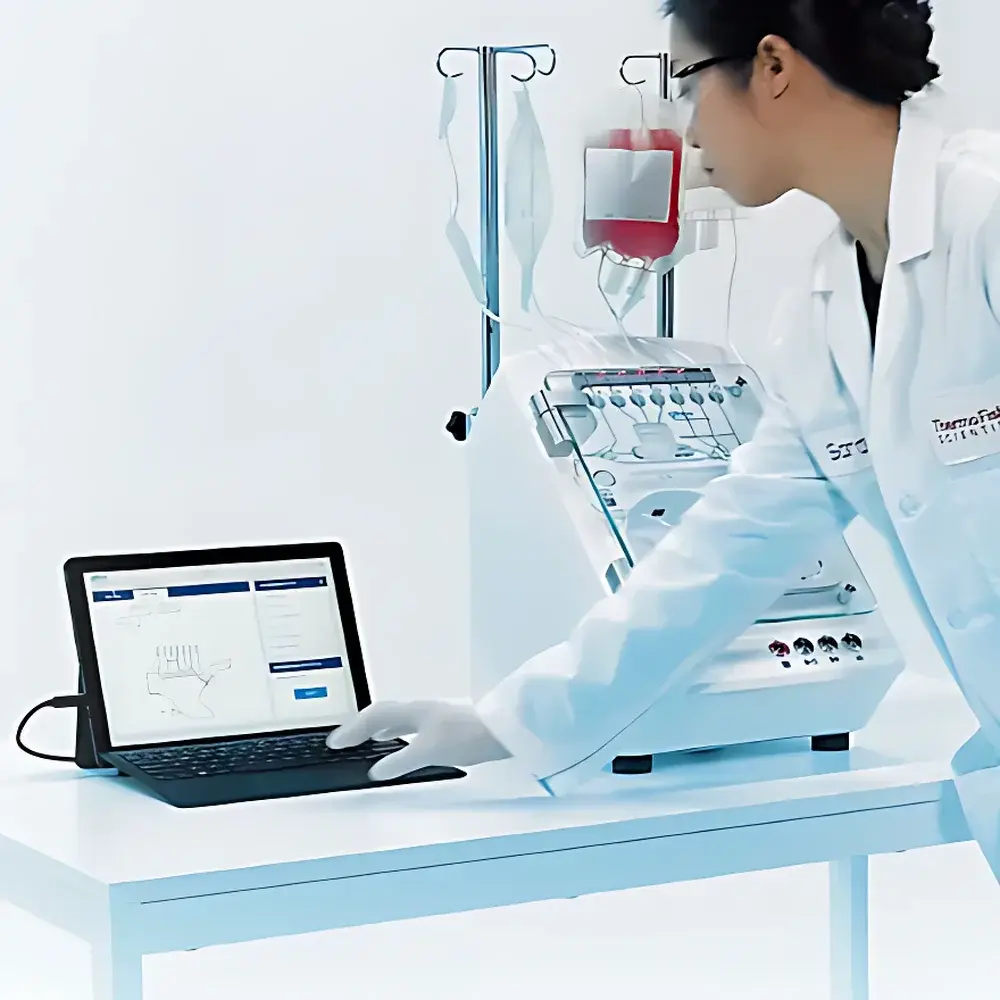
- Modular Automation Software: Intuitive, graphical programming interface allows creation, validation, and version control of SOP-driven protocols—including multi-step wash/concentrate/buffer-swap sequences—with full parameter logging and export capability.
Sample Compatibility & Compliance
The CTS Rotea system is validated for processing human peripheral blood mononuclear cells (PBMCs), leukapheresis products, bone marrow aspirates, and expanded T-cell cultures. It supports removal of red blood cells, granulocytes, and residual platelets without enzymatic or osmotic disruption—reducing off-target immune modulation and improving final product purity. The system complies with design controls per ISO 13485:2016 and is qualified for use in facilities operating under current Good Manufacturing Practice (cGMP) guidelines per 21 CFR Parts 210/211 and EU Annex 1. When integrated with Thermo Fisher’s DeltaV-compatible digital workflow suite, it supports ALCOA+ data integrity principles—including attributable, legible, contemporaneous, original, accurate, complete, consistent, enduring, and available records—as required for FDA and EMA submissions.
Software & Data Management
The Rotea Control Software provides role-based access, protocol encryption, and electronic signature support aligned with 21 CFR Part 11 requirements. All critical process parameters—including rotor speed (rpm), volumetric flow rate (mL/min), temperature (°C), elapsed time, and real-time camera snapshots—are timestamped and stored in a secure SQLite database. Audit trails record user actions, parameter changes, and system events with immutable timestamps. Export functions generate CSV- and PDF-formatted reports compatible with enterprise quality management systems (QMS) and manufacturing execution systems (MES). Optional DeltaV integration enables direct orchestration within broader biomanufacturing automation frameworks, supporting end-to-end batch record generation and electronic batch record (EBR) compliance.
Applications
- Automated PBMC isolation from whole blood or leukapheresis material—achieving equivalent purity and yield to Ficoll® density gradient centrifugation in ≤30 minutes vs. 120 minutes.
- T-cell washing and concentration prior to electroporation or viral transduction—preserving CD4+/CD8+ ratio and activation marker expression (e.g., CD25, CD69).
- Buffer exchange into cryopreservation media (e.g., CryoStor® CS10) with <5% residual saline or culture medium.
- Reduction of granulocyte contamination in autologous T-cell products—mitigating inhibitory effects on T-cell expansion.
- Final formulation of allogeneic NK or CAR-T products at clinical or commercial scale—enabling seamless transition from Phase I to commercial launch.
FAQ
What regulatory standards does the CTS Rotea system support?
The system is designed and documented to support compliance with ISO 13485, 21 CFR Part 11 (with optional DeltaV integration), and cGMP requirements for cell therapy manufacturing per FDA Guidance for Industry (2020) and EMA CHMP Guideline on Quality, Non-Clinical and Clinical Requirements (2021).
Can the Rotea system be used for non-clinical research applications?
Yes—its modular software and broad volume range make it suitable for preclinical development, process characterization studies, and analytical method development in GLP-compliant labs.
Is the system compatible with third-party bioreactors or cell culture vessels?
Yes—standardized tubing connectors and open communication protocols (e.g., Modbus TCP) enable integration with G-Rex® bioreactors, Cell Factory® systems, and other industry-standard upstream equipment.
How is sterility assured during operation?
Sterility is maintained exclusively through gamma-irradiated, pre-sterilized disposable kits—no internal wetted surfaces require cleaning or sterilization between runs.
Does the system require external cooling or heating units?
No—the integrated temperature-controlled rotor housing maintains sample zone temperatures between 4°C and 37°C without auxiliary chillers or heaters.
Related Products




