
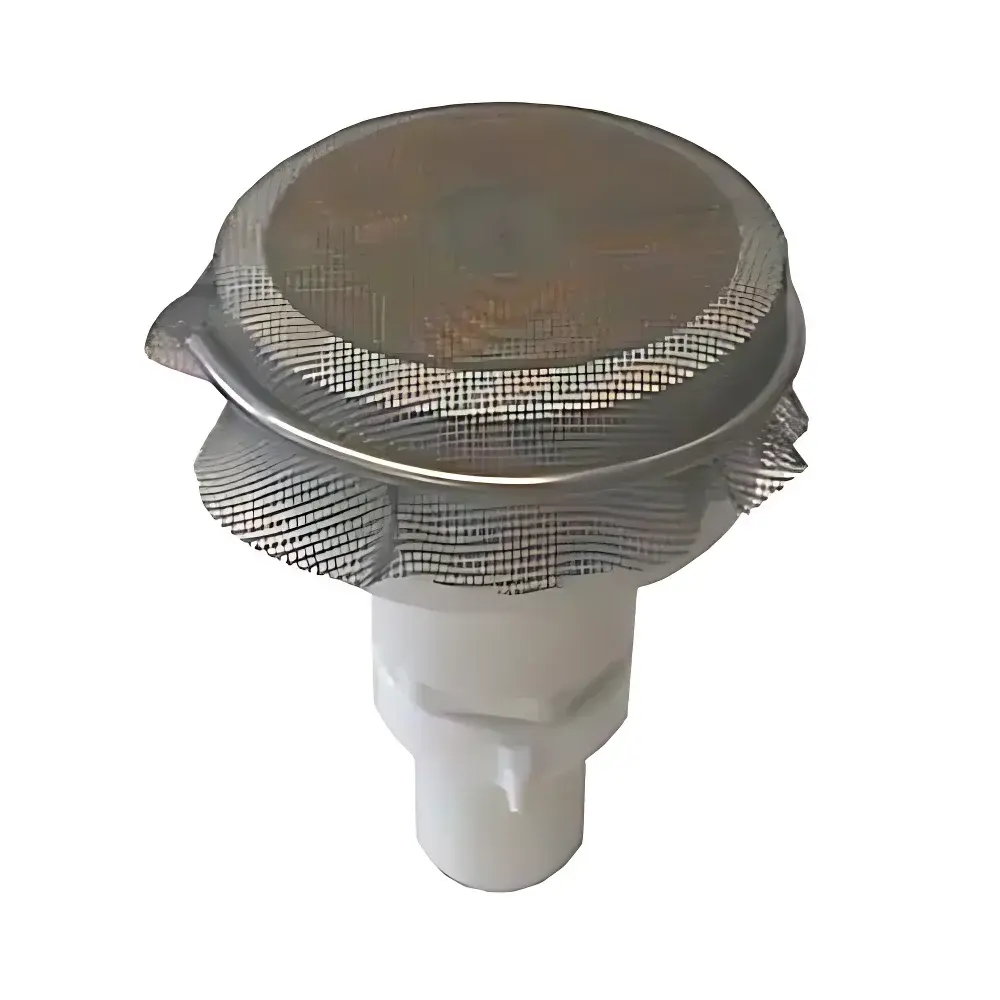
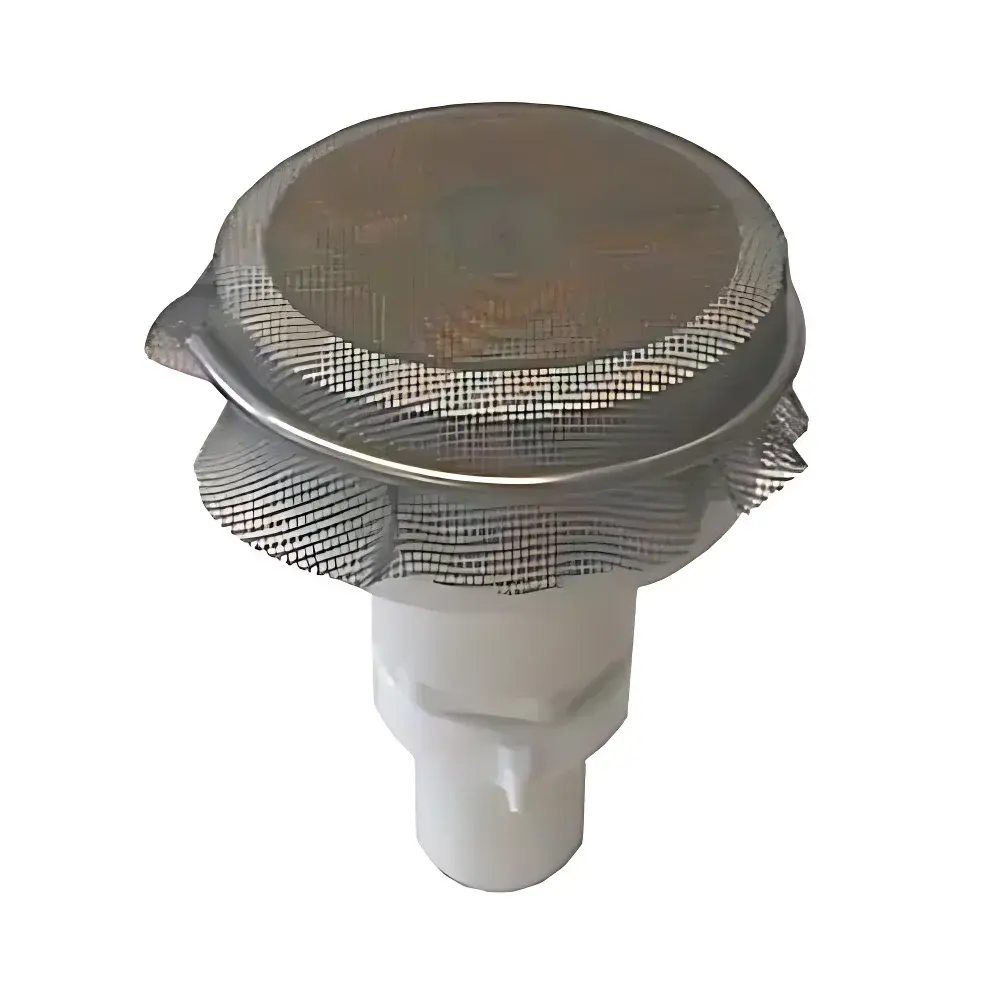
RainWise LW Leaf Wetness Sensor
| Brand | RainWise |
|---|---|
| Origin | USA |
| Model | LW |
| Instrument Type | Thermo-Hygrometer |
| Power Consumption | 3.0 W @ 12 VDC |
| Output Signal | 0–5 V DC |
| Substrate Material | Gold-Plated PCB |
| Mounting | Direct attachment to Monopod mounting bracket |
| Compliance | Designed for outdoor environmental monitoring per IEC 60529 IP65 enclosure rating |
Overview
The RainWise LW Leaf Wetness Sensor is an industrial-grade, solid-state surface moisture detector engineered for continuous, non-contact assessment of leaf surface wetness in agricultural, ecological, and meteorological monitoring applications. Unlike capacitive or resistive sensors relying on electrolytic conduction, the LW employs a printed gold-plated PCB substrate with interdigitated electrode geometry. Surface moisture alters the dielectric constant and conductance across the electrode array, producing a linearly proportional analog voltage output (0–5 V DC) calibrated to relative wetness duration—not absolute water depth. This principle enables high reproducibility in field deployments where dew formation, light rain, fog deposition, or irrigation splash events must be quantified objectively for phenological modeling, disease risk forecasting (e.g., downy mildew, apple scab), and irrigation scheduling validation.
Key Features
- Solid-state gold-plated PCB sensing element ensures long-term corrosion resistance and stable calibration under UV exposure and repeated thermal cycling.
- Low-power design (3.0 W @ 12 VDC) supports integration into solar-powered weather stations and remote telemetry networks without excessive battery drain.
- IP65-rated housing provides protection against dust ingress and low-pressure water jets, enabling reliable operation in unsheltered outdoor environments including orchards, vineyards, and research plots.
- Direct-mount compatibility with the RainWise Monopod universal mounting system eliminates need for custom brackets or alignment fixtures—reducing installation time and mechanical drift risk.
- Analog 0–5 V DC output is compatible with standard data loggers (e.g., Campbell Scientific CR1000X, Onset HOBO RX3000, Delta-T DL2e) and SCADA systems without signal conditioning.
Sample Compatibility & Compliance
The LW sensor does not require sample preparation or consumables; it operates passively on ambient surface condensation dynamics. Its planar geometry mimics leaf surface energy exchange characteristics, offering representative response to microclimatic drivers such as vapor pressure deficit (VPD), radiative cooling, and convective heat transfer. While not certified to ISO 17025 for metrological traceability, the sensor conforms to IEC 60529 (IP65) for environmental protection and meets NEMA-4X equivalency for outdoor instrumentation enclosures. It is routinely deployed in USDA-ARS phenology networks and EU-funded projects aligned with EFSA guidance on plant pathogen forecasting models.
Software & Data Management
Raw 0–5 V output is digitized by external data acquisition hardware and interpreted using user-defined scaling coefficients (typically 0 V = dry, 5 V = saturated). RainWise provides reference calibration documentation outlining recommended conversion to standardized leaf wetness duration (LWD) units (minutes/hour), consistent with WMO Guide to Meteorological Instruments and Methods of Observation (CIMO Guide, Chapter 12). When integrated with compliant data loggers supporting audit trails and timestamped storage, the system supports GLP-aligned environmental data collection. No proprietary software is required; output integrates natively with Python-based analysis pipelines (e.g., Pandas, NumPy), R statistical environments, and commercial platforms including Meteologger Cloud and WeatherLink Live.
Applications
- Agricultural disease modeling: Input variable for empirical models predicting infection windows for fungal pathogens sensitive to leaf surface moisture duration (e.g., Phytophthora infestans, Botrytis cinerea).
- Irrigation efficiency verification: Correlating sensor-triggered wetness events with scheduled drip or overhead application timing to assess canopy penetration and evaporation losses.
- Climatological network augmentation: Supplementing standard meteorological variables (T, RH, wind) with biologically relevant microclimate metrics in flux towers and AmeriFlux sites.
- Urban green infrastructure monitoring: Quantifying dew retention on green roof substrates and vertical garden panels to inform hydrological performance modeling.
- Educational field studies: Teaching tool for plant–atmosphere interaction concepts in undergraduate environmental science and horticulture curricula.
FAQ
Does the LW sensor measure actual water depth or only presence/absence of moisture?
No—it outputs an analog voltage proportional to the electrical conductance across its interdigitated electrodes, which correlates empirically with surface wetness duration and continuity, not volumetric water thickness.
Can the LW be used indoors or in controlled-environment chambers?
Yes, provided ambient temperature remains within –20 °C to +60 °C and relative humidity does not exceed 95% non-condensing; however, calibration may require chamber-specific validation due to altered boundary layer dynamics.
Is firmware or calibration update capability built into the sensor?
No—the LW is a passive analog transducer with no embedded microcontroller or field-upgradable firmware; calibration stability relies on material integrity and proper mounting orientation.
What is the typical response time to dew formation?
Under standard conditions (15 °C, 90% RH, still air), measurable output change occurs within 60–90 seconds following initial condensate nucleation on the PCB surface.
How often should the sensor surface be cleaned in dusty or high-pollen environments?
Visual inspection is recommended every 2–4 weeks; gentle cleaning with deionized water and lint-free cloth maintains electrode sensitivity—avoid solvents or abrasive materials that could degrade the gold plating.



