
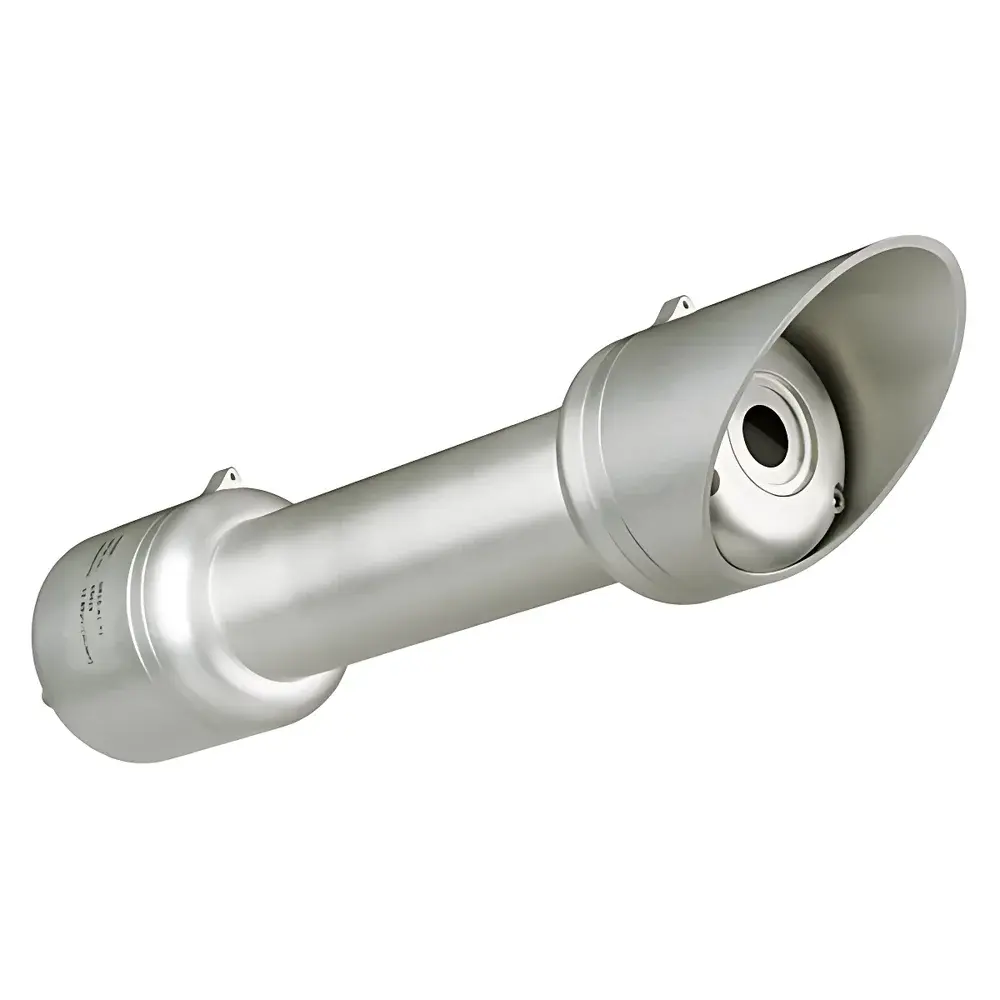
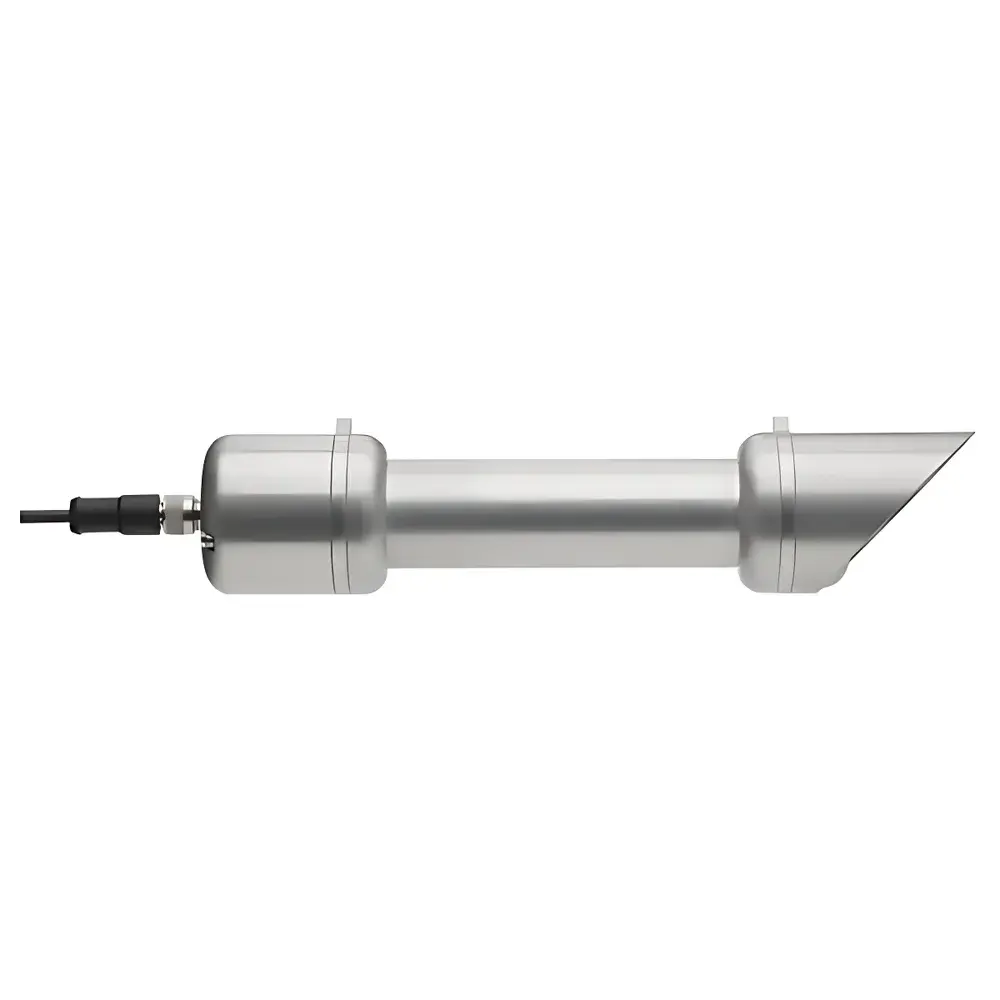
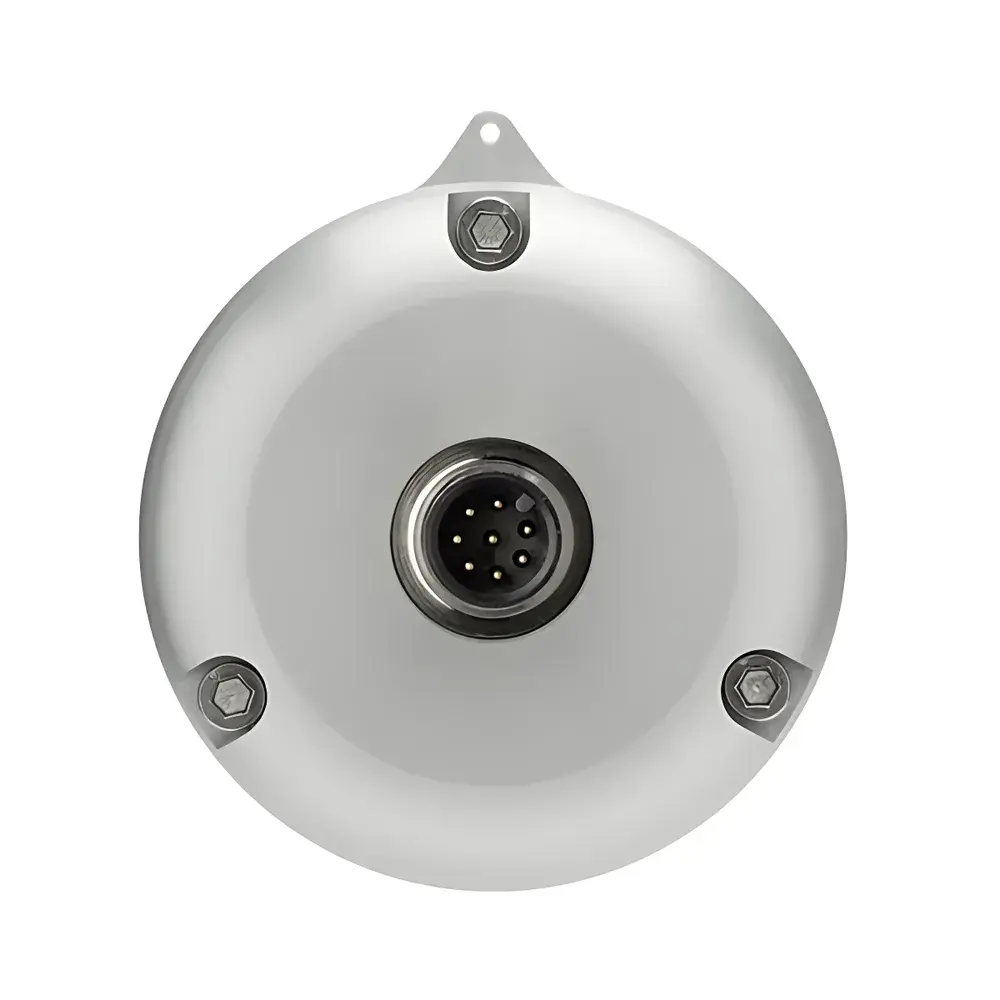

Hukseflux DR15-A1 Direct Normal Irradiance (DNI) Pyrheliometer
| Brand | Hukseflux |
|---|---|
| Origin | Netherlands |
| Model | DR15-A1 |
| ISO 9060 Classification | Class B (formerly "First Class") |
| Calibration Uncertainty | < 1.2 % (k = 2) |
| Heating Power | 1 W @ 12 VDC |
| Response Time (95 %) | 4 s |
| Field of View (Full Angle) | 5° |
| Slope Error | ≤ 1° |
| Zero Offset | < ±1 W/m² |
| Spectral Range | 200–4000 nm |
| Operating Temperature | −40 to +80 °C |
| Temperature Response | < ±1 % (−10 to +40 °C) |
| Output | Analog mV signal |
| Measurement Range | 0–4000 W/m² |
| Traceability | World Radiometric Reference (WRR) |
| Cable Length | 5 m |
| Calibration Certificate | Individual unit certificate including sensitivity and temperature response test data |
| Window Heater | Integrated quartz window heater (low-power, anti-condensation/anti-frost) |
Overview
The Hukseflux DR15-A1 is a high-precision, thermopile-based direct normal irradiance (DNI) pyrheliometer engineered for continuous, traceable measurement of solar radiation incident perpendicular to the sun’s disk. It operates on the principle of differential thermoelectric detection: incident solar radiation is absorbed by a black-coated thermal sensor mounted at the base of a precision collimating tube, generating a proportional thermoelectric voltage output. The instrument conforms to ISO 9060:2018 Class B specifications—equivalent to the legacy “First Class” designation—ensuring compliance with international standards for solar resource assessment, meteorological monitoring, and solar energy system performance validation. Designed as a direct replacement for earlier Hukseflux models (DR01, DR02, DR03), the DR15-A1 integrates an optimized quartz window heating system that delivers fourfold improvement in thermal offset suppression while maintaining only 1 W power consumption at 12 VDC—enabling reliable operation in high-humidity or sub-zero environments without condensation or frost accumulation on the optical surface.
Key Features
- Precision-engineered collimator with 5° full field-of-view and ≤1° slope error, minimizing stray light and ensuring strict alignment with solar disk geometry
- Individually calibrated thermopile sensor with blackened absorber surface and spectrally flat response across 200–4000 nm
- Optically polished fused quartz window with integrated low-power (1 W) resistive heater for continuous anti-condensation and anti-frost operation
- Traceable calibration against the World Radiometric Reference (WRR), with uncertainty <1.2 % (k = 2)
- Robust mechanical design compliant with IEC 61215 and IEC 61724-1 requirements for long-term outdoor deployment
- Analog mV output compatible with standard data loggers and SCADA systems without signal conditioning
- Operating temperature range from −40 °C to +80 °C, with temperature-induced output drift <±1 % over −10 to +40 °C
Sample Compatibility & Compliance
The DR15-A1 is intended for use exclusively on two-axis solar trackers capable of maintaining solar disk alignment within ±0.25°. Its 5° field of view ensures accurate DNI capture under typical atmospheric conditions while rejecting diffuse sky radiation. The instrument meets the optical, thermal, and electrical performance criteria defined in ISO 9060:2018 (Class B), ASTM E816 (Standard Test Method for Calibration of Thermopile Type Pyrheliometers), and IEC 61724-1:2021 (Photovoltaic system performance—Part 1: Monitoring). Each unit ships with a manufacturer-issued calibration certificate documenting individual sensitivity (µV/(W/m²)), zero offset, temperature response curve, and response time (t₉₅ = 4 s). All calibrations are performed in accordance with ISO/IEC 17025-accredited procedures and maintain full traceability to WRR via the Physikalisch-Meteorologisches Observatorium Davos / World Radiation Center (PMOD/WRC).
Software & Data Management
The DR15-A1 requires no proprietary software or firmware. Its analog mV output (typically ~10 µV per W/m²) interfaces directly with industry-standard data acquisition systems—including Campbell Scientific CR series, Delta-T Devices DL2e, and Siemens Desigo CC platforms—enabling seamless integration into existing meteorological or solar plant monitoring infrastructures. When deployed in GLP- or GMP-regulated environments (e.g., utility-scale solar farm commissioning or bankable resource assessments), users may configure audit-trail-enabled logging to satisfy data integrity requirements under ISO/IEC 17025 or IEC 62443. While the sensor itself does not support digital protocols, its stable analog signal supports high-resolution sampling (≥1 Hz) and post-processing alignment correction using tracker position logs and solar geometry algorithms (e.g., SPA or ASTRO).
Applications
- Solar resource assessment for CSP and PV power plant feasibility studies and bankability reporting
- Long-term DNI time-series generation in national meteorological networks and BSRN (Baseline Surface Radiation Network) stations
- Performance testing and validation of concentrating solar thermal collectors and heliostat fields
- Atmospheric science research involving aerosol optical depth, water vapor transmittance, and clear-sky model verification
- Calibration transfer and intercomparison campaigns between reference and secondary pyrheliometers
- Site suitability analysis for solar tower and parabolic trough installations where high angular accuracy and low zero-offset drift are critical
FAQ
Is the DR15-A1 suitable for unattended, year-round operation in arctic climates?
Yes—the integrated 1 W quartz window heater enables reliable frost and condensation mitigation down to −40 °C, and the instrument’s temperature response remains within ±1 % across −10 to +40 °C.
Does the DR15-A1 require periodic recalibration?
Per ISO 9060 and IEC 61724-1, annual recalibration is recommended for bankable solar resource data; however, stability testing shows typical drift <0.5 % per year under controlled exposure conditions.
Can the DR15-A1 be used without a solar tracker?
No—it measures direct normal irradiance and must be continuously aligned with the solar disk; fixed-mount deployment will yield non-representative, geometrically biased results.
What is the significance of the 5° field of view?
It balances solar disk capture (0.53° apparent diameter) with sufficient margin for tracker pointing uncertainty and atmospheric scattering, while minimizing contribution from circumsolar radiation per ISO 9060 definitions.
How is zero offset characterized and corrected?
Each unit undergoes shaded/unshaded thermal equilibrium testing; the documented zero offset (<±1 W/m²) may be subtracted in post-processing or applied as a real-time offset in the data logger.







