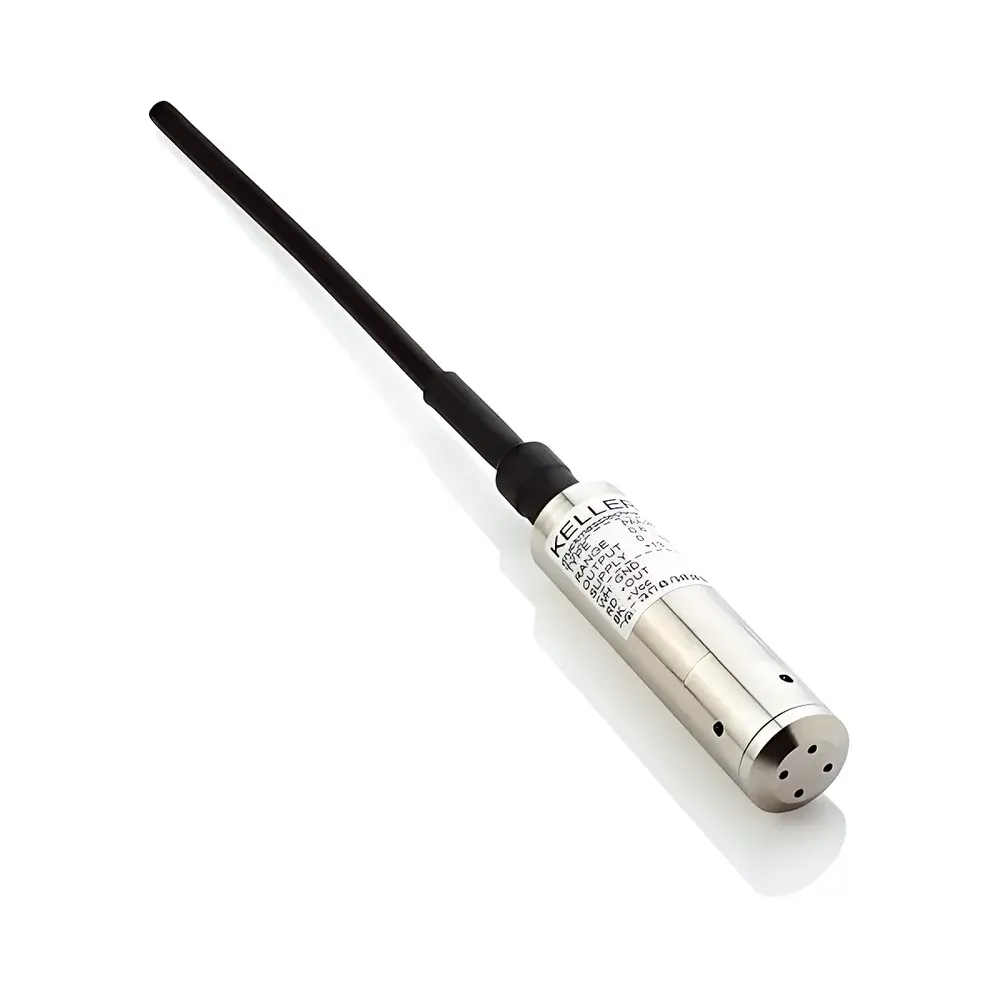
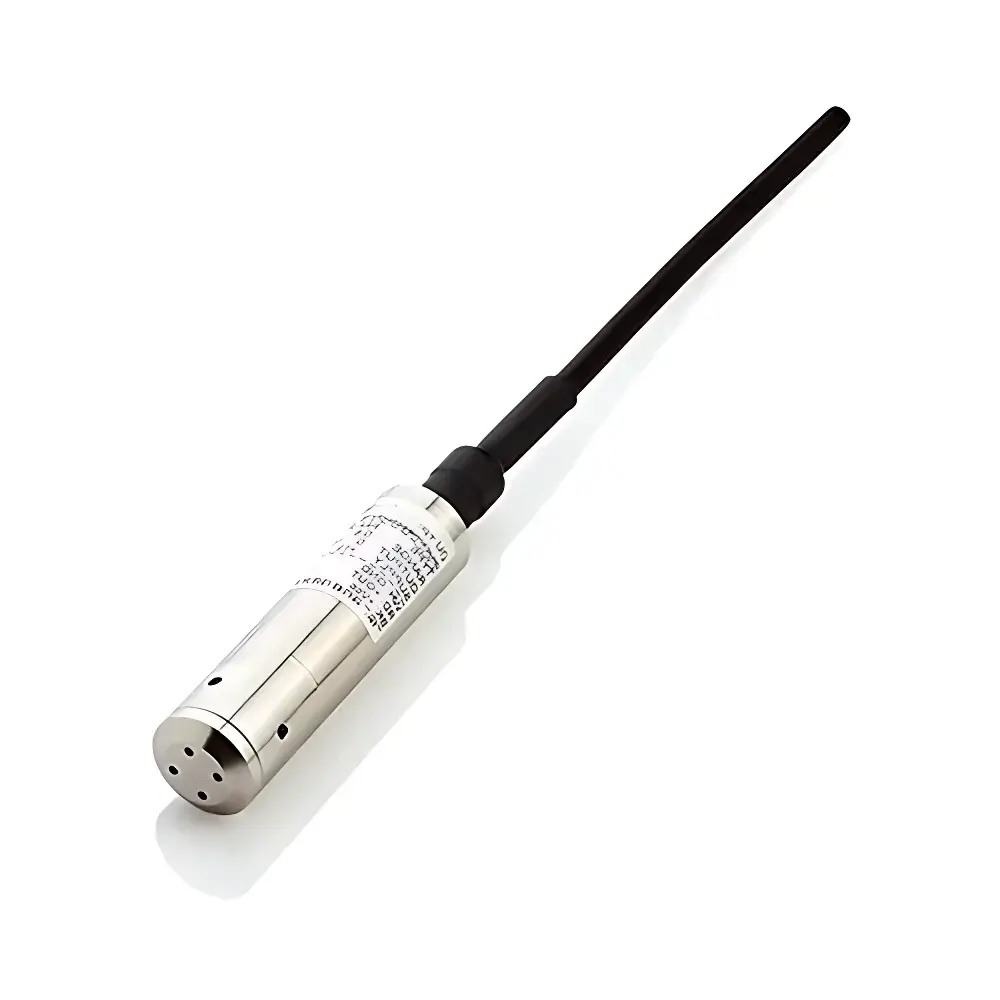
RainWise H20LVL Submersible Pressure-Based Water Level Sensor
| Brand | RainWise |
|---|---|
| Origin | USA |
| Model | H20LVL |
| Measurement Principle | Hydrostatic Pressure |
| Range | 3–200 m |
| Accuracy | ±0.1% FS |
| Output Signal | Analog (4–20 mA or 0–5 VDC) |
| Enclosure Rating | IP68 |
| Operating Temperature | −20 °C to +70 °C |
| Power Supply | 12–30 VDC |
| Material | 316 Stainless Steel Housing |
| Compliance | CE, RoHS |
Overview
The RainWise H20LVL is a high-stability, submersible pressure-based water level sensor engineered for long-term deployment in diverse hydrological and environmental monitoring applications. It operates on the fundamental principle of hydrostatic pressure measurement: the sensor detects the pressure exerted by the column of water above it, then converts this pressure into an accurate, linear representation of depth using a calibrated stainless steel diaphragm and temperature-compensated piezoresistive sensing element. Designed for continuous immersion, the H20LVL delivers reliable, drift-minimized readings across its full operational range—from shallow surface water bodies (≥3 m) to deep boreholes and reservoirs (up to 200 m). Its robust construction, combined with factory calibration traceable to NIST standards, ensures consistent performance under variable thermal, chemical, and mechanical stress conditions typical of field-deployed hydrometric instrumentation.
Key Features
- High-accuracy hydrostatic sensing with ±0.1% full-scale (FS) accuracy, including linearity, hysteresis, and repeatability
- 316 stainless steel pressure housing rated IP68 for permanent submersion in freshwater, brackish, and mildly corrosive environments
- Integrated temperature compensation over −20 °C to +70 °C to correct for fluid density variation and sensor thermal drift
- Configurable analog output options: 4–20 mA (2-wire loop-powered) or 0–5 VDC (3-wire), compatible with standard SCADA, PLC, and data logger inputs
- Low-power design supporting operation from 12–30 VDC, suitable for solar- or battery-powered remote stations
- Zero and span adjustments accessible via external potentiometers—no software or special tools required for field recalibration
- Stable zero-point retention (<0.05% FS/year typical drift) minimizing maintenance frequency in unattended deployments
Sample Compatibility & Compliance
The H20LVL is validated for direct immersion in natural and engineered water systems, including groundwater wells, open-channel flumes, irrigation reservoirs, stormwater retention basins, and tidal estuaries. It is chemically compatible with potable water, wastewater (non-aggressive pH 4–10), and low-salinity seawater (≤15 ppt). While not certified for explosive atmospheres or ultrapure pharmaceutical process water, its materials and sealing meet ASTM D4169 packaging durability benchmarks and comply with RoHS Directive 2011/65/EU and CE marking requirements for electromagnetic compatibility (EMC Directive 2014/30/EU) and low-voltage safety (LVD Directive 2014/35/EU). Documentation includes factory calibration certificates with uncertainty budgets per ISO/IEC 17025 principles.
Software & Data Management
The H20LVL is a standalone analog transducer requiring no embedded firmware or proprietary configuration software. It integrates transparently into existing telemetry ecosystems—including Campbell Scientific CR-series loggers, Onset HOBO UX120 systems, and Siemens Desigo CC platforms—via standard current/voltage input modules. For audit-trail compliance in regulated environmental monitoring (e.g., EPA Method 1604, ISO 14001 programs), users are advised to pair the sensor with data loggers supporting time-stamped acquisition, GLP-compliant metadata tagging, and secure export formats (CSV, XML). When deployed in FDA-regulated water system validation (e.g., USP ), the analog signal path must be validated per 21 CFR Part 11 requirements for electronic records, including operator authentication, change control, and audit logging at the data acquisition layer.
Applications
- Real-time groundwater level monitoring in municipal and agricultural well networks
- Stage measurement for flood warning systems and river gauge stations (aligned with USGS NWIS protocols)
- Level control feedback in pump station automation and lift station management
- Long-term trend analysis of aquifer recharge and depletion dynamics
- Regulatory compliance reporting for NPDES permits and state water resource agencies
- Calibration reference for acoustic or radar-based non-contact level sensors in hybrid monitoring setups
FAQ
Is the H20LVL suitable for saltwater applications?
It is rated for short-term exposure to low-salinity seawater (≤15 ppt); for sustained marine deployment, consult RainWise for titanium-housed variants.
Does the sensor require vented cable or absolute pressure compensation?
No—it is a gauge-pressure sensor with built-in atmospheric reference via vented cable; absolute models (H20LVL-A) are available upon request.
Can the output signal be re-ranged in the field?
Yes—zero and span potentiometers allow manual adjustment without disassembly or external power interruption.
What is the recommended mounting method for stilling wells?
A rigid vertical mounting with anti-vortex baffling is required; avoid flexible conduit that may transmit mechanical noise or air entrapment.
Is NIST-traceable calibration documentation included?
Each unit ships with a certificate of conformance listing as-shipped calibration points, uncertainty values, and traceability to NIST Standard Reference Materials.