
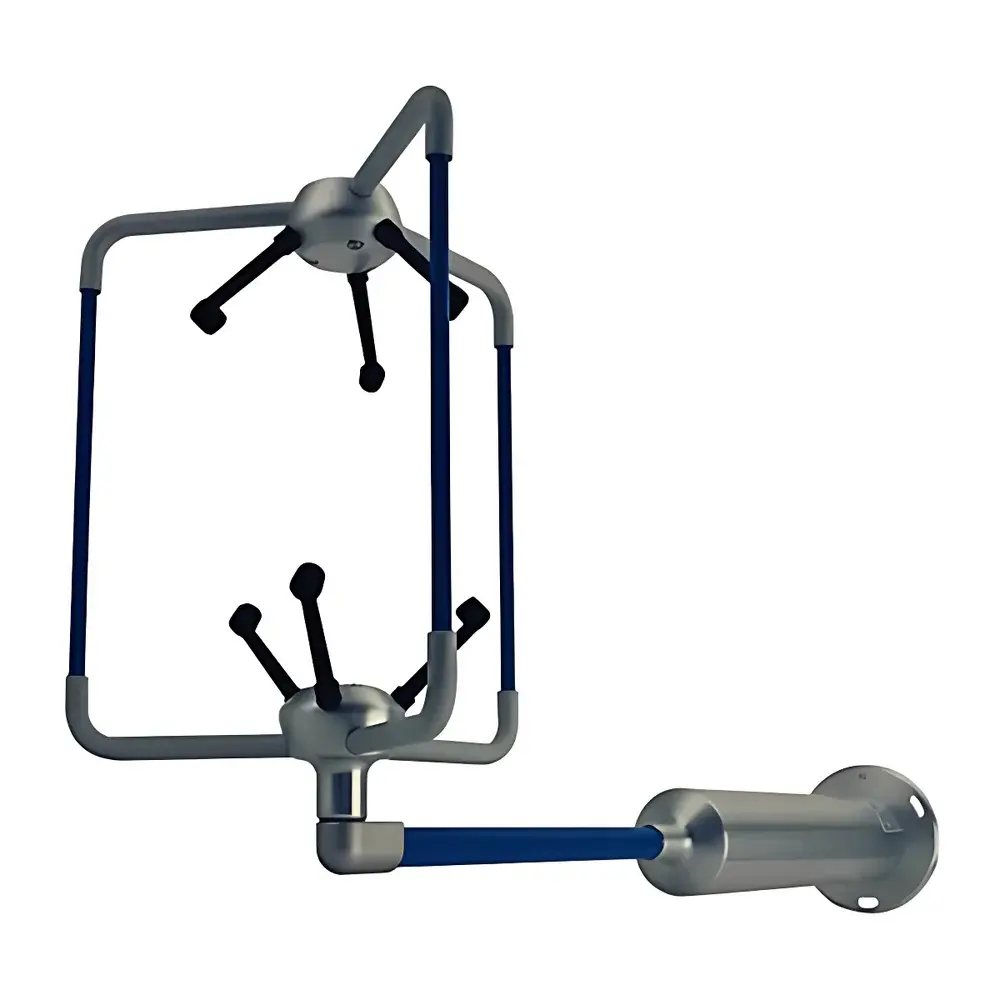
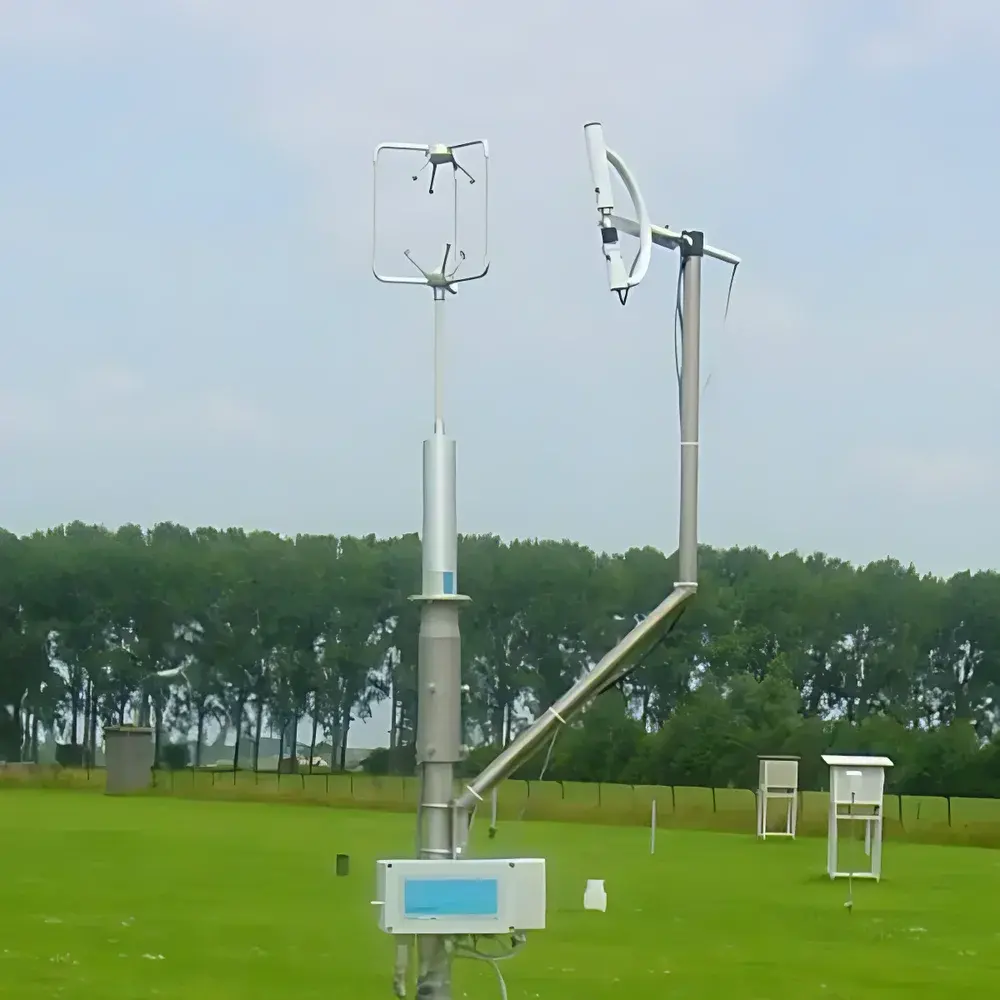
Gill WindMaster RA 3D Ultrasonic Anemometer
| Brand | Gill |
|---|---|
| Origin | United Kingdom |
| Model | WindMaster RA |
| Instrument Type | Ultrasonic Anemometer |
| Resolution | 0.01 m/s |
| Measurement Range | 0 – 50 m/s |
| Accuracy | ±1.5% of reading |
| Operating Temperature | −40 °C to +70 °C |
| Operating Humidity | 5–100% RH |
| Output Frequency | Standard 20 Hz (optional 32 Hz) |
| Output Parameters | U, V, W velocity components, sonic temperature, speed of sound |
| Construction Material | Anodized aluminum and carbon fiber composite |
| Calibration | Optional traceable wind tunnel calibration per unit |
Overview
The Gill WindMaster RA is a high-precision, three-dimensional ultrasonic anemometer engineered for research-grade atmospheric turbulence measurement and eddy covariance flux studies. Based on time-of-flight ultrasonic transit-time principle, it measures orthogonal wind velocity components (U, V, W) by calculating the differential propagation time of ultrasonic pulses between four transducer pairs arranged in a tetrahedral geometry. This architecture eliminates mechanical moving parts and enables direct, phase-insensitive measurement of turbulent wind fluctuations at high temporal resolution—critical for surface energy balance, boundary layer meteorology, and micrometeorological flux quantification. The instrument outputs synchronized, low-latency digital data at standard 20 Hz (upgradable to 32 Hz), supporting real-time spectral analysis and compliance with international flux measurement protocols including AmeriFlux, ICOS, and FLUXNET standards.
Key Features
- Three-axis wind vector measurement with simultaneous output of U (east-west), V (north-south), and W (vertical) components
- Sonic temperature derived from mean acoustic path speed—used for air density correction and virtual heat flux computation
- Robust mechanical design featuring anodized aluminum housing and carbon fiber support arms, optimized for structural rigidity and minimal flow distortion
- Wide operational envelope: certified performance across −40 °C to +70 °C ambient temperature and 5–100% relative humidity without condensation-related drift
- Low-power RS-485 or SDI-12 digital interface; optional Ethernet or USB variants available for integration into SCADA or data logger ecosystems (e.g., Campbell Scientific CR6, Delta-T DL6)
- Factory-calibrated with NIST-traceable reference; optional individual unit wind tunnel calibration (per ISO 17025-accredited facility) for enhanced uncertainty reduction in critical applications
Sample Compatibility & Compliance
The WindMaster RA is compatible with all standard micrometeorological tower configurations, including lattice masts, guyed poles, and rooftop mounting platforms. Its compact form factor (190 mm height × 140 mm base diameter) minimizes wake interference and satisfies IEC 61400-12-1 Annex D requirements for wind turbine site assessment instrumentation. The device meets EN 12599:2012 for environmental monitoring equipment and complies with CE marking directives for electromagnetic compatibility (2014/30/EU) and low voltage safety (2014/35/EU). For regulated environmental monitoring networks, its data output format supports automated ingestion into EPA-compliant QA/QC workflows and aligns with NOAA’s Integrated Surface Database (ISD) metadata conventions.
Software & Data Management
Gill provides the free Windows-based WindSoft configuration utility for firmware updates, sensor diagnostics, and real-time data visualization. Raw binary output is fully documented in the open-format WindMaster RA Communication Protocol v3.2, enabling seamless integration with Python (via PySerial), MATLAB, LabVIEW, or R-based processing pipelines. Time-stamped ASCII output includes UTC-synchronized timestamps (GPS optional), ensuring traceability for GLP-aligned long-term monitoring deployments. When paired with Gill’s optional GPS module, the system supports precise georeferencing and leap-second-aware timestamping—essential for cross-site intercomparison studies under FAO-56 or WMO-GAW guidelines.
Applications
- Turbulent flux measurements (CO₂, H₂O, sensible/latent heat) using eddy covariance methodology
- Structural wind loading analysis on bridges, high-rise buildings, and transmission line corridors
- Wake characterization and inflow assessment at utility-scale wind farms and blade testing facilities
- Urban ventilation mapping and building-integrated airflow modeling
- Boundary layer profiling in atmospheric research towers and tall mast observatories
- Calibration reference for cup-and-vane anemometers in national meteorological networks
FAQ
What is the recommended mounting orientation for optimal turbulence measurement?
The sensor must be mounted level and aligned with true north (or grid north if correcting for declination in post-processing); tilt errors >2° significantly degrade W-component accuracy.
Does the WindMaster RA require periodic recalibration in field use?
No routine recalibration is required under normal operating conditions; however, annual verification against a reference anemometer is advised for ISO/IEC 17025-compliant monitoring programs.
Can the device operate unattended for extended periods in remote locations?
Yes—designed for continuous operation with typical power draw of 1.2 W (12 V DC), compatible with solar-charged battery systems and low-power data loggers.
Is sonic temperature output suitable for thermodynamic calculations?
Yes—the sonic temperature is directly proportional to the square of the speed of sound and correlates with virtual temperature; it is widely used in eddy covariance software (e.g., EddyPro, TK3) for density corrections.
How does the WindMaster RA handle precipitation or frost accumulation?
The transducers feature hydrophobic coating and self-heating capability (optional 24 V auxiliary heating circuit), reducing ice adhesion and maintaining measurement continuity during light freezing rain or dew formation.
Related Products







