
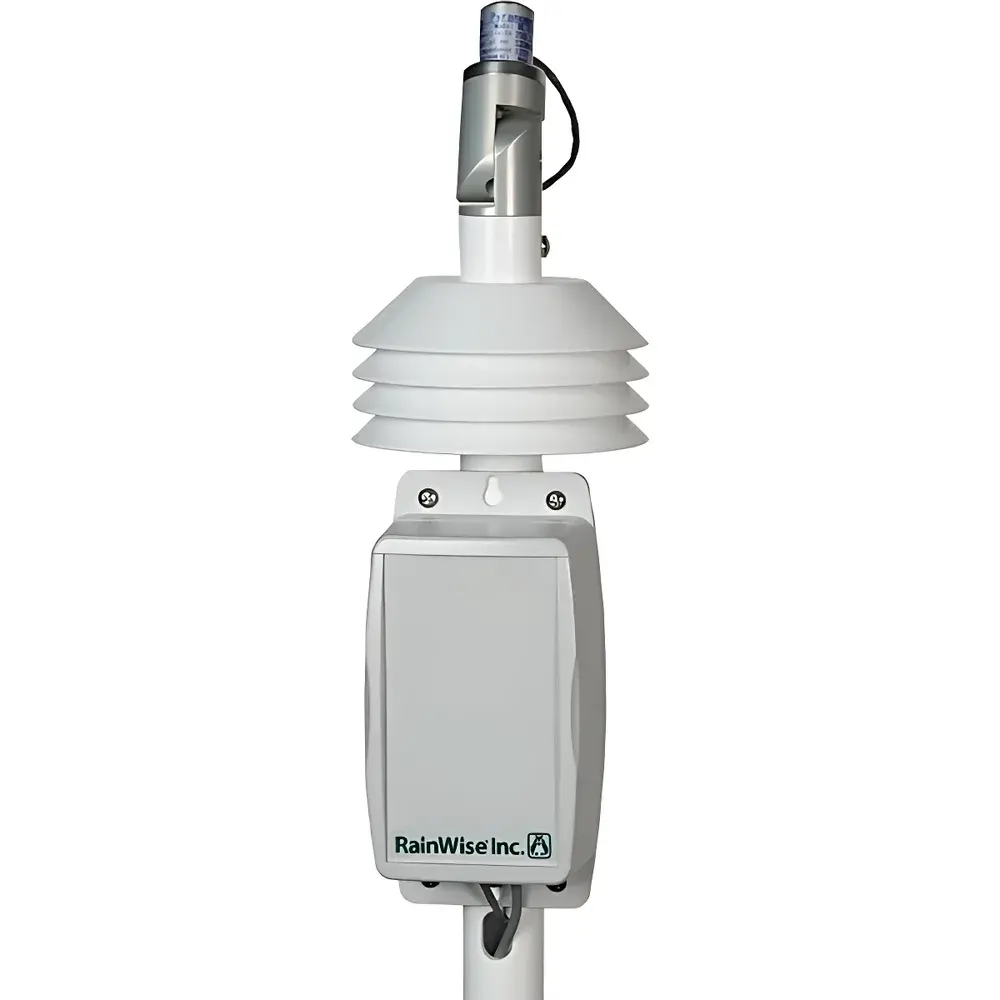
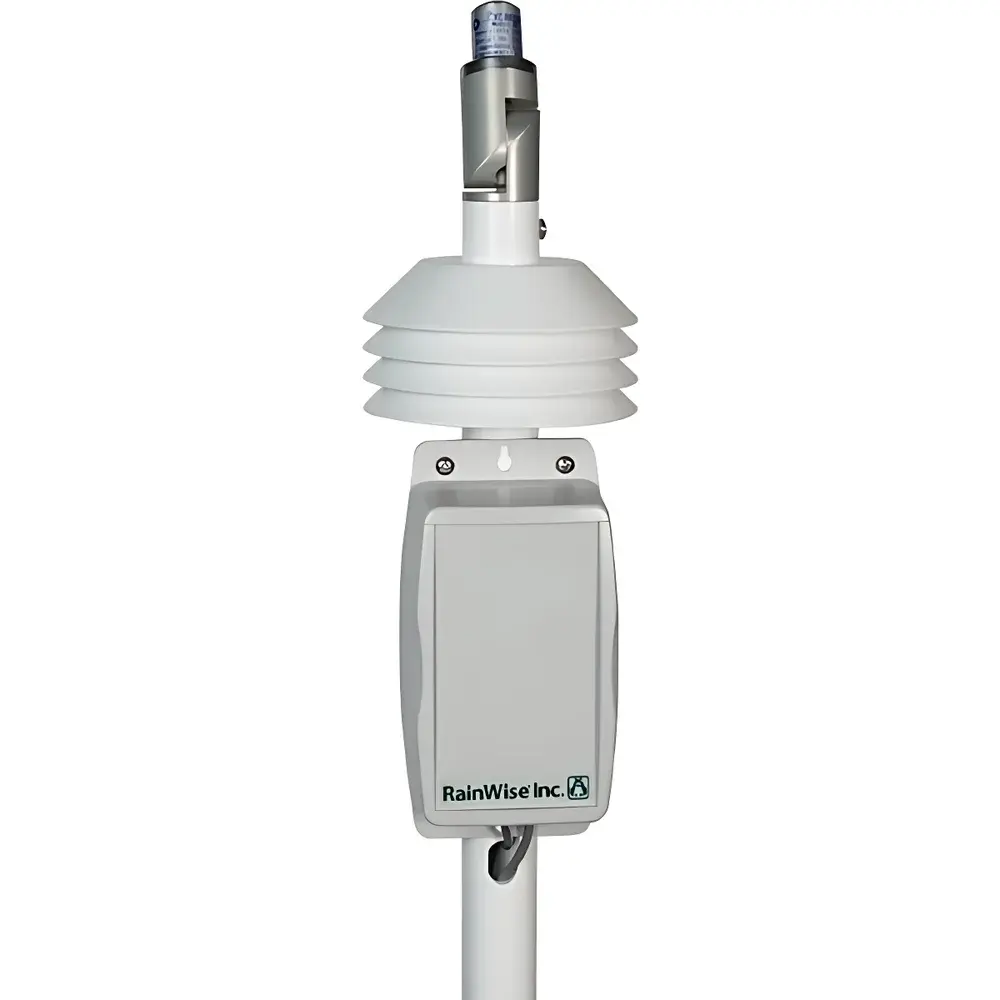
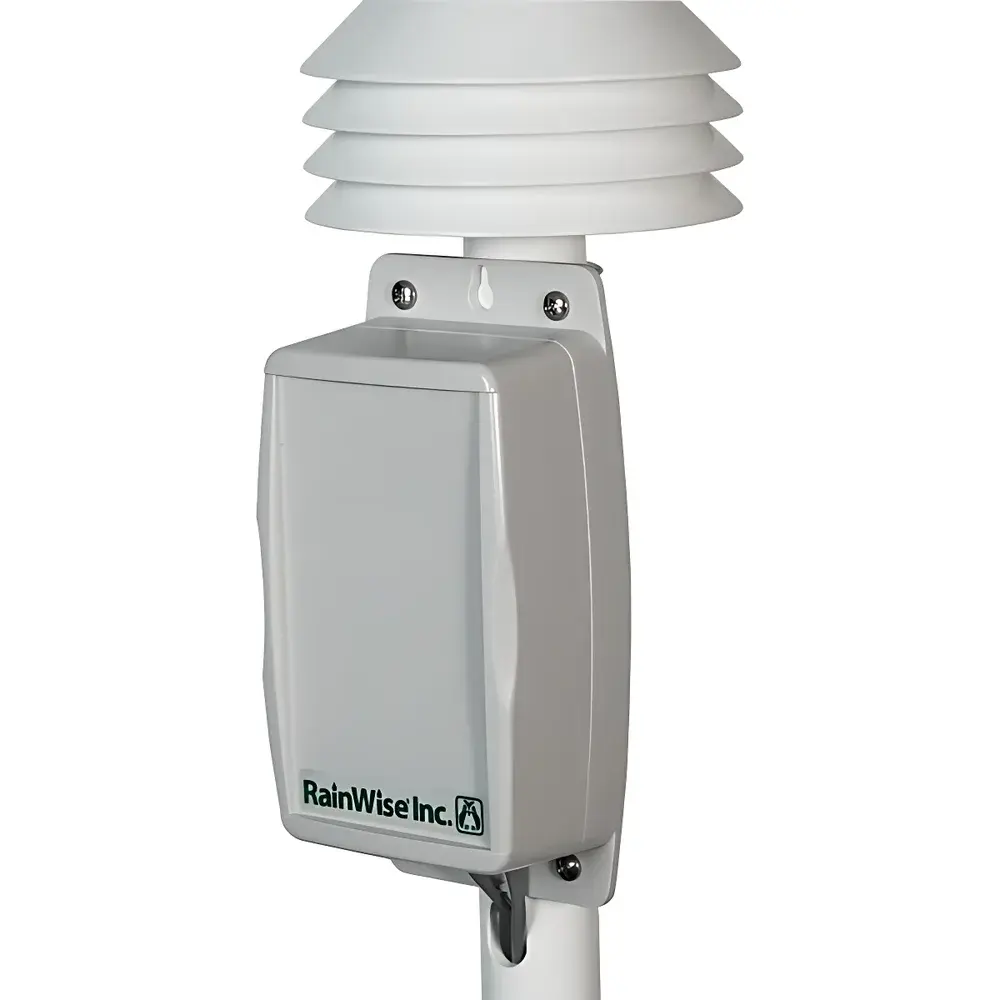
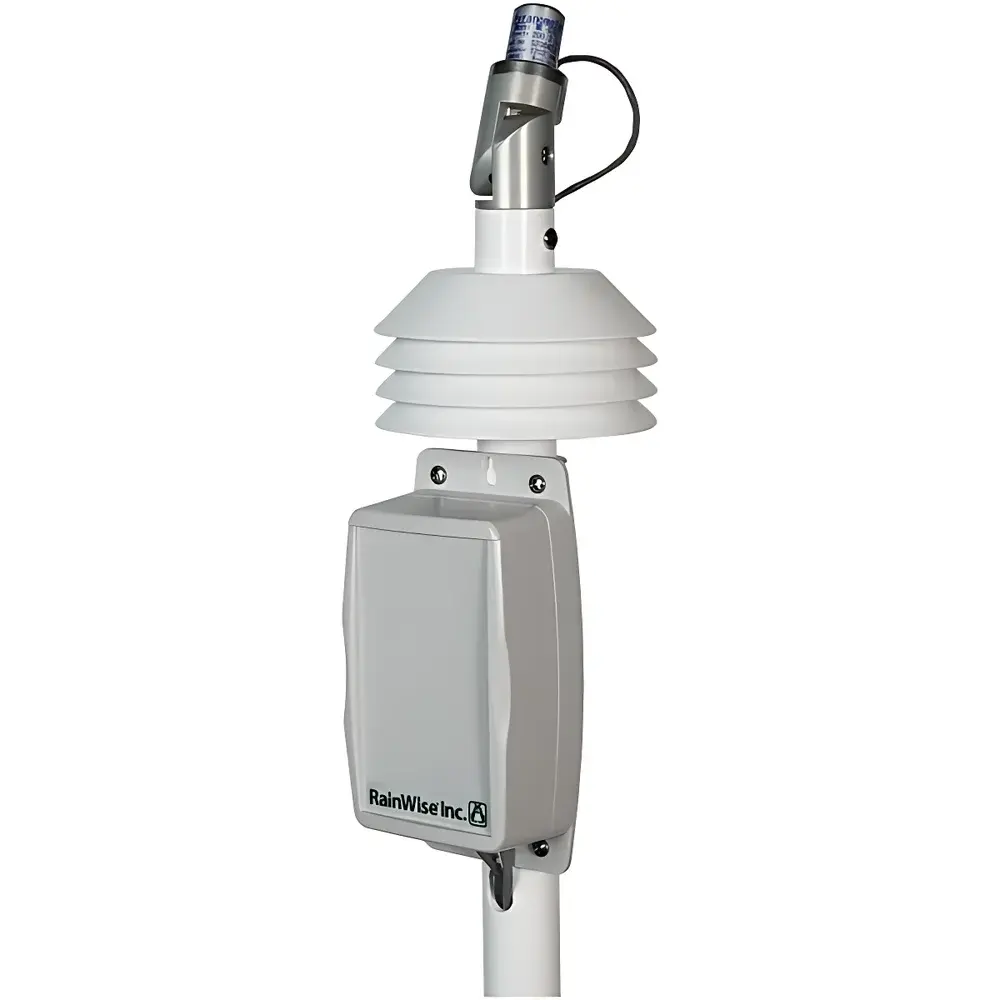
RainWise PVmet 100 Photovoltaic Weather Station
| Brand | RainWise |
|---|---|
| Origin | USA |
| Model | PVmet 100 |
| Sensor Types | Global/Plane-of-Array Pyranometer, Air Temperature Sensor, PV Module Backsheet Temperature Sensor (1 standard, up to 2 optional) |
| Measurement Range | Solar Irradiance 0–1750 W/m², Air Temperature −40–80 °C, Backsheet Temperature −40–80 °C |
| Accuracy | ±5% (irradiance), ±0.3 °C (temperature) |
| Resolution | 1 W/m² (irradiance), 0.1 °C (temperature) |
| Cosine Response Error | ±1% at 45°, ±5% at 75° |
| Operating Temperature | −25–55 °C (electronics), −40–60 °C (environmental) |
| Humidity Range | 0–100% RH |
| Power Supply | 10–30 VDC, 50 mA |
| Communication | RS-485 Modbus RTU (standard), optional Modbus TCP via Ethernet |
| Protocol Compliance | SunSpec Modbus Register Map v1.1 certified |
| Enclosure Materials | PVC, ABS, anodized aluminum, stainless steel, LEXAN®, Makrolon® 2658 |
| Cable Length | 7.62 m |
| Dimensions (L×W×H) | 6 × 20.3 × 20.3 cm |
| Weight | 0.8 kg |
Overview
The RainWise PVmet 100 Photovoltaic Weather Station is a purpose-built environmental monitoring system engineered specifically for utility-scale and commercial photovoltaic (PV) power plants. Designed in accordance with industry requirements for performance ratio (PR) calculation, yield assessment, and IEC 61724-1 compliant solar resource monitoring, the PVmet 100 implements a modular sensor architecture centered on high-fidelity irradiance and thermal measurement. Its core measurement principle relies on thermopile-based pyranometry for broadband solar irradiance detection across the 300–1100 nm spectral range, coupled with precision PT1000-class resistance temperature detectors (RTDs) for air and module backsheet temperature acquisition. The station operates as a node within larger SCADA or energy management systems (EMS), delivering time-synchronized, traceable environmental data essential for performance modeling, degradation analysis, and grid integration reporting.
Key Features
- Single or dual configurable PV module backsheet temperature sensors—enabling differential thermal profiling across string-level or inverter-level arrays
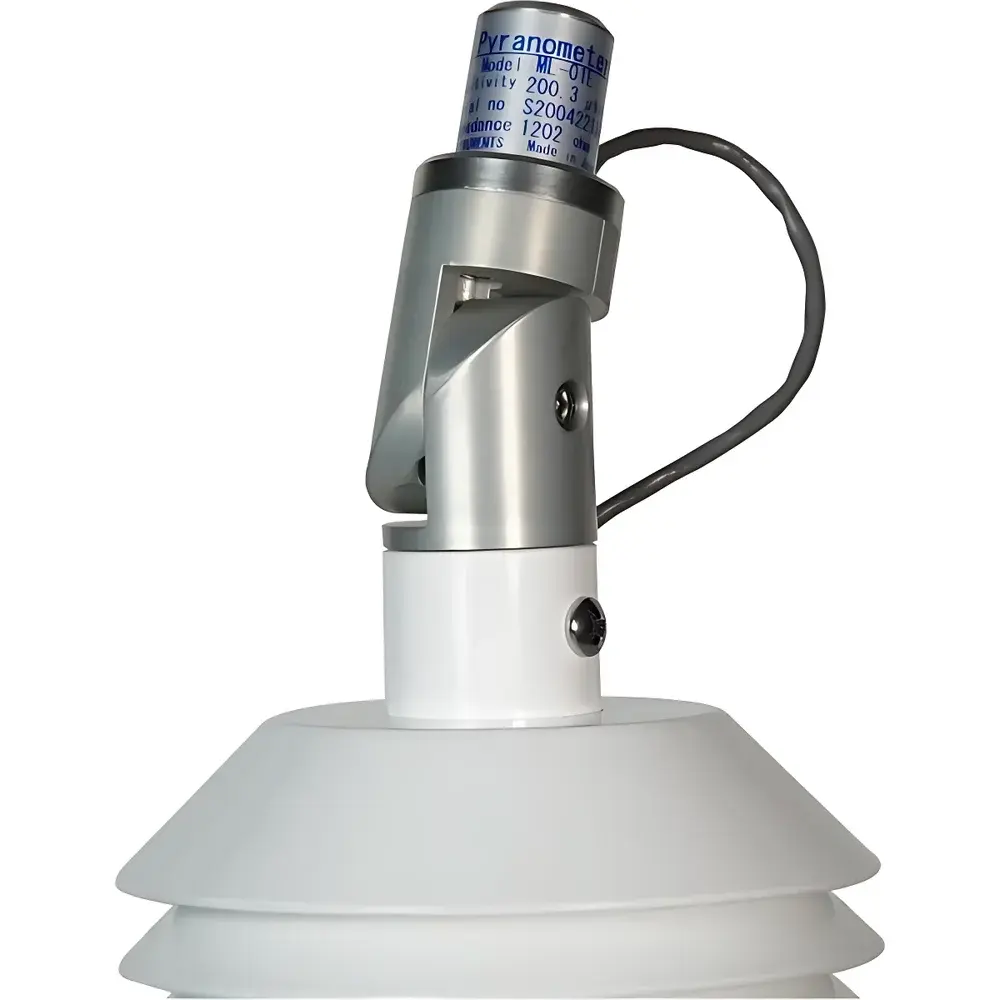
- Field-selectable global horizontal irradiance (GHI) or plane-of-array (POA) irradiance configuration via interchangeable mounting hardware and calibrated sensor orientation
- SunSpec-certified Modbus RTU implementation over RS-485 (2-wire, half-duplex), ensuring interoperability with inverters, SCADA gateways, and third-party monitoring platforms supporting SunSpec Model 103 and 104 registers
- Optional Modbus TCP interface for direct integration into Ethernet-based plant control networks without protocol translation hardware
- Ruggedized NEMA 4X-rated enclosure constructed from UV-stabilized LEXAN® and anodized aluminum, rated for continuous outdoor operation in ambient temperatures from −40 °C to +60 °C and 0–100% relative humidity
- RoHS-compliant, lead-free electronics architecture aligned with EU Directive 2011/65/EU and UL 61010-1 safety standards
Sample Compatibility & Compliance
The PVmet 100 is compatible with crystalline silicon (c-Si), thin-film (CdTe, CIGS), and bifacial PV technologies. Its irradiance sensor meets ISO 9060:2018 classification as a Secondary Standard pyranometer (Class C), with cosine response error within ±1% at 45° zenith angle and ±5% at 75°—sufficient for POA irradiance monitoring under typical tilt angles used in fixed-tilt and single-axis tracking installations. All temperature sensors conform to IEC 60751 Class A tolerance (±0.15 °C + 0.002 × |t|) over their full operating range. Data logging and transmission comply with IEC 61724-1:2021 Annex B requirements for minimum sampling frequency (1-minute intervals), timestamp accuracy (<1 s deviation), and metadata tagging (sensor type, location, calibration date). The device supports audit-ready data provenance when integrated with GLP/GMP-aligned EMS platforms featuring 21 CFR Part 11 electronic signature and audit trail capabilities.
Software & Data Management
The PVmet 100 functions as a passive sensor node—no onboard data storage or embedded firmware UI. It delivers raw sensor values via standardized Modbus register maps mapped to SunSpec Model 103 (Irradiance) and Model 104 (Temperature). Integration is achieved through external data loggers (e.g., Campbell Scientific CR1000X, Siemens Desigo CC, or Schneider EcoStruxure Gateways) or cloud-connected edge controllers. When deployed with compliant data acquisition systems, it enables automated generation of key KPIs including Plane-of-Array Irradiance (POAI), Module Temperature (Tmod), Ambient Temperature (Tamb), and calculated parameters such as cell temperature (Tcell) using NOCT-based or thermal network models. All register reads support CRC-16/MODBUS error checking, and configurable baud rates (default 9600 bps) ensure robust serial communication over distances up to 1,200 meters with proper termination (120 Ω).
Applications
- Performance Ratio (PR) and Yield Assessment per IEC 61724-1 Tier B or Tier C monitoring requirements
- Real-time soiling loss estimation via GHI/POA ratio trending and machine learning–based baseline deviation analysis
- Thermal derating correction for inverter AC output forecasting and energy yield modeling
- Commissioning validation and long-term degradation monitoring (LID, LeTID, PID) through multi-year irradiance-temperature-corrected power correlation
- Grid code compliance reporting for reactive power control, ramp rate limiting, and curtailment verification
- Research-grade environmental input for PV simulation tools including PVsyst, SAM, and System Advisor Model
FAQ
Does the PVmet 100 include internal data logging capability?
No—the PVmet 100 is a sensor-only node designed for integration with external data acquisition systems. It does not feature onboard memory or clock synchronization circuitry.
Can the backsheet temperature sensor be installed on both sides of a bifacial array?
Yes—two independently wired RTD channels allow simultaneous measurement of front- and rear-side module temperatures, supporting bifacial gain quantification and thermal asymmetry analysis.
Is calibration certificate included with shipment?
A factory calibration report traceable to NIST standards is provided; however, field recalibration is recommended every 2 years per IEC 61724-1:2021 Clause 7.3.3 for Tier B monitoring.
What mounting options are available for the POA irradiance sensor?
The unit ships with universal tilt-mount brackets compatible with standard PV racking profiles (e.g., Unirac, IronRidge), allowing precise alignment parallel to the module surface without custom fabrication.
How is electrical grounding implemented for lightning protection?
The enclosure includes a dedicated grounding lug connected to internal shielding; users must bond this point to the site’s grounding electrode system per IEEE 1100 and NEC Article 250 requirements.
Related Products







