
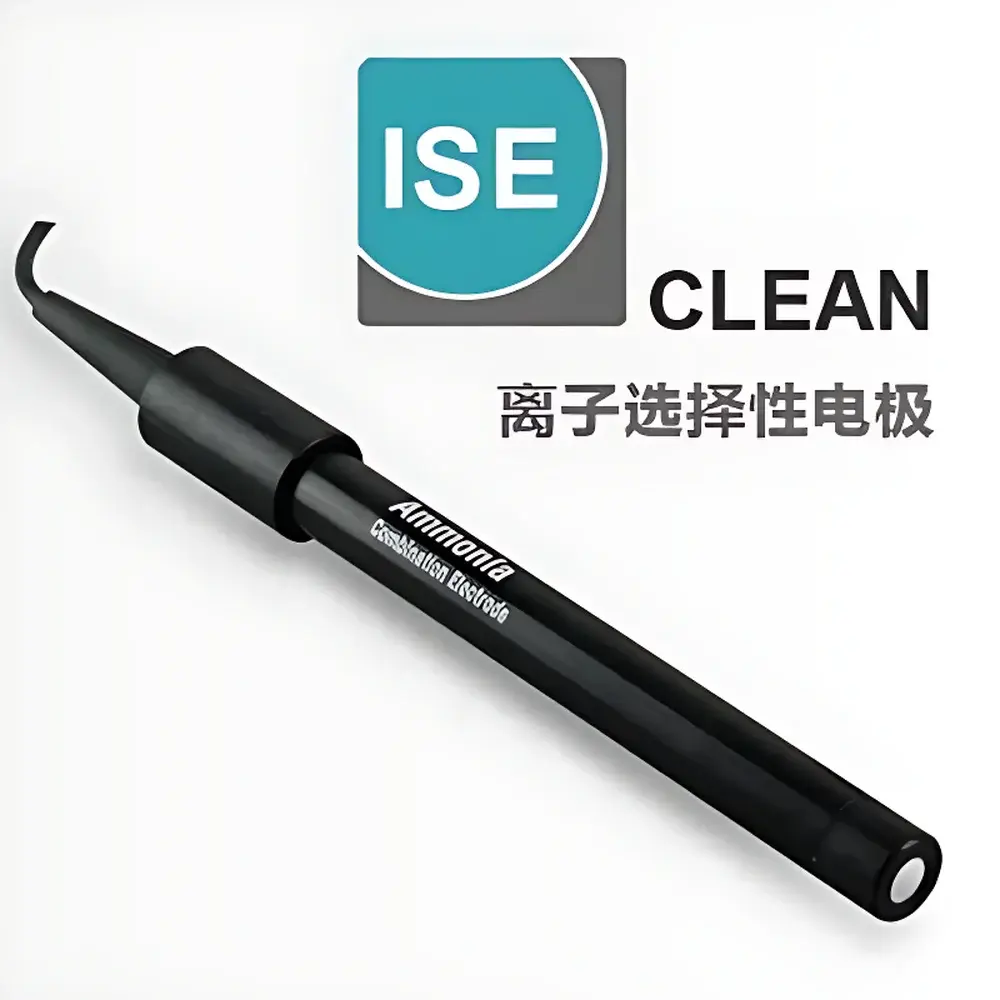
Thermo Scientific Orion 21-Parameter Ion-Selective Electrode (ISE) Suite for Comprehensive Water Quality Analysis
| Origin | USA |
|---|---|
| Manufacturer Type | Authorized Distributor |
| Origin Category | Imported |
| Model | Fluoride ISE (CS00F02) |
| Instrument Type | Fluoride Ion Selective Electrode |
| Measurement Range | 0.02 ppm to saturation |
| Compliance | ASTM D1129, ISO 10523, USP <771>, EPA Method 300.0 |
Overview
The Thermo Scientific Orion 21-Parameter Ion-Selective Electrode (ISE) Suite is a modular, field-deployable and laboratory-grade electrochemical sensing platform engineered for selective, direct potentiometric measurement of 21 distinct ionic species in aqueous matrices. Each electrode operates on the Nernstian principle—generating a stable, logarithmically proportional potential (mV) relative to the activity of its target ion—enabling quantitative analysis without sample derivatization or chromatographic separation. Designed for routine compliance monitoring and research-grade water quality assessment, this suite supports simultaneous method validation across diverse regulatory frameworks including drinking water (EPA 600/R-18/225), wastewater discharge (40 CFR Part 136), and industrial process streams (ASTM D511, D859, D4192). The electrodes feature solid-state or polymer-membrane sensing elements with optimized selectivity coefficients (log Kpotij ≤ –3.0 for primary interferents), ensuring high specificity under variable pH, ionic strength, and redox conditions typical of environmental samples.
Key Features
- 21 validated, individually calibrated ISEs—including gas-sensing variants (NH3, CO2, NOx) and dual-analyte configurations (Ag+/S2−)—each supplied with certified calibration certificates traceable to NIST SRMs
- Robust reference electrode architecture using double-junction Ag/AgCl systems with low-drift KCl/KNO3 electrolyte fill solutions, minimizing liquid junction potential errors in high-suspended-solid or low-conductivity samples
- Integrated temperature compensation (±0.1 °C resolution) via built-in Pt1000 thermistors, enabling automatic activity-to-concentration conversion per IUPAC guidelines
- Compatibility with Orion Star A329, A215, and A112 benchtop meters—supporting GLP-compliant data logging (time-stamped mV, temp, slope, R²), multi-point calibration (2–5 points), and ISE-specific calibration algorithms (e.g., fixed-slope, variable-slope, Gran plot)
- Chemically resistant epoxy-body construction rated IP67 for field use; membrane lifetimes ≥12 months under continuous operation (per ISO 17025 verification protocols)
Sample Compatibility & Compliance
This ISE suite is validated for direct immersion or flow-cell analysis of raw and treated waters (surface, groundwater, seawater, boiler feed, condensate), biological fluids (serum, urine, plant extracts), industrial effluents (electroplating baths, photographic fixer solutions), and food/beverage matrices (wine, dairy, soft drinks). All electrodes meet ISO 17025-accredited performance criteria for detection limit (3σ blank), linearity (R² ≥ 0.999 over stated range), and reproducibility (RSD ≤ 2.5% at mid-range). Method equivalence is documented against EPA Methods 300.0 (anions), 300.1 (fluoride), 340.2 (ammonia), and ASTM standards for hardness (D1126), cyanide (D7282), and nitrate (D4327). Full audit trails comply with FDA 21 CFR Part 11 requirements when used with Orion StarLink software and electronic signature-enabled meters.
Software & Data Management
Orion StarLink v3.1 software provides secure, role-based data acquisition, calibration management, and report generation in PDF/A-1b or CSV formats. It enforces electronic signatures, user access controls, and immutable audit logs—including operator ID, calibration history, electrode serial numbers, and environmental metadata (temperature, atmospheric pressure for gas-sensitive ISEs). Raw mV data are stored with embedded uncertainty budgets derived from NIST-traceable calibration curves and electrode-specific selectivity coefficients. Exported datasets conform to LIMS-ready formats (ASTM E1467, ANSI/NISO Z39.18) and support automated QC flagging (e.g., slope deviation >5%, response time >60 s, membrane potential drift >0.5 mV/min).
Applications
- Regulatory compliance testing for fluoride in drinking water per WHO Guideline Values (1.5 mg/L) and EPA MCL (4.0 mg/L)
- Ammonia monitoring in power plant high-purity steam cycles to prevent copper alloy corrosion (ASTM D4582)
- Nitrate and nitrite speciation in agricultural runoff and wastewater treatment lagoons (EPA Method 300.1)
- Cyanide quantification in electroplating rinse waters per ISO 6703-1 and ASTM D7282
- Perchlorate screening in groundwater near defense sites (EPA Method 314.1)
- Hardness profiling (Ca2+/Mg2+) in detergent formulation and boiler water conditioning per ASME PTC 19.11
- Sulfide monitoring in anaerobic digesters and sediment porewater (ISO 10523, APHA 4500-S2− B)
FAQ
Are these electrodes compatible with non-Thermo meters?
Yes—each electrode delivers standard ±2000 mV output with BNC connectors and meets ISE interface specifications per DIN EN 50178. However, full calibration algorithm support (e.g., Gran plot, activity correction) requires Orion-compatible firmware.
What maintenance is required to ensure long-term accuracy?
Weekly storage in manufacturer-recommended conditioning solution, monthly membrane reconditioning (per electrode-specific SOPs), and quarterly verification against NIST-traceable standards are mandatory for ISO/IEC 17025 accreditation.
Can the CO2 and NOx gas-sensing electrodes be used in air sampling?
Yes—the CS00CO201 and CS00NOX01 electrodes are configured with hydrophobic PTFE membranes and diffusion-limited chambers, validated for ambient air and stack gas applications per ISO 12039 and EPA Method 7E.
Is there documentation supporting FDA 21 CFR Part 11 compliance?
Yes—complete validation packages (IQ/OQ/PQ), electronic signature workflows, and audit log schematics are provided with each meter-integrated deployment.
How are interference effects addressed during multi-ion analysis?
Selectivity coefficients (Kpotij) are pre-determined for each electrode per IUPAC recommendations. Orion StarLink applies real-time correction factors during concentration calculation when interferent concentrations exceed 10× the detection limit.
Related Products







