
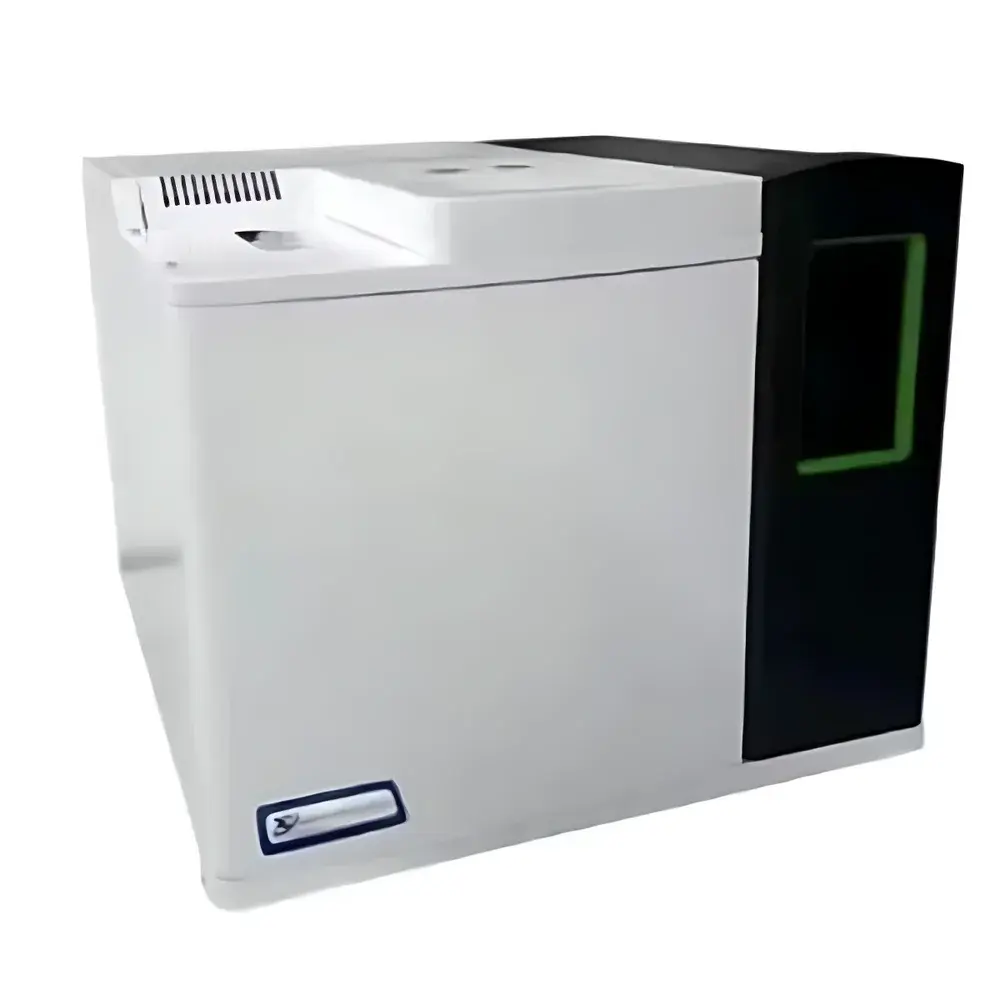
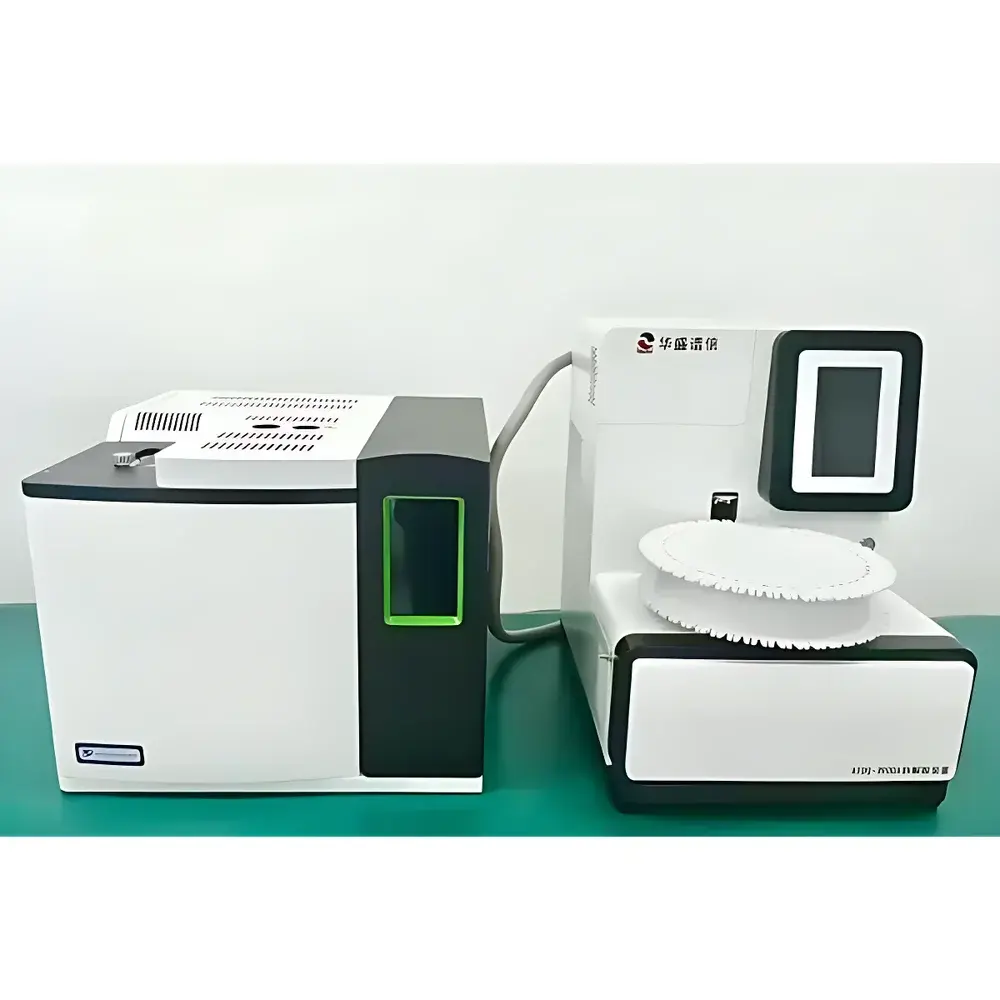
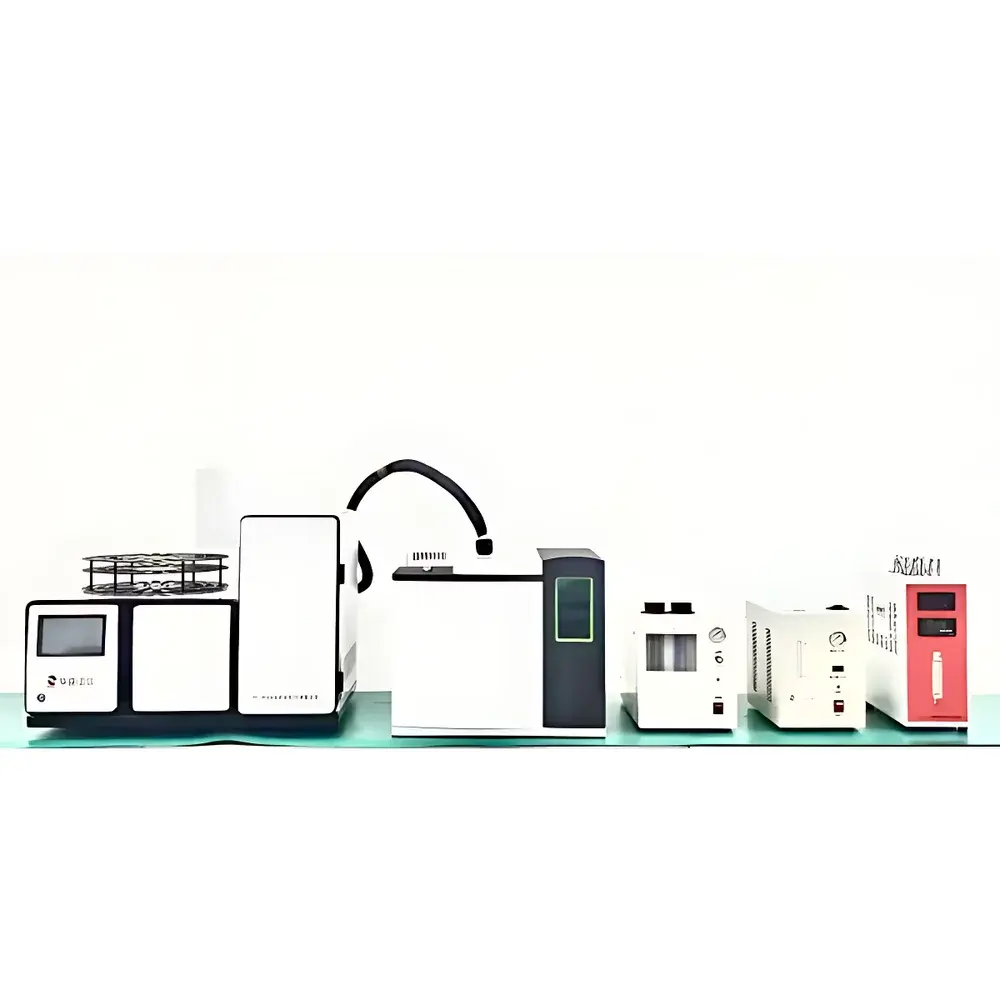
HSPX GC-9100Plus Laboratory Gas Chromatograph
| Brand | HSPX |
|---|---|
| Origin | Beijing, China |
| Manufacturer Type | Original Equipment Manufacturer (OEM) |
| Instrument Type | Benchtop Laboratory Gas Chromatograph |
| Application Scope | General-Purpose Analytical Chemistry |
| Oven Temperature Range | 4 °C to 450 °C |
| Oven Ramp Rate | 0.1–39 °C/min (Standard Mode) |
| Oven Cool-Down Time | ~6 min (from 450 °C to 50 °C) |
| Carrier Gas Flow Range & Control | 0–1000 mL/min |
| Carrier Gas Pressure Range & Control | 0–970 kPa |
| Injector Maximum Operating Temperature | 400 °C |
| Injector Pressure Setting Range | 0–970 kPa |
| Injector Total Flow Setting Range | 0–1200 mL/min |
| FID Detection Limit | ≤3×10⁻¹² g/s (n-hexadecane in iso-octane) |
| FID Baseline Noise | ≤5×10⁻¹⁴ A |
| FID Baseline Drift | ≤1×10⁻¹³ A/30 min |
| FID Linear Dynamic Range | ≥10⁶ |
Overview
The HSPX GC-9100Plus is a fully programmable, benchtop laboratory gas chromatograph engineered for precision separation and quantitative analysis of volatile and semi-volatile organic compounds. Based on the fundamental principle of differential partitioning between a mobile phase (inert carrier gas) and a stationary phase (capillary or packed column), the system achieves high-resolution elution through precise thermal programming and pressure/flow control. Designed for routine QC/QA, environmental monitoring, petrochemical screening, and pharmaceutical impurity profiling, the GC-9100Plus integrates robust hardware architecture with modular detector support—including standard configuration with flame ionization detection (FID)—to deliver reproducible retention times, accurate peak integration, and long-term baseline stability under regulated laboratory conditions.
Key Features
- Thermally stabilized oven with dual-zone temperature control (±0.01 °C stability) and rapid heating/cooling capability—achieving 450 °C to 50 °C cooldown in approximately six minutes.
- Programmable temperature ramping from 0.1 °C/min up to 80 °C/min, enabling flexible method development for complex matrices requiring fast elution or extended low-temperature hold periods.
- Digital electronic pressure control (EPC) for both inlet and detector gas lines, ensuring consistent flow profiles across multi-method sequences and minimizing retention time drift.
- Split/splitless injection system with adjustable inlet pressure (0–970 kPa) and total flow (0–1200 mL/min), compatible with standard 0.53 mm, 0.32 mm, and 0.25 mm ID capillary columns.
- FID detector optimized for hydrocarbon sensitivity, featuring low-noise picoammeter electronics (<5×10⁻¹⁴ A), sub-picomolar detection limits, and linear response over six orders of magnitude—validated per ASTM D2887 and ISO 10301 protocols.
- Embedded microprocessor-based controller with real-time diagnostics, automatic leak detection, and self-calibrating valve sequencing to reduce operator dependency and enhance method transferability.
Sample Compatibility & Compliance
The GC-9100Plus accommodates liquid, gaseous, and headspace-derived samples via standard syringe injection, auto-sampler interfaces (optional), or purge-and-trap modules. It supports common GC-compatible solvents (e.g., hexane, methanol, dichloromethane), derivatized analytes, and thermally labile compounds within its defined operating envelope (injector ≤400 °C; oven ≤450 °C). The instrument conforms to key regulatory expectations for analytical instrumentation: hardware design supports audit trails, user-access controls, and electronic record integrity per FDA 21 CFR Part 11 when operated with compliant data systems. Method parameters are stored with timestamped metadata, facilitating GLP/GMP documentation and ISO/IEC 17025-compliant validation workflows.
Software & Data Management
The GC-9100Plus operates with vendor-supplied chromatography data system (CDS) software compatible with Windows OS environments. The interface provides full instrument control—including oven programming, inlet/detector parameter setting, and sequence scheduling—as well as integrated peak detection, calibration curve generation (linear, quadratic, weighted), and report export in PDF, CSV, and XML formats. Raw data files adhere to ANDI/NetCDF standards for cross-platform compatibility with third-party processing tools (e.g., OpenChrom, Chromeleon). Audit trail functionality logs all method edits, run executions, and user logins with immutable timestamps—essential for laboratories undergoing regulatory inspection or internal quality audits.
Applications
- Environmental analysis: BTEX, PAHs, chlorinated solvents, and pesticide residues in water, soil, and air samples.
- Petrochemical QA: Hydrocarbon group-type analysis (HTA), gasoline PIONA profiling, and refinery stream composition verification.
- Pharmaceutical testing: Residual solvent quantification per ICH Q3C guidelines; assay purity assessment of APIs and intermediates.
- Food & flavor chemistry: Volatile aroma compound profiling, lipid oxidation marker detection (e.g., hexanal), and ethanol content verification.
- Forensic toxicology: Screening for drugs of abuse, accelerants, and volatile metabolites in biological matrices.
FAQ
Is the GC-9100Plus compliant with FDA 21 CFR Part 11 requirements?
Yes—when used with validated CDS software and configured with role-based access control, electronic signatures, and enabled audit trail logging, the system meets foundational elements of Part 11 for electronic records and signatures.
Can the instrument be upgraded to support additional detectors?
Yes—the GC-9100Plus features standardized detector bays and gas routing manifolds compatible with optional thermal conductivity (TCD), electron capture (ECD), and nitrogen-phosphorus (NPD) detectors, subject to factory calibration and firmware updates.
What column dimensions and phases are supported?
Standard configurations support fused-silica capillary columns ranging from 10 m to 60 m in length, 0.10 mm to 0.53 mm internal diameter, and film thicknesses from 0.1 µm to 5.0 µm—including polydimethylsiloxane (PDMS), cyanopropylphenyl, and wax-based stationary phases.
Does the system include validation documentation?
Factory-installed IQ/OQ documentation packages are available upon request, including temperature uniformity mapping, retention time repeatability testing, and FID performance verification against certified reference standards.
Is remote monitoring or network integration possible?
The instrument supports Ethernet TCP/IP communication and can be integrated into local area networks for centralized monitoring, method sharing, and automated data archiving via LIMS interfaces.



