
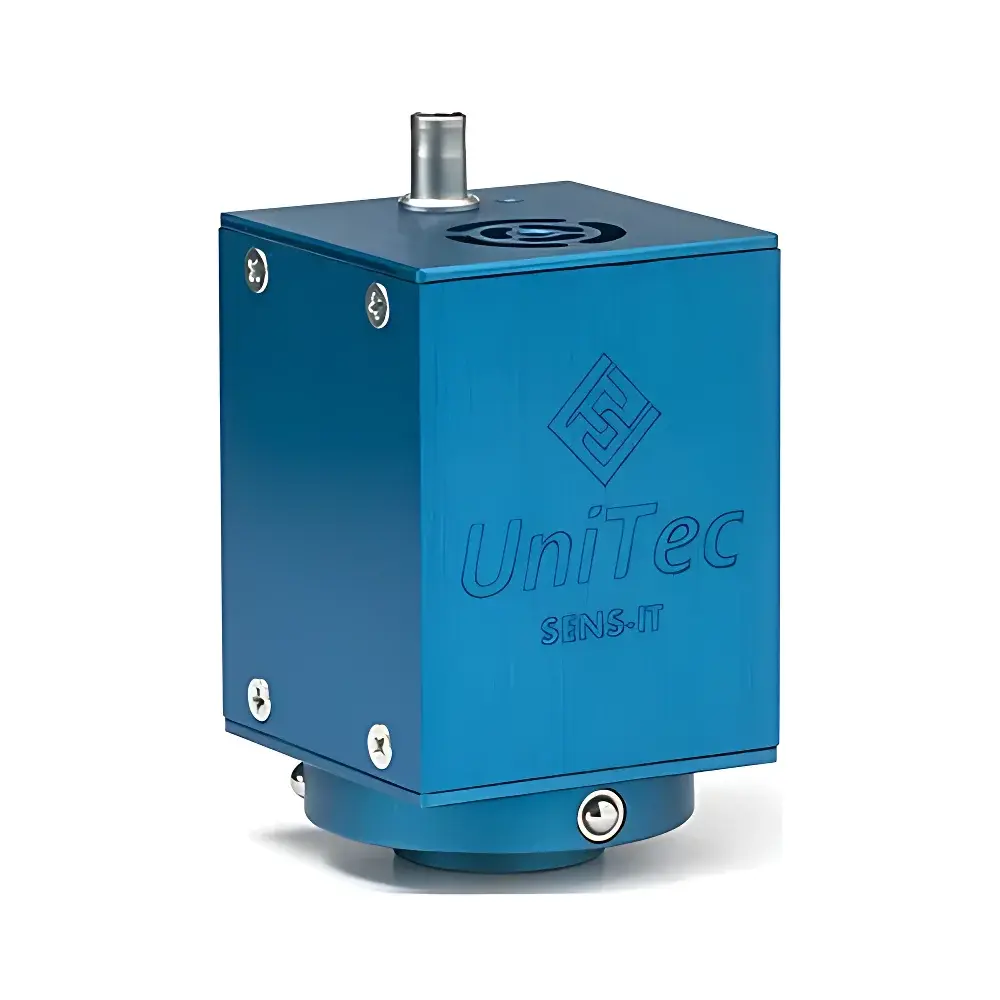
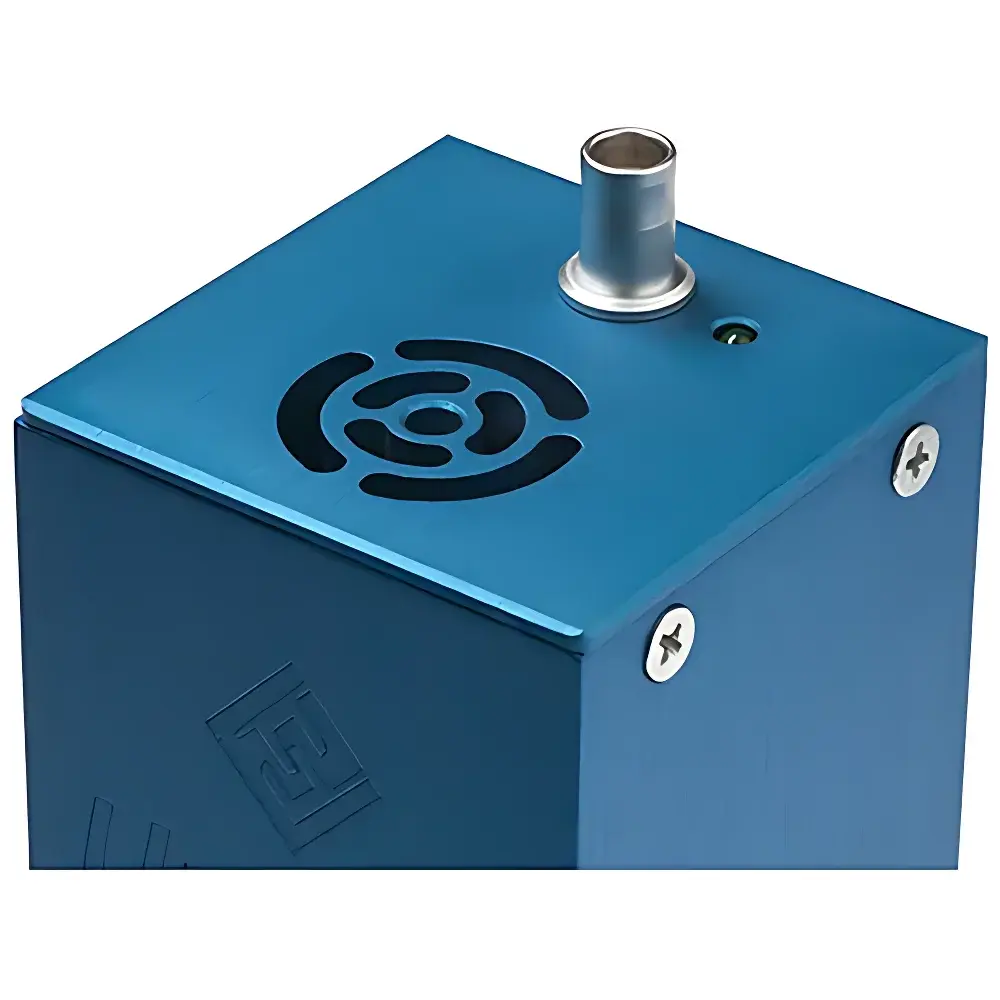
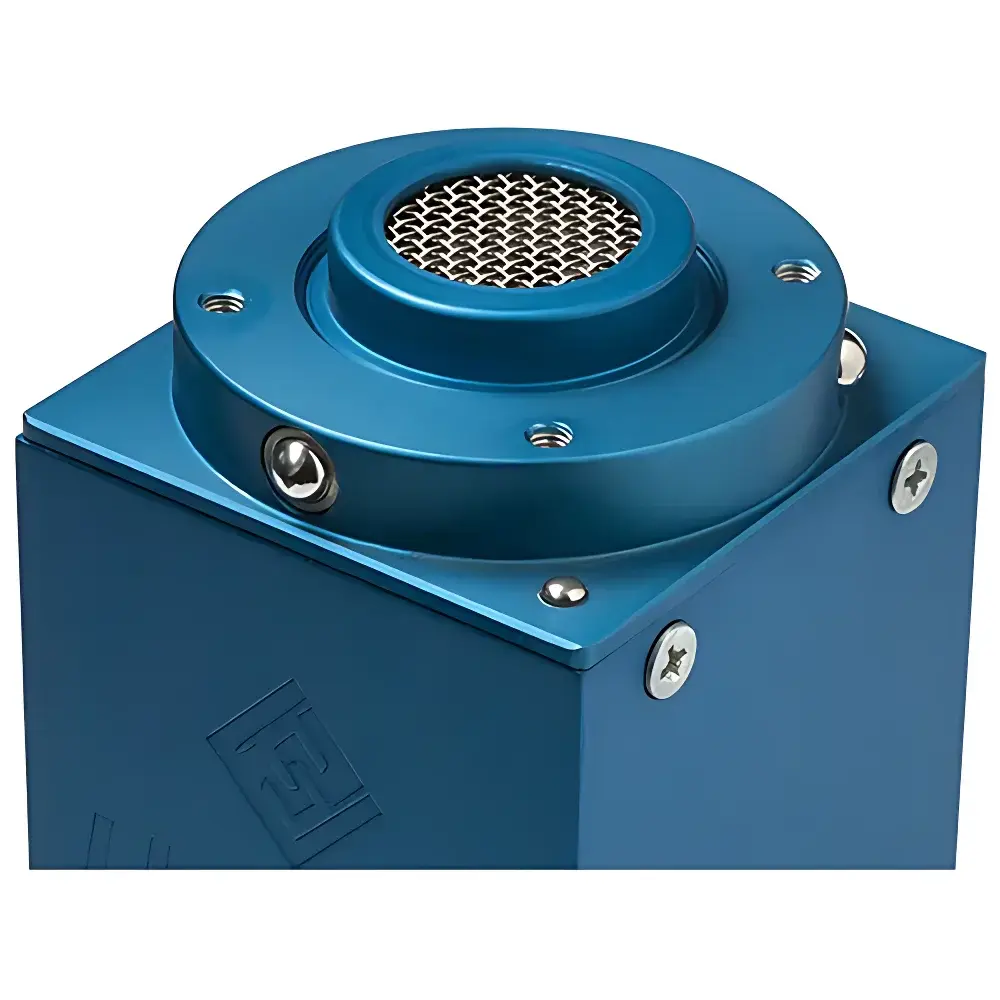
UNITEC SENS-IT Thick-Film Solid-State Gas Sensor
| Brand | UNITEC |
|---|---|
| Origin | Italy |
| Model | SENS-IT |
| Detection Principles | TF-MOS (CO, NO₂, O₃, C₆H₆, CH₄) / EC (NH₃, SO₂, H₂S, VOC) / IR (CO₂) |
| Measurement Range | CO: 0.1–80 ppm |
| NO₂/O₃ | 10–250 ppb |
| C₆H₆ | 0.1–30 ppb |
| CH₄ | 1–1,500 ppm |
| NH₃ | 7–100 ppm |
| SO₂/H₂S | 5–10,000 ppb / 2–3,000 ppb |
| VOC | 0.6–25 ppm |
| CO₂ | 10–5,000 ppm |
| Accuracy | ±0.2 ppm (CO), ±10 ppb (NO₂/O₃), ±0.3 ppm (NH₃), ±20 ppb (SO₂), ±15 ppb (H₂S), ±0.1 ppm (VOC), ±50 ppm (CO₂) |
| Resolution | 0.1 ppm / 1 ppb / 0.1 ppm as applicable |
| Output | 0–5 V analog + RS485 digital |
| Operating Temp | −20 to +50 °C |
| Humidity | 10–95% RH (non-condensing) |
| Dimensions | 50 × 50 × 90 mm (H) |
| Weight | ~200 g |
| Housing | Anodized aluminum alloy |
| Power | +12 VDC |
| Onboard Control | Digital thermal regulation, fan speed control, linearization, parameter configuration |
Overview
The UNITEC SENS-IT is a modular, multi-technology solid-state gas sensor platform engineered for long-term environmental monitoring in urban, industrial, and smart city applications. Unlike single-principle sensors, the SENS-IT integrates three complementary detection methodologies within a unified mechanical and electronic architecture: thick-film metal oxide semiconductor (TF-MOS) technology for reactive gases (CO, NO₂, O₃, benzene/C₆H₆, CH₄), electrochemical (EC) cells for toxic inorganic species (NH₃, SO₂, H₂S, broad-spectrum VOCs), and non-dispersive infrared (NDIR) absorption for CO₂ quantification. This hybrid design enables simultaneous, cross-validated measurement of up to nine regulated pollutants—without optical alignment, consumable electrolytes, or catalytic bead degradation. The TF-MOS sensing element features a nanostructured SnO₂-based thick film deposited on alumina substrates with integrated Pt microheaters; surface reactions follow a two-step charge-transfer mechanism: first, atmospheric oxygen chemisorption creates electron-depleted surface layers; second, target gas molecules react with adsorbed oxygen species, modulating conductivity proportionally to concentration. EC modules employ three-electrode configurations with acid-polymer electrolytes and selective catalytic electrodes, while the NDIR channel uses dual-wavelength reference compensation to eliminate drift from dust accumulation or aging. All transduction signals are digitized at source via a 16-bit ADC and processed by an embedded ARM Cortex-M4 CPU, ensuring metrological traceability and real-time compensation for temperature, humidity, and cross-sensitivity.
Key Features
- Multi-technology integration: Simultaneous deployment of TF-MOS, electrochemical, and NDIR sensing in a single compact housing (50 × 50 × 90 mm)
- Digital sensor management: Fully programmable via RS485 Modbus RTU—supports remote zero/span calibration, thermal profile adjustment, fan speed control, and output linearization
- Stable thick-film architecture: Nanostructured metal oxide layers exhibit no active surface consumption; typical baseline drift <2% per year under continuous operation
- Environmental resilience: IP65-rated anodized aluminum enclosure with thermostatically controlled forced-air cooling for stable operation across −20 to +50 °C and 10–95% RH (non-condensing)
- Regulatory readiness: Compliant with EU Directive 2008/50/EC requirements for indicative air quality measurements; supports audit-ready data logging with timestamped calibration events
- Plug-and-play interoperability: Standard 0–5 V analog output and RS485 interface enable seamless integration into SCADA systems, LoRaWAN gateways, and OEM data loggers
Sample Compatibility & Compliance
The SENS-IT is validated for ambient air matrix analysis in accordance with EN 14625 (electrochemical sensors), EN 14626 (metal oxide sensors), and ISO 12039 (NDIR CO₂). Its TF-MOS elements demonstrate selectivity ratios >100:1 against common interferents (e.g., H₂ vs. CO; ethanol vs. benzene) when operated at optimized microheater temperatures (250–400 °C). Electrochemical modules meet IEC 62209-2 sensitivity thresholds for NH₃ and H₂S in low-concentration urban settings. All firmware and calibration procedures support GLP-compliant operation, including electronic signature-capable audit trails, secure parameter locking, and version-controlled calibration certificates exportable in CSV/JSON. The device conforms to EMC Directive 2014/30/EU and Low Voltage Directive 2014/35/EU, with CE marking valid for fixed and mobile deployment scenarios.
Software & Data Management
UNITEC provides the SENS-IT Configuration Suite—a Windows/Linux-compatible desktop application enabling full parametric control, real-time signal visualization, and firmware updates over RS485. Raw sensor outputs are corrected using factory-derived polynomial coefficients stored in non-volatile memory; users may import custom calibration matrices for site-specific interference compensation. Data streams support Modbus register mapping for integration with industry-standard platforms including Ignition SCADA, Node-RED, and AWS IoT Core. Optional cloud firmware (SENS-IT CloudLink) adds TLS 1.2 encryption, OTA updates, and configurable alert thresholds with email/SMS notification via MQTT. All calibration actions—including span gas exposure timestamps, operator ID, and environmental conditions—are logged with SHA-256 hash integrity verification, satisfying FDA 21 CFR Part 11 requirements for electronic records in regulated environmental reporting.
Applications
- Urban ambient air quality networks: Deployment along traffic corridors, near schools, and residential zones for compliance monitoring per EU Air Quality Directive
- Industrial fence-line monitoring: Continuous detection of fugitive emissions (NH₃, SO₂, VOCs) at refinery perimeters, chemical storage yards, and wastewater treatment plants
- Smart city infrastructure: Integration into streetlight-mounted nodes, bus shelters, and municipal kiosks for hyperlocal pollution mapping
- Mobile monitoring platforms: Mounted on drones, electric vehicles, or backpack systems for spatially resolved emission source identification
- Indicative assessment per Annex XI of Directive 2008/50/EC: Cost-effective validation of modeling outputs and supplementary data collection where reference-grade analyzers are impractical
FAQ
Does the SENS-IT require periodic replacement of sensing elements?
No. TF-MOS and NDIR components are solid-state with no consumables; electrochemical cells have a nominal service life of 24 months under continuous operation at 25 °C and may be field-replaced without recalibration.
Can multiple SENS-IT units be daisy-chained on a single RS485 bus?
Yes. Each unit supports unique Modbus slave addressing (default range 1–247); up to 32 nodes operate reliably over distances up to 1,200 m with proper termination and shielding.
Is factory calibration traceable to national standards?
Yes. All calibration certificates reference NIST-traceable gas standards (e.g., NIST SRM 1662 for CO, CRM 112a for NO₂) and include uncertainty budgets per GUM (JCGM 100:2008).
How is humidity cross-sensitivity compensated?
Integrated capacitive RH sensor feeds real-time correction coefficients into the onboard algorithm; humidity-induced signal drift is reduced to <±3% of reading across 10–95% RH.
What maintenance is required for long-term field deployment?
Annual visual inspection of inlet filter and fan performance; biannual verification against certified span gas; no routine cleaning or reconditioning of sensing surfaces is necessary.







