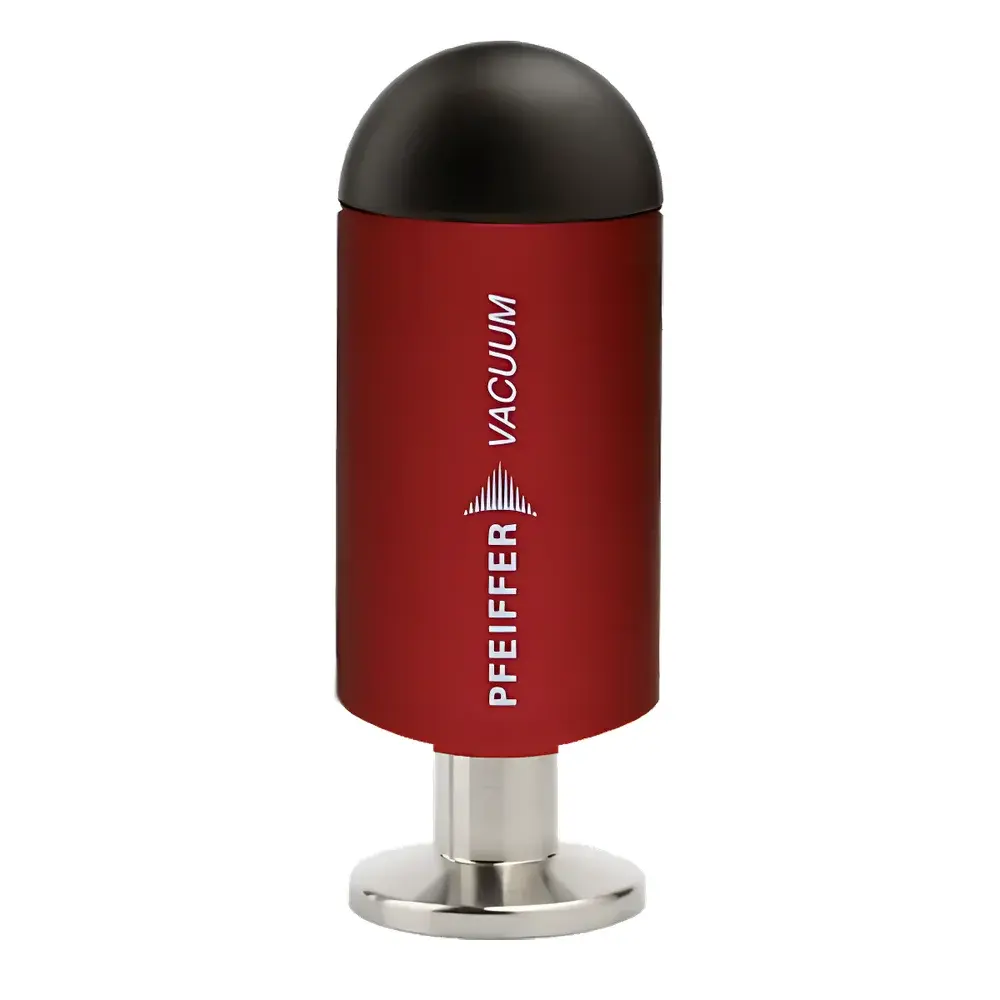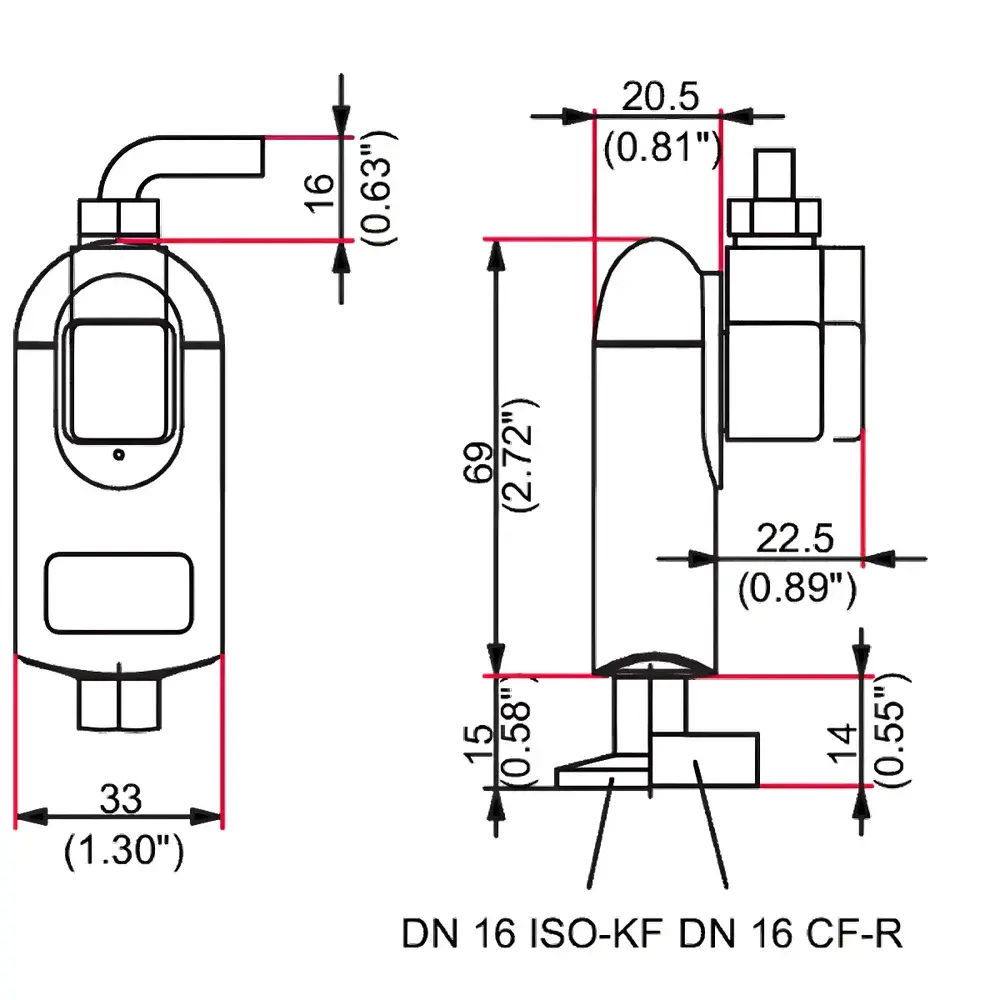
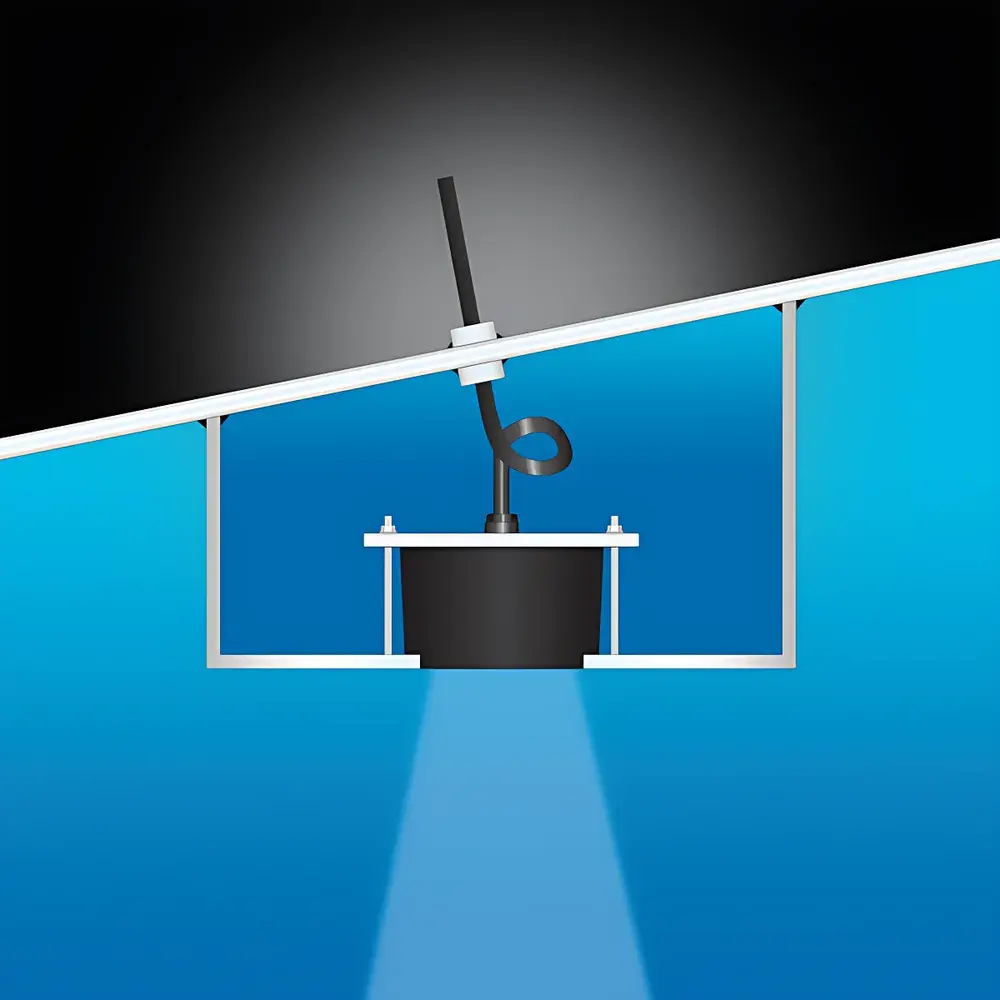
AIRMAR CM265LH Dual-Frequency Chirp Through-Hull Depth Sounder
| Brand | AIRMAR |
|---|---|
| Origin | USA |
| Model | CM265LH |
| Transducer Type | Dual-beam Chirp Through-Hull |
| Operating Frequency Bands | Low-band 42–65 kHz (beamwidth 25°–16°), High-band 130–210 kHz (beamwidth 10°–6°) |
| Total Bandwidth | 103 kHz |
| Output Power | 1000 W |
| Depth Range | Up to 3000 m (10,000 ft) |
| Temperature Sensor | Integrated fast-response thermistor |
| Hull Compatibility | Fiberglass or wood |
| Mounting | Wet-mount through-hull with flanged edge design |
| Housing Material | Polyurethane encapsulation |
| Cable Length | 10 m |
| Weight | 6.07 kg |
| Compliance | CE, FCC, ROHS |
| Software Interface | NMEA 2000 / NMEA 0183 output |
Overview
The AIRMAR CM265LH is a dual-frequency, wideband Chirp through-hull depth sounder engineered for high-fidelity hydroacoustic profiling in commercial and research marine environments. Unlike conventional pulsed-echo sonars, the CM265LH employs swept-frequency (Chirp) signal transmission across two distinct, non-overlapping bands—low-band (42–65 kHz) and high-band (130–210 kHz)—enabling simultaneous acquisition of deep-penetration bathymetric data and high-resolution target discrimination. Its physics-based architecture leverages pulse compression and matched filtering to achieve up to 10× improvement in range resolution and signal-to-noise ratio compared to fixed-frequency echosounders operating at 50 kHz or 200 kHz alone. This enables unambiguous separation of closely spaced biological targets—including baitfish schools, pelagic game species, and benthic structural features—within complex water columns. Designed for permanent wet-mount installation, the transducer integrates a calibrated, fast-response thermistor for concurrent water temperature measurement—critical for sound velocity correction and accurate depth calculation per ISO 17025-compliant hydrographic workflows.
Key Features
- Dual-band Chirp architecture delivering co-registered low-frequency (deep penetration) and high-frequency (fine detail) echograms in real time
- Patented Xducer ID® technology enabling automatic transducer recognition and configuration by compatible chartplotters and multifunction displays
- Optimized beam geometry: low-band beamwidth narrows from 25° to 16° across its sweep; high-band compresses from 10° to 6°, minimizing side-lobe interference and improving angular resolution
- 1000 W peak acoustic output power with thermally stable Class-D drive electronics, supporting operation in turbid, cold, or saline conditions without performance drift
- Through-hull mounting system with reinforced polyurethane housing and flanged edge seal—rated for continuous submersion and compliant with ABYC H-24 and ISO 8846 marine electrical safety standards
- NMEA 2000 certified interface (with built-in termination) for seamless integration into vessel networks; also supports legacy NMEA 0183 v3.01 for analog depth/temperature output
Sample Compatibility & Compliance
The CM265LH is validated for deployment on fiberglass and wooden hulls with minimum thickness of 12 mm (0.47 in) and maximum deadrise angle of 22°. It is not rated for aluminum, steel, or cored composite hulls without supplemental acoustic coupling assessment. The transducer meets IEC 60945 maritime equipment requirements for electromagnetic compatibility (EMC), vibration resistance (IEC 60068-2-64), and thermal stability (-10°C to +55°C ambient). All firmware and calibration data are traceable to NIST-traceable reference standards. For regulatory compliance in survey-grade applications, the device supports optional GLP audit trails when interfaced with certified hydrographic data loggers compliant with IHO S-44 Special Order specifications.
Software & Data Management
Raw echo data is streamed via NMEA 2000 PGNs 128267 (Depth Below Transducer), 130311 (Water Temperature), and proprietary AIRMAR PGNs for Chirp envelope and spectral metadata. Third-party software platforms—including SonarTRX, QPS Qimera, and Teledyne CARIS HIPS—support direct ingestion of CM265LH-derived .svs and .raw files for post-processed bottom classification, biomass estimation, and multibeam fusion. Firmware updates are delivered via AIRMAR’s secure web portal and require no hardware modification. Data integrity is maintained through CRC-32 checksum validation on all transmitted frames, satisfying FDA 21 CFR Part 11 requirements for electronic records when deployed in regulated aquaculture monitoring systems.
Applications
- Commercial fishing vessel bottom mapping and target identification for selective harvest operations
- Coastal habitat assessment including seagrass bed delineation, oyster reef characterization, and artificial reef monitoring
- Hydrographic survey support for nautical chart updates under NOAA and IHO mandates
- Aquaculture site selection and environmental baseline studies requiring concurrent depth and thermal profiling
- Academic fisheries acoustics research involving species-specific target strength modeling and swim bladder resonance analysis
- Marine salvage and underwater infrastructure inspection where high lateral resolution is required at depths exceeding 1,000 m
FAQ
Does the CM265LH support integration with existing marine network architectures?
Yes—it is fully NMEA 2000 certified (Device Class: Depth Sounder) and includes internal termination resistors. It interoperates with Raymarine, Garmin, Furuno, Simrad, and Lowrance MFDs without external gateways.
Is calibration required before first use?
No factory recalibration is needed; however, sound velocity input must be configured based on local salinity and temperature for optimal depth accuracy. AIRMAR provides an online sound speed calculator compliant with UNESCO 1983 algorithm.
Can this transducer be used on planing hulls traveling above 35 knots?
Yes—the optimized hydrodynamic profile and rigid polyurethane housing minimize cavitation onset up to 42 knots under typical sea states (Beaufort 3–4).
What is the warranty coverage and service support structure?
AIRMAR offers a 24-month limited warranty covering materials and workmanship. Global service centers in the US, UK, Singapore, and Australia provide repair turnaround within 10 business days for covered failures.
Are raw IQ data streams accessible for custom signal processing?
Yes—via optional AIRMAR SDK (available under NDA), developers can access time-synchronized I/Q samples at 2.5 MHz sampling rate for adaptive beamforming, Doppler analysis, or machine learning–based classification pipelines.