
Hukseflux SR22 Secondary Standard Pyranometer
| Brand | Hukseflux |
|---|---|
| Origin | Netherlands |
| Model | SR22 |
| ISO 9060 Classification | Secondary Standard |
| Spectral Range | 190–4000 nm |
| Calibration Uncertainty | < 1.7 % (k = 2) |
| Zero Offset (unventilated) | < 5 W/m² |
| Zero Offset (ventilated) | < 2.5 W/m² |
| Measurement Range | 0–4000 W/m² |
| Sensitivity | 15 × 10⁻⁶ V/(W/m²) |
| Operating Temperature | −40 to +80 °C |
| Temperature Response | < ±1 % (−10 to +40 °C) |
| Directional Response Report | Included |
| Temperature Dependence Characterization | Supplied as二次 polynomial per unit |
| Output Signal | Analog voltage |
| Supply Voltage | 8–30 VDC |
| Heater Power | 1.5 W @ 12 VDC |
| Cable Length | 5 m (extendable in 5 m increments) |
| Weight | 1 kg |
| Ingress Protection | IP67 |
| Integrated Temperature Sensor | Pt100 or 10 kΩ thermistor |
| Traceability | WRR (World Radiometric Reference) |
Overview
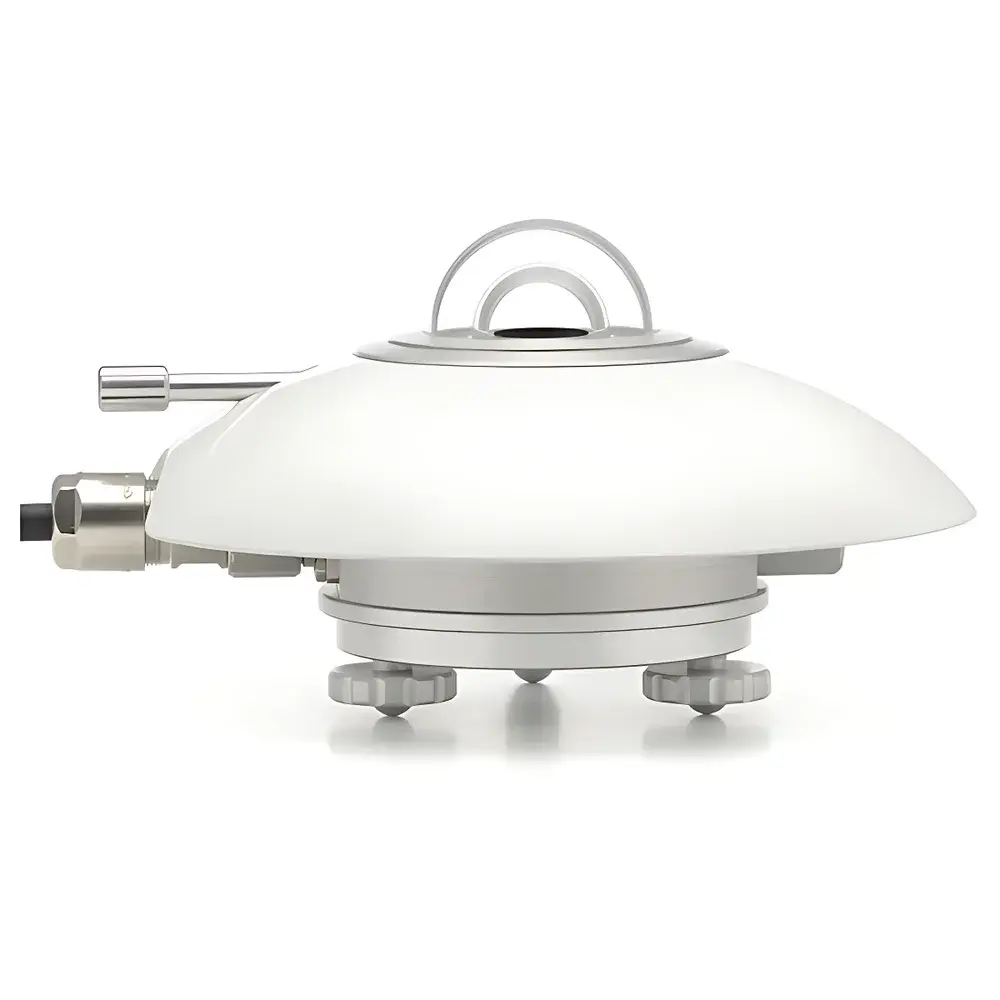
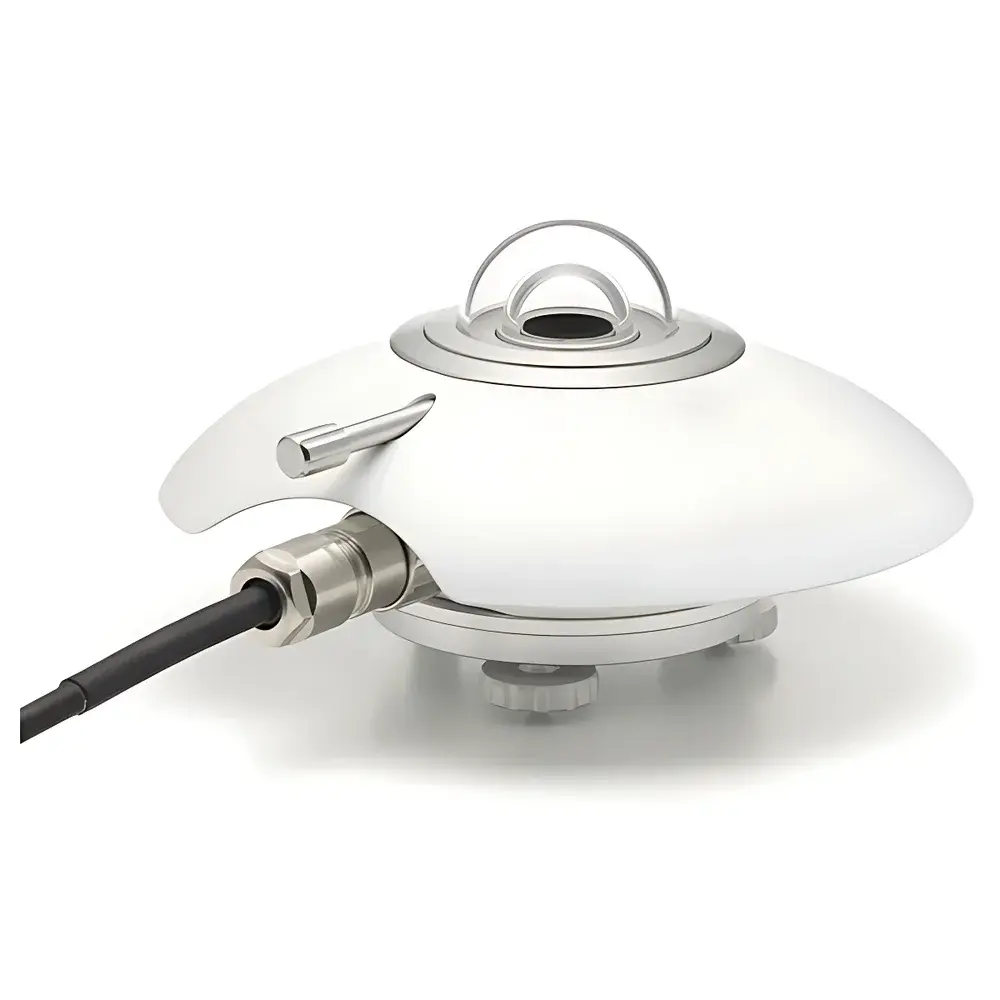
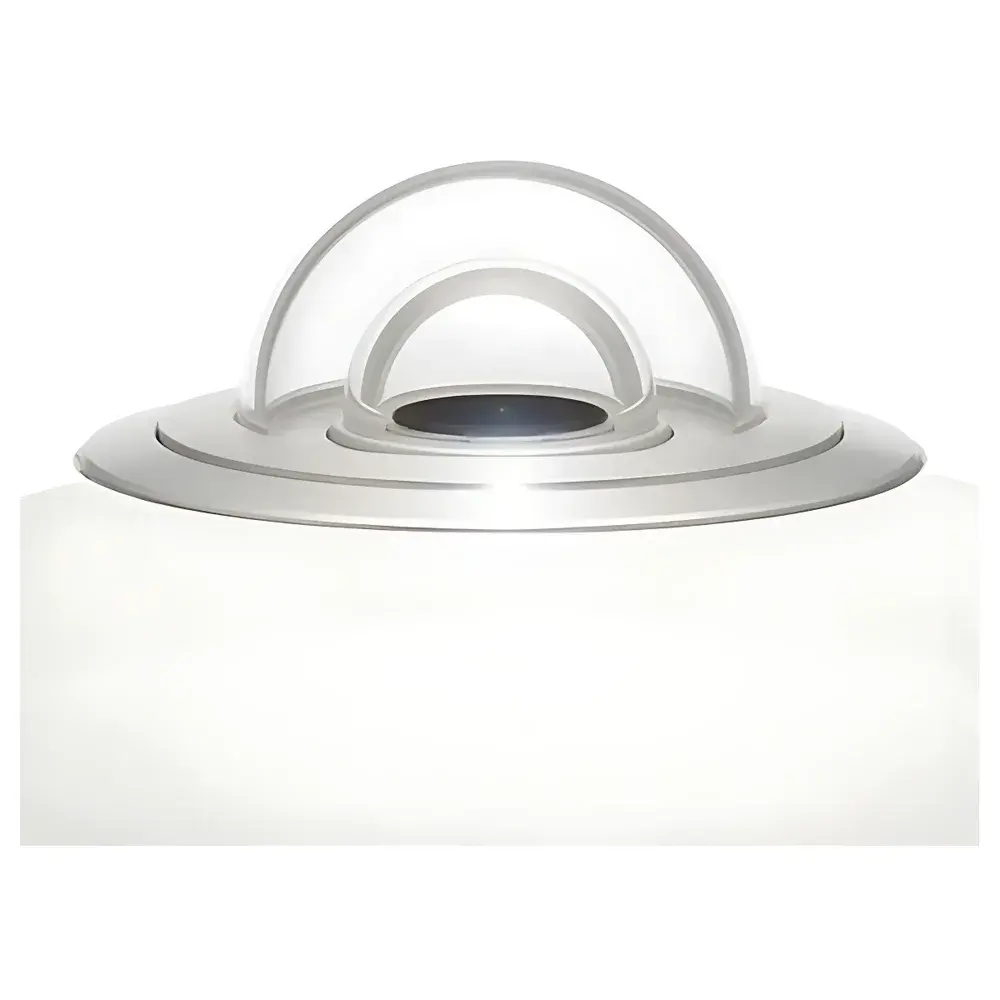
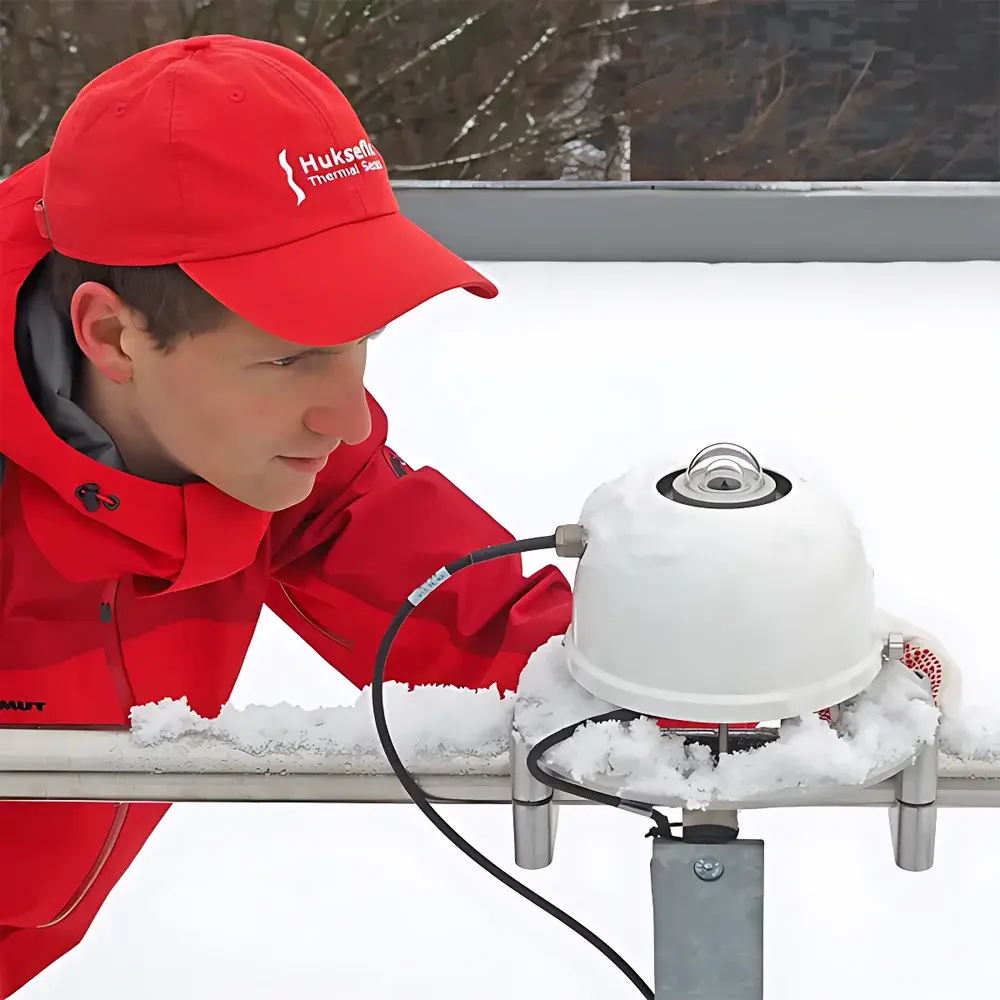
The Hukseflux SR22 is a secondary standard pyranometer engineered for high-accuracy solar irradiance measurement in demanding meteorological, climatological, and calibration applications. Designed and manufactured in the Netherlands, it complies fully with ISO 9060:2018 classification requirements for secondary standard instruments—ensuring traceability to the World Radiometric Reference (WRR) maintained at PMOD/WRC, Davos. Unlike conventional glass-dome pyranometers, the SR22 employs dual concentric domes fabricated from high-purity synthetic quartz. This optical architecture extends spectral responsivity from 190 nm to 4000 nm—fully encompassing the extraterrestrial solar spectrum (including the critical 3000–4000 nm near-infrared band), thereby minimizing spectral error and reducing calibration uncertainty. Its 180° field of view enables hemispherical integration of global horizontal irradiance (GHI), delivering measurements in SI-compliant units of W/m². The instrument incorporates an onboard temperature sensor (Pt100 or 10 kΩ thermistor) and a low-power heating element (1.5 W @ 12 VDC) to mitigate dew, frost, and snow accumulation—critical for continuous operation across polar, alpine, and tropical deployments.
Key Features
- ISO 9060:2018 secondary standard classification with WRR-traceable calibration certificate
- Dual quartz dome design enabling full solar spectral coverage (190–4000 nm), eliminating transmission gaps inherent in borosilicate glass
- Low zero-offset performance: < 5 W/m² (unventilated), < 2.5 W/m² (with ventilation)—optimized for low-irradiance conditions and nighttime stability
- Comprehensive thermal characterization: individual unit-specific quadratic temperature dependence coefficients supplied for post-processing correction
- Integrated Pt100 or 10 kΩ thermistor for simultaneous temperature monitoring—essential for uncertainty budgeting per GUM (JCGM 100)
- Robust mechanical construction: IP67-rated housing, stainless steel body, and hermetically sealed electronics for long-term outdoor reliability
- Low-power heater (1.5 W @ 12 VDC) and compatibility with the VU01 active ventilation unit to suppress convective errors and condensation effects
Sample Compatibility & Compliance
The SR22 is designed for permanent outdoor installation on meteorological masts, BSRN (Baseline Surface Radiation Network) stations, and reference radiometer intercomparison campaigns. Its spectral flatness (< ±2 % across 350–1500 nm) and directional response meet stringent requirements for climate-grade data acquisition. Each unit undergoes individual testing for temperature dependence, directional error, and nonlinearity—reports are provided with shipment. Compliance includes adherence to IEC 61724-1 (photovoltaic system monitoring), WMO Guide to Instruments and Methods of Observation (CIMO Guide), and supports GLP-aligned data quality assurance frameworks. While not intrinsically compliant with FDA 21 CFR Part 11, its analog output, calibration documentation, and uncertainty reporting support integration into validated environmental monitoring systems under GxP-regulated protocols where irradiance is a critical process parameter.
Software & Data Management
The SR22 delivers a linear analog voltage output (15 µV per W/m²), compatible with industry-standard data loggers (e.g., Campbell Scientific CR series, Delta-T DL2e, Onset HOBO). Hukseflux provides a dedicated Excel-based uncertainty calculator aligned with the JCGM 100:2008 “Guide to the Expression of Uncertainty in Measurement” (GUM), enabling users to quantify combined standard uncertainty for field deployments—including contributions from calibration, temperature dependence, directional response, and ventilation status. Raw output requires no firmware or proprietary software; however, Hukseflux offers optional configuration tools for VU01 ventilation control logic and heater duty-cycle optimization. All calibration certificates include serial-numbered traceability metadata, supporting audit-ready documentation for ISO/IEC 17025-accredited laboratories.
Applications
- Primary reference instrumentation in Baseline Surface Radiation Network (BSRN) and GCOS (Global Climate Observing System) stations
- Ground-truth validation of satellite-derived solar irradiance products (e.g., CM SAF, NASA POWER)
- Calibration transfer and intercomparison studies between primary standards (e.g., absolute cavity radiometers) and field-deployed sensors
- Long-term solar resource assessment in extreme environments: Arctic tundra, high-altitude observatories, and equatorial humid zones
- Performance monitoring of concentrating solar power (CSP) and photovoltaic (PV) test facilities requiring spectrally resolved GHI
- Research on atmospheric transmissivity, aerosol optical depth, and cloud radiative forcing
FAQ
Is the SR22 suitable for unventilated deployment?
Yes, but ventilation (e.g., via VU01) is strongly recommended to minimize convective heat loss errors and improve zero-offset stability—particularly under low-wind or high-humidity conditions.
What is the purpose of the onboard temperature sensor?
It enables real-time thermal correction using the unit-specific quadratic coefficients provided in the calibration report—reducing temperature-induced uncertainty by up to 70% in the −30 to +50 °C range.
Can the SR22 be used for spectral irradiance measurements?
No—it is a broadband pyranometer. While its extended quartz-transmitted spectrum improves broadband accuracy, it does not resolve spectral bands; use a spectroradiometer (e.g., Bentham DMc300) for spectral analysis.
How is calibration traceability ensured?
Each SR22 is calibrated against a WRR-traceable reference at the Hukseflux Calibration Laboratory, accredited to ISO/IEC 17025, with uncertainty budgets reported per GUM guidelines.
Is the heater always active?
No—the heater operates only when enabled via external control logic (e.g., based on humidity or temperature thresholds); its 1.5 W power draw minimizes energy demand in off-grid installations.







