
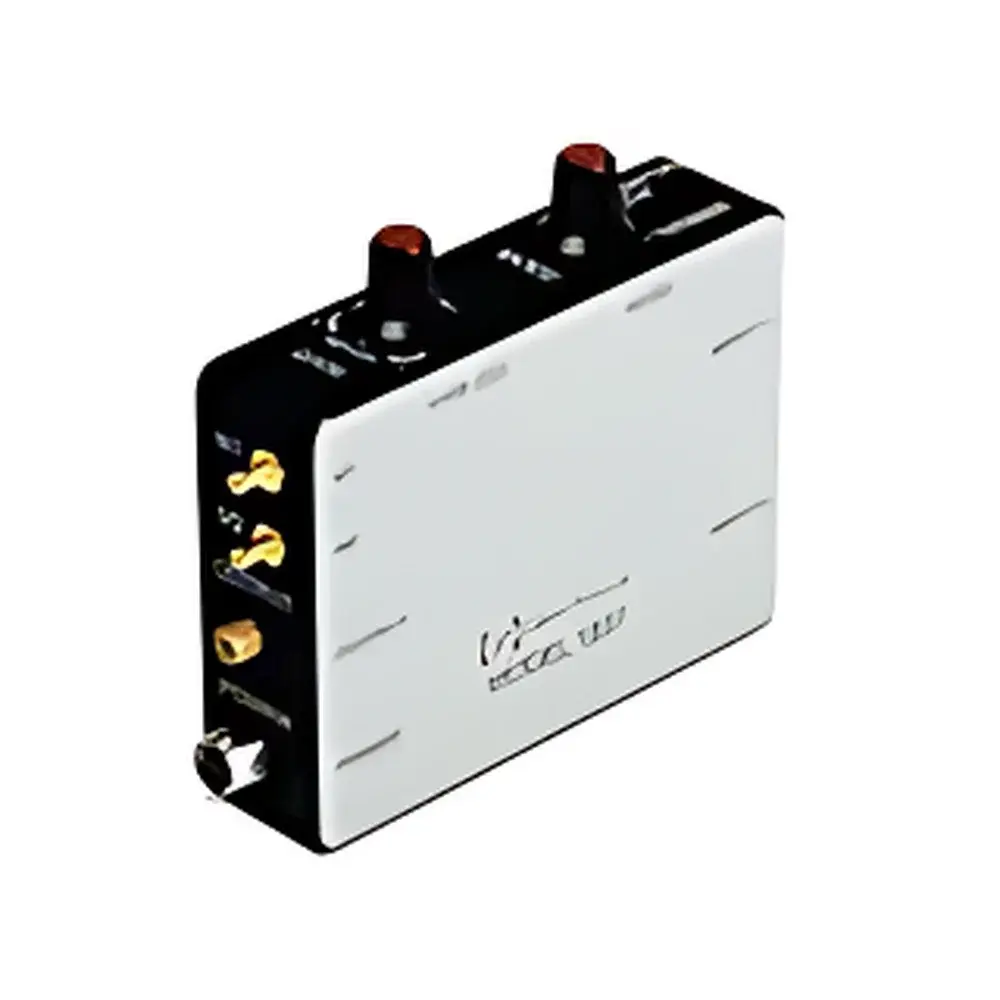
NewOpto Auto-Balanced Detector Model 2007 / 2017 / 1837
| Brand | NewOpto |
|---|---|
| Origin | USA |
| Type | Optical Instrument Component |
| Model | Auto-Balanced Detector |
| Wavelength Range | 400–1070 nm / 800–1700 nm / 900–1650 nm |
| Common-Mode Rejection Ratio (CMRR) | ≥50 dB (typ.), >21 dB @ 300 MHz (Model 1837) |
| Bandwidth (–3 dB) | 125 kHz / 125 kHz / 1 GHz (12 dB compression, Model 1837) |
| Rise Time | 3 µs / 3 µs / <1 ns |
| Max Conversion Gain | 5.2×10⁵ V/W / 1×10⁶ V/W / >30,000 V/W |
| Peak Responsivity | 0.5 A/W / 1 A/W / 0.75 A/W |
| Max Transimpedance Gain | 1×10⁶ V/A / 1×10⁶ V/A / >40,000 V/A |
| Output Impedance | 100 Ω / 100 Ω / 50 Ω |
| NEP | 3 pW/√Hz / 3 pW/√Hz / 15 pW/√Hz |
| Saturation Power (CW) | 1 mW / 0.5 mW / 1 mW (per input) |
| Detector Active Diameter | 2.5 mm / 1 mm / N.A. |
| Optical Input | FC & free-space / FC & free-space / FC/APC, single-mode |
| Output Connector | Male BNC / Male BNC / SMB |
| Power Supply | ±15 V, <300 mA / ±15 V, <300 mA / ±15 V, 200 mA |
Overview
The NewOpto Auto-Balanced Detector series (Models 2007, 2017, and 1837) is a precision optical receiver engineered for high-fidelity differential photodetection in demanding interferometric, spectroscopic, and quantum optics applications. Operating on the principle of balanced heterodyne or homodyne detection, these detectors suppress common-mode optical and electronic noise by actively maintaining DC balance between signal and reference photodiode arms—without compromising bandwidth, gain linearity, or dynamic range. Unlike passive balanced receivers, the auto-balancing circuitry continuously monitors and corrects offset drift in real time, ensuring stable zero-bias operation over extended measurement durations and varying thermal conditions. This architecture is particularly critical in low-light experiments where shot-noise-limited performance must be preserved, such as cavity ring-down spectroscopy (CRDS), dual-comb interferometry, and squeezed-state characterization.
Key Features
- Real-time automatic DC balance control with sub-millisecond response, eliminating manual nulling and reducing long-term drift to <±10 µV/hour
- Configurable operation modes: fully auto-balanced, manually adjustable balanced, or single-ended (via internal jumper selection)
- High common-mode rejection ratio (CMRR) ≥50 dB across DC–125 kHz (Models 2007/2017); Model 1837 achieves >21 dB up to 300 MHz with optimized RF layout
- Preserved transimpedance gain and bandwidth integrity—no trade-off between noise suppression and signal fidelity
- Low-noise, low-capacitance photodiode pairs matched to within ±2% responsivity and ±0.5% capacitance
- Integrated low-drift operational amplifiers with rail-to-rail output swing and EMI-hardened supply filtering
- Thermally stabilized housing with aluminum alloy chassis and conductive anodized finish for optimal RF shielding and thermal dissipation
Sample Compatibility & Compliance
The NewOpto Auto-Balanced Detectors support both free-space and fiber-coupled inputs, accommodating standard FC/PC, FC/APC, and SMA interfaces depending on model. The 2.5 mm active-area detector (Model 2007) is optimized for visible-to-NIR beam profiling and pump-probe setups; the 1 mm variant (Model 2017) enables higher spatial resolution in confocal configurations; Model 1837’s single-mode fiber input ensures diffraction-limited coupling efficiency for telecom-band applications (900–1650 nm). All units comply with IEC 61326-1:2013 for electromagnetic compatibility (EMC) in laboratory environments and meet RoHS 2015/863/EU material restrictions. Mechanical design adheres to ISO 10110-7 for optical surface quality and MIL-STD-810G for shock/vibration resilience during transport and benchtop integration.
Software & Data Management
While the detectors operate as analog front-end modules without embedded firmware, they are fully compatible with industry-standard data acquisition systems—including National Instruments PXIe platforms, Keysight DAQ970A, and Thorlabs Kinesis-compatible controllers. For traceable calibration workflows, NewOpto provides NIST-traceable responsivity certificates (per ANSI/NCSL Z540-1) and full spectral response curves (400–1700 nm, sampled at 5 nm intervals). When integrated into GLP/GMP-compliant laboratories, the devices support audit-ready documentation via optional calibration logs and version-controlled configuration records. Their analog output architecture ensures seamless compliance with FDA 21 CFR Part 11 when paired with validated acquisition software featuring electronic signatures and change-tracking capabilities.
Applications
- Ultra-sensitive absorption spectroscopy (e.g., CRDS, PAS, TDLAS) requiring >10⁸ dynamic range and sub-pW/√Hz noise floors
- Quantum optics experiments including Bell-state measurement, homodyne tomography, and continuous-variable quantum key distribution (CV-QKD)
- Interferometric sensing systems such as Mach-Zehnder and Michelson configurations used in gravitational wave prototype benches and MEMS displacement metrology
- Optical coherence tomography (OCT) backend receivers where phase stability and polarization insensitivity are critical
- Laser frequency stabilization loops utilizing Pound-Drever-Hall (PDH) error signals with high CMRR against intensity noise
- Industrial laser power monitoring in semiconductor lithography tools, where real-time common-mode rejection prevents false alarms from ambient light fluctuations
FAQ
What is the primary mechanism of common-mode noise rejection in these detectors?
The detector employs a feedback-controlled transimpedance amplifier topology that dynamically adjusts bias current to maintain equal photocurrents across the two matched photodiodes—thereby canceling intensity noise and power supply ripple before amplification.
Can the Model 1837 be used with multimode fiber inputs?
No—Model 1837 is designed exclusively for single-mode fiber (SMF-28 or equivalent) with FC/APC termination; using multimode fiber will degrade CMRR and introduce modal noise.
Is external power supply regulation required?
A clean, low-noise ±15 V DC supply with ripple <1 mVpp is recommended; onboard regulators provide additional filtering, but unregulated wall adapters may induce measurable 1/f noise in sub-kHz measurements.
How often should recalibration be performed for metrology-grade use?
Annual recalibration is advised for ISO/IEC 17025-accredited labs; for non-critical R&D use, verification against a calibrated reference detector every six months is sufficient.
Are custom wavelength calibrations available?
Yes—NewOpto offers application-specific responsivity mapping (including temperature-dependent curves) under contract service agreement, with delivery of certified calibration reports per ISO/IEC 17025 requirements.



