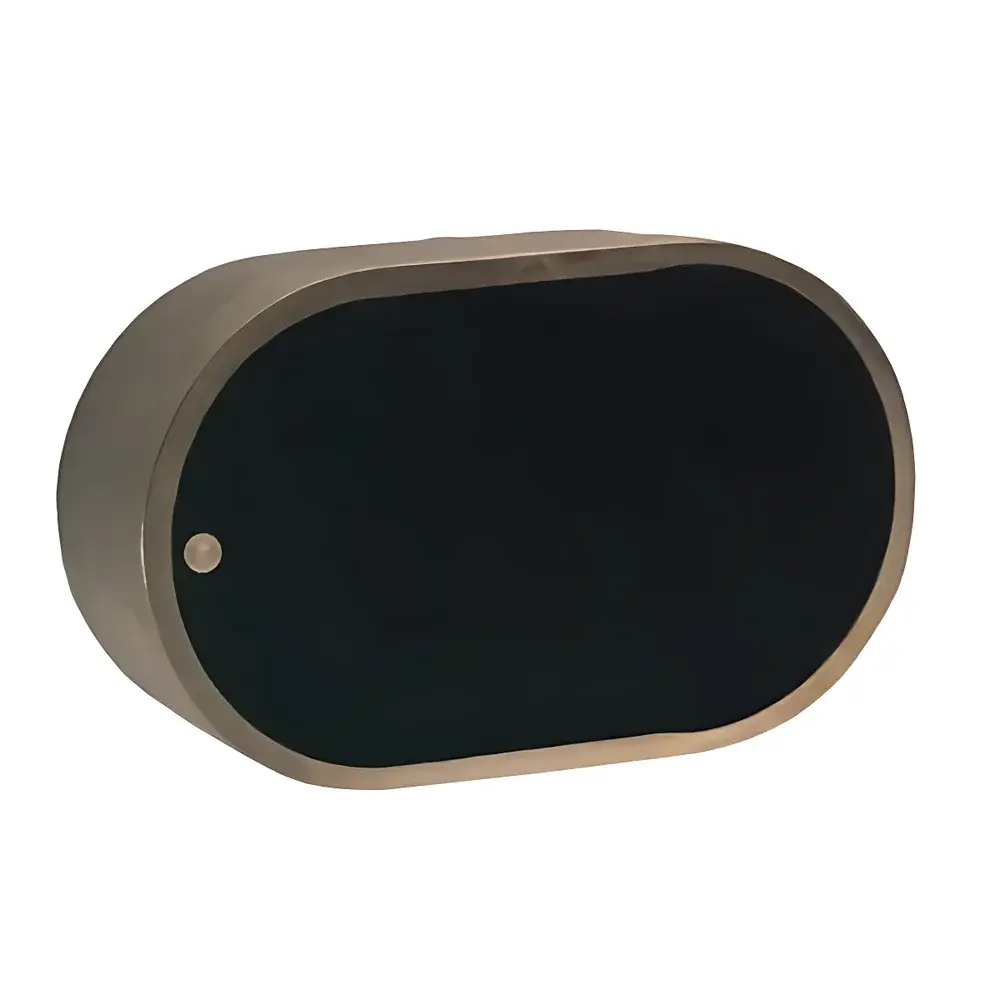
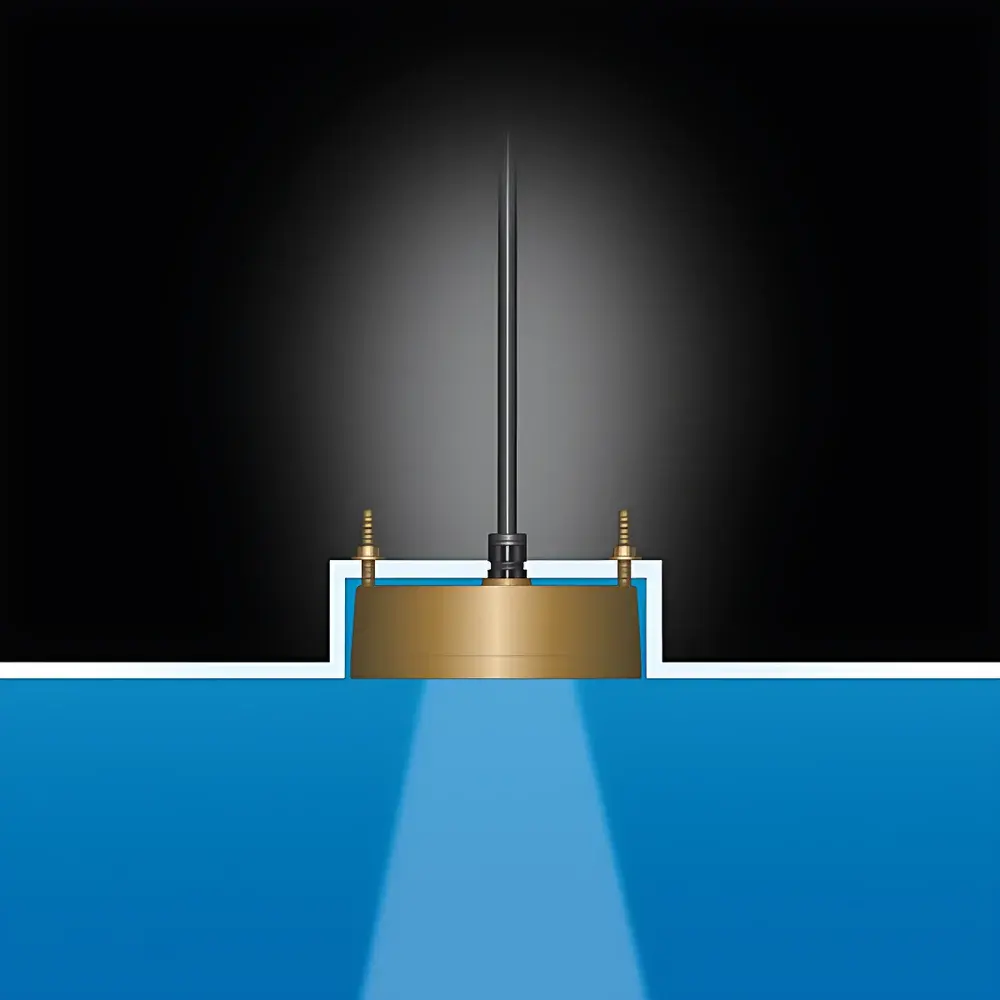
AIRMAR PM275LHW Dual-Frequency CHIRP Depth Sounder
| Brand | AIRMAR |
|---|---|
| Origin | USA |
| Model | PM275LHW |
| Power Output | 1000 W |
| Operating Frequency Bands | Low Band: 42–65 kHz (beam width: 25°–16°), High Band: 150–250 kHz (fixed 25° beam width) |
| Max Depth Range | 914 m (low band), 152 m (high band) |
| Beam Coverage | Fixed 25° wide beam across entire high band |
| Transducer Material | Bronze |
| Housing Material | Polyurethane acoustic window |
| Mounting Options | Pocket, Keel, Tank, Hull-Through (B275LHW), Transom (TM275LHW), or Clamp-on (CM275LHW) |
| Integrated Temperature Sensor | Yes |
| Compatible Hull Types | Solid fiberglass only, minimum hull length 8 m |
| Tilt Compensation | Customizable for hull deadrise angle |
| Weight | 5.3 kg |
| Total Frequency Span | 123 kHz |
| Compliance | CE, FCC, RoHS |
Overview
The AIRMAR PM275LHW is a dual-frequency CHIRP (Compressed High-Intensity Radar Pulse) depth sounder engineered for professional marine applications requiring simultaneous high-resolution shallow-water imaging and robust deep-water performance. Unlike conventional fixed-frequency transducers, the PM275LHW employs swept-frequency CHIRP technology—transmitting continuous, linearly modulated pulses across two distinct broadband bands. This enables superior signal-to-noise ratio, improved target separation, and enhanced depth discrimination through matched filtering in the receiver. The low-band (42–65 kHz) delivers long-range penetration with adaptive beam narrowing (25° to 16°), supporting reliable bottom detection down to 914 meters in oceanic environments. The high-band (150–250 kHz) maintains a fixed 25° beam width across its full spectrum—uniquely balancing lateral coverage and vertical resolution for precise fish arch rendering and seafloor texture analysis in depths up to 152 meters. Its bronze housing and polyurethane acoustic window ensure corrosion resistance and optimal acoustic impedance matching in saltwater, while the integrated fast-response thermistor provides synchronized water temperature data critical for sound velocity correction in bathymetric calculations.
Key Features
- Dual-band CHIRP architecture enabling concurrent operation at 42–65 kHz and 150–250 kHz
- Fixed 25° wide beam in high band—doubling seabed coverage compared to narrow-beam 200 kHz transducers while preserving target separation fidelity
- 1 kW peak power output optimized for deep-water signal return and noise rejection in turbid or thermocline-affected conditions
- Integrated NTC thermistor with ±0.2°C accuracy and <500 ms response time, co-located with acoustic path for real-time sound speed compensation
- Bronze transducer body rated for permanent immersion; compatible with solid fiberglass hulls ≥8 m in length
- Xducer ID® digital identification protocol enabling automatic configuration and firmware validation within compatible multifunction displays
- Mounting flexibility: pocket, keel, tank, hull-through (B275LHW), transom (TM275LHW), or clamp-on (CM275LHW) configurations
- Deadrise-tolerant mechanical design accommodating hull angles from 0° to 24° without beam distortion
Sample Compatibility & Compliance
The PM275LHW is validated for use on monohull vessels with solid fiberglass construction—excluding cored composites, wood, or metal hulls due to acoustic attenuation and impedance mismatch risks. It meets electromagnetic compatibility requirements per FCC Part 15 Subpart B and EU Directive 2014/53/EU (Radio Equipment Directive), carrying CE, FCC, and RoHS markings. While not certified to IEC 60945 or IMO Resolution A.694(17) for Class A ECDIS integration, it complies with NMEA 2000 (IEC 61162-3) physical layer specifications and supports PGN 128259 (Depth Below Transducer) and 130311 (Water Temperature) for seamless integration into commercial and recreational marine networks. Its analog CHIRP output is compatible with third-party sonar processors adhering to AIRMAR’s published waveform timing and voltage envelope specifications.
Software & Data Management
The PM275LHW operates as a sensor-level device without embedded firmware-based data storage or onboard processing. All signal processing—including pulse compression, spectral decomposition, gain control, and bottom tracking—is performed externally by the host display unit or sonar processor. Configuration parameters (e.g., frequency sweep range, pulse width, gain slope, and beam selection) are managed via NMEA 2000 PGN 127250 (Transducer Configuration) or proprietary vendor protocols. Raw echo data is not exposed at the transducer level; however, processed depth, temperature, and confidence-indexed bottom-lock status are transmitted at configurable update rates (1–10 Hz). For GLP/GMP-aligned deployments, timestamped NMEA logs containing PGN 128259 and 130311 may be archived for audit trail purposes—though no FDA 21 CFR Part 11 electronic signature or audit trail functionality resides within the transducer itself.
Applications
- Commercial pelagic and demersal fishing operations requiring simultaneous midwater fish school detection and bathymetric mapping
- Scientific hydrographic surveys of continental shelf zones where dual-band correlation improves sediment classification accuracy
- Offshore aquaculture site assessment, including cage placement optimization and benthic habitat profiling
- Recreational sportfishing chartplotters demanding high-fidelity fish arch rendering and structure definition in depths <150 m
- Port authority dredging monitoring systems utilizing consistent beam geometry for repeatable volume change quantification
- ROV and AUV auxiliary depth referencing where compact form factor and dual-band redundancy mitigate single-point failure risk
FAQ
Can the PM275LHW be installed on aluminum or steel hulls?
No. Acoustic coupling inefficiency and signal reflection losses render it incompatible with metal or cored composite hulls. Only solid fiberglass hulls ≥8 m in length are supported.
Does the transducer support true real-time raw CHIRP waveform output?
No. It outputs processed depth and temperature data via NMEA 2000. Raw IQ data streaming requires vendor-specific sonar processors with proprietary interface licensing.
Is temperature compensation applied automatically within the transducer?
No. The thermistor provides calibrated temperature readings; sound velocity correction must be implemented in the host display or processing unit using standard Mackenzie or Chen-Millero algorithms.
What is the minimum required deadrise angle tolerance?
The mechanical mounting system accommodates deadrise angles from 0° to 24°. Angles exceeding 24° require custom wedge kits ordered separately.
Can the low and high bands operate simultaneously?
Yes—both bands transmit and receive concurrently under standard operating mode, enabling synchronized shallow/deep profiling without time multiplexing latency.