
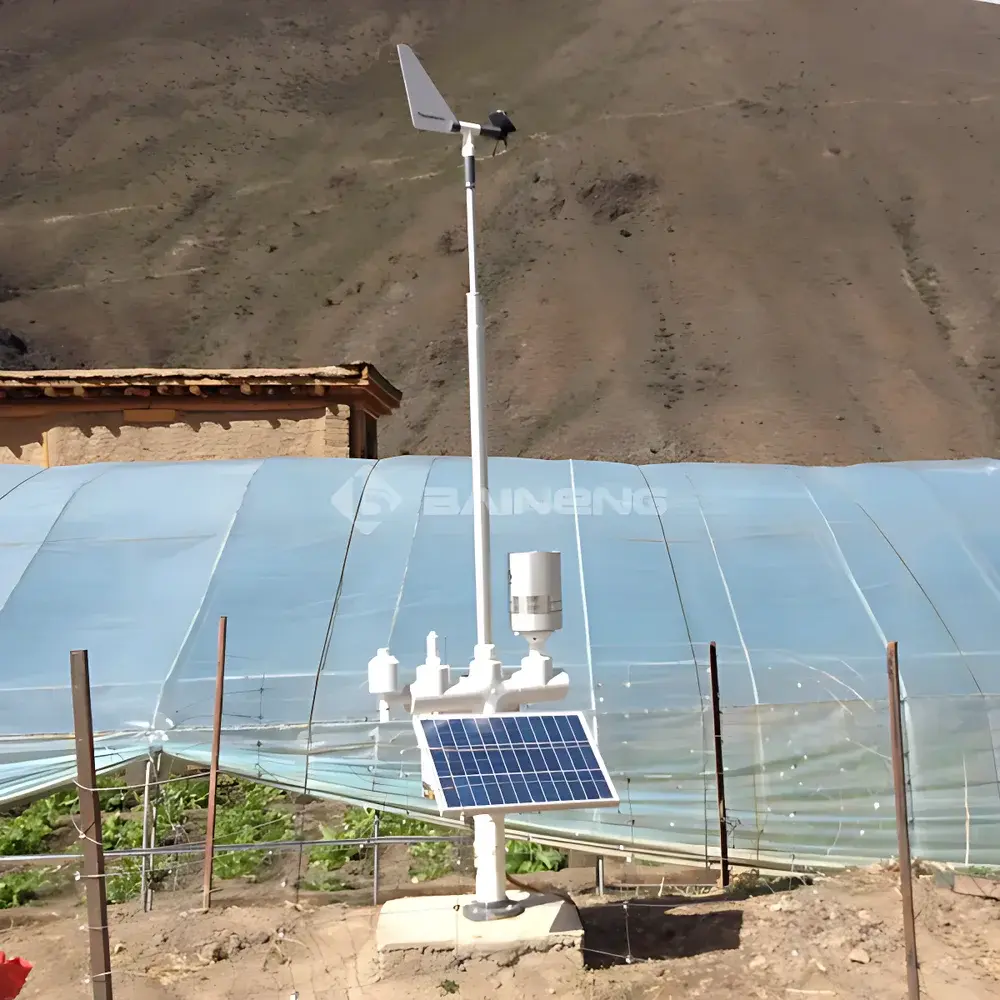
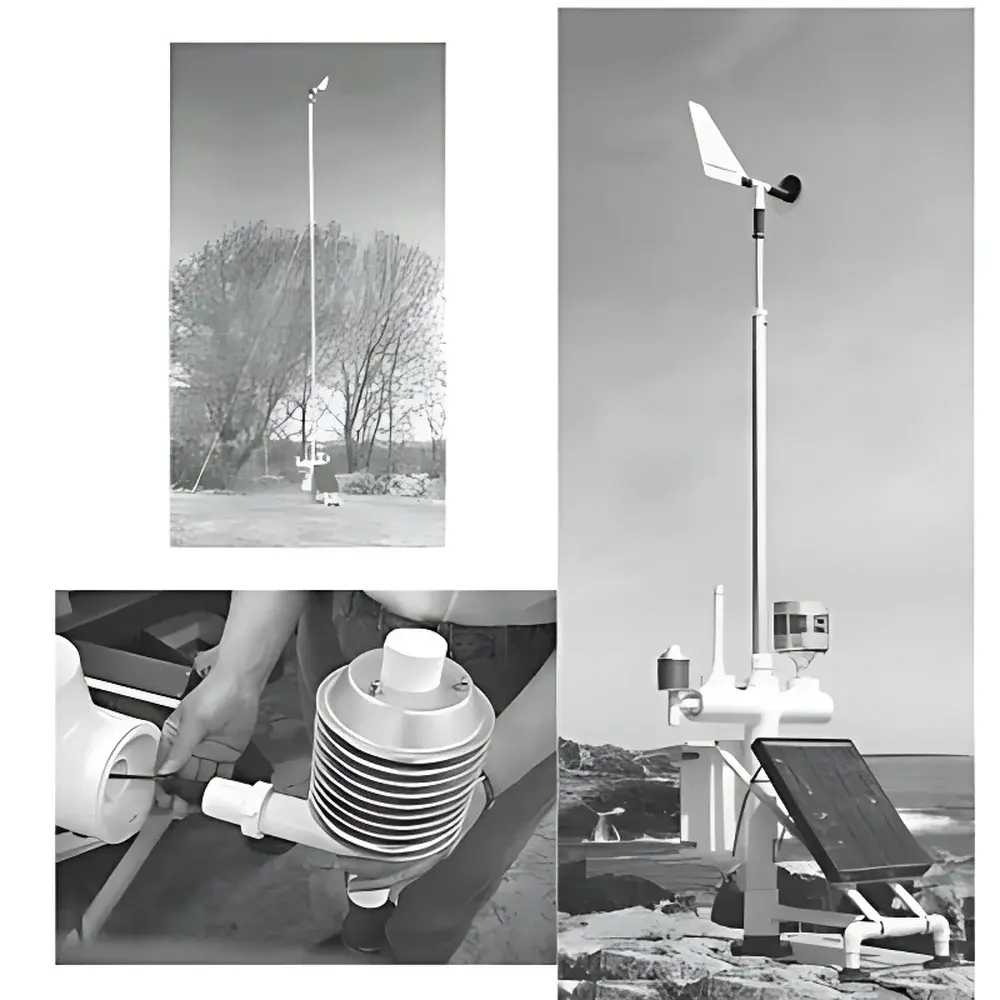
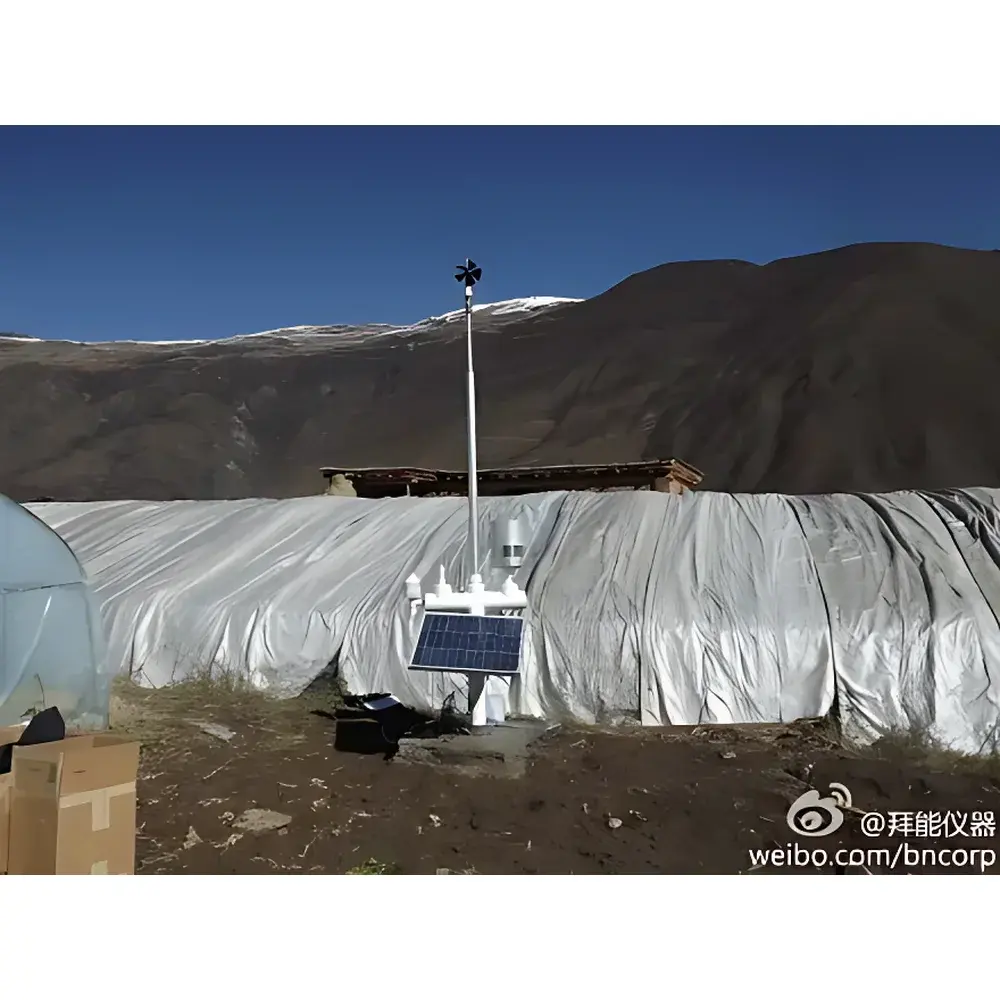
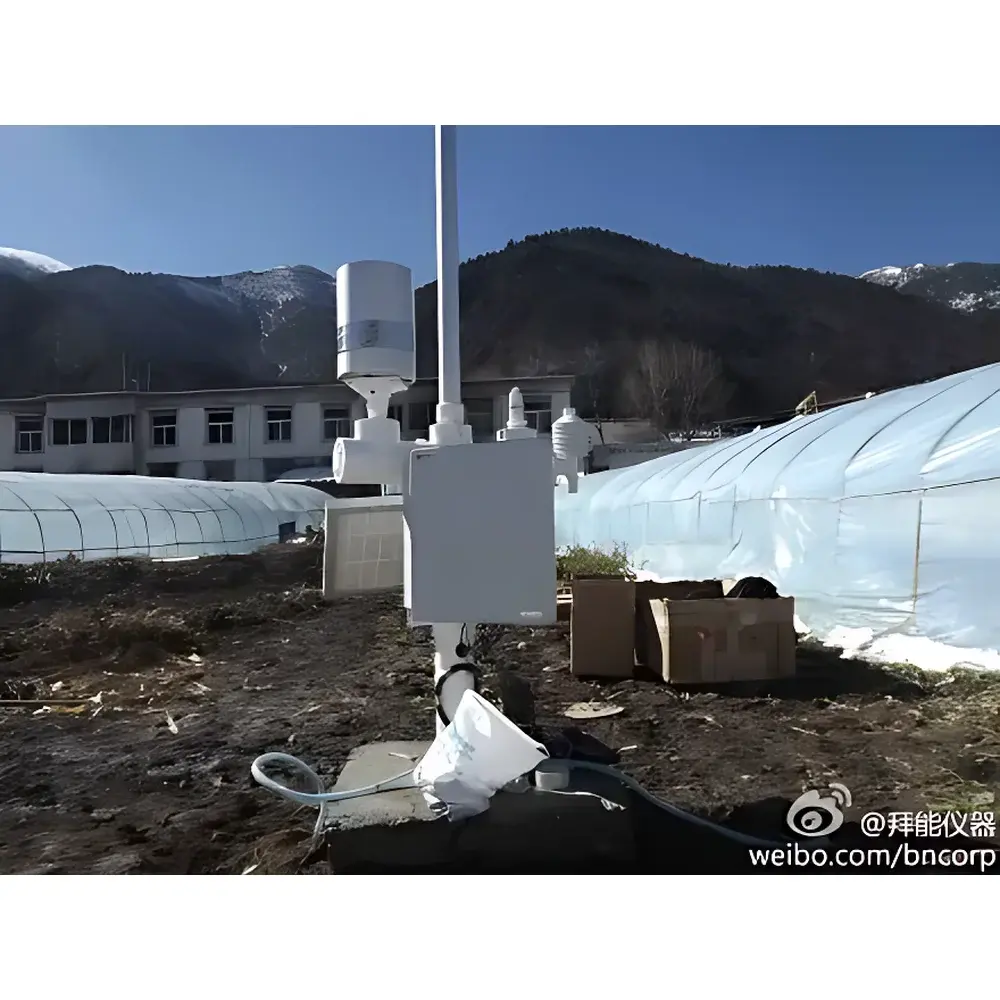
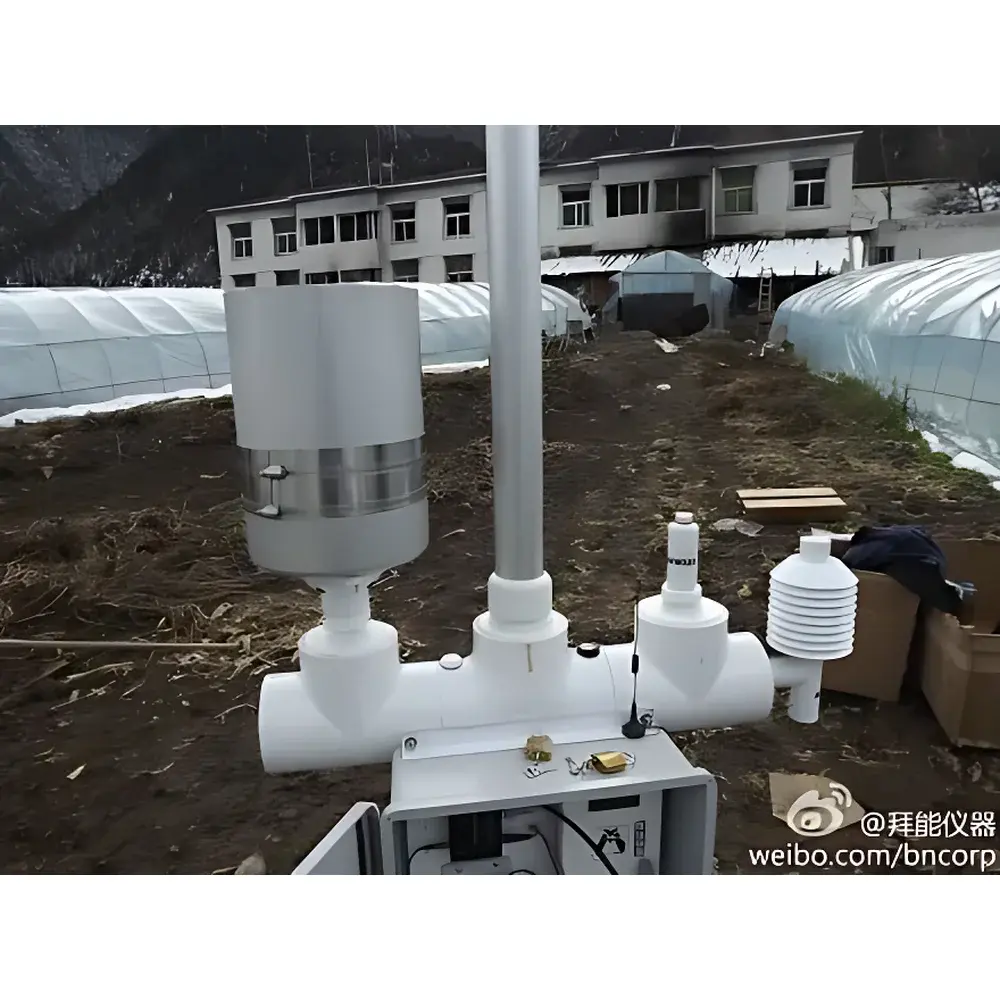
RainWise EDL-WS Integrated Weather Station
| Brand | RainWise |
|---|---|
| Origin | USA |
| Model | EDL-WS |
| Instrument Type | Portable Weather Station |
| Data Logger Memory Options | 128K / 256K / 512K / 1M (up to 2M optional) |
| Power Supply | 6 VDC, AC/DC adapter or solar panel compatible |
| Display | 2-line × 16-character LCD |
| Communication Interface | RS232 standard, optional Ethernet, GPRS/CDMA, or wireless modules |
| Sampling Interval | 1, 5, 10, 15, 20, 30, or 60 minutes |
| Input Channels | 8 single-ended or 4 differential analog inputs + 3 digital inputs |
| Output Options | RS232, optional 4–20 mA or 0–1 V analog outputs |
| Real-Time Clock | Integrated, battery-backed |
| Backup Battery Life | 10 years |
| Dimensions (Data Logger) | 19.5 × 10 × 4 cm |
| Enclosure Rating | IP67 (Monopod mounting bracket) |
Overview
The RainWise EDL-WS Integrated Weather Station is a modular, field-deployable environmental monitoring system engineered for long-term, unattended operation in diverse climatic and geographic conditions. At its core resides the EDL (Electronic Data Logger), a low-power, non-volatile memory-based data acquisition unit designed specifically for integration with RainWise’s suite of NIST-traceable meteorological sensors. The system operates on the principle of distributed sensor measurement—where each calibrated transducer converts physical atmospheric or surface parameters into standardized electrical signals (analog voltage, current, or digital serial output), which are time-stamped, logged, and transmitted via configurable communication protocols. Unlike fixed-installation observatories, the EDL-WS architecture supports rapid deployment and reconfiguration, making it suitable for temporary field campaigns, agricultural microclimate studies, hydrological basin monitoring, and EPA-compliant ambient air quality support networks. Its design complies with fundamental requirements outlined in ASTM D5142 (standard practice for meteorological instrumentation), ISO 17025 (for calibration traceability), and US EPA Guidance for Meteorological Monitoring in Ambient Air Programs.
Key Features
- Modular sensor architecture: Compatible with over 12 certified sensor types—including wind speed/direction (AerVane or WindSonic), temperature/humidity (RH/T), barometric pressure (BAROP), precipitation (RGP, RGA, PGH), solar radiation (SOL-PYR, SOL-PAR), soil moisture (SM), leaf wetness (LW), evaporation (EVAP), water level (H20LVL), and wet-bulb/dry-bulb (TWD).
- EDL data logger with sleep-mode power management: Consumes <2 mA in standby; supports 6 VDC, AC/DC, or solar charging with integrated charge regulation.
- Configurable sampling and storage: Adjustable logging intervals (1–60 min); memory options up to 2 MB enable multi-year continuous recording at typical intervals without external media.
- Plug-and-play sensor integration: Pre-configured firmware eliminates need for field programming; all sensors connect directly to EDL’s analog or digital I/O ports without signal conditioning hardware.
- Dual-output capability: Standard RS232 interface plus optional analog (4–20 mA or 0–1 V) or wireless (GPRS/CDMA/Ethernet) telemetry for SCADA or cloud-based ingestion.
- Robust mechanical design: IP67-rated Monopod mounting bracket; UV-stabilized polycarbonate and anodized aluminum housings across all sensor models ensure durability in coastal, desert, and high-UV environments.
Sample Compatibility & Compliance
The EDL-WS system accommodates sensors validated for use across regulatory and research-grade applications. AerVane and WindSonic anemometers meet or exceed EPA Design Criteria for Wind Measurement Systems (EPA-454/R-99-007), including dead-band-free azimuthal coverage (0–360°) and NIST-traceable angular calibration. RH/T and BAROP sensors provide documented metrological traceability to NIST standards, supporting GLP-compliant data reporting. RGA and PGH rain gauges conform to NOAA/NWS specifications for orifice diameter (21.9 cm) and tipping bucket resolution (0.25 mm), with PGH incorporating thermostatically controlled heating for reliable cold-weather performance. SOL-PYR and SOL-PAR sensors adhere to ISO 9060:2018 spectral classification (Class C for pyranometers; Class B for PAR sensors), enabling defensible solar resource assessment per IEC 61724-1. All analog sensor outputs comply with IEEE 1451.2 TEDS templates where applicable, facilitating automated configuration in networked deployments.
Software & Data Management
RainWise provides complimentary PC-based data acquisition software compatible with Windows OS, supporting real-time telemetry, local file export (CSV, TXT), and basic visualization. The software enables full configuration of EDL parameters—including sampling interval, memory wrap behavior, alarm thresholds, and communication settings—without requiring firmware modification. Logged datasets include embedded timestamps synchronized to the internal RTC, with optional GPS-derived time correction when paired with compatible modules. Data files retain sensor metadata (model, serial number, calibration date), satisfying audit requirements under FDA 21 CFR Part 11 for electronic records where electronic signatures are implemented. For enterprise integration, ASCII-formatted RS232 output and SDI-12 v1.3 compliance (WindSonic, SM) allow seamless ingestion into third-party platforms such as Campbell Scientific LoggerNet, CR1000X firmware, or custom Python/Node-RED pipelines using standard serial-to-HTTP bridges.
Applications
The EDL-WS serves mission-critical roles in environmental science, infrastructure resilience, and operational meteorology. It is routinely deployed for: agricultural irrigation scheduling via evapotranspiration modeling (using combined T/H, PAR, and soil moisture inputs); flood early-warning systems (integrating H20LVL, rainfall, and barometric trend analysis); renewable energy site assessment (solar irradiance + wind profiling); ecological phenology studies (leaf wetness, soil temperature, PAR); and urban heat island monitoring (multi-node temperature/humidity arrays). Its portability and solar readiness make it ideal for remote watershed monitoring where grid power is unavailable, while its modular expandability supports tiered validation—e.g., co-locating WindSonic with AerVane for comparative turbulence analysis in boundary-layer research.
FAQ
Is the EDL-WS still in production?
No—the EDL-WS system has been officially discontinued by RainWise. However, technical documentation, firmware updates, and legacy sensor support remain available through authorized distributors for existing installations.
Can the EDL logger operate independently without a PC connection?
Yes—the EDL functions autonomously once configured; no continuous PC link is required for data acquisition or storage.
What is the maximum cable length between sensors and the EDL?
For analog sensors, recommended maximum shielded twisted-pair length is 100 m; digital sensors (e.g., WindSonic, SDI-12) support up to 300 m with proper termination and noise mitigation.
Does the system support MODBUS or MQTT protocols?
Not natively—the EDL outputs ASCII via RS232. Protocol translation requires external gateways (e.g., Digi XBee-MQTT bridges or industrial protocol converters).
Are calibration certificates included with each sensor?
Yes—each sensor ships with a NIST-traceable calibration report indicating date, reference standard, uncertainty budget, and environmental test conditions.







