
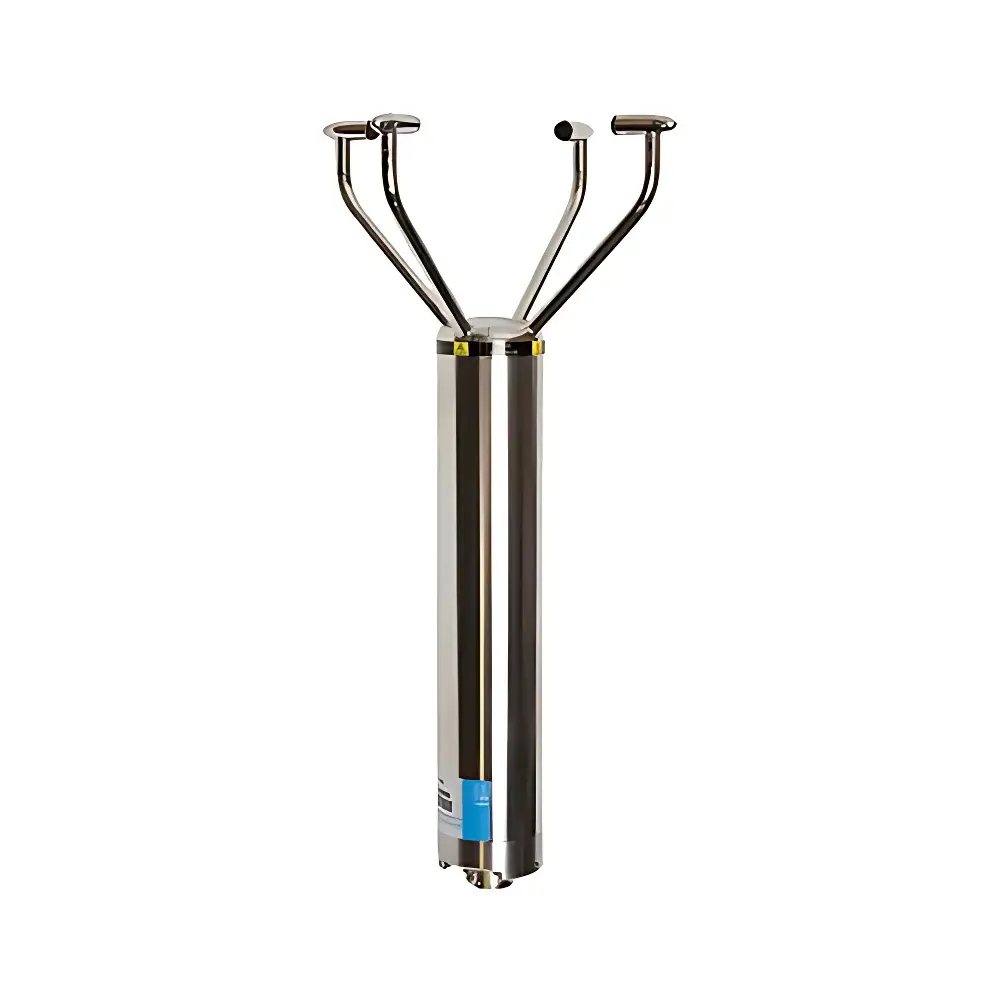
GILL WindObserver 70 Ultrasonic Anemometer
| Brand | GILL |
|---|---|
| Origin | United Kingdom |
| Model | WindObserver 70 |
| Instrument Type | Ultrasonic Anemometer |
| Resolution | 0.01 m/s |
| Measurement Range | 0–75 m/s |
| Accuracy | ±2% of reading |
| Operating Temperature | −55°C to +70°C |
| Operating Humidity | 0–100% RH |
| Heating Power | 150 W (1 W/cm²) |
| Electrical Input | 7 A @ 24 VAC/DC |
| Wind Direction Range | 0–360° (dead-zone-free) |
| Calibration | NIST-traceable |
| Enclosure Material | Stainless steel |
| Ingress Protection | IP66 |
| Compliance | FAA AC 150/5220-9C, UK CAA CAP 744, ICAO Annex 3, WMO Guide to Meteorological Instruments and Methods of Observation (WMO-No.8, 7th ed., 2008) |
Overview
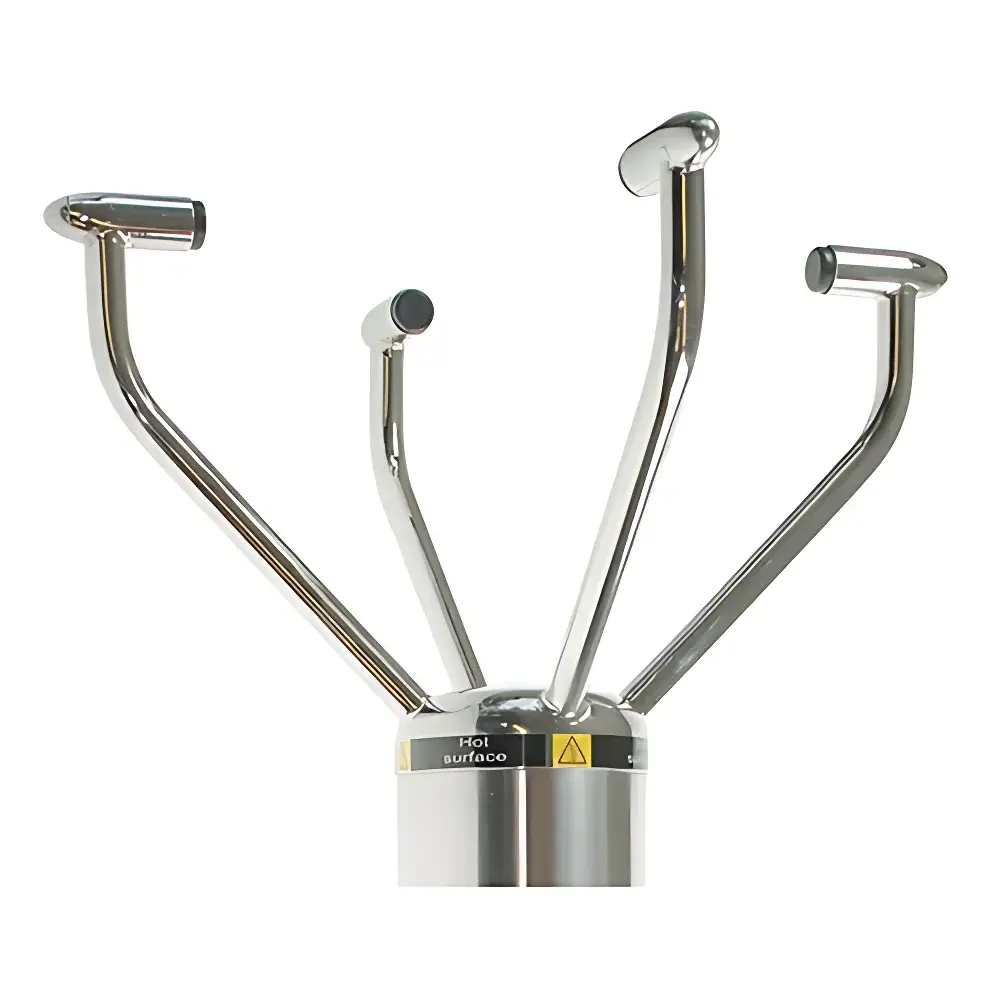
The GILL WindObserver 70 is a solid-state, heated ultrasonic anemometer engineered for high-reliability wind measurement in aviation-critical and extreme environmental applications. Unlike mechanical cup-and-vane sensors, it employs time-of-flight ultrasonic transit-time differential measurement across three orthogonal acoustic paths to compute true 3D wind vector components—horizontal wind speed, wind direction, and vertical velocity—without moving parts. Its robust architecture eliminates mechanical wear, hysteresis, and inertia-related lag, enabling sub-second response to rapid wind transients. Designed and validated to meet stringent civil aviation regulatory requirements, the WindObserver 70 is formally accepted by the U.S. Federal Aviation Administration (FAA) under Advisory Circular AC 150/5220-9C and the UK Civil Aviation Authority (CAA) per CAP 744 for use in Automated Weather Observing Systems (AWOS) and Airport Weather Stations. It complies with ICAO Annex 3 (Meteorological Service for International Air Navigation) and adheres to the observational standards outlined in the World Meteorological Organization’s *Guide to Meteorological Instruments and Methods of Observation* (WMO-No.8, 7th Edition, 2008), including specifications for vector-averaged wind and 3-second gust reporting.
Key Features
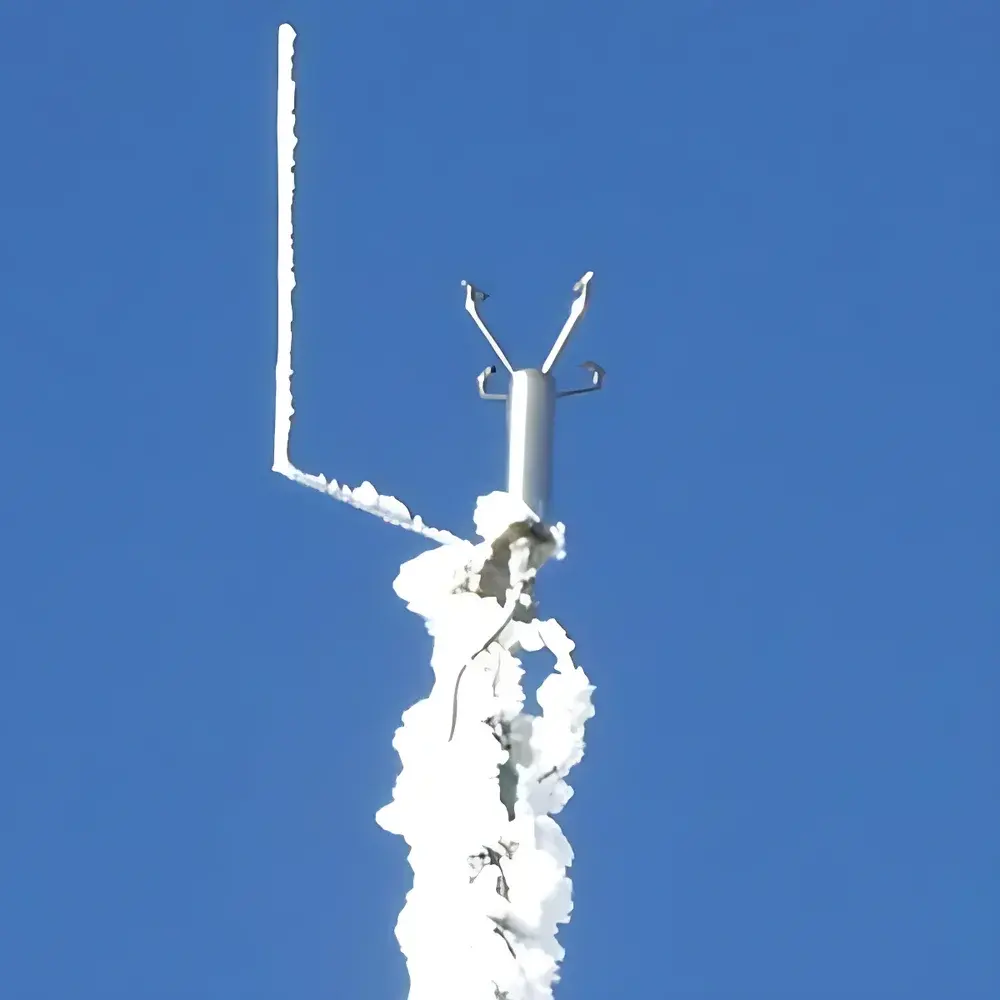
- Integrated 150 W resistive heater delivering uniform 1 W/cm² surface power density—validated per MIL-STD-810F for continuous operation in freezing rain, rime ice, snow accumulation, and sub-zero ambient conditions
- Fully sealed stainless-steel housing rated IP66 for dust-tightness and protection against powerful water jets
- Dead-zone-free 0–360° wind direction measurement with no mechanical obstruction or azimuthal blind spots
- NIST-traceable factory calibration with documented uncertainty budget and long-term stability verification
- No field recalibration required; zero-maintenance design supported by 10-year mean time between failures (MTBF) data from operational fleet analysis
- Configurable output modes: instantaneous vector wind, 1–600 second vector-averaged wind, and standardized 3-second gust (maximum 3-s running average)
- Low-power RS-485 Modbus RTU and optional SDI-12 digital interfaces; analog 4–20 mA and 0–10 V outputs available for legacy integration
Sample Compatibility & Compliance
The WindObserver 70 is intended for outdoor, unsheltered deployment in open-exposure meteorological sites—including airport runways, helipads, approach lighting systems, and remote telemetry stations. It operates continuously across its full specification range without performance degradation in condensing humidity (0–100% RH non-condensing), saline coastal atmospheres, or high-UV desert environments. Regulatory compliance includes: FAA AC 150/5220-9C (AWOS sensor acceptance criteria); UK CAA CAP 744 (UK aerodrome weather instrumentation standards); ICAO Annex 3, Chapter 4 (instrument accuracy, exposure, and siting requirements); and WMO-No.8 §3.3.2.1 (ultrasonic anemometer performance thresholds for aviation-grade observations). The device supports GLP-aligned data integrity through configurable audit logging and meets electromagnetic compatibility (EMC) requirements per EN 61326-1:2013 for industrial environments.
Software & Data Management
The WindObserver 70 interfaces natively with industry-standard meteorological data acquisition platforms (e.g., Campbell Scientific CR series, Vaisala MAWS, and custom SCADA systems) via Modbus RTU over RS-485. Firmware supports user-defined averaging intervals, gust detection algorithms compliant with WMO definitions, and real-time diagnostic flags (e.g., heater status, transducer fault, signal-to-noise ratio warnings). Optional GILL WinLog software provides configuration, firmware updates, and raw waveform visualization for validation and troubleshooting. All configuration changes are timestamped and logged locally; when integrated into Part 11-compliant systems, the device supports external audit trail generation for FDA 21 CFR Part 11 or ISO/IEC 17025 traceability workflows.
Applications
- Primary wind sensor in certified AWOS, ASOS, and AWSS installations at civil and military airfields
- Helideck wind monitoring per CAP 437 (UK) and IMO MSC.1/Circ.1351 (international offshore standards)
- Wind shear and microburst detection subsystems for Category III instrument landing systems (ILS)
- Long-term climate monitoring networks requiring NIST-traceable, low-drift instrumentation
- Railway and highway intelligent transport systems (ITS) for crosswind hazard alerts
- Offshore oil & gas platforms where corrosion resistance, icing resilience, and explosion-proof mounting options are critical
FAQ
Is the WindObserver 70 certified for use in FAA-approved AWOS installations?
Yes—the sensor is explicitly listed in FAA Advisory Circular AC 150/5220-9C Appendix B as an approved ultrasonic anemometer for AWOS Category I, II, and III systems.
Does it require periodic recalibration in the field?
No. The unit is factory-calibrated with NIST-traceable standards and designed for zero-maintenance operation over its service life. Recalibration is not required unless physical damage occurs.
Can it operate reliably during freezing precipitation events?
Yes. Its 150 W heater maintains transducer surface temperature above freezing under sustained icing conditions, and its thermal management has been verified per MIL-STD-810F Method 509.5 (Ice Accumulation).
What mounting options are available?
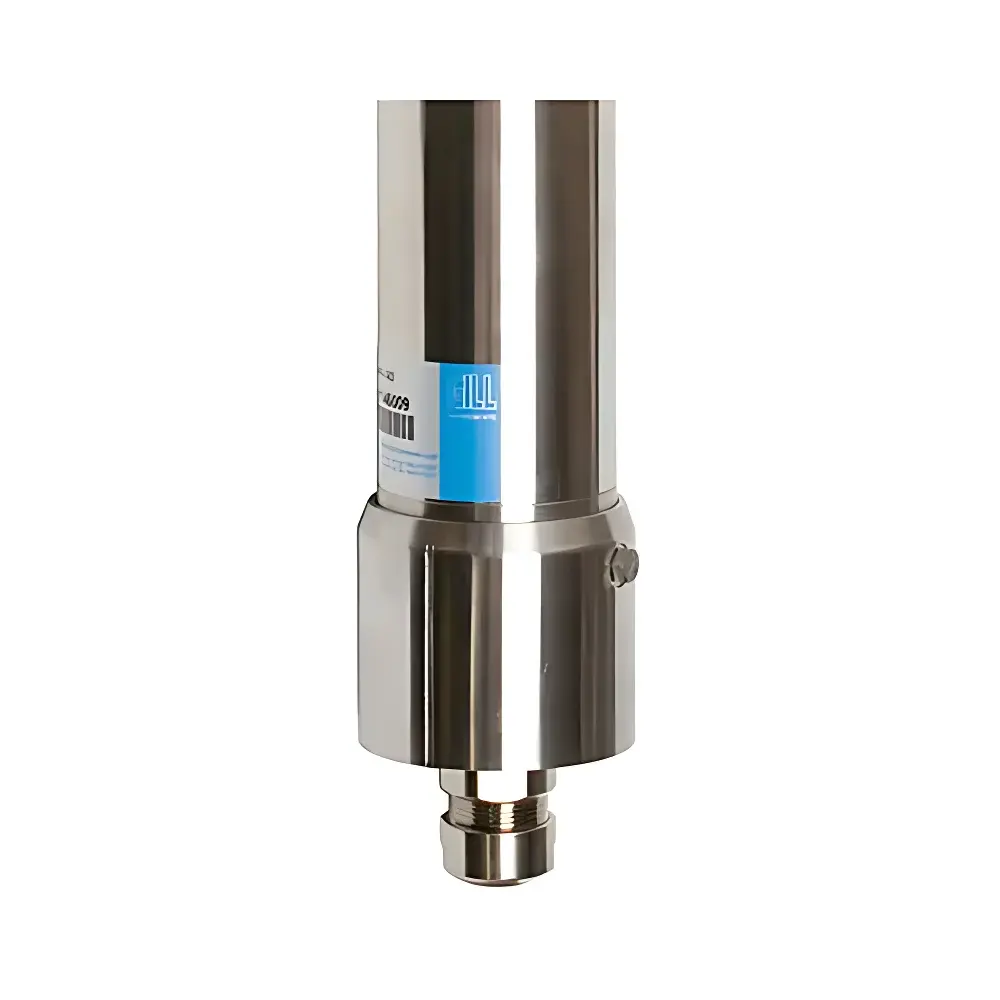
Standard configurations include universal U-bolt mast clamp (for 50–114 mm OD poles) and optional tilt-adjustable pedestal mount with integrated cable gland. Custom OEM flanges are available upon request.
How is data output synchronized with other meteorological sensors in a network?
The device supports hardware-sync pulse input (TTL) for time-aligned sampling across multi-sensor arrays and includes internal real-time clock with NTP client capability when used with compatible gateway hardware.
Related Products







